Beyond oil: rethinking Nigeria’s energy security in an electrifying world
The 2026 energy shock and COP31’s electrification agenda raise a bigger question for Nigeria: how can it use today’s energy strengths to build a less vulnerable and more competitive economy?
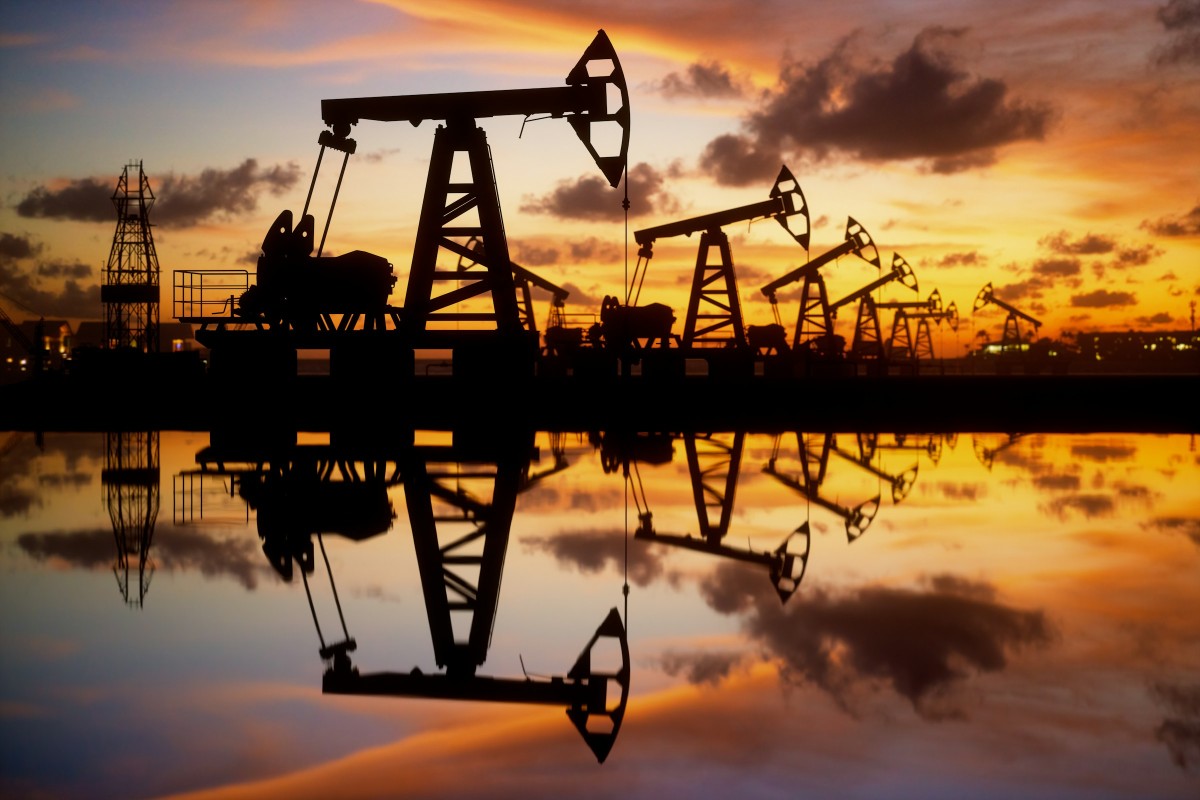
Photo by Getty Images via Unsplash.com

Summary
- In September, Dangote's petrol output rose 13%, yet deliveries to the Nigerian market fell 21%, exports rose 59%, and petrol reached about NGN1,465 (USD 1.10) per litre. Nigeria still pays international prices for crude, and some of its crude is already committed to export contracts.
- Diesel prices rose by about 83% between February and August 2026, raising costs for every business that runs a diesel generator. Power from an improved grid, and decentralised renewable energy solutions can cut those costs, but only if it is affordable and useful for production.
- The World Bank's $750 million DARES programme aims to expand electricity access to more than 17.5 million Nigerians by providing results-based financing to clean energy businesses to deliver clean, reliable power for households and productive uses. Nigeria's partnership with the International Energy Agency can help Nigerian institutions make informed decisions about future energy investments.
- Nigeria should leave COP31 with priority electricity investments, named institutions in charge of delivery, and specific requests for financing support, rather than another announcement of ambition.
Introduction
In September 2026, petrol prices across Nigeria rose sharply as conflict in the Middle East disrupted global oil markets. The Nigerian Midstream and Downstream Petroleum Regulatory Authority (NMDPRA) reported indicative petrol prices of about NGN1,371 (USD 1.03) per litre in Lagos, NGN1,420 (USD 1.07) in Abuja and NGN1,465 (USD 1.10) in Maiduguri. According to the regulator's September figures, its output rose by 13% from August to September, while deliveries to the domestic market fell by 21% and exports increased by 59%. Higher refining output did not mean more fuel for Nigerian consumers.
Petrol receipts fell by 23%, from 50.5 million to 38.7 million litres daily, while reported consumption rose by 7% to 44.4 million litres. This left a gap of 5.7 million litres daily between receipts and consumption. The episode exposed the limits of judging energy security by refining capacity alone.
Some Nigerian crude is already committed to export contracts or used in financing arrangements, while refineries must still pay for crude at prices influenced by international markets. An analysis of NNPC's 2025 audited accounts identified three crude-backed facilities with contracted delivery commitments of 186,250 barrels per day at year-end 2025. Improving domestic supply arrangements can reduce unnecessary costs, but cannot insulate Nigeria from international oil prices.
Dangote Refinery's IPO and Nigeria's closer ties with the International Energy Agency (IEA), a contributor to COP31's electrification agenda, are the two recent developments this commentary looks at.
The energy security question is changing
The global oil shock affects different parts of the petroleum economy differently. Higher prices can boost crude export earnings, but they also increase transport, production and household costs. Refiners do not necessarily benefit either: the IEA reports that West Africa–Europe crude freight costs exceeded USD 22 per barrel in mid-October, more than four times their pre-conflict level. Higher shipping and feedstock costs can erode refining margins even when product prices rise.
For Nigeria, the distinction between capacity and security is particularly important. Dangote Refinery has changed the fuel supply chain by reducing reliance on imported finished products, supporting exports and creating opportunities for skills and industrial suppliers. Its approximately USD 1.6 billion initial public offering attracted orders valued at around three times the amount offered, about NGN 6.4 trillion (USD 4.8 billion) from Nigerian retail and institutional investors, according to Reuters. Proceeds are intended in part to support a planned expansion towards 1.4 million barrels per day by 2029. This is a major industrial investment, but its scale does not by itself guarantee affordable fuel or greater economic resilience. Nigerians have shown they will finance a large industrial asset at home. The open question is whether power and distributed energy projects can reach the same pool of capital.
Domestic crude sourcing has also improved. The Nigerian Upstream Petroleum Regulatory Commission (NUPRC) reported that more than 127 million barrels of Nigerian crude went to domestic refineries during January–September 2026. Questions of price, commercial terms and availability remain open.
Refining domestically creates value, but petroleum export earnings remain exposed to global markets. A broader test is whether the refinery develops suppliers, engineering capabilities and skills that also benefit electricity and other industries. Its long-term value should be measured partly by what develops beyond petroleum.
Electrification is the wider economic opportunity
For a small manufacturer operating a diesel generator, a global oil price shock means higher production costs. UN Trade and Development estimates that diesel prices in Nigeria rose by 82.7% between 23 February and 31 August 2026. Reliable electricity from an improved grid, embedded generation or a well designed solar and battery system could reduce that exposure, extend operating hours and improve competitiveness. This is where the energy transition becomes an economic development strategy rather than simply an emissions commitment.
Nigeria must also expand first time electricity access and meet rising industrial demand, unlike countries mainly replacing existing fuel use. The challenge is not simply to replace diesel with renewables: it is to build reliable generation, transmission and distribution, improve payment arrangements and use electricity more productively. Gas remains important to the current power mix. In February, NISO data reported by Reuters showed power plants receiving only about 43% of required gas volumes, with national generation around 4,300 MW. Energy security therefore also requires addressing gas supply constraints and the commercial weaknesses of the electricity system.
Connections alone are insufficient. Electricity must be reliable, affordable and useful for production. Replacing petrol and diesel makes sense where cleaner power demonstrably lowers costs and supports jobs; electrification is not the least-cost option for every application.
Financing initiatives are taking shape. The World Bank's USD 750 million DARES programme aims to provide new or improved electricity access to more than 17.5 million Nigerians. Under DARES, the USD 188 million Green Finance and Investment Facility is intended to mobilise financing for 40 interconnected mini-grids. Separately, Nigeria's Distributed Renewable Energy Fund targets USD 300 million, with an initial USD 25 million World Bank contribution and investment management by NSIA and Africa50. Their impact will depend on how much financing reaches developers and how many reliable energy systems become operational.
Developers face payment risks, weak networks, currency mismatches and low customer purchasing power. Project preparation, guarantees, clearer regulation and financing for portfolios of small projects can help.
Using the IEA partnership to make better choices
Nigeria was welcomed as an IEA Association country following a Governing Board decision in June 2026, and a joint work programme was launched in September. The IEA announcement creates an opportunity for closer analysis and cooperation, though not an automatic route to project finance.
The partnership could identify where replacing diesel saves businesses the most, how oil demand scenarios affect revenue and which investments remain competitive. The Energy Commission of Nigeria (ECN) should coordinate analysis with ministries, regulators and the IEA, and link findings to planning and investment.
This should strengthen Nigerian analysis of transition risks without displacing national decisions. Its value lies in better domestic choices.
A clearer agenda for COP31
Nigeria's Energy Transition Plan targets net zero emissions by 2060. Its NDC 3.0 commits to reducing economy-wide emissions by approximately 32.2% by 2035 against a recalculated 2018 baseline, ending routine gas flaring by 2030 and reducing fugitive emissions from oil and gas by 60% by 2035. These commitments make the direction clear. At COP31, Nigeria should connect them to investments that improve living standards and reduce economic vulnerability.
COP31's 35-by-35 Global Electrification Pledge seeks to increase electricity's share of global final energy consumption to 35% by 2035. For Nigeria, the practical test is whether international cooperation can support expanding electricity access and supplying growing industrial demand, not only replacing existing energy uses. Nigeria should seek implementation and monitoring arrangements that recognise these different national starting points.
First, Nigeria has to make reliable, increasingly clean electricity an industrial priority. The Federal Ministry of Power should work with the Nigerian Electricity Regulatory Commission (NERC), the Rural Electrification Agency (REA) and state governments to identify priority grid, distributed energy, storage and efficiency investments and develop an initial pipeline within 12 months.
Second, Nigeria has to turn the existing clean energy finance pipeline into concrete projects. This means addressing the commercial risks of each market segment, strengthening local delivery institutions and exploring how Nigeria can engage with COP31's Climate Implementation Bridge (BRIDGE) to develop investment-ready projects and financing partnerships. Nigeria was not among the five pilot countries initially announced for BRIDGE; participation should therefore be pursued rather than assumed. Nigeria should also look at how pension funds and other domestic investors could finance power and distributed energy projects.
Third, Nigeria has to manage petroleum with the energy transition in mind. Nigeria should disclose crude supply and financing commitments, assess long-lived asset risks, enforce methane and flaring rules, and leverage petroleum-sector capabilities elsewhere. It has to assess refinery expansion for commercial returns, fiscal exposure and broader industrial benefits, and not just as a substitute for diversification.
Finally, Nigeria has to use the IEA partnership to guide decisions on cost-effective electrification, fiscal resilience under oil-market changes and bankable priority projects. It is necessary to incorporate findings into budgets, regulation and investment plans.
The 2026 energy shock underscores the stakes. Domestic refining is valuable, but Nigeria also needs an economy less vulnerable to volatile fuels. It should leave COP31 with priority electricity investments, accountable institutional leads and specific requests for project preparation and financing support. This approach would signal more than another announcement of ambition.
References
COP31 Presidency. (2026, September 21). COP31 35-by-35 global electrification pledge. https://cop31.tr/news-detail/cop31-35-by-35-global-electrification-pledge
COP31 Presidency. (2026, September 24). COP31 Presidency elevates finance and city action. https://cop31.tr/news-detail/cop31-presidency-elevates-finance-and-city-action
International Energy Agency. (2026, September 4). Executive Director meets with Nigeria's leaders in Abuja as country begins new chapter as member of IEA family. https://www.iea.org/news/executive-director-meets-with-nigerias-leaders-in-abuja-as-country-begins-new-chapter-as-member-of-iea-family
International Energy Agency. (2026, October 21). The soaring cost of shipping is lifting the price of oil for consumers. https://www.iea.org/commentaries/the-soaring-cost-of-shipping-is-lifting-the-price-of-oil-for-consumers
Nigeria. (2025). Nigeria's NDC 3.0 (Transmission version). United Nations Framework Convention on Climate Change. https://www.unfccc.int/sites/default/files/2025-09/Nigeria%20NDC%203.0%20-%20Transimission%20Version%202.pdf
Nigerian Upstream Petroleum Regulatory Commission. (2026, October 26). Domestic refinery crude deliveries. https://nuprc.gov.ng/media/news/0938dab559420e0f75bef1f4
Nigeria Sovereign Investment Authority. (2026, September 22). NSIA, Africa50 and SEforALL announce commercial launch of the USD300 million Nigeria DRE Fund: A model for scaling DRE investment across Africa. https://nsia.com.ng/nsia-africa50-and-seforall-announce-commercial-launch-the-usd300-million-nigeria-dre-fund-a-model-for-scaling-dre-investment-across-africa
Proshare. (2026, October 12). NNPC's N11.18trn crude-backed facilities raise questions over federation revenues and Gazelle 2 refinancing. https://www.proshare.co/articles/nnpcs-n11.18trn-crude-backed-facilities-raise-questions-over-federation-revenues-and-gazelle-2-refinancing
Reuters. (2026, February 27). Nigeria's grid capacity shrinks with gas supply at 43%. https://www.reuters.com/business/energy/nigerias-grid-capacity-shrinks-with-gas-supply-43-2026-02-27/
Reuters. (2026, November 4). Dangote talks with African bourses widen refinery IPO access. https://www.reuters.com/business/energy/dangote-talks-with-african-bourses-widen-refinery-ipo-access-2026-11-04/
Rural Electrification Agency. (2026, May 14). Nigeria launches $188 million green finance facility. https://nep.rea.gov.ng/posts/news-Nigeria-Launches-188-Million-Dolars-Green-Finance-Facility.html
THISDAY. (2026, October 23). Petrol supply crashes 23% as imports drop 30%, local receipts fall 21%. https://www.thisdaylive.com/2026/10/23/petrol-supply-crashes-23-as-imports-drop-30-local-receipts-fall-21/
United Nations Conference on Trade and Development. (2026, November 2). Pain at the pump: One oil shock, very different bills. https://unctad.org/news/pain-pump-one-oil-shock-very-different-bills
World Bank. (2023, December 15). Nigeria to expand access to clean energy for 17.5 million people. https://www.worldbank.org/en/news/press-release/2023/12/15/nigeria-to-expand-access-to-clean-energy-for-17-5-million-people
About the Authors

Chibuikem Agbaegbu
Chibuikem Nnamdi Agbaegbu is a climate and energy expert with over 13 years of experience across Sub-Saharan Africa. He leads the Climate Transitions Programme and West Africa Office at the Africa Policy Research Institute, with expertise in energy policy, climate finance, renewable energy markets and programme delivery.

Uchechi Onyenwe
Uchechi Onyenwe is a Research Assistant with APRI‘s Climate Transitions Programme. Her work focuses on climate and energy policy, critical minerals governance, energy transition financing, and the political economy of Africa’s energy transition.