
Mainstreaming Climate Action into Nigeria’s Transportation Sector
Nigeria’s transport system must go green. Explore how smart policies, clean tech, and infrastructure upgrades can drive a low-carbon, efficient, and inclusive mobility future.

Summary
-
Nigeria’s transportation sector accounts for a significant share of national emissions, largely driven by fossil fuel-dependent road transport, aging vehicle fleets, and poor infrastructure.
-
Climate action is marginal in current transport plans and policies. Key agencies like the Ministry of Transport, NRC, and NPA have yet to adopt climate-smart frameworks or emission reduction targets.
-
While nascent efforts exist—such as CNG buses in Lagos, electric boat trials, and the planned Blue and Red Lines—these remain isolated and uncoordinated, lacking a national strategy or clear financing mechanisms.
-
Major challenges include policy fragmentation, lack of inter-agency collaboration, limited local manufacturing capacity for electric vehicles, weak incentives, and inadequate infrastructure for non-motorized and public transport.
-
The paper recommends a national sustainable mobility plan, investment in multimodal transport, electrification of fleets, improved rail and inland waterway systems, and targeted climate finance for green transport projects.
Introduction
Context and objectives
Energy is a fundamental driver of the transportation sector, with its growth and development closely tied to energy consumption. Globally, the sector accounts for approximately 20% of total delivered energy, with liquid fuels being the dominant energy source (International Energy Agency [IEA], 2007)1. In fact, transportation is responsible for over 50% of global liquid fuel consumption—a figure projected to increase in the coming years. According to the IEA, between 2007 and 2035, energy use in the transport sector is expected to contribute approximately 87% of the total rise in global liquid fuel consumption (Chukwu et al., 2015)2.
This growing energy demand in the transport sector has direct implications for both economic growth and environmental sustainability. In Nigeria, the steady increase in the sector’s contribution to national GDP reflects a corresponding rise in energy consumption—driven largely by the dominance of road transport and its dependence on fossil fuels. The widespread use of petroleum-based fuels in automobiles not only sustains economic activity but also contributes significantly to greenhouse gas emissions. This reliance on fossil fuels is a major driver of environmental pollution and climate change, posing long-term challenges for the country’s energy balance and ecological stability.
In line with these trends, Nigeria’s transport sector—while contributing an average of 3% to national GDP3—also accounts for a significant share of the country’s greenhouse gas (GHG) emissions. According to the Department of Climate Change (2021), the sector was responsible for 24% of Nigeria’s total GHG emissions in 2020, underscoring the environmental cost of its fossil fuel dependence. The dominance of road transport, powered primarily by petroleum-based fuels, has intensified this impact. As automobile engines burn these fuels, they emit large volumes of carbon dioxide and other pollutants, contributing to environmental degradation and exacerbating climate change. This dual role of the sector—as both an economic driver and a major emitter—highlights the urgent need to align transport development with sustainable energy and climate goals.
Given its growing contribution to both national GDP and greenhouse gas emissions, the transportation sector is central to Nigeria’s efforts to achieve its climate and energy transition goals. As outlined in the updated Nationally Determined Contribution (NDC) and the National Climate Change Policy (NCCP, 2021–2030), decarbonizing transport is essential for reducing overall emissions and achieving the country’s 2030 and 2060 targets. The sector’s heavy reliance on fossil fuels, particularly in road transport, underscores the urgency of adopting cleaner, more sustainable mobility solutions.
This research brief examines Nigeria’s transportation landscape with a focus on the sector’s challenges and opportunities for decarbonization. It seeks to inform the Federal Ministry of Transportation’s climate action strategy by assessing current government plans and initiatives, identifying key implementation gaps, and recommending pathways to integrate climate action into transport sector development. Positioned within the broader context of Nigeria’s energy transition, the brief highlights how a climate-smart transformation of the transportation sector can advance sustainable development goals. Drawing from global best practices and lessons from countries further along in their decarbonization journeys, the brief emphasizes the importance of mainstreaming climate considerations into Nigeria’s future transport policies and infrastructure planning.
Methodology
The research employs a multifaceted methodology to provide a comprehensive analysis of Nigeria's transportation sector and its challenges and opportunities for decarbonization. This approach includes:
-
Literature review: A thorough examination of existing literature on Nigeria's transport policies, initiatives, and their effectiveness in addressing greenhouse gas emissions. This includes reviewing academic papers, government reports, and relevant case studies to gather insights into the historical context and current state of the transportation sector.
-
Policy analysis: An evaluation of existing policies and strategies related to transportation and climate action, assessing their alignment with national climate goals and identifying gaps in implementation. This analysis considers the impact of past and current transport policies on emissions and infrastructure development.
-
Stakeholder consultations: Engagement with key stakeholders, including representatives from the Federal Ministry of Transportation, industry experts, and civil society organizations. These consultations provide valuable perspectives on current priorities, challenges faced in the sector, and potential solutions for integrating climate action into transportation planning.
-
Case study analysis: This policy report interrogates case studies from other climes, such as Kenya and Ethiopia, to distil leading practices and key insights that apply to Nigerian realities
-
Data analysis: Collection and analysis of quantitative data on emissions, energy consumption, and transportation infrastructure. This includes evaluating the energy consumption rates of various transport sub-sectors, such as road, rail, air, and water, to identify the highest contributors to greenhouse gas emissions and assess the potential for decarbonization.
Engagement with the Federal Ministry of Transportation has been integral to this research, ensuring that the findings reflect the Ministry's current priorities and incorporate their insights into the recommendations. By combining these methodologies, the research aims to provide a well-rounded understanding of the transportation sector's role in Nigeria's climate strategy and offer actionable recommendations for mainstreaming climate action into its development agenda.
Background and trends in Nigeria's transportation sector
Historical trend and evolution
The historical development of Nigeria's transportation sector is deeply rooted in its colonial past. Initially, transportation systems were rudimentary, relying on footpaths and waterways for trade and movement. The introduction of railways in 1898 marked a significant milestone, facilitating the export of cash crops like cocoa and palm oil while linking various regions of the country (ibid.). The colonial administration prioritized the construction of railways primarily for resource extraction and export, which laid the groundwork for modern transportation infrastructure.
Post-independence, the transportation sector became crucial for national development, with the National Transport Policy established in 1993 aiming to enhance efficiency and connectivity. However, this policy has not been updated to reflect the significant socio-economic changes in the country over the past two decades. The introduction of the National Automotive Industry Development Plan (NAIDP) in 2014 aimed to promote local vehicle production and the adoption of cleaner technologies. Despite these initiatives and its approximate 3% contribution to GDP, the transport sector remains heavily reliant on fossil fuels, making it the highest consumer of fossil fuels and the largest contributor to GHG emissions, accounting for an annual average of 48% of Nigeria's total CO2 emissions from fuel combustion (ibid.).
Table 1: Key evolutions and milestones in Nigeria’s transportation sector since 1898 till date
| # | Key evolutions and milestones | Description |
| 1 | 1898: Introduction of railways | The construction of Nigeria's first railway line begins, running from Iddo (Lagos) to Otta (Ogun) (32 km). This marks the beginning of organized rail transport in the country. |
| 2 | 1901-1912: Railway expansion | The 193 km rail network expands to Ibadan and further to Kano, establishing a crucial link between the north and south. |
| 3 | 1913-1923: Second rail line | Construction of the second major rail line connecting Port Harcourt to Kaduna, further enhancing connectivity and facilitating the movement of goods. |
| 4 | 1940s – 1980s: Road transport ascendancy | Road transport gains prominence, gradually overshadowing rail transport due to neglect and underinvestment in the latter. |
| 5 | 1945: Aviation takes off | Formation of the West African Airways Corporation (WAAC), marking the beginning of commercial aviation in Nigeria. |
| 6 | 1958: Eastern Rail Line extension | The rail line from Port Harcourt is extended to Maiduguri, expanding the reach of the railway network. |
| 7 | 1960: Nigerian Airways | Establishment of the Nigerian Airways following the dissolution of WAAC, signifying the growth of the aviation sector. |
| 8 | 1980s: Aviation deregulation | Deregulation of the aviation sector allows private sector participation, leading to increased competition and a boom in domestic air travel. |
| 9 | 1993: Establishment of National Transport Policy | The National Transport Policy is established, aiming to provide a comprehensive framework for the transportation sector. However, this policy has not been updated since then. |
| 10 | 2001-2007: Deregulation of Aviation Section and Air Travel Boom | In 2001, The Nigerian Civil Aviation Policy (NCAP) is introduced, allowing private sector participation in domestic air transportation which leads to a significant increase in air passenger traffic. |
| 11 | 2014: Introduction of NAIDP | The NAIDP is launched to promote local vehicle production and the adoption of cleaner technologies in the automotive industry. |
| 12 | 2016 Onwards: Modern railway revival | Commissioning of new standard gauge rail lines, including Abuja-Kaduna (2016) and Lagos-Ibadan (2021), signaling a renewed focus on rail transport. |
| 13 | Recent Years: Rise of e-mobility | Emergence of EVs and related initiatives, such as the Hyundai Kona assembly and the partnership between GIG Logistics and JET Motor Company for electric deliveries. |
| 14 | Ongoing: Policy & infrastructure development | Development of policies like the NAIDP and the establishment of solar-powered EV charging stations indicate a growing commitment to sustainable transport. |
Source: Akujor et al., 2022; Prof Patience Onokala; Author’s compilation
These key developments from Table 1 highlight the dynamic evolution of Nigeria's transport sector since 1898. While the sector has experienced growth and modernization, it also faces challenges related to sustainability and decarbonization. The ongoing initiatives and policy developments signal a positive shift towards a cleaner and more sustainable transport future for Nigeria.
However, despite ongoing efforts to improve the transportation sector, challenges such as inadequate maintenance and underinvestment have persisted, resulting in a decline in infrastructure quality. These constraints have contributed to fluctuations in the sector’s performance. Between Q1 2020 and Q2 2024, the transportation sector’s contribution to Nigeria’s GDP showed both upward and downward trends, ultimately averaging around 2% of national GDP during this period (see Figure 1). Road transport remains the dominant mode, accounting for over 90% of internal movements (Akujor et al., 2022)4 underscoring its centrality in national mobility.
Figure 1: Nigeria GDP from transport between Q1 2020 AND Q2 2024 (NGN millions)
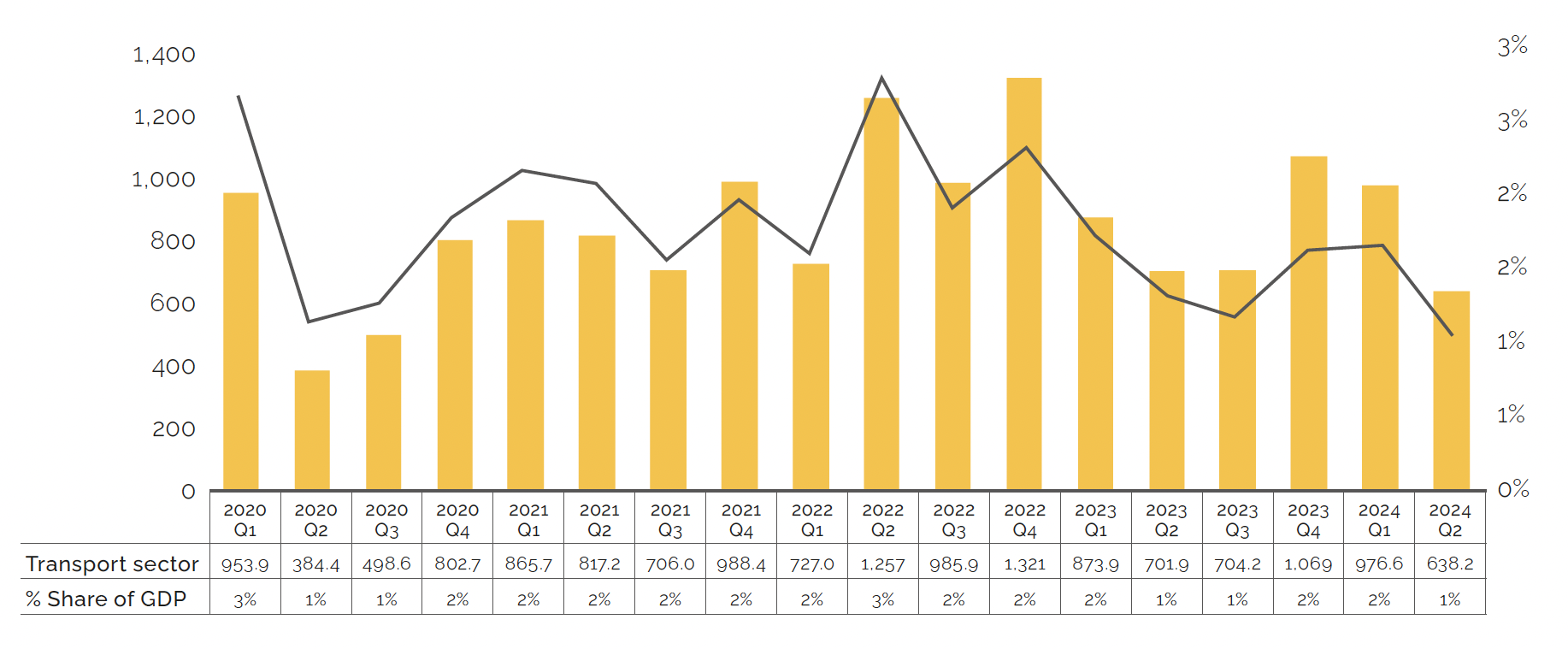
Recent data from the National Bureau of Statistics indicate modest growth in the sector's GDP contribution, particularly in road and air transport sub-sectors. However, this growth comes with significant energy and environmental implications. The heavy reliance on fossil fuels, especially in road transport, has led to increased energy consumption and heightened environmental pollution.
Indeed, from 2000 to 2016, Nigerian vehicles emitted approximately 1.49 trillion tons of CO₂ equivalent, marking the transport sector as a major contributor to greenhouse gas emissions5. Projections under a business-as-usual scenario suggest that emissions could rise by up to 50% by 2035 and nearly double by 2050, posing serious risks to both environmental sustainability and the resilience of existing infrastructure6.
Energy consumption in the Nigerian transport sector
In Nigeria, both freight and passenger transport are essential for addressing spatial inequalities by linking remote regions to economic hubs and vital services. However, this critical role comes with significant energy demands—especially in a rapidly growing economy. The sector’s heavy dependence on fossil fuels, particularly in road transport, drives up national energy consumption and contributes substantially to environmental degradation.
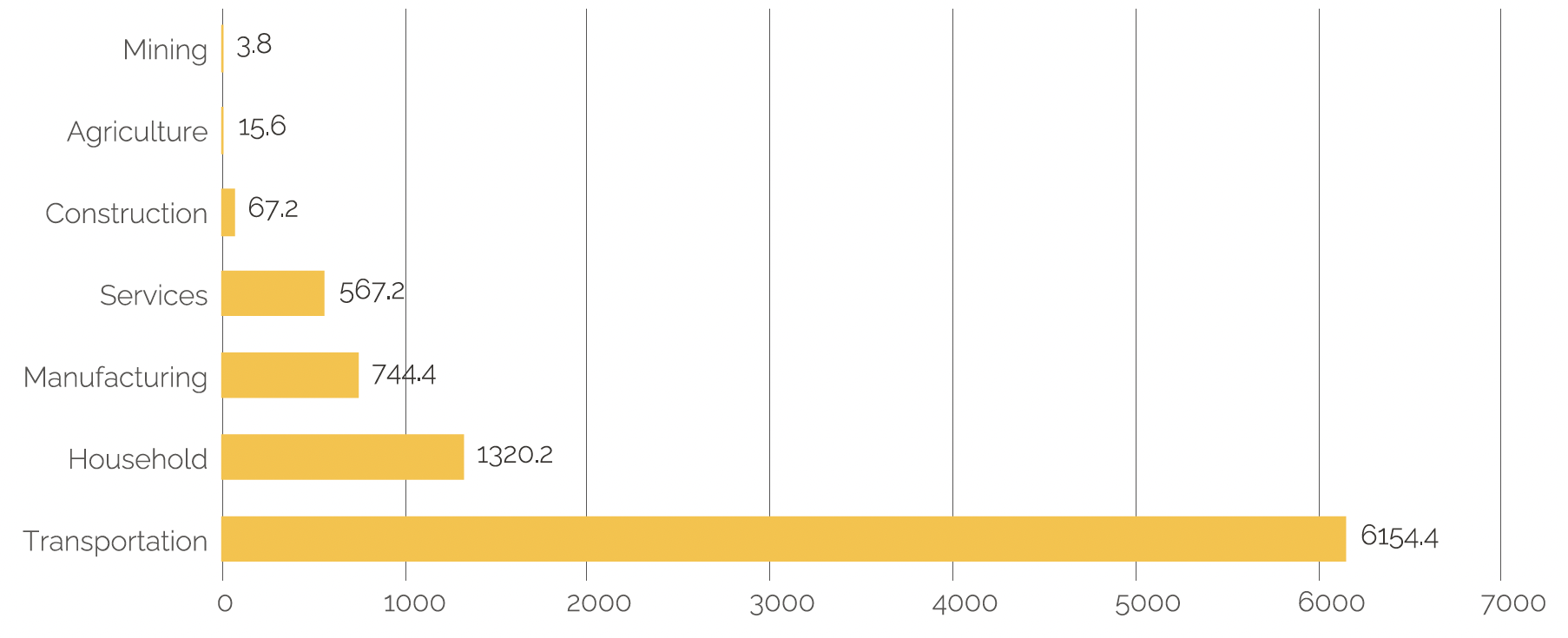
The dominance of road transport, which accounts for over 90% of internal mobility7, has led to a sharp increase in the use of petroleum-based fuels. The combustion of these fuels is a key source of GHG emissions, contributing to environmental warming and altering climatic patterns. According to the 2020 Annual Statistical Bulletin from the Nigerian National Petroleum Commission (NNPC), there has been a steady increase in daily consumption of petroleum products, with Premium Motor Spirit (PMS) being the most consumed. This trend aligns with the expansion of Nigeria’s road transport sub-sector, which accounts for about 69% of the country’s total carbon emissions. Projections by the Energy Commission of Nigeria (ECN) further indicate that the transport sector is the largest fossil fuel consumer, accounting for approximately 70% of total consumption across all economic sectors8.
Figure 2: 10-Year average daily petroleum products distribution (millions litres)
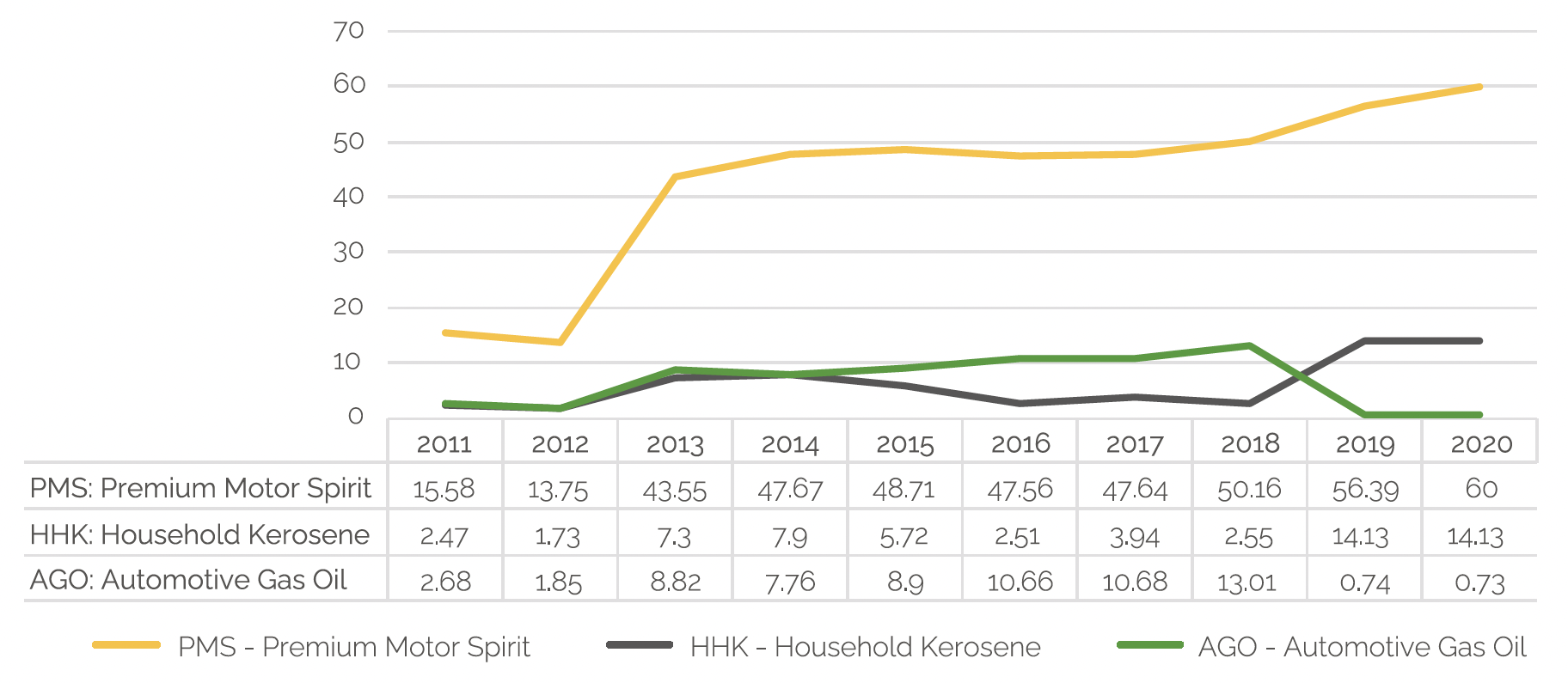
Figure 3: Nigerian balance of final fossil fuel (1,000 TOE) consumption by sector
From Figure 4, it is evident that approximately 77% of fossil fuels consumed in Nigeria's transportation sector are allocated to passenger transport, while 18% are used for freight transport. This high level of consumption results in significant energy expenditure and contributes substantially to greenhouse gas (GHG) emissions. Notably, the railway and water transport sectors account for only 0.0088% of total fossil fuel usage, highlighting the minimal emphasis placed on these more energy-efficient modes compared to the dominant road transport. Within passenger transportation, cars are the largest consumers of fossil fuels, with a notable proportion being privately owned vehicles alongside those used for commercial purposes. This trend underscores the environmental harm caused by private cars, as they are a leading source of GHG emissions in the sector.
Figure 4: Distribution of Fossil Fuel Consumption Across Transport Modes in Nigeria
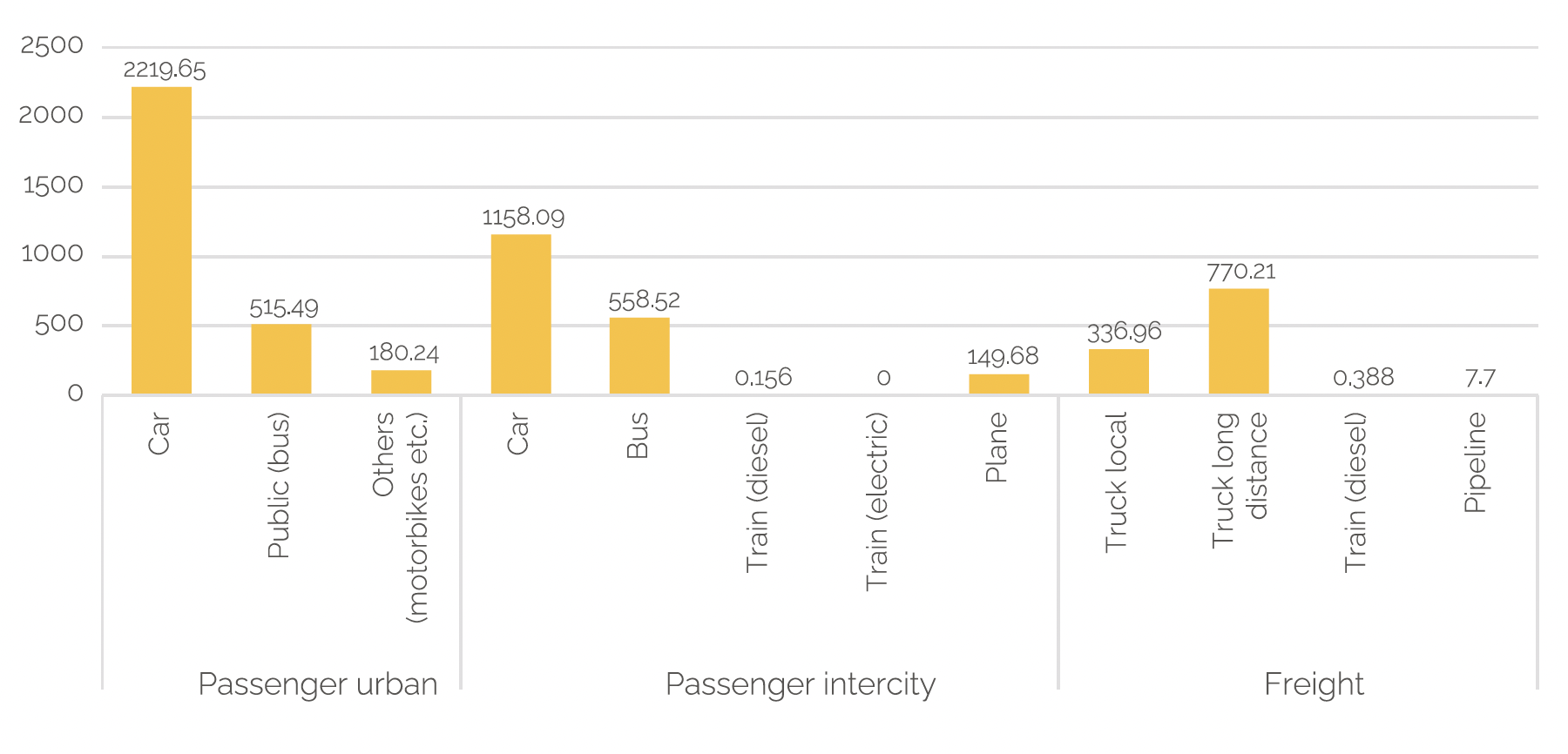
Sub-sector analysis
Road transport
The dominant mode of transportation in Nigeria, accounting for an 89% share between 2020Q1 and 2024Q2, is road transport. Road transport is responsible for the highest share of greenhouse gas emissions due to its reliance on internal combustion engine (ICE) vehicles. Nigeria has an extensive road network totalling approximately 193,200 km, comprising 34,123 km of federal roads, 30,500 km of state roads, and 129,577 km of local government roads. This network facilitates about 90% of the internal movement of goods and people in the country (Federal Government of Nigeria, 2010)9. The planning, financing, and maintenance of these roads are distributed among various tiers of government, as outlined in the Nigerian Constitution.
Historically, the condition of Nigeria's roads has deteriorated significantly. In 1985, around 23% of national roads were reported to be in poor condition, a figure that rose to 30% in 1991 and reached 50% by 2001. This decline underscores the urgent need for improvements, as the current reliance on the road system is critical for supporting the country’s socio-economic development. Poorly maintained roads and bridges hinder efficient transportation, which is vital for economic activities.
Presently, the road transport sector in Nigeria faces several challenges:
- Fragmented Operations: The sector is characterized by numerous small-scale operators of goods and passenger vehicles, many of whom lack professional and business capacity, leading to inefficient services.
- Lack of Coordination: Uncoordinated activities and services contribute to inefficiencies within the sector.
- Regulatory Non-compliance: There is widespread non-compliance with traffic regulations, coupled with poor enforcement mechanisms.
To address these issues, the Nigerian government, as outlined in the 2010 National Transport Policy, aims to introduce user charges on federal roads. This initiative is intended to augment budgetary allocations for road maintenance and rehabilitation. The Ministry of Works is tasked with the construction of new roads and major upgrades, while the Federal Roads Maintenance Agency, established in 2002, is responsible for the routine maintenance of federal roads. The government also seeks to attract private sector investment in road construction and maintenance through Public-Private Partnerships (PPPs). This approach aims to transfer performance risk to the private sector, ensuring greater accountability and efficiency in service delivery.
The road transport system's heavy reliance on fossil fuels poses significant challenges. The sector is the largest consumer of fossil fuels, contributing substantially to GHG emissions. Therefore, improving road infrastructure and transitioning to cleaner energy sources, such as Liquified Petroleum Gas (LPG), CNG and EVs, are critical steps in reducing the carbon footprint of this sector.
The government's initiatives, such as the Presidential Compressed Natural Gas Initiative (P-CNGI) and the ETP, aim to facilitate the adoption of cleaner fuels and promote EVs. These efforts align with Nigeria's climate goals and the commitment to reduce emissions outlined in the NDC.
Box 1: Comparative insights on energy sources for vehicles in Nigeria
In Nigeria's quest to decarbonize its transportation sector, various energy sources for vehicles present distinct benefits and challenges. LPG stands out as a cost-effective alternative, often costing less than one-third of gasoline, making it appealing for budget-conscious consumers and fleet operators. Additionally, LPG vehicles can reduce CO2 emissions by up to 21% and particulate matter emissions by 95% compared to gasoline vehicles. Notably, gasoline cars can be easily converted to run on LPG, facilitating a smoother transition for consumers. However, the adoption of LPG requires the establishment of refuelling infrastructure and conversion facilities, which are still developing in Nigeria, along with addressing safety concerns related to storage and handling.
CNG also presents significant environmental advantages, emitting lower levels of harmful pollutants like CO2 and NOx when burned. It can reduce fuel costs by approximately 58%, making it a viable option for public transportation and commercial fleets. Nonetheless, the lack of existing gas infrastructure poses challenges for widespread adoption, particularly in regions facing gas shortages.
Table 2: Competitiveness of LPG against CNG
| LPG | CNG | |
| End-user price of fuel | Driven by the international LPG price (which follows other oil prices) but is generally lower than those gasoline and diesel | Driven by bulk cost of delivered natural gas to major demand centres. |
| Cost of refuelling infrastructure | Comparable to conventional fuels | Generally higher than for conventional fuels and LPG as higher compression is needed; home refuelling costs are typically more than $10,000 |
| Cost of vehicle conversion (LDV) | Ranges from around $400 to $4000, depending on the type of car, type of conversion and local market conditions | Generally, much more expensive, partly because a bigger tank is needed (in the United States, the cost ranges from $12,000 to $18,000 due to licensing requirements) |
| Ease of refuelling | Refuelling is rather quick, and the fuel is generally widely available as it is easy to transport by road | Refuelling takes longer; the fuel is not always available in all areas as it must be piped. Refuelling is also noisier with CNG than LPG |
Source: Menecon Consulting analysis
EVs offer the promise of zero tailpipe emissions when powered by renewable energy sources. However, their high initial costs remain a barrier for many consumers in Nigeria. Moreover, while EVs are seen as a long-term solution for sustainable transportation, concerns about the environmental impact of battery production and disposal must be addressed. The extraction of raw materials for batteries can lead to significant ecological damage, and improper disposal poses risks to the environment.
Gasoline remains the most accessible fuel option due to its established distribution network across Nigeria. However, gasoline vehicles contribute significantly to greenhouse gas emissions and urban air pollution, undermining efforts to decarbonize the transport sector. Additionally, fluctuations in global oil prices can lead to instability in fuel costs for consumers.
In summary, each energy source offers unique advantages and challenges in Nigeria's transportation landscape. LPG and CNG provide immediate cost savings and lower emissions compared to gasoline, while EVs represent a long-term vision for sustainability but require careful consideration of their environmental impacts. Policymakers must navigate these complexities to develop strategies that promote cleaner transportation solutions tailored to Nigeria's economic and infrastructural realities. By leveraging the strengths of each fuel type, Nigeria can work towards a more sustainable and resilient transportation system.
While Nigeria's road transport sector is vital for economic development, it faces significant challenges that need to be addressed to achieve decarbonization. By enhancing infrastructure, promoting cleaner energy alternatives, and implementing effective policies, Nigeria can work towards a more sustainable and efficient transport system that aligns with its climate objectives.
Rail transport
Rail transport holds significant potential as an efficient and cost-effective means of long-distance transportation, especially for high-density traffic flows. When properly integrated with other transport modes, railways can provide a sustainable alternative for moving large numbers of inter-city passengers and high volumes of containerized cargo, such as oil, coal, and agricultural products. Railways are recognized for being more energy-efficient and environmentally friendly compared to road transport, which predominantly relies on internal combustion engine vehicles.
Unfortunately, due to years of neglect, the Nigerian railway system has deteriorated significantly, resulting in declining traffic, reduced capacity, and loss of revenue. This decline has rendered the railway economically unviable, necessitating urgent resuscitation to correct the current imbalance in the transport sector and support Nigeria's industrialization goals.
The government is actively rehabilitating the existing rail network and is committed to developing rail links to ports and Inland Container Depots. Established on October 3, 1912, through the merger of the Lagos Government Railways and the Baro-Kano Railway, the Nigerian Railway Corporation (NRC) became an autonomous public corporation in 1955. The Federal Government fully owns the NRC, and the proposed method of privatization involves concessioning.
The Railway Act of 1955, amended in 1990, currently vests regulation of the industry in the NRC, creating potential conflicts of interest as the regulator is also the operator. Proposed reforms include drafting a new act and establishing an independent regulator to separate the roles of government, the regulator, and the private sector. This independent regulator would oversee economic safety in the rail sector and promote a modern regulatory regime. The reform and privatization program for the railway sector comprises several steps:
- Formulating and implementing a new transport policy for Nigeria.
- Reviewing the existing Railway Act and drafting a new one.
- Establishing an independent transport sector regulator.
- Introducing private sector participation through concessions for freight and passenger operations.
The 2010 draft National Transport Policy outlines the government's comprehensive analysis of transferring the management and operations of the existing railway system to the private sector. It identifies vertically integrated concessions as the initial phase of PPPs in the railway sector. Additionally, there are plans to review and update the draft 25-Year Strategic Vision for the Nigerian Railway System to develop a thorough plan for rehabilitation and expansion of the railway infrastructure.
In the context of decarbonizing Nigeria's transport sector, revitalizing the railway system is crucial. The current heavy reliance on road transport, which is a significant contributor to greenhouse gas emissions, underscores the need for a shift towards more energy-efficient rail transport. Enhancing the railway system can significantly reduce the carbon footprint associated with freight and passenger transportation.
Recently, developments like the Blue Line Rail project in Lagos State further support this transition. The Blue Line has become fully electric, marking a significant step towards modernizing Nigeria's rail infrastructure while promoting sustainable transport solutions. This initiative aligns with efforts to reduce emissions from road transport by providing cleaner alternatives for urban mobility. The electric operation of the Blue Line not only alleviates traffic congestion but also contributes to lowering greenhouse gas emissions associated with traditional diesel-powered trains (Bassey, 2023)10.
Air transport
Airports and air navigational facilities are crucial infrastructure components for Nigeria's air transport sub-sector, which currently accounts for 6% of the total transportation share. From its origins with three landing sites in Lagos, Kano, and Maiduguri during the 1920s, Nigeria has expanded to twenty airports, numerous regulated airstrips, and heliports, supported by 23 active domestic airlines, 554 licensed pilots, 913 licensed engineers, and 1,700 cabin personnel.
The airports can be categorized into three groups: international airports, domestic airports, and local private airstrips. The international and domestic airports are government-owned, with operations managed by the Federal Airports Authority of Nigeria. The National Airspace Management Agency (NAMA) oversees regulation, traffic control, and navigational aids for aircraft. However, many navigational aids and air traffic control facilities are inadequate or outdated.
The government's Civil Aviation Policy of 2001 aims to enhance the development and management of airports, improve traffic control, and ensure compliance with International Civil Aviation Organization regulations. Following the deregulation of the sector, privately owned airlines now provide air transport services, primarily on domestic routes, with some extending to the West African sub-region and international routes.
NAMA, established in 1999, is Nigeria's sole Air Navigation Service Provider, ensuring the safety of air travel and preventing unauthorized aircraft intrusions. The 2010 National Transport Policy mandates improvements in aviation safety by strengthening NAMA's capacity and investing in modern airspace management technologies, alongside promoting education and training for aviation staff.
Despite the potential for air transport to facilitate economic growth, it poses significant challenges in terms of carbon emissions. The aviation sector relies heavily on fossil fuels, contributing to greenhouse gas emissions and environmental degradation. As air travel increases, so does the environmental impact, necessitating a transition to more sustainable practices.
To decarbonize the air transport sector, Nigeria must focus on improving the efficiency of existing infrastructure, investing in cleaner technologies, and promoting the use of sustainable aviation fuels. Additionally, integrating air transport with other modes of transport can enhance overall efficiency and reduce emissions.
Water transport
At independence, Nigeria's maritime infrastructure was primarily centered around two major ports in Lagos and Port Harcourt, along with smaller ports in Warri and Calabar. However, by the late 1970s, the oil boom led to a significant increase in import traffic, overloading the existing port facilities and resulting in delays and high demurrage costs. In response, substantial investments were made, increasing port capacity by approximately 300% between 1975 and 1980. Today, the Nigerian Ports Authority (NPA) governs and operates the Ports in Nigeria. The major Ports include Lagos Port Complex and Tin Can Island Port Complex both in Lagos State. The Calabar Port Complex in Cross River State. The Delta Ports in Warri, Delta State and the Rivers Port Complex and Onne Port Complex both in Rivers State.
The NPA, established by Decree No. 38 of 1999, controls all public and private activities within the port sector. While the government retains full control over the NPA, including appointing its leadership and overseeing financial decisions, this centralized system has led to high tariffs, excessive manpower, and inefficiencies. The ports face challenges from mismanagement and increasing competition from neighbouring countries, resulting in sub-optimal performance and mounting pressure from the private sector to improve efficiency.
In terms of decarbonization, water transportation is the most energy-efficient mode among all forms of transport, producing the least pollution. It has the potential to handle many of the tasks currently managed by land and air transport, if Nigeria's water bodies are properly dredged and maintained in good condition. By enhancing the accessibility and usability of waterways, Nigeria could significantly reduce its reliance on less efficient and more polluting transport options, thereby contributing to overall decarbonization efforts in the transport sector.
Recently, Caverton Marine partnered with Explomar to electrify ferries operating in Lagos State. This initiative aims to promote cleaner water transport by transitioning from traditional fuel sources to electric-powered vessels. The electrification of ferries aligns with broader efforts to decarbonize the transportation sector while enhancing the efficiency of water transport (Punch, 2024)11.
In summary, Nigeria's transportation sector faces significant challenges related to infrastructure, policy, and emissions. However, there are opportunities for decarbonization through revitalizing rail and water transport, promoting alternative fuels, and adopting EVs. Addressing these challenges will be crucial for aligning the sector with national climate goals and promoting sustainable economic growth. The ongoing electrification of ferries in Lagos exemplifies a proactive step toward enhancing water transport's role in achieving these objectives.
Overview and analysis of Nigeria's climate goals and transportation sector policies
Overview of Nigeria's climate policies and goals
Nationally Determind Contribution (NDC): The updated NDC outlines has set a target of 100,000 extra buses by 2030. Its long-term vision for its transport sector is that by 2050, there will be an uptake of zero-emission vehicles and a recourse to mass transit (Federal Ministry of Environment, 2022)12. This initiative demonstrates a clear commitment to integrating climate action into transportation planning. Specific NDC targets for transport sector include:
- 100,000 extra buses by 2030
- Bus Rapid Transport (BRT) will account for 22.1% of passenger-km by 2035
- 25% of trucks and buses using CNG by 2030
- All vehicles meet EURO III emission limit by 2030 and EURO IV by 2030
National Climate Change Policy (NCCP, 2021 – 2030): The revised NCCP emphasizes the integration of science, technology, and innovation into sustainable transport systems to achieve climate-compatible and climate-resilient outcomes. The vision for the transport sector includes creating a fast, safe, efficient, affordable, gender-responsive, socially inclusive, integrated, and inter-modal system for transporting goods and people. A key focus is on inducing a modal shift from road to rail and inland waterways for freight transport, while also developing cost-effective mass transit options for passenger travel to reduce greenhouse gas emissions. Key policy measures for NCCP include:
- Avoid inefficient transport or unnecessary travel.
- Improve the quality and coverage of public transport.
- Promote cycling and walking to decrease CO2 emissions.
- Facilitate a gender-friendly and socially inclusive modal shift from road travel.
- Enhance the environmental performance of the transport sector.
- Implement the polluter pays principle.
- Incorporate BRT and light rail systems in urban areas.
- Encourage PPP in sector development.
Energy Transition Plan 2022: The ETP projects a significant reduction of about 97 % in transport-related emissions by 2060 by adopting EVs in the passenger car segment. Nigeria ETP has designated gas as a transition fuel and targets 10% biofuel blends by 2030. The plan includes mode-shift approaches to encourage the transition from passenger cars to public transport and two- and three-wheelers by 2050. This long-term vision supports Nigeria's climate goals by promoting a shift towards cleaner energy sources and reducing the carbon footprint of the transportation sector.
National Renewable Energy and Energy Efficiency Policy (2015): This policy promotes the adoption of renewable energy sources and energy efficiency measures across various sectors, including transportation. It aims to increase the share of renewable energy in Nigeria's energy mix, enhance energy efficiency, and reduce reliance on fossil fuels. By encouraging the use of cleaner energy technologies, the policy supports the transition towards sustainable transport solutions, thereby contributing to reduced greenhouse gas emissions.
The National Civil Aviation Policy (NCAP): Established in 2001, this policy regulates the aviation sector in Nigeria, focusing on improving safety, efficiency, and environmental performance. It encourages the development of a competitive and sustainable aviation industry while addressing issues such as emissions from air transport. The NCAP aims to promote best practices in environmental management within the aviation sector, aligning with broader climate goals.
National Gas Policy: Although primarily focused on the gas sector, this policy includes provisions that impact transportation, particularly regarding the use of natural gas as a cleaner alternative fuel for vehicles. By promoting the adoption of CNG for public transport and freight services, the National Gas Policy aims to reduce emissions from traditional fossil fuel use in transportation while also enhancing energy security.
National Renewable Energy Action Plan (NREAP): The 2016 NREAP is a strategic framework designed to guide Nigeria in increasing the share of renewable energy in its energy mix. The plan outlines specific targets and actions to enhance the development and utilization of renewable energy sources across various sectors, including transportation. In particular, the key targets related to the transport sector include:
- Increase renewable energy utilization: The NREAP aims to achieve a target of 30% of the total energy mix from renewable sources by 2030. This includes promoting the use of biofuels and other renewable energy technologies in the transportation sector.
- Promotion of biofuels: The action plan encourages the development and adoption of biofuels as an alternative fuel for vehicles, which can significantly reduce greenhouse gas emissions from the transport sector.
- Integration with other policies: The NREAP is designed to complement other national policies, such as the NCCP and the Energy Transition Plan, ensuring a cohesive approach to achieving Nigeria's climate and energy goals.
- Investment in infrastructure: The plan emphasizes the need for investments in infrastructure that supports renewable energy deployment, including charging stations for EVs and facilities for biofuel production.
Table 3: Highlights of Nigeria's climate policies and goals
| # | POLICY NAME | CLIMATE CONSIDERATION | EXPECTED IMPACT AND OUTCOME |
| 1 | NDC | Sets targets for zero-emission vehicles and mass transit; includes specific transport sector goals. | Aims for 100,000 extra buses by 2030, increased BRT usage, and significant reductions in GHG emissions through cleaner public transport options. |
| 2 | NCCP (2021-2030) | Integrates science and technology into sustainable transport systems; promotes modal shifts. | Enhances the quality of public transport, encourages cycling and walking, and aims to improve environmental performance in the transport sector, leading to reduced emissions. |
| 3 | ETP (2022) | Focuses on adopting EVs and reducing transport-related emissions; designates gas as a transition fuel. | Projects a 97% reduction in transport-related emissions by 2060, promotes biofuels, and encourages a shift from private cars to public transport, contributing to cleaner energy use. |
| 4 | National Renewable Energy and Energy Efficiency Policy (2015) | Promotes renewable energy sources and energy efficiency measures across sectors, including transportation. | Aims to increase renewable energy share in the energy mix, enhance energy efficiency, and reduce reliance on fossil fuels, contributing to lower GHG emissions in the transport sector. |
| 5 | NCAP | Regulates aviation sector emissions; promotes safety and environmental management practices. | Encourages sustainable aviation practices that align with climate goals, improving the environmental performance of air transport in Nigeria. |
| 6 | National Gas Policy | Promotes natural gas as a cleaner alternative fuel for vehicles; impacts transportation emissions. | Aims to reduce emissions from traditional fossil fuels by promoting CNG for public transport and freight services, enhancing energy security. |
| 7 | NREAP | Guides Nigeria in increasing renewable energy utilization across various sectors, including transportation. | Targets 30% of total energy mix from renewable sources by 2030; promotes biofuels as an alternative fuel for vehicles, supporting reduced GHG emissions in the transport sector. |
Emerging government initiatives
The government has launched several initiatives aimed at promoting cleaner and more sustainable transportation options. These emerging initiatives represent a crucial step towards achieving Nigeria's climate goals and improving the quality of life for its citizens. This brief examines key initiatives: the Lagos E-Mobility Project, the Abuja Light Rail Project, the National Mass Transit Programme, and the Nigerian Railway Modernization Project. Each initiative employs a different approach to reducing emissions, from promoting EVs to expanding public transportation networks. By analyzing these initiatives, we can identify potential challenges, opportunities, and best practices for effectively decarbonizing Nigeria's transportation sector.
The Presidential Compressed Natural Gas Initiative
The P-CNGI is a significant national effort aimed at promoting the adoption of CNG as a cleaner and more affordable alternative to traditional fuels in Nigeria's transportation sector. Driven by the Nigerian National Petroleum Company Limited, the initiative seeks to address multiple challenges, including the rising cost of fuel, environmental pollution, and the need for job creation.
The P-CNGI has set ambitious goals. It aims to establish a nationwide network of CNG filling stations, ensuring convenient access for vehicle owners. The initiative also plans to convert a substantial number of vehicles to CNG, with a target of one million vehicles by 2027. This large-scale conversion effort is expected to create significant employment opportunities, with plans to train 10,000 auto technicians to support the program.
The P-CNGI's focus on CNG aligns with global trends towards cleaner transportation fuels. CNG offers several advantages over petrol and diesel, including lower greenhouse gas emissions, reduced air pollution, and lower operating costs for vehicle owners. By promoting CNG adoption, the initiative can contribute to Nigeria's efforts to decarbonize its transportation sector and improve air quality, particularly in urban areas.
Furthermore, the P-CNGI's emphasis on job creation and skills development can have positive socio-economic impacts. Training auto technicians and establishing CNG conversion centers can provide valuable employment opportunities and contribute to the growth of the automotive industry in Nigeria.
However, the successful implementation of the P-CNGI will require careful consideration of various factors. This includes ensuring the availability and affordability of CNG, establishing a robust and reliable CNG supply chain, and addressing potential safety concerns associated with CNG usage. Effective collaboration between government agencies, private sector partners, and vehicle owners will be crucial for achieving the initiative's goals and maximizing its benefits for Nigeria's transportation sector and the environment.
Nigeria’s commitment to achieve zero vehicle emissions by 2040
Nigeria has demonstrated a commitment to decarbonizing its transportation sector by pledging to achieve zero vehicle emissions by 2040 (Accelerating to Zero Coalition, 2024). This ambitious goal, as reported by Accelerating to Zero, aligns with the global push towards EVs and reflects Nigeria's dedication to combating climate change and improving air quality.
The commitment involves phasing out ICE in new cars and vans by 2040, signaling a significant shift towards electric mobility. To achieve this, Nigeria plans to incentivize EV adoption through various measures, including tax breaks and subsidies. Furthermore, the country aims to stimulate domestic EV production and create a robust charging infrastructure to support the growing EV fleet.
This commitment has far-reaching implications for Nigeria's automotive industry, energy sector, and overall environmental sustainability. By transitioning to zero-emission vehicles, Nigeria can significantly reduce its greenhouse gas emissions, improve urban air quality, and enhance its energy security. While challenges remain in terms of infrastructure development, affordability, and public awareness, Nigeria's commitment to a zero-emission vehicle future represents a crucial step towards a cleaner and more sustainable transportation sector.
Lagos State e-Mobility project
The Lagos E-Mobility Project represents a significant step towards decarbonizing transportation in Nigeria's largest city. The initiative, a joint venture between Ibile Holdings Limited and CIG Motors Company Limited, aims to introduce 1,000 EVs to the LAGRIDE taxi fleet. This ambitious target demonstrates a commitment to reducing reliance on fossil fuels and minimizing the city's carbon footprint.
However, to fully assess the project's potential impact and identify potential challenges, a more in-depth analysis is needed. For instance, understanding the specific types of EVs being deployed (e.g., battery electric, hybrid) and their projected emissions reductions is crucial. Additionally, investigating the source of electricity for charging the EVs is key to ensuring genuine emissions reduction. If the electricity is generated from fossil fuels, the environmental benefits would be significantly diminished.
Furthermore, evaluating the charging infrastructure plan is essential. This includes the number and location of charging stations, their accessibility to drivers, and the charging capacity. A robust and well-distributed charging network is vital for the smooth operation of the EV fleet.
Examining the financial incentives offered to drivers to encourage EV adoption is also important. This could include subsidies, tax breaks, or reduced operating costs. Such incentives can play a crucial role in accelerating the transition to e-mobility. Finally, assessing the project's integration with broader urban planning goals is necessary. This includes considering how the EV fleet will interact with existing public transportation networks and how it will contribute to reducing traffic congestion and improving air quality.
The Abuja Light Rail system
The Abuja Light Rail system is an integral part of the Abuja Rail Mass Transit System and the Federal Capital Territory (FCT) Transportation Master Plan. When fully operational, holds considerable potential for decarbonizing transportation within the FCT. As a modern, electric-powered rail network, it offers a cleaner alternative to the city's heavily congested road transport system, which is dominated by private vehicles. By encouraging a shift towards mass transit, the light rail system can significantly reduce GHG emissions and contribute to cleaner air quality in Abuja.
However, realizing this potential requires a critical examination of the project's status and future plans. According to report (Centenary City Nigeria, 2024)13, the initial phases of the project, covering 45.24 km with 12 stations, are operational, connecting the Abuja city center to the Nnamdi Azikiwe International Airport. However, future phases are planned to expand the network to cover 290km, serving more areas within the FCT. The timely completion of these expansion phases is crucial for maximizing the system's impact on reducing traffic congestion and emissions.
Furthermore, ensuring affordability and accessibility for all segments of the population is essential. This includes providing subsidized fares for low-income communities and integrating the light rail system with other modes of public transportation, such as buses, to create a seamless and convenient commuting experience.
Public awareness campaigns are also necessary to promote the benefits of using the light rail system and encourage a shift away from private vehicle use. Highlighting the environmental benefits, as well as the convenience and cost-effectiveness of rail travel, can help drive ridership and maximize the system's positive impact on Abuja's transportation landscape.
It is worth noting that the rehabilitation of the Agbor Railway Village and the construction of the railway ancillary facilities yard demonstrate the government's commitment to revitalizing rail infrastructure in Nigeria. This project, which facilitated the transportation of pipelines for the AKK Gas Pipeline, showcases the potential of rail transport for freight movement and its contribution to national development. While not directly related to the Abuja Light Rail system, it highlights the broader context of railway modernization efforts in Nigeria and their potential for decarbonizing various sectors of the economy.
Finally, integrating the light rail system with broader urban planning initiatives is crucial. This includes promoting transit-oriented development, where residential and commercial areas are clustered around rail stations, reducing the need for car travel and creating walkable, sustainable communities.
The National Mass Transit Programme
The National Mass Transit Programme, with its focus on converting diesel and petrol-powered buses to CNG, presents a significant opportunity for decarbonizing Nigeria's transportation sector. According to report (Nnodim, 2024)14, the program's initial phase targets Lagos, Kwara, the Federal Capital Territory, and Rivers states, offering a 50% discount on conversion equipment and installation support to qualified union members. This phase will be executed in partnership with major transport unions, including the National Union of Road Transport Workers, the Road Transport Employers’ Association of Nigeria, and the Nigerian Association of Road Transport Owners.
However, to fully realize the program's potential, several key aspects require further analysis. Firstly, clarifying the scale and timeline of the conversion program is crucial. Understanding how many buses are targeted for conversion in each state and the projected completion timeframe will help assess the program's overall impact on emissions reduction. Secondly, evaluating the availability and accessibility of CNG infrastructure is essential. This includes the number and distribution of CNG filling stations, their capacity to meet the increased demand, and the pricing of CNG compared to traditional fuels. A robust CNG infrastructure is vital for the program's success and the widespread adoption of CNG-powered buses. Thirdly, examining the program's long-term sustainability is important. This includes assessing the financial incentives offered for conversion, the availability of ongoing maintenance and support for CNG vehicles, and the program's potential for replication in other states.
Finally, analyzing the coordination and collaboration among stakeholders is crucial. The program involves various actors, including the Federal Government, state governments, transport unions, and private sector partners. Effective communication and coordination among these stakeholders are essential for the program's smooth implementation and success.
For instance, are there clear channels of communication and decision-making between the Federal Ministry of Transportation, state-level agencies, and transport unions? How are potential conflicts or disagreements regarding implementation addressed? A clear understanding of the institutional arrangements and coordination mechanisms will provide valuable insights into the program's effectiveness and potential challenges.
Lagos Rail Mass Transit (LRMT)
Lagos is taking significant strides towards decarbonizing its transportation sector with ambitious rail mass transit projects, notably the LRMT network and the Blue Line Rail. These initiatives aim to alleviate the city's notorious traffic congestion while promoting a cleaner, more sustainable mode of transportation. The LRMT is a comprehensive network of urban rail lines planned to span six major corridors, with the Blue Line as its flagship project. This 27km line, partially operational as of 2023, connects Marina to Mile 2, and aims to eventually reach Okokomaiko. According to report, the Blue Line transported over one million passengers in its first 219 days, demonstrating a strong public embrace of this new transit option.
However, several factors are crucial to the continued success and expansion of Lagos' rail initiatives. Firstly, ensuring affordability and accessibility for all income levels is vital. This includes fare structures that cater to low-income communities and seamless integration with other modes of public transport, like buses and ferries, as envisioned in the Strategic Transport Master Plan.
Secondly, continued investment in expanding the network is essential. Completing the Blue Line to Okokomaiko and developing the other planned lines (Purple, Green, Yellow, Red, and Orange) will significantly enhance the system's reach and impact on decongesting the city.
Thirdly, stakeholder coordination is key. Effective collaboration between the Lagos Metropolitan Area Transport Authority (LAMATA), the Lagos State Government, private sector partners, and community representatives is crucial for smooth implementation and addressing potential challenges. This includes clear communication channels, transparent decision-making processes, and mechanisms for addressing concerns and resolving conflicts.
The Lagos Blue Line's early success demonstrates the potential of rail mass transit to transform the city's transportation landscape. By prioritizing affordability, expanding the network, and fostering strong stakeholder coordination, Lagos can leverage these initiatives to achieve significant progress towards its decarbonization goals and create a more efficient and sustainable urban environment.
At a high level, the emerging efforts are distilled in the table below to examine the climate considerations of the initiatives and the expected outcomes.
Table 4: Emerging policies and projects
| # | POLICY NAME | DESCRIPTION | CLIMATE CONSIDERATION | EXPECTED IMPACT AND OUTCOME |
| 1 | Lagos E-Mobility Project and Smart Taxi Initiative | Promotes electric mobility in Lagos State by developing EV infrastructure and establishing charging stations. | Encourages the use of clean energy for public transport. | Aims to reduce emissions in urban transport through the adoption of electric buses and taxis. |
| 2 | Abuja Light Rail Project | Enhances public transport in the Federal Capital Territory with a light rail system. | Provides a cleaner alternative to road transport. | Reduces traffic congestion and greenhouse gas emissions by promoting mass transit over private vehicle use. |
| 3 | National Mass Transit Programme | Promotes mass transit systems across Nigeria to decrease vehicle numbers on roads. | Supports energy-efficient public transport options. | Aims to lower greenhouse gas emissions by encouraging the use of buses and other public transport forms. |
| 4 | Lagos Blue Rail Line | Blue Line Rail in Lagos has now transitioned to a fully electric operation. | By utilizing electric trains, the Blue Line aims to contribute significantly to reducing reliance on fossil fuels in urban mobility. | Aim to alleviate traffic congestion and reduce greenhouse gas emissions by providing a cleaner alternative to road transport. |
| 5 | P-CNGI | Launched in 2023, this initiative promotes the adoption of CNG in the transport sector. | Aligns with climate commitments by promoting cleaner fuel alternatives. | Seeks to reduce carbon emissions while enhancing energy security through cleaner transportation options. |
| 6 | Zero Vehicle Emission by 2040 | Commitment to phase out ICE by 2040 as part of the Zero Emission Vehicle Declaration. | Strong alignment with global climate goals for emission reduction. | Aims for a significant reduction in greenhouse gas emissions from the transport sector by transitioning to zero-emission vehicles. |
While Nigeria demonstrates a commitment to decarbonizing its transportation sector through various initiatives, a significant challenge lies in the fragmented and uncoordinated nature of these efforts. Many initiatives remain inadequately institutionalized, lacking the necessary frameworks and collaborative mechanisms to ensure effective implementation and maximize impact. This disjointed approach hinders progress, limiting the potential for widespread adoption of clean energy solutions and the realization of national climate goals.
Therefore, establishing a cohesive country platform is imperative. Such a platform would serve to integrate and streamline these disparate initiatives, fostering collaboration among all stakeholders, including government agencies, private sector actors, and civil society. By facilitating coordinated planning, implementation, and monitoring, this platform can ensure a more unified and impactful approach to decarbonizing Nigeria's transportation sector. Only through such collaborative and integrated efforts can Nigeria effectively address the challenges of climate change and transition towards a cleaner, more sustainable transportation future.
Transportation sector policies
Nigeria's transportation policies have undergone significant evolution, yet many remain outdated and lack the necessary integration with climate goals.
The National Transport Policy
The National Transport Policy draft was initiated in 1965, with its adoption occurring in 1993 under the theme "moving out of the crisis." This first National Transport Policy primarily focused on modal development. However, recognizing that the aspirations outlined in this document were insufficient to adapt to the dynamic and evolving transport sector, subsequent reforms in 2003, 2008, and 2010 shifted attention towards integrated intermodal development, deregulation, privatization, and public-private partnerships (Oroleye, 2019)15
The introduction to the 1993 National Transport Policy document highlighted that "the Nigerian transport system functions in a crisis situation," citing a significant imbalance between the needs of Nigerian society and the capacity of the transport sector to meet those demands. This imbalance has persisted, with the demand for transport services consistently outstripping supply, indicating that the Nigerian transport system remains in a challenging state requiring urgent remedies.
High-level government policies, such as the NV 20:2020 economic transformation blueprint, the 7-point Agenda, NEEDS, and Public-Private Partnerships (PPP), emphasize the necessity of a functional and reliable transport system to connect people, services, and opportunities. The 2010 National Transport Policy outlines guidelines for planning, development, coordination, management, supervision, and regulation of the transport sector, aiming to:
- Explain government decisions and actions in the sector by outlining guiding goals and principles.
- Identify existing gaps and shortcomings and propose solutions.
- Illustrate how actions across different modes are interconnected in pursuit of common goals.
- Provide a framework for monitoring and accountability.
- Ensure consistency in the application of policy principles across all modes.
The fundamental goal of the National Transport Policy is to develop an adequate, safe, environmentally sound, efficient, affordable, and integrated transport system within a competitive market economy framework. This includes ensuring that transport infrastructure meets the needs of all Nigerians, promoting safety, minimizing pollution, and enhancing efficiency (Federal Government of Nigeria, 2010)16.
The most recent draft National Transport Policy was released in 2023 and is currently undergoing validation, with hopes for approval in 2024. The current administration divvied up the erstwhile Ministry of Transportation into two: Federal Ministry of Transportation and Federal Ministry of Marine and Blue Economy. Previously, the ministry of Transportation had oversight responsibility over land, rail and water transportation. Under the current administration, the Federal Ministry of Transportation only oversees Land and Rail Transport, while Marine and Blue Economy oversees water transportation. The Federal Ministry of Transportation is currently working on a National Land Transportation Policy to cover its mandate.
National Automotive Industry Development Plan (NAIDP)
The 10-year NAIDP (2023), which was launched in 2013 and officially kicked off in 2014, represents the Nigerian government's commitment to advancing the country's automotive sector. The 2014 plan is built upon five key pillars: Industrial Infrastructure, Skills Development, Standards, Investment Promotion, and Vehicle Purchase Scheme and Market Development. To facilitate the implementation of the NAIDP, several strategies have been proposed, including public-private partnerships, capacity building, and infrastructure development. These strategies aim to enhance collaboration between the government and private sector stakeholders, improve the skills of the workforce, establish necessary standards, attract investments, and promote the purchase of locally manufactured vehicles.
The key objectives of NAIDP include17:
- Local Production: One of the primary objectives of the NAIDP is to increase local vehicle production. The plan aims for at least 30% of vehicles produced in Nigeria to be manufactured locally by 2033. This is expected to stimulate the economy by creating jobs and reducing the outflow of foreign currency spent on importing vehicles.
- Promotion of EVs: The NAIDP includes provisions for the development and adoption of electric vehicle technology. This aligns with Nigeria's broader climate goals, which emphasize the transition to cleaner, more sustainable forms of transportation. The plan encourages investment in EV manufacturing and infrastructure, such as charging stations.
- Standards and Compliance: The plan outlines the need for establishing standards for vehicle manufacturing in Nigeria. This includes compliance with international safety and environmental regulations, which will enhance the quality of vehicles produced in the country.
- Investment and Incentives: The NAIDP aims to attract both local and foreign investments into the automotive sector. It proposes various incentives for manufacturers, including tax breaks and reduced tariffs on imported components necessary for vehicle assembly.
- Research and Development: The plan emphasizes the importance of research and development in advancing automotive technology in Nigeria. It encourages partnerships between academic institutions and the automotive industry to foster innovation and improve manufacturing processes.
Despite these initiatives, challenges remain, including a lack of active policy frameworks and integrated planning that can instil the urgency of decarbonization in the transport sector. The absence of incentives for adopting zero-emission vehicles further complicates the transition. Nevertheless, Nigeria's abundant renewable energy resources present significant potential for decarbonization, provided that comprehensive and effective policies are implemented to support this transition.
Box 2: Selected Examples of Government Policies to Promote Cleaner Energy Sources for Vehicles
Turkey
Tax Incentives: Turkey provides significant tax reductions on LPG, making it more affordable for consumers compared to gasoline and diesel.
Subsidies: The government offers subsidies for the installation of Autogas refuelling stations, encouraging infrastructure development.
Regulatory Support: There are regulations in place to promote the conversion of vehicles to run on Autogas, including simplified processes for vehicle certification.
France
Financial Incentives: France has implemented a bonus-malus system where financial bonuses are provided for purchasing LPG vehicles, while penalties are applied to higher-emission vehicles.
Infrastructure Development: The government supports the expansion of Autogas refuelling infrastructure through grants and funding programs.
Environmental Regulations: Strict emission regulations encourage the adoption of cleaner fuels like LPG.
Germany
Tax Exemptions: Germany offers tax exemptions on Autogas, significantly lowering fuel costs for consumers.
Incentives for Conversion: Financial incentives are available for converting existing vehicles to LPG, promoting a shift from traditional fuels.
Supportive Legislation: The government has established legislation that favours the use of alternative fuels, including Autogas.
Canada
Grant Programs: Various provinces offer grant programs to support the purchase of LPG vehicles and the installation of refuelling stations.
Tax Credits: Tax credits are available for businesses that convert their fleets to run on Autogas, incentivizing commercial adoption.
Government Partnerships: Collaboration between federal and provincial governments helps facilitate the growth of the Autogas market.
Australia
Fuel Tax Credits: Australia provides fuel tax credits for LPG used in vehicles, making it a financially attractive option.
Incentives for Fleet Operators: There are specific incentives aimed at fleet operators to encourage the transition to LPG vehicles.
Infrastructure Investment: The government supports investment in Autogas infrastructure to ensure widespread availability.
Assessment of transport sector policies with Government climate goals
Nigeria's transportation sector policies have evolved significantly, yet they often lack the necessary integration with climate goals outlined in national climate policies and emerging government initiatives. The National Transport Policy, while acknowledging the need for environmental soundness in its draft form, is currently not active and has not yet been approved. Although it indicates an intention to address environmental concerns, it fails to specify actionable strategies that align with Nigeria’s broader climate commitments, such as those articulated in the NDC. This lack of clear, practical climate-smart initiatives limits its effectiveness in contributing to sustainable transportation planning and decarbonization efforts in the country.
The NDC set ambitious targets for the transport sector, including the introduction of 100,000 extra buses by 2030 and a commitment to zero-emission vehicles by 2050. These targets reflect a clear intention to align transportation planning with climate action, emphasizing mass transit and cleaner technologies. However, the effectiveness of these targets is contingent upon the implementation of supportive policies and infrastructure.
The NCCP further reinforces the need for sustainable transport systems by promoting science, technology, and innovation. It aims for a modal shift from road to rail and inland waterways, which aligns with the NDC's focus on reducing greenhouse gas emissions. Nevertheless, the NCCP's success hinges on overcoming institutional barriers and ensuring that stakeholders are actively engaged in its implementation.
Emerging initiatives, such as the Lagos E-Mobility Project, Lagos Blue Line Rail, and the Abuja Light Rail Project, demonstrate proactive steps toward enhancing public transport and reducing emissions. These projects aim to establish electric vehicle infrastructure and promote mass transit as cleaner alternatives to road transport. However, while these initiatives are promising, they often operate in silos without adequate coordination with broader national policies.
The ETP envisions a significant reduction in transport-related emissions through the adoption of EVs and biofuels. This long-term strategy supports Nigeria's climate goals but requires substantial investment in infrastructure and public awareness to facilitate a shift from traditional fossil fuels.
In contrast, historical transportation policies such as the National Transport Policy have struggled to adapt to current climate challenges. Although recent drafts aim to address integrated intermodal development, there remains a gap between policy formulation and practical implementation. The focus on local vehicle production under the NAIDP is commendable; however, it must prioritize electric vehicle technology and sustainable practices to align with climate objectives.
Moreover, while initiatives like the National Gas Policy promote natural gas as a cleaner alternative fuel, they do not fully address the urgent need for comprehensive decarbonization strategies across all transport modes. The reliance on fossil fuels continues to dominate Nigeria's transport sector, contributing significantly to greenhouse gas emissions.
In summary, while Nigeria has established various climate policies and emerging initiatives aimed at decarbonizing its transport sector, there is a critical need for better integration of these efforts. Effective collaboration among government entities, private stakeholders, and civil society is essential to ensure that transportation policies not only meet current demands but also align with Nigeria's long-term climate goals. Addressing these challenges will be vital for transitioning towards a more sustainable and resilient transport system that contributes positively to both economic development and environmental protection.
Achievements and gaps in Nigeria's transportation sector policies
Achievements:
- Integration of climate goals: Nigeria's NDC set ambitious targets for the transport sector, including the introduction of 100,000 extra buses by 2030 and a commitment to zero-emission vehicles by 2050. These targets reflect a clear intention to align transportation planning with climate action.
- Supportive policies: The NCCP promotes sustainable transport systems by advocating for a modal shift from road to rail and inland waterways, which aligns with the NDC's focus on reducing greenhouse gas emissions. This policy emphasizes the integration of science, technology, and innovation in achieving climate-compatible outcomes.
- Emerging initiatives: Initiatives such as the Lagos E-Mobility Project and the Abuja Light Rail Project demonstrate proactive steps toward enhancing public transport and reducing emissions. These projects aim to establish electric vehicle infrastructure and promote mass transit as cleaner alternatives to road transport.
- The ETP: The ETP envisions a significant reduction in transport-related emissions through the adoption of EVs and biofuels, supporting Nigeria's long-term climate goals.
- Recognition of local production: The NAIDP promotes local vehicle production and includes provisions for the development and adoption of electric vehicle technology, aligning with broader climate objectives.
Gaps:
- Lack of active policies: The National Transport Policy is currently in draft form, not active, and has not yet been approved. While it acknowledges the need for environmental soundness, it lacks clear, actionable strategies that align with Nigeria’s climate commitments.
- Implementation challenges: Many policies remain inadequately institutionalized, lacking robust frameworks for implementation. This gap hinders effective coordination among stakeholders and limits the potential impact of climate-driven initiatives.
- Dependence on fossil fuels: The continued reliance on fossil fuels across all transport subsectors indicates a significant barrier to achieving decarbonization goals. There is insufficient diversification of energy sources within the transport sector.
- Insufficient infrastructure investment: There is a notable lack of investment in necessary infrastructure, such as charging stations for EVs and improved rail networks, which limits the effectiveness of emerging initiatives aimed at promoting cleaner transport options.
- Siloed initiatives: Emerging initiatives often operate in silos without adequate coordination with broader national policies, leading to missed opportunities for synergy and comprehensive climate action.
- Historical policy limitations: Historical transportation policies have struggled to adapt to current climate challenges, resulting in a gap between policy formulation and practical implementation.
- Conflicting pronouncement and commitment: There are conflicting commitments and pronouncements from various government agencies concerning the decarbonization of the transport system. For example, the NAIDP targets 30% local production of EVs by 2033, while the ETP sets a more ambitious goal of 100% electric vehicle adoption by 2060. This discrepancy indicates a lack of cohesive strategy among government policies.
In summary, while Nigeria has made significant achievements in establishing climate policies and emerging initiatives aimed at decarbonizing its transport sector, critical gaps remain in policy activation, implementation, infrastructure investment, and stakeholder engagement that must be addressed to realize its long-term climate goals effectively.
Engagement with the Federal Ministry of Transportation
The following insights were identified regarding the prospect of and barriers to Nigeria’s transport system's decarbonization.
- Decarbonization requires top-to-bottom leadership: A few ministry staff highlighted that the current decarbonisation strategies for the transport sector are concentrated at the center. Outside of Lagos and Abuja, more must be done at the subnational levels to incentivise a modal shift to transport systems that reduce the reliance on fossil-fuel-powered vehicles or are focused on mass transit. Climate action in the transport system is devolving slower towards the subnational unit than other government priorities, such as energy access.
- There are clear growth opportunities: While there are fears that decarbonising the transport sector might lead to massive job losses in the downstream petroleum sector a la closure of gasoline stations, myriad job opportunities abound on the journey to net-zero. Electric vehicle assembly and retrofitting of ICE vehicles to be powered by CNG, amongst others, are quick wins that can result from decarbonisation of the transport sector.
- Financing is the elephant in the room: Government efforts to decarbonise the transport system are constrained by a dearth of funding. The price tag to decarbonise public transport is enormous, and government funding is inadequate to meet Nigeria’s net-zero targets. Funding from private investors and development partners is necessary to complement government efforts.
- There are positive externalities to decarbonisation that win even sceptics: We noted from our interviews that while a net-zero transport system helps mitigate the effect of climate change, it is essential to consider the localized impact on air quality and reduced noise levels. Investing in low-carbon mobility also benefits inclusion, as disadvantaged communities living on the city outskirts can benefit from a shift to public transport and cycling.
- Climate Action still takes the back seat: The emphasis on CNG and biofuels as transition fuels for decarbonising the transport sector amounts to putting all our eggs in one basket. Other technologies and zero-carbon fuels like hydrogen could also play a role in Nigeria’s quest to decarbonize the transportation sector. Even with the recourse to cleaner fuel options such as CNG for road transport, the issue of climate change appears to be a subsidiary theme, taking a back seat to the economic issue of pricing of PMS and the hike its cost due to the removal of subsidy.
Box 3: Impact of Fuel Subsidy Removal on Transportation
The removal of fuel subsidies on May 29, 2023, in Nigeria has had significant economic implications for the transportation sector. With the elimination of subsidies, fuel prices have risen, leading to increased costs for consumers and businesses relying on transportation services. This has influenced consumer behaviour, potentially driving a shift towards more cost-effective options like public transportation.
The higher fuel costs present opportunities for the adoption of cleaner transportation alternatives, such as LPG, CNG and EVs. However, the success of these alternatives depends on the implementation of appropriate policies and incentives to support their development and market penetration.
A comparative analysis of the cost-competitiveness of CNG and EVs in the post-subsidy removal context reveals both opportunities and challenges:
- CNG: CNG offers a cleaner and potentially more cost-effective alternative to gasoline, especially for commercial vehicles and public transportation. The Nigerian government's P-CNGI aims to facilitate the adoption of CNG in the transport sector, leveraging the country's abundant natural gas resources. However, the success of CNG depends on the availability of refueling infrastructure and the conversion of vehicles to CNG compatibility.
- EVs: EVs present an opportunity to reduce emissions and fuel costs in the long run, particularly if supported by renewable energy sources. Nigeria's ETP 2022 projects a significant reduction in transport-related emissions by 2060 through the adoption of EVs, especially in the passenger car segment. Challenges include the higher upfront costs of EVs compared to conventional vehicles, limited charging infrastructure, and the need for policies to incentivize EV adoption.
To fully capitalize on the opportunities presented by the fuel subsidy removal, Nigeria needs to:
- Implement policies that encourage the development of alternative fuel infrastructure and provide incentives for consumers to adopt cleaner transportation options, leveraging insight from countries like Germany, France, Australia, and Turkey.
- Invest in public transportation systems to offer affordable and efficient alternatives to private vehicle use.
- Foster partnerships between the government and private sector to drive innovation and investment in clean transportation technologies.
- Develop regulatory frameworks that set emission standards and promote the use cleaner and renewable energy sources in the transportation sector.
Constraints and barriers to decarbonization
- Economic dependence on petroleum: Nigeria's economy heavily relies on petroleum, complicating the transition away from fossil fuels. The recent proposal by the Minister of Finance for a N5.4 trillion (Aina, 202418) expenditure on fuel subsidies may inadvertently promote carbon-intensive transportation and slow the adoption of cleaner alternatives like EVs.
- Poor diversification: The lack of a diversified economy limits Nigeria's ability to invest in and transition to alternative energy sources and technologies, which is a significant barrier to decarbonization.
- Limited awareness and education: There is inadequate public awareness and education regarding the benefits and applicability of renewable energy sources in the transport sector, hindering community support for decarbonization efforts.
- Existing infrastructure is dysfunctional: Most cities in Nigeria still lack a robust public transit alternative, making the demand for outdated vehicles attractive as an option for mobility. While this offers an opportunity to leapfrog a huge swath of Nigeria’s population into low-carbon mobility, supporting infrastructure such as electricity to power EV charging is still unreliable, and just about a little over 50 per cent of Nigeria’s population has access to electricity.
- High costs of zero-emission vehicles (ZEVs): The initial investment required for ZEVs remains high, making them less accessible to the average consumer, which slows down their adoption.
- Lack of sectoral policy frameworks: There are currently no active policy frameworks or integrated planning efforts that emphasize the urgency of decarbonization in the transport sector, resulting in a lack of incentives for adopting cleaner technologies.
- Policy misalignment: There is a strong misalignment on the policy front. Various agencies of government are making conflicting commitments and pronouncements about decarbonizing the transport system. The automotive policy targets 30% local production of EVs by 2033, while the energy transition plan targets 100% EV adoption by 2060. There is an urgent need to align these objectives so that government agencies are seen to be working at something other than cross purposes. It is difficult to inspire confidence in the viability of e-mobility options in a country where the electricity supply is unreliable
- Conflicting mandates of Government agencies: As with some government institutions, the Nigerian transport sector is saddled with government agencies with overlapping and conflicting mandates. The need for clarity regarding who oversees regulation or policy direction makes inter-agency coordination difficult. For example, the Nigerian Maritime Administration and Safety Agency and the National Inland Waterways Authority are in constant conflict over whose responsibility it is to control the inland waterways.
Box 4: Case studies: Decarbonisation insights from Ethiopia and Kenya
Nigeria can benefit from best practices adopted by other countries to speed up the transition to carbon-neutral mobility. Two African countries' strides in decarbonizing their transport systems are worth commending.
Ethiopia
With a population of 126 million people and predominantly two-decades-old cars, Ethiopia is a noteworthy case of rapid adoption of EVs. A few years ago, Ethiopia announced a plan to catalyse the adoption of EVs as part of the Green Development Masterplan 2021-2030. It set a target of 148,000 electric cars and 50,000 electric buses on Ethiopian roads by 2030. Its Ministry of Transport and Logistics recently announced that its target of over 100,000 EVs was achieved in the plan's first two years. The target has now been raised to 439,000 EVs. Ethiopia has now banned the import of non-EVs.
Ethiopia owes its success story in part to favourable government policies. In Ethiopia, electric vehicle parts are imported duty-free. Semi-knocked-down kits are subject to a 5 per cent import tax, and fully assembled EVs are subject to a 15 per cent import tax. The government's tax incentives are yielding fruit and have spurred local assembly. The country has attracted the likes of Green Tech Africa, which partners with major Chinese EV manufacturers. Green Tech is exploring setting up a local assembly plant for electric cars.
The government is also planning to install 2,226 charging stations across the country. The transition into electric mobility is occasioned by the crippling cost of fossil fuel import in a country with limited foreign currency reserves. In 2023, Ethiopia imported petroleum products valued at almost $6 billion, over 50% of which went to fuelling vehicles.
Kenya
In 2016, Kenya passed its Climate Change Act. Road transport is recognised as the largest source of transport sector emissions, accounting for 14% of the total national emissions.
It has documented a National Climate Change Action Plan 2018-2022, which itemised plans to implement a BRT in its capital city, Nairobi, moving passengers and freight from road to rail. Some of these efforts are yielding. For instance, the operationalisation of the Standard Gauge Railway between Mombasa and Nairobi has taken an average of 300 trucks off the road through 6-8 cargo trains daily. Plans are also afoot to electrify the standard gauge railway.
Kenya is also documenting standards for EVs and motorcyclists. The private sector is equally active in supporting the government’s transportation sector decarbonisation agenda. Kenya currently boasts a high-volume assembly line for modern electric buses, a partnership between BasiGo and Kenya Vehicle Manufacturers. The company is projecting to deliver 1000 local assembly electric buses by 2027.
The Kenyan government reduced the excise duty on EVs to 10 percent as part of incentives to encourage local assembly of EVs. The Kenyan government revised the Integrated National Transport Policy (2009) to include e-vehicles and the supporting infrastructure. It also developed an automotive policy—with a focus on EVs- to encourage the assembly and manufacture of vehicles. Kenya has committed to moving to fully electric buses by 2027.
Box 5: Case studies: Decarbonizing transport in emerging economies
The International Transport Forum recognizes the unique challenges faced by emerging economies in decarbonizing their transport sectors. Their Decarbonising Transport in Emerging Economies (DTEE) project, highlighted on their website, focuses on supporting countries like Argentina, Azerbaijan, India, and Morocco in developing strategies to reduce CO2 emissions while simultaneously pursuing economic growth and poverty reduction. The project emphasizes a collaborative approach, working with local stakeholders and policymakers to create tailored solutions. Through workshops, training sessions, and policy briefings, the DTEE project aims to build capacity and foster long-term sustainable transport policies in these countries.
Key lesson for Nigeria: Nigeria can learn from the DTEE project's emphasis on a context-specific and collaborative approach. Decarbonizing transport requires engaging with diverse stakeholders, understanding local needs and constraints, and developing customized strategies that align with national development priorities. By fostering partnerships, investing in capacity building, and prioritizing long-term policy frameworks, Nigeria can effectively navigate the complexities of decarbonizing its transport sector while ensuring a just and equitable transition.
Consideration and opportunities for climate action in the transport sector
There are myriad opportunities for Nigeria to recalibrate its mobility strategies and move itself on a clear path towards a sustainable and low-carbon transport future. Decarbonising the mobility sector also affords opportunities for job creation, energy security and air quality improvement. With the right policies and incentives to attract investment, opportunities to leapfrog to electric mobility technologies for millions of Nigerians who are currently underserved by the available transport modes can be realized.
- Revising Nigeria's NTP to promote EVs: Leveraging experiences from Kenya, Nigeria could revise its 2010 National Transport Policy, which is still in draft form, to incorporate EVs and the necessary supporting infrastructure. This revision would not only modernize the policy but also align it with other relevant climate change policies before finalization. Through this, Nigeria can enhance its approach to promoting cleaner transportation options and ensure that its policy framework effectively addresses the urgent need for decarbonization in the transport sector.
- Local assembly and manufacturing of EVs: Nigeria’s rich stock of decarbonizing minerals, such as lithium and cobalt, presents significant opportunities for establishing a local manufacturing industry for batteries to power ZEVs. Nigeria's lithium-ore deposit is estimated to be the fifth largest in the world, while its cobalt deposit is approximately 700,000 metric tons. These critical minerals can be harnessed to produce components for EVs, aligning with the NAIDP and supporting Nigeria’s climate action targets. The establishment of a local manufacturing or assembly industry for EVs, e2wheelers, and e3wheelers could create thousands of jobs. Although the ETP considers EVs a realistic option post-2030, there are growth opportunities if government incentives are provided to encourage mass adoption.
- Private sector initiatives: Private companies are increasingly investing in electric vehicle technology and production, as seen with local assembly initiatives like Stallion Motors’ Hyundai Kona electric vehicle. Likewise, engaging private sector participation through PPPs can facilitate infrastructure development and encourage investments in clean transportation technologies.
- Off-grid options for charging stations: Leveraging its geographical location, Nigeria enjoys an average of 6.5 hours of sunshine daily. This high solar irradiation offers immense opportunities for deploying solar-powered charging stations for EVs. A few solar-powered charging stations have been established in Lagos and Abuja; however, there are currently fewer than 100 charging stations across the country. Co-locating charging stations with existing petrol stations can serve as a heuristic to encourage a behavioural shift towards EVs. This ‘nudge’ approach is already being adopted with the co-location of CNG pumps and retrofitting stations at filling stations. Additionally, charging stations can serve as anchor loads for rural mini grids powered by renewable energy sources.
- Job creation and new business lines: In Nigeria’s ETP, gas has been identified as a transition fuel expected to play a significant role in the country's journey to net-zero emissions by 2060. While the plan charts a role for gas in power generation and clean cooling, there are also opportunities in the transportation sector. CNG, which is a cleaner energy source than petrol and diesel and supported by the P-CNGI offers potential for low-carbon mobility. The removal of the fuel subsidy in 2023 by the Federal Government has opened opportunities for retrofitting vehicles and buses to run on CNG.
- Diversification of revenue streams: Nigeria has sufficient biomass feedstock to produce biofuels such as ethanol fuel and biodiesel to power surface transportation. It can become a regional hub for biofuels. The ETP advocates for biofuel blending as an interim decarbonisation measure as a prelude to an EV-regime. Nigeria can take a cue from Brazil, the second largest biofuel producer in the world, with standards requiring a 27% blend of ethanol in gasoline (Transportpolicy.net, n.d.)19. Its biodiesel blend has progressively increased from 8% In 2017 to 10% in 2019. Virtually all bioethanol in Brazil is manufactured from locally grown sugarcane. Nigeria has ample arable land that is mainly uncultivated. In addition, degraded land can be used to cultivate the feedstock for biofuels to ensure that they do not compete with the food supply chain. In the coming years, energy companies are betting biofuels will play a key role in decarbonising the freight, aviation and shipping sectors.
- International collaboration: Collaborating with neighbouring countries rich in essential minerals for battery production can lower costs and enhance Nigeria's position in the electric vehicle market.
Box 6: The role of the private sector
Given the huge price tag required to build a sustainable transport system in Nigeria, the government can only deliver on its decarbonisation commitments with the support of the private sector and the development partners.
In June 2022, the Lagos state government, through the LAMATA, signed a memorandum of understanding with Oando Clean Energy Limited for the rollout of electric mass transit buses, supporting charging infrastructure and service centers. The deployment of an EV infrastructure Ecosystem commenced in April 2023 with a pilot phase of the roll out of the first set of two electric buses and a charging station. The initiative is expected to deliver 12,000 buses over the next six years. It will aim to transition the ICE “mass transit buses to electric ‘starting in Lagos and eventually across the country.”
The e-mobility sector in Nigeria, despite being nascent, is buzzing with activity. Start-ups such as Metro Africa Xpress (MAX) have received over $39 million in funding. Originally a fossil-fuel logistics company, MAX pivoted into the EV market following a government ban on commercial motorcycles in Lagos. MAX has a subscription model that makes it convenient for transport operators to own Electric two —and three-wheelers.
Other notable players in the e-mobility landscape include Possible EV, Nigeria’s first electric vehicle taxi service. Launched in Abuja in 2023, Possible EV commenced business with an initial fleet of 30 EVs. Sterling Bank, a commercial bank, launched an EV charging station in Lagos called Qore.
Recommendations
Considering the comprehensive analysis provided in this research brief regarding Nigeria's transportation landscape, challenges, and opportunities for decarbonization, several actionable recommendations are proposed. These recommendations aim to guide the Federal Ministry of Transportation in effectively integrating climate action into the sector's development agenda. By addressing the identified obstacles and leveraging available opportunities, Nigeria can transition towards a sustainable transport system that aligns with its climate goals and enhances overall socio-economic development. The following recommendations are designed to facilitate this transition and ensure a cohesive approach to decarbonizing the transportation sector.
- Revise NTP: Led by the Ministry of Transport, the Federal Government should update the 2010 NTP to incorporate cleaner energy vehicles (LPG, CNG, and EV) and supporting infrastructure while aligning it with other climate change policies before finalization.
- Establish a country platform for decarbonizing Nigeria's transportation sector: The Federal Ministry of Budget and Economic Planning in close collaboration with the NCCC should lead the establishment of a cohesive Country Platform that integrates and streamlines existing initiatives while fostering collaboration among government agencies, private sector actors, and civil society. This platform should facilitate coordinated planning, implementation, and monitoring of transportation decarbonization efforts, ensuring alignment with national climate goals. Additionally, by demonstrating a structured approach to decarbonization, the platform can accelerate access to climate finance, attracting vital funding from international mechanisms to scale up initiatives and improve infrastructure.
- Set realistic target on EV infrastructure: The Nigerian government must not only invest in EV infrastructure, but it also needs to set a realistic target for the number of public EV charge points required to achieve its net-zero target and periodically track and report progress. This will require massive investment in assessing the number of public EV charging points required. Preferably, the charging station should be powered by decentralized renewables such as stand-alone solar systems.
- Expand range of sustainable mobility options beyond EVs: The government needs to expand the range of options beyond EV and CNG in its decarbonization toolkit. Instead of prescribing technologies, Nigeria should set broad targets and let companies and individuals explore realistic options. Methanol, biofuels, green hydrogens are decarbonizing fuels that can also be explored. Multiple policies for promoting the use of these zero-carbon fuels and their carrier technologies increases the odds of realizing the targets for Nigeria’s transport sector.
- Set standards on cleaner fuels and phase-out date for ICE: The government needs to adopt appropriate standards on cleaner fuel and emission standards of vehicles imported in the country and set a hard target for the phase out of ICE into the country. Standards for EVs and charging points also need to be introduced. It is important to ensure that there is a balance between Nigeria’s commitment to zero-emission and the safety of users of EVs. In the same vein, standards on battery recycling and end-of-life use should also be set.
- Implement tax and financial incentives: The government should establish a comprehensive system of tax reductions or exemptions alongside financial incentives, such as grants or subsidies, for alternative fuels like LPG and CNG. By making these fuels more financially attractive compared to gasoline and supporting the conversion of existing gasoline-powered vehicles to LPG or CNG, the government can incentivize consumers and businesses to transition to cleaner alternatives, thereby significantly reducing greenhouse gas emissions.
- Align incentives with decarbonisation targets: Government incentives must align with its decarbonization targets. While direct subsidies for EVs can be costly and distortionary, Nigeria can explore providing incentives such as import duty waivers for EVs and zero duty on the importation of EV components and charging points. Also, the government can support on-lending facilities through commercial banks for the acquisition of EVs at a concessionary rate to mitigate ownership risks.
- Encourage local manufacturing: Support local assembly and manufacturing of EVs by providing incentives for companies that utilize domestic resources such as lithium and cobalt deposits.
- Implement PPPs: The government through the Ministry in collaboration with the Bureau of Public Enterprise (BPE) and Infrastructure Concession Regulatory Commission can leverage PPPs to mobilize investment in clean transportation infrastructure projects while ensuring efficient service delivery through collaboration with private sector stakeholders.
- Enhance public awareness campaigns: The ministry should implement comprehensive public education campaigns to raise awareness about the benefits of transitioning to cleaner transportation options such as EVs and CNG vehicles.
- Facilitate international collaboration: Engage with neighbouring countries rich in essential minerals for battery production to create cost-effective supply chains that enhance Nigeria's position in the global electric vehicle market.
This research brief summarizes key findings and recommendations, emphasizing the importance of mainstreaming climate action in Nigeria's transportation sector. By addressing the identified challenges and leveraging opportunities for decarbonization, Nigeria can progress towards its climate goals while fostering sustainable economic growth.
Conclusion
While the prospect of transitioning into the less carbon-intensive mode of transportation such as EVs appear daunting in view of the financial outlay required, opportunities exist when these technologies, as well as other sustainable transport practices, are adopted in the country. There is a strong alignment between Nigeria’s net-zero targets for the transport sector and the government priorities in investment drive and job creation. Nigeria can borrow a leaf from its peers in the global south that are providing the right suites of incentives to decarbonize its transportation session. Bold leadership is required to phase out polluting modes of transportation and Nigeria government needs to demonstrate this commitment otherwise our decarbonizing plans will remain a pipe dream.
To realise the potential and promise of decarbonisation, it will require the concerted and coordinated efforts of all stakeholders: government, manufacturers, financiers, development partners and international communities.
Endnotes
[1] Tracking Industrial Energy Efficiency and CO₂ Emissions (2007). International Energy Agency (IEA).
[2] Chukwu PU, Isa AH, Ojosu OJ, Olayande JS. Energy consumption in transport sector in Nigeria: current situation and ways forward. J Energy Technol Policies. 2015;5:75–83.
[3] Department of Climate Change. (2021). National Climate Change Policy for Nigeria 2021–2030. Federal Ministry of Environment.
[4] Akujor, C. E., Uzowuru, E. E., Abubakar, S. S., Amakom, C. M. (2022, September 23). Decarbonisation of the Transport Sector in Nigeria. National Library of Medicine.
[5] Ibid.
[6] Ibid.
[7] Ibid.
[8] Chukwu PU, Isa AH, Ojosu OJ, Olayande JS. Energy consumption in transport sector in Nigeria: current situation and ways forward. J Energy Technol Policies. 2015;5:75–83.
[9] Federal Government of Nigeria. (2010, August). Draft National Transport Policy.
[10] Bassey, J. (2023, October 16). Blue Line rail becomes fully electric. Business Day.
[11] Caverton Marine Partners with ExploMar to Electrify Lagos State Ferries. (2024, August 12). Punch.
[12] Federal Ministry of Environment. (2022, June 2). Nigeria’s Nationally Determined Contributions (NDCs) (Updated submission). United Nations Climate Change.
[13] Abuja Light Rail System. (2024, November 29). Centenary City Nigeria.
[14] Nnodim, O. (2024, May 31). FG begins nationwide conversion of mass transit buses. Punch Nigeria.
[15] Oroleye, A. (2019). Road Transport Policy Reforms in Nigeria: A Case of Underdeveloped Infrastructure. Global Journals of Human Social Science.
[16] Federal Government of Nigeria. (2010, August). Draft National Transport Policy.
[17] Nigerian Automotive Industry Development Plan (2023, May). NADD.
[18] Aina, D. (2024, June 5). New economic stabilisation paper hints at N5.4tn fuel subsidy bill. Punch Newspaper.
About the Author

Adedotun Eyinade
Adedotun Eyinade is the Program Director of the Nigerian Off-grid Market Acceleration Program (NOMAP), an independent initiative funded by the Shell Foundation and the UK’s Foreign, Commonwealth and Development Office (FCDO). Since 2018, NOMAP has delivered high-impact interventions that support the growth of Nigeria’s off-grid energy sector.