Mainstreaming Climate Action into Agriculture and Food Security in Nigeria
Climate change threatens Nigeria’s agricultural and food systems. Discover how policy, finance, and technology can transform agriculture for a resilient and food-secure future.

Summary
- Nigeria’s agriculture sector is highly vulnerable to climate change impacts-especially drought, floods, and heatwaves-threatening food security, rural livelihoods, and GDP. Yet climate action in the sector remains limited and under-prioritized.
- There is limited integration of climate considerations into key agricultural policies and planning tools. The disconnect between the Ministry of Agriculture and other agencies (like the NCCC and REA) hampers effective climate-smart implementation.
- Despite the benefits, CSA practices such as irrigation, drought-resistant seeds, and solar-powered processing are not widely adopted due to financing gaps, lack of awareness, weak extension services, and insufficient infrastructure.
- Climate finance for agriculture is limited and poorly tracked. The report highlights the need to develop incentives, partnerships, and blended finance models to scale CSA, especially by involving the private sector and local cooperatives.
- Key actions include updating national agricultural policy to integrate climate goals, building institutional capacity, enhancing inter-agency collaboration, increasing CSA awareness, and investing in renewable energy solutions for agro-processing and irrigation.
- The dominant discourse that still represents women as victims of climate change is a missed opportunity for climate and sustainable development action, particularly in Africa where adaptation actions are urgently needed and where positive sustainable solutions are increasingly led by women.
Agriculture in Nigeria: The slopes
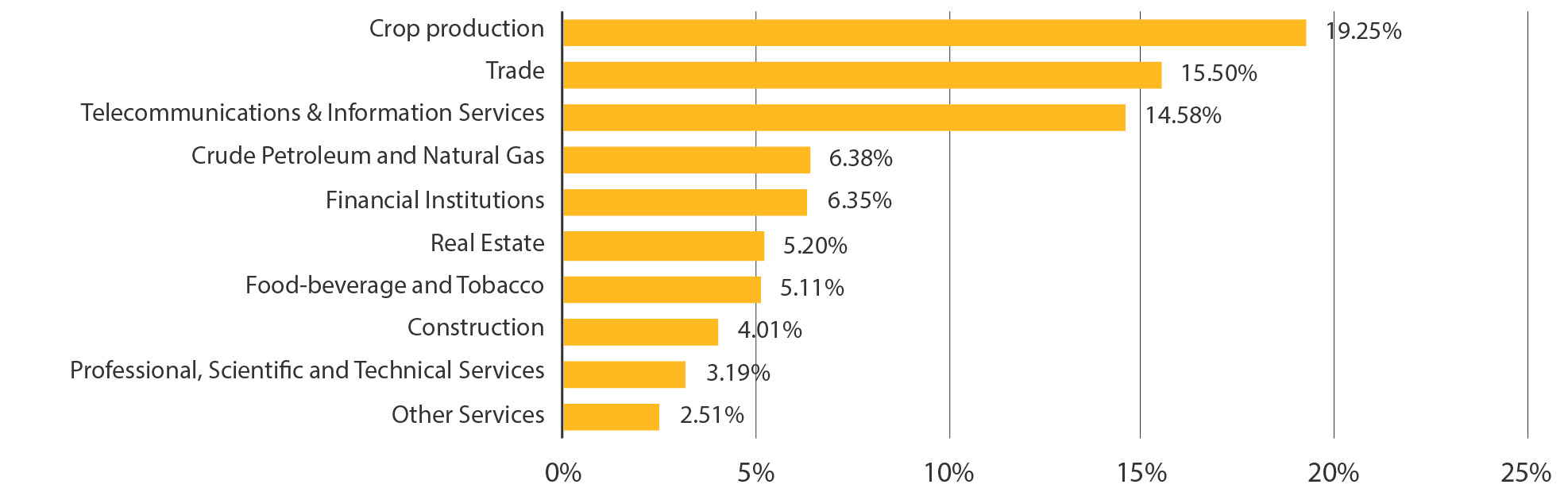
Agriculture in Nigeria plays a crucial role in the economy, contributing approximately 19% to 25% to the country's overall gross domestic product (GDP) between 2023 and the first quarter (Q1) of 2024 (Figure 1). In the Q1 2024, agricultural crop production accounted for about 19.24% of GDP, compared to trade (15.7%), telecommunications and information services (14.58%), oil and gas (6.38%), financial institutions (6.35%), real estate (5.20%), food, beverages and tobacco (5.11%) and construction (4.01%).
Smallholder farmers, most of whom are women, predominantly characterize the agricultural landscape in Nigeria. These farmers typically engage in subsistence farming, focusing on food crops for local markets and producing over 60% of food production. They remain the backbone of Nigeria’s agricultural sector – feeding the nation amidst a multitude of challenges and experiencing over 40% food wastage, partly as a result of these challenges.
Figure 1: Agriculture to GDP (%) FROM 1999-2023
More than half of the country’s population, precisely 152 million (or 68%), live in highly vulnerable conditions (World Poverty Clock, 2024). This includes living in physical, social, economic and environmental conditions that increase the susceptibility of its citizens and communities to the impacts of climate change and other socioeconomic deprivations. The Food and Agriculture Organization (FAO) predicts that about 26.5 million people in Nigeria will face food shortages by the end of 2024 (BusinessDay Nigeria, 2024). This crisis is exacerbated by ongoing conflicts, climate irregularities, removal of petrol subsidies in May 2023 and rising food production costs.
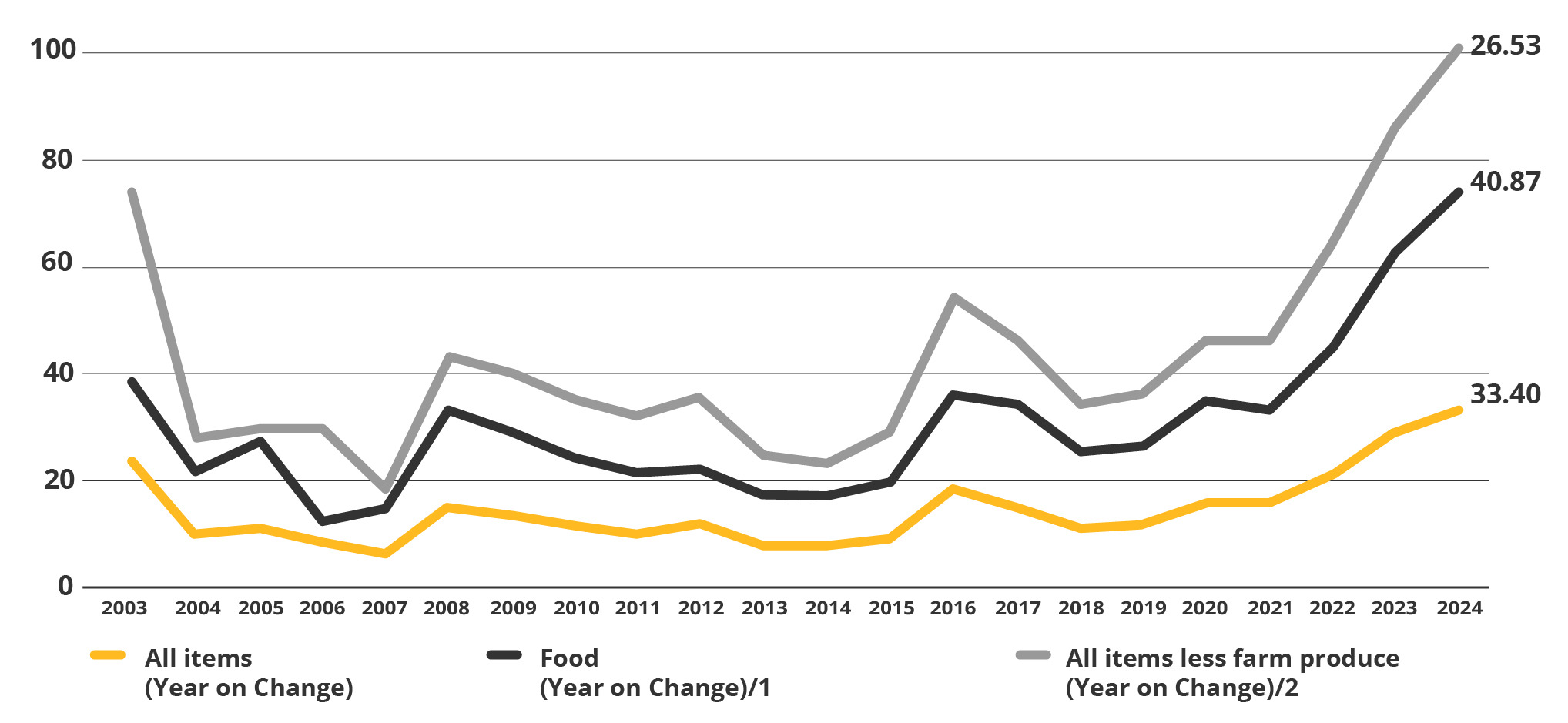
Food inflation has surged, with rates exceeding 34% as of May 2024, driven by rising prices of staples due to supply shortages and insecurity (Nigerian Bureau of Statistics [NBS], 2024). According to the World Bank, this rising inflation caused the number of impoverished Nigerians to rise from 89.8 million in the beginning of 2023 to a staggering 104 million in 2024 (BusinessDay, 2024).
Despite efforts to boost local production, Nigeria still imports substantial quantities of farm inputs like fertilizer, pesticides and staple foods, including staples like rice, where only 57% of the 6.7 million metric tons consumed annually is produced locally (FAO, 2024).
Figure 2: Inflation Rate in Nigeria 2003-2024
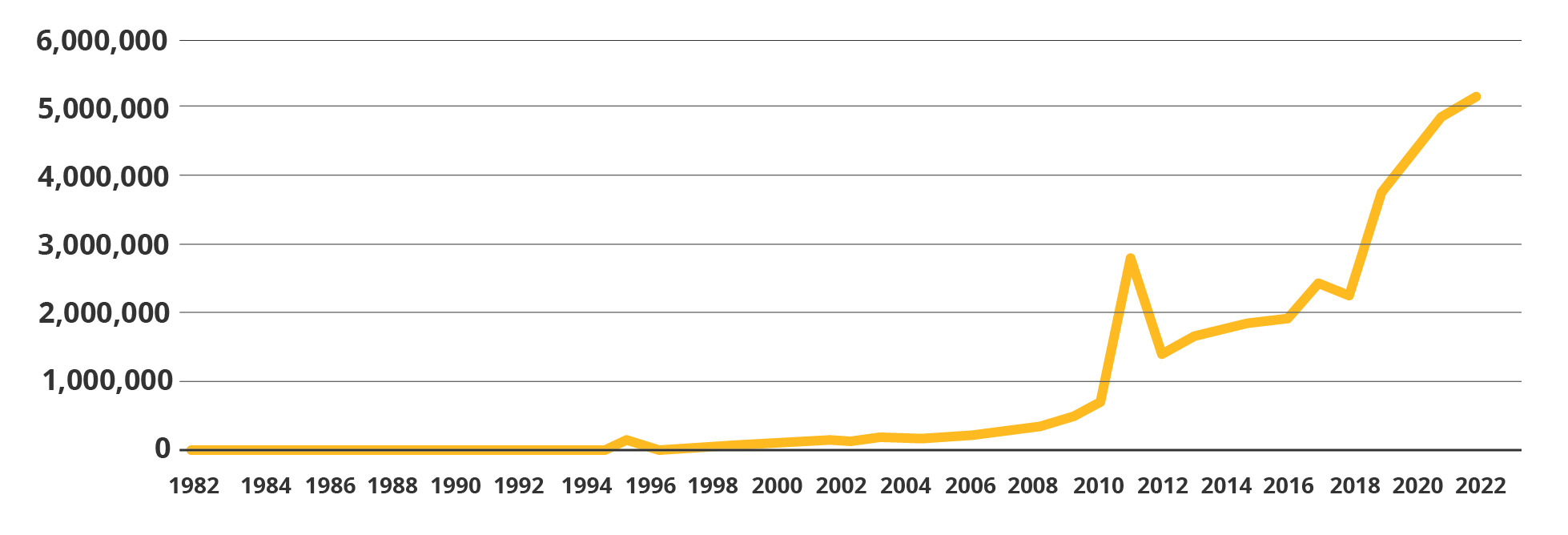
Nigeria recorded a 121.7% increase in the value of imported foods within the 5-year period, rising to NGN 1.9 trillion in 2022 from NGN 857 billion in 2018. Nigeria’s food and beverage import bill increased by 30% from NGN 1.21 trillion in the fourth quarter of 2023 to NGN 1.59 trillion in the first three months of 2024 (NBS, Q1 2024). According to the International Trade Administration (2023)1, Nigeria relies on USD 10 billions of imports to meet its food and agricultural production shortfalls (mostly wheat, rice, poultry, fish, food services and consumer-oriented foods). Europe, Asia, the United States (US), South America and South Africa are major sources for Nigeria’s agricultural imports.
Nigeria is particularly vulnerable to the adverse effects of climate change due to its fragile economy, low resilience and limited capacity to adapt. The country’s economy relies heavily on climate-sensitive ecosystems and natural resources, with the agricultural sector largely dependent on rainfall.
Figure 3: Value of Major Food Import in Nigeria 1982 - Q2 2022
Extreme weather events, such as floods and droughts, have increasingly disrupted agricultural production in Nigeria. Key staples like rice, maize and sorghum are particularly affected, pushing many smallholder farmers and communities into cycles of poverty. The frequency of these climate-induced events has escalated, leading to severe consequences for food security and livelihoods.
As rainfall patterns become more erratic, farmers face challenges in planning planting and harvesting schedules. In northern Nigeria, prolonged droughts have resulted in decreased water availability for irrigation and crop growth. Meanwhile, southern regions experience heavy rainfall that leads to flooding, damaging crops and infrastructure.
The interplay of rising temperatures and changing precipitation patterns exacerbates these challenges. For instance, increased heat can lead to heat stress in both crops and livestock, negatively impacting productivity. The cumulative effect of these climate-related challenges not only threatens food security but also undermines the economic stability of farming communities across Nigeria. Moreover, inadequate infrastructure hampers farmers' access to markets and increases post-harvest losses, making it difficult for them to effectively sell their produce
These challenges are further exacerbated by ongoing violence and conflicts, banditry, kidnapping and insurgent attacks, particularly in northern Nigeria – making farms unsafe for smallholder farmers and farming communities as well as threating climate actions, especially in the rural areas.
To address these challenges, urgent action is needed to enhance the resilience and adaptive capacity of smallholder farmers while prioritizing sustainable agricultural practices within policy frameworks.
Climate change: Loss, damage and risk on Nigeria’s food security
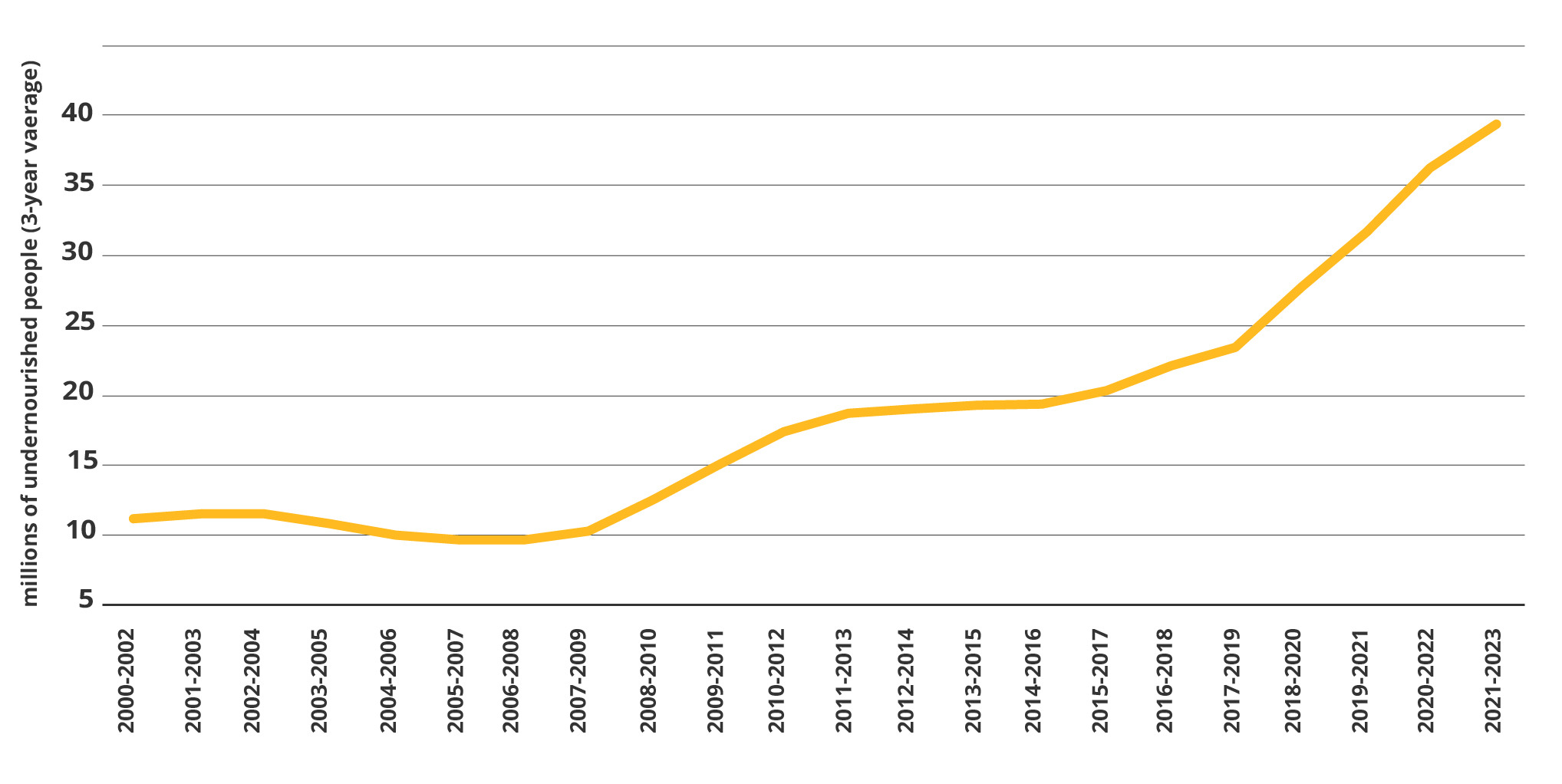
Between 2020 and 2022 alone, an average of 21.3% of the country experienced hunger (Statista, 2024). According to the Food and Agricultural Organization (FAO), this situation could potentially worsen, as it warned that over 26.5 million Nigerians were at risk of hunger in 2024. The estimates for 2024 indicate a sharp rise from the 18.6 million people currently vulnerable to food insecurity (from October to December 2023) (FAO in Nigeria, 2023).
Figure 4: Global Food Security Score in Nigeria 2022
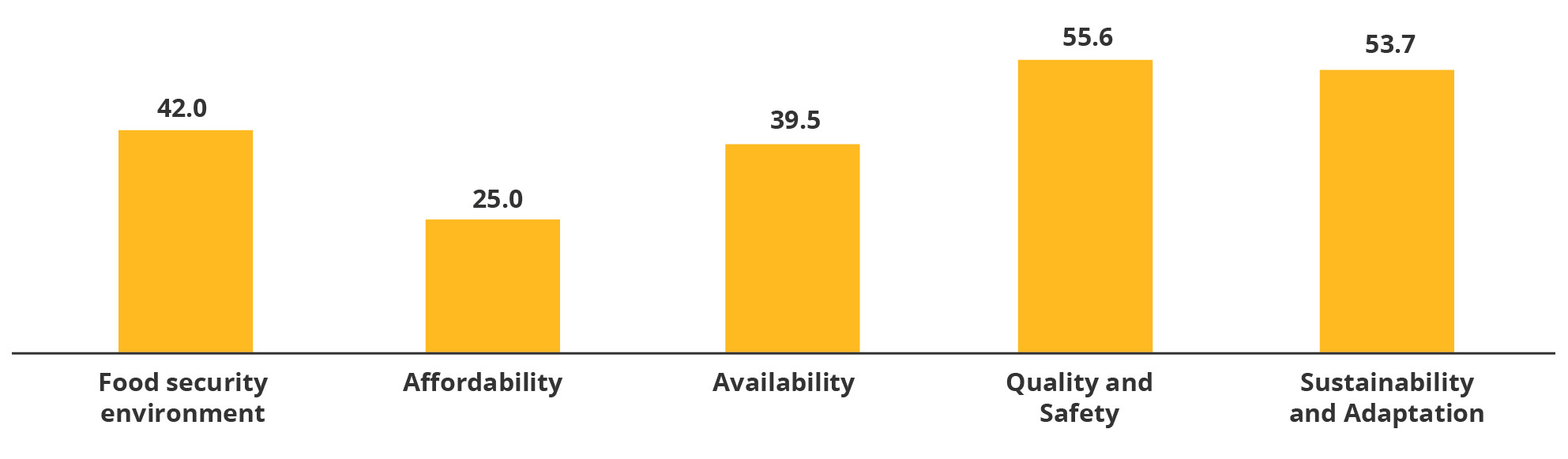
Figure 5: Number of People Undernourished in Nigeria 2000-2023
With a population projected to increase to over 400 million people by 2050 and approximately 35% living in extreme poverty as of April 2024, the United Nations predicts that 82 million Nigerians may go hungry by 2030 (Punch, 2024). The Federal Ministry of Agriculture projects that the demand for staple food will increase by over 50% by 2050. By 2080, agricultural production in the country is expected to decline by 10% to 25%, as the decline in rain-fed agriculture could be as much as 50% (ActionAid Nigeria, 2022). The UN has called on the Nigerian government to tackle climate change, pest infestation and other threats to agricultural productivity.
Climate change poses significant threats to Nigeria’s agricultural sector and food security. These impacts are multifaceted, affecting crop yields, food availability, access, utilization and stability, as a result of the alteration of rainfall patterns, increasing temperature, soil degradation, increasing incidents of pests and diseases, water scarcity, diminishing nutritional values, increasing production costs and reduced farmer income, forcing pastoral migration, conflicts and the displacement of agrarian communities.
Crop yield: Increased temperatures and altered rainfall patterns negatively impact crop yields, especially in lower-latitude regions; maize and wheat yields decline, while some higher-latitude regions see improvements.
The Nigeria Meteorological Agency (NIMET) has reported changes in rainfall patterns, including a delayed onset and an early cessation of rains, leading to increased drought occurrences and reduced soil moisture (Ani et al., 2022). According to FAO’s Agricultural Stress Index (ASI), as of end-July 2024, between 40 and 85 per cent of cropland in these areas was affected by drought conditions.
Water scarcity, drought and desertification: Desertification affects as much as 60% of Nigeria's land. This is exacerbated by drought and climate change. For instance, Lake Chad, once one of Africa's largest lakes that catered for over 30 million people, has experienced significant shrinkage due to a combination of climate change and human activity.
Violent conflict: Environmental degradation intensifies land and water competition, fueling conflicts between farmers and pastoralists. Climate change is increasingly recognized as a significant driver of violence and displacement in Nigeria, particularly in regions already vulnerable to socio-economic and environmental stresses.
According to the Global Report on Internal Displacement (GRID) 2024, a total of 457,000 people were internally displaced by conflict and disaster in 2023 in Nigeria. Of this figure, 291,000 were displaced by violent conflict (Global Report on Internal Displacement, 2024). While the rest were displaced by disaster related factors such as flooding. The violent conflict and insecurity on farms across Nigeria led to a marked decline in agricultural labor supply as individuals flee violence and seek safer, alternative livelihoods.
Flood and soil health: Climate change contributes to soil degradation in Nigeria, where extreme rainfall events lead to flooding, erosion and nutrient loss. The degradation of soil health results in lower agricultural productivity and threatens the livelihoods of rural communities that depend on farming.
The primary climate hazards faced by the coastal regions of Nigeria include floods, storms and erosion, which account for over 76% of the average annual hazard occurrences from 1980 to 2020 (World Bank, 2014). Between 1980 and 2000, Nigeria experienced flooding in six separate years, a number that surged to 18 between 2001 and 2020 (ibid.). It is estimated that in Abia, Anambra and Imo States, there are no fewer than 600 gully erosion sites (FMoEnv, 2021).
Agricultural pests and diseases: Climate change is driving the spread of pests and diseases in Nigeria, as warmer temperatures and increased humidity create ideal conditions for infestations. This has led to higher crop losses and increased pest management costs, threatening food security and agricultural income. In May and December 2023, outbreaks of diseases like Tuta absoluta and ginger fungus, exacerbated by conventional monoculture (which can cause pathogenic bacteria to thrive) and high temperatures, caused farmers to lose over NGN 12 billion. With Nigeria already facing a deficit of 1.3 million metric tons of tomatoes, these infestations could push the shortfall to 3 million metrics tons, creating widespread uncertainty and discouraging tomato farming (Punch, 2023b). Similarly, the National Ginger Association reported that 70% of its members' plantations were wiped out by fungi, resulting in losses exceeding NGN 10 billion (ibid.).
Food/farm systems: Pre-colonial Nigerian agriculture centered on large-scale subsistence farming, using intercropping and mixed farming systems with crops like yams, cassava, millet, and sorghum. These traditional methods promoted biodiversity, soil health, and resilience to pests (Agriculture Nigeria, 2022).
Colonial rule shifted agriculture towards monoculture cash crops—cocoa, groundnuts, and palm oil—primarily for export to benefit British industries. This forced farmers to prioritize exports over food crops, increasing food import dependence and undermining sustainable local practices.
Post-colonial farming heavily relies on chemical fertilizers and pesticides, boosting yields but causing soil degradation and higher greenhouse gas emissions (Ajayi, 2012). Government programs continue to support these conventional practices, fostering dependency on hazardous imports, deforestation, and cash crop promotion. Rapid GMO approvals further escalate pesticide use (Mojeed, 2024). Political challenges also hinder land reforms and efforts to secure land access for smallholder farmers, especially women.
Agricultural and climate change policies: Where is there alignment?
Nigeria's total emissions of greenhouse gases estimated between 2010 and 2018 ranged between 247 MtCO2e in 2010 and 347 MtCO2e in 2018 (Nigeria’s NDC, 2021). In 2019, the country ranked as the 25th largest GHG emitter globally and the second-highest in Africa, following South Africa. Nigeria's emissions reached approximately 332.25 MtCO2e in 2019. In 2020, emissions saw a slight reduction to 322.34 MtCO2e, primarily due to the economic downturn caused by the COVID-19 pandemic (CarbonBrief, 2023).
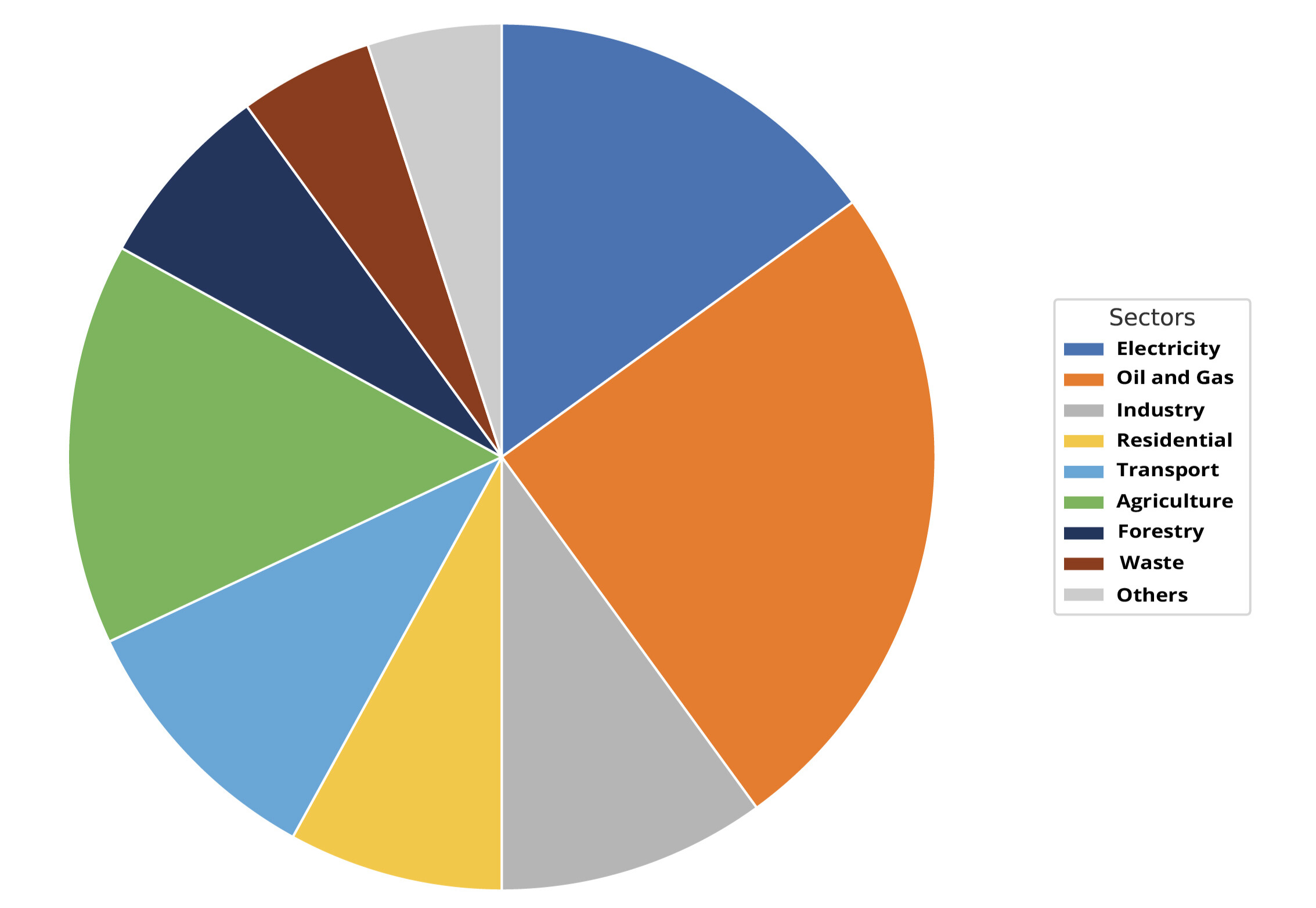
The energy sector accounted for the largest share of GHG emissions, contributing 209 MtCO2e in 2018 (60% of the total emissions). Among energy sector emissions, oil and gas, make up 36% of the total energy sector emissions, followed by emissions from transportation, electricity generation and residential and industrial energy consumption. The second-largest contributor to Nigeria's overall GHG emissions is Agriculture, Forestry and Other Land Use (AFOLU), which contributed approximately 25% of national GHG emissions. Waste accounted for 9% of emissions, while Industrial Processes and Other Product Use (IPPU) contributed 5% (Federal Government of Nigeria [FGN], 2021).
Figure 6: Major GHG Emitting Sources in the Economy of Nigeria
For Nigeria to achieve rapid economic growth and development, it is essential to responsibly harness and utilize its natural gas resources as a transition fuel, while steadily moving toward cleaner energy solutions. This energy transition will play a vital role in powering the economy, especially the small informal sector, boosting food security and safeguarding food sovereignty. Addressing critical challenges such as climate change and conflicts that undermine agricultural capacity is equally important.
The success of these efforts relies on balancing economic growth with environmental sustainability, which, in turn, requires strong political will, robust policy frameworks, multi-sectoral collaboration and the capacity to implement effective solutions at all levels.
Agriculture policies for food security
In line with President Tinubu’s 8-Point Agenda and Priority Area, the FMAFS currently have at its core of operations, the FMAFS Road Map Strategies and Ministerial Priority Action (2023 – 2027) which seeks to boost agriculture and achieve food security through the development of commodity value chains and the provision of infrastructure support. The FMAFS Road Map Strategies and Ministerial Priority Action (2023 - 2027) outlines the immediate, short, medium and long-term priorities of the Federal Ministry of Agriculture and Food Security in Nigeria to achieve its goals. The key components and objectives of the Road Map includes:
Immediate priorities: Focus on urgent agricultural needs and challenges, and address food security issues through immediate interventions.
Short-term strategies: Enhance agricultural productivity through improved access to inputs and technology, and strengthen extension services to provide farmers with necessary knowledge and skills.
Medium-term goals: Promote sustainable agricultural practices to ensure long-term food security, and foster public-private partnerships to drive investment in the agricultural sector.
Long-term vision: Achieve comprehensive food security and nutrition for all Nigerians, and develop a resilient agricultural system that can adapt to climate change and other challenges.
The NATIP is a strategic policy framework established by the Nigerian government to enhance the agricultural sector through the integration of technology and innovation. With a 6-year timeframe from 2022 to 2027, it aims to drive economic and social change through significant public and private sector investments in agriculture and rural development. It focuses on incorporating technology and innovation, intervention instruments and an implementation strategy, to fast-track increased productivity, import substitution, with particular emphasis on the reduction of rice, dairy, meat and fish imports, and increased resilience through digital and climate-smart agriculture, towards promoting agricultural value chains and investments. The policy was developed in collaboration with stakeholders and aims to modernize the agricultural sector by aligning with global food systems and supply chains, creating job opportunities, increasing export revenue and addressing security challenges that affect agricultural land and investments.
Table 1: Ten key intervention pillars of NATIP:
| 1. Synergy and MDA Alignment |
| 2. Knowledge Creation and Transfer |
| 3. Rapid Mechanization |
| 4. Agriculture Development Fund |
| 5. Realization of Extention Service Delivery |
| 6. Livestock Development |
| 7. Strengthening Value-Chains for Priority Crops |
| 8. Fisheries and Aquaculture Development |
| 9. Market Development |
| 10.Partnership for Securing Agricultural Lands and Investments (PSALI) |
Additionally, NATIP includes cross-cutting interventions to address gaps in previous policies, focusing on areas like rural infrastructure, nutrition, standardization for exports, digital and climate-smart agriculture, agricultural lending and insurance, data management, access to quality inputs, sustainable resource use and the involvement of women and youth in agriculture. The policy also emphasizes cooperative revitalization and the establishment of a national food reserve.
Alignment between NATIP (2022 - 2027) and FMAFS Road Map (2023 - 2027)
The provisions in the FMAFS Road Map Strategies and Ministerial Priority Action (2023 - 2027) align closely with NATIP's objectives by focusing on enhancing agricultural productivity, promoting sustainable practices and fostering innovation through R&D. Both documents aim to address the challenges facing Nigeria's agricultural sector while ensuring that the country moves towards a more sustainable and resilient food system, delivering long-term resilience and productivity.
Table 2: The FMAFS Road Map aligns with the NATIP in several key areas:
| Areas of Alignment in the Agriculture Roadmap and the Sector Policy = Great Alignment | |
| Key interventional pillars of NATIP (2023 -2026) | FMAFS Road Map Strategies & Priority Action (2023 – 2027) |
| Synergy and MDA alignment | Stakeholders buy-in for ownership of National Livestock Transformation Plan (NLTP). Holding the National Council of Agriculture and Food Security (NCAFS) meetings. Collaboration with Federal Ministry of Water Resources (FMWater). National Framework for proper coordination and alignment. Innovative communication. Develop new intergovernmental partnership framework across government tiers. |
| Knowledge creation and transfer | Initiate and implement stakeholder session. Facilitation agriculture and Food security mapping. Strengthen the agriculture and food security institutions. Learning and accountability platforms. Institutionalize Nigeria Food System Dashboard. Setup world class laboratories in research institutions |
| Rapid mechanization | Green imperative and other mechanization program, small scale irrigation, mini-earth dams and water catchment technologies. Promote viable agriculture mechanization enterprises and services i.e. e-hailing services, tractor hire, etc. |
| National Agricultural Development Fund (NADF) | Reform Bank of Agriculture, Agriculture Development Fund and Nigerian agricultural insurance corporation. Fast tracking the NADF |
| Revitalization of extension service delivery | Working with state, local government area (LGA), private sector and development partners in the training and deployment of extension workers. Development of E-extension service. Strengthen Community of Practice (COP) across govt tiers |
| Livestock development | Implement National Livestock Transformation Plan (NLTP). Make significant investment in animal feed-crop, foliage and fodder estate as antidote to farmer-herder clashes. |
| Strengthening value chains for priority crops | Development of subnational policies for key cash crop commodities. |
| Fisheries and aquaculture development | Facilitate special intervention in fish production and other animal-based protein |
| Market development | Rapid commercialization of improved varieties and breeds of food crops and animals. Ease of doing agriculture business for women and youth. |
| Partnership for Securing Agricultural Land and Investment (PSALI) | Open up land to boost production for key stable food. Open up land to boost production of cash crops. Promotion and strengthening Agro-rangers and other paramilitary to assist in addressing farm insecurity. |
| Cross cutting areas: | |
| Development of rural infrastructure | Development of new strategies for strengthening agricultural infrastructure |
| Nutrition | Boost production of traditional and nutrition commodities, promote biofortification and fortification of key staple food. Revive and promote home economics and food and nutrition in homes and school. |
| Standardization of export | Strengthening commodity exchange for agricultural products |
| Digital and climate smart agriculture | Construct and manage dry and cold storage facilities. Promotion and preparation of dry season farming. Establishment of 2 new national gene bank facilities, each for crop and animals to conserve fast eroding genetic resources and food security. joint action pal with FMWater for the irrigation potentials of River Basin Development Authorities and other flood plains to guarantee all year food production. Development of digital/ICT mobile based agro-industry system and E-extension platforms to support farmers establish 6 agro-ecological zones in Nigeria. Technology/ITC based farming. Promotion of cold chain systems with private sector |
| Agricultural lending and insurance | Reform Bank of Agriculture, Agriculture Development Fund and Nigerian agricultural insurance corporation. Implementation of Agro-Pocket (AP). Use FinTech solutions and wallets for financial disbursement for farmers |
| Data and information management | Deploy and operationalize the Enterprise Content Management System (ECM). Implement personnel performance management system. Development of national database for planning and implementation. |
| Access to quality inputs | Implementation of the National Agricultural Growth Scheme and Agro Pocket (NAGS-AP). Capacity building to strengthen farm inputs regulatory function. |
| Sustainable resource use | Development of robust sustainable innovation ecosystem. Development and implementation of soil fertility mapping and soil information system. Development of soil health scorecards |
| Involvement of women and youth in agriculture | Implement programs for women and youth in agriculture and livelihood. Development of agricultural Development Centre for Women and Youth. |
| Cooperative revitalization | Develop and promote cooperative models for impact agriculture |
| Establishment of a national food reserve | Modernize and enhance food reserves to defend against food scarcity and price stabilization |
The Nationally Determined Contribution (Updated 2021)
Nigeria has made notable progress in implementing its NDC specifically for the agricultural sector, focusing on climate change mitigation and adaptation strategies. The NDC outlines a commitment to reduce greenhouse gas (GHG) emissions by 20% unconditionally and by 47% conditionally by 2030, with agriculture being one of the priority sectors.
The updated NDC provides a high-level and strategic vision for climate action in Nigeria and sets out what the country commits to meet its Paris Agreement obligations. In the baseline scenario for 2030, it is estimated that Agriculture, Forestry and Other Land Use (AFOLU) will continue to be the second largest sources of GHG emissions (ibid.). The measures outlined for mitigation against GHG emissions for AFOLU in the NDC range from the adoption of climate-smart agriculture; 50% reduction in fraction of crop residues burnt in 2030; improved natural forest management; forest restoration; forest protection; reduce fuelwood harvesting and protection; and restoration of the mangrove forest ecosystem (ibid.).
The NDC stresses the importance of Climate Smart Agriculture (CSA) and agroecology. It notes that CSA is a vital strategy for the agricultural sector, aiming to boost productivity sustainably, increase farm incomes equitably and improve food security and development. It emphasizes that agroecological practices enhance farming system resilience, as opposed to methods like high external input farming (i.e. with synthetic chemical fertilizers and pesticides) and large-scale industrial agriculture. The updated NDC recommends that enhanced practices like Agroecology and agroforestry not only elevate yields but also lead to better diets (nutrition), increased productivity and reinvestment in rural communities (vulnerable groups). It noted that farm systems like agroforestry, which blends trees with crops and animals, offer carbon sequestration and mulch material, reducing emissions by 158 million to 712 million tons (NDC, 2021).
National Climate Change Policy for Nigeria (2021-2030)
The National Climate Change Policy for Nigeria (2021-2030) aims to foster sustainable socio-economic development that is low-carbon, climate-resilient and gender-responsive. The policy underscores the challenge of boosting agricultural output while curbing greenhouse gas (GHG) emissions. Derived from the NDC, the policy promotes climate-smart, gender-responsive farming techniques to lower emissions and bolster the sector’s resilience.
The FMAFS Road Map Strategies and Ministerial Priority Action (2023 - 2027), NATIP (2022-2027) and the Agriculture Sector NDC Strategy exhibit significant alignment across multiple dimensions, including food security, sustainable practices, research and development, capacity building, public-private partnerships, infrastructure development and innovation. This alignment is essential for creating a cohesive approach to enhancing Nigeria's agricultural sector while addressing the challenges posed by climate change and ensuring food security for the population.
To identify the areas of alignment between the FMAFS Road Map Strategies and Ministerial Priority Action (2023 - 2027), the NATIP and the Agriculture Sector NDC Strategy, we focus on the key objectives and strategies of each document.
Areas of alignment
Food security enhancement:
- FMAFS road map: Prioritizes boosting agriculture to achieve food security.
- NATIP: Aims to enhance food security through sustainable agricultural practices and increased productivity.
- NDC strategy: Focuses on improving food security while addressing climate change impacts on agriculture.
Sustainable agricultural practices:
- FMAFS road map: Emphasizes the need for sustainable farming techniques.
- NATIP: Promotes climate-smart agriculture and sustainable land management.
- NDC strategy: Supports sustainable agricultural practices to mitigate greenhouse gas emissions.
Research and development:
- FMAFS road map: Highlights the importance of strengthening agricultural research and development.
- NATIP: Focuses on enhancing agricultural research capabilities and technology adoption.
- NDC strategy: Encourages research into climate-resilient crops and sustainable practices.
Capacity building and extension services:
- FMAFS road map: Aims to strengthen extension services for farmers.
- NATIP: Emphasizes capacity building for extension workers and farmers.
- NDC strategy: Supports training programs to enhance farmers' resilience to climate impacts.
PPPs:
- FMAFS road map: Encourages collaboration between public and private sectors.
- NATIP: Supports the establishment of PPPs to drive innovation and investment in agriculture.
- NDC strategy: Promotes partnerships to enhance agricultural sustainability and resilience.
Infrastructure development:
- FMAFS road map: Identifies infrastructure enhancement as crucial for agricultural growth.
- NATIP: Recognizes the need for improved agricultural infrastructure.
- NDC strategy: Supports infrastructure investments that facilitate climate adaptation in agriculture.
Innovation and technology adoption:
- FMAFS road map: Promotes the adoption of innovative agricultural technologies.
- NATIP: Focuses on integrating technology and innovation into agricultural practices.
- NDC strategy: Encourages the use of technology for climate-smart agriculture.
How the Agriculture Policy NATIP mainstreams climate action?
The NATIP 2022-2027 addresses climate change in agriculture through several strategic measures aimed at promoting sustainable and resilient practices.
Below are the key ways in which NATIP mainstreams climate action:
- Integration of climate-smart agricultural practices: NATIP emphasizes the adoption of climate-smart agricultural practices that enhance resilience to climate variability.
- Digital agriculture and sustainable technologies: The policy encourages the use of digital technologies to optimize agricultural practices.
- Use of climate-resilient varieties: The policy encourages the development and dissemination of climate-resilient seed varieties that are drought-resistant, heat-tolerant and pest-resistant.
- Soil management practices: NATIP promotes better soil management practices to maintain soil health and fertility
- Access to drought-resistant inputs: The policy aims to increase farmers' access to drought-resistant seeds and livestock feeds.
- Early warning systems: Implementation of early warning systems and meteorological forecasts will provide farmers with timely information about weather changes.
- Collaboration with private sector: NATIP encourages private sector participation in the production and distribution of agricultural inputs, including climate-resilient seeds and fertilizers.
- Data management and research: The policy emphasizes the importance of data management and research in understanding climate impacts on agriculture.
- Efficient water management: NATIP focuses on improving water management practices to enhance agricultural productivity.
- Strengthening surveillance systems: The policy aims to enhance surveillance systems for monitoring animal and aquatic diseases, which are increasingly affected by climate change.
- Access to agricultural finance and insurance: NATIP seeks to improve access to agricultural finance and insurance products that are tailored to address climate risks. It recommends the establishment of the NADF.
- Development of high-priority value chains: By supporting the development of high-priority value chains, NATIP aims to increase competitiveness in international markets while ensuring that these chains are resilient to climate impacts.
- Nutritional security and malnutrition reduction: The policy includes objectives aimed at reducing malnutrition and improving nutritional security.
- Secure environment for agricultural investment: NATIP aims to create a more secure environment for agricultural investments by promoting sustainable practices that align with climate action goals.
- Capacity building and training: The government, through the Ministry of Agriculture and Rural Development, is enhancing local capacities by providing training to extension workers and local farmers.
NATIP vs. agricultural sector budget, actuals and alignment with NDC Climate Action Plan
The success of NATIP in mainstreaming climate actions and delivering food security, hinges on the effective execution of its strategies, which require sufficient and quality funding and implementation. Without proper budgeting and quality implementation, the ambitious goals of the policy, such as enhancing agricultural productivity and food security in a climate sensitive way, will never be realized.
Proper budgeting is essential to facilitate its implementation and achieve its overarching goals of enhancing food security and economic growth in the agricultural sector. Without adequate funding, even the best-designed policies cannot be effectively implemented. Unfortunately, Nigeria's agricultural budget has consistently fallen short of the recommended 10% allocation of the national budget as stipulated by the Maputo Declaration.2 For instance, the budget for agriculture represented only 2.5% in 2022, 2% in 2023 and 3.5% in 2024 of the total national budget; these are significantly below the recommended target of 10% (ActionAid Nigeria, 2024).
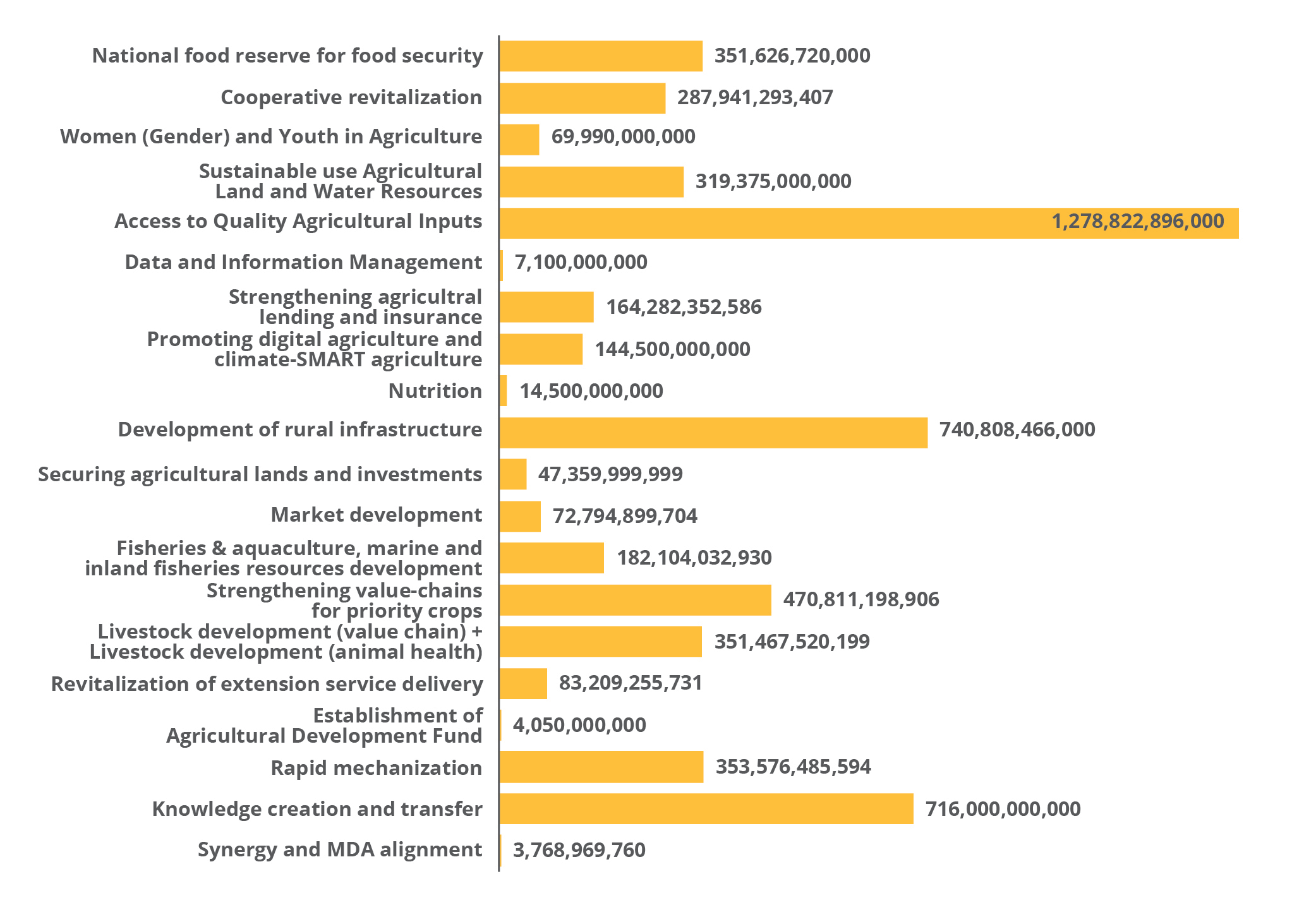
The NATIP Action Plan and Monitoring and Evaluation Framework (2022–2027) estimates a total of NGN 5,664,079,090,817 (USD 3,654,951,982) for implementing its various components over six years, averaging NGN 944,013,181,803 (USD 609,158,664) annually (NATIP, 2022). The financial requirements for transforming the agricultural sector are based on the understanding that agricultural funding is not solely the government's responsibility. Securing the necessary resources requires ongoing collaboration and dialogue between the public and private sectors, as well as strong partnerships with donors and alignment across relevant MDAs. Despite this, a significant portion of NATIP's funding is expected to come from the national budget, particularly from allocations to the FMAFS.
The chart below provides a breakdown of the estimated costs for NATIP components, with access to quality agricultural inputs receiving the largest allocation, followed by rural infrastructure development, knowledge creation and transfer, crop and livestock value chains and rapid mechanization.
Figure 7: Summary of financial estimates for NATIP implementation
In Nigeria’s approved 2024 budget, NGN 107.3 billion (USD 0.07 billion), about 10.8% of the total agricultural sector budget, was allocated to the National Agricultural Development Fund (NADF), with NGN 106.8 billion earmarked for capital expenditure and NGN 100 billion specifically for the Agricultural Development Fund (ADF). Comparing the National Agricultural Transformation Implementation Plan (NATIP) annual average estimate of NGN 944 billion (USD 0.6 billion) to actual budgets shows that in 2022, only 48.96% of NATIP’s target was funded (NGN 462 billion), increasing to 66.42% in 2023 (NGN 626.99 billion), and surpassing the target in 2024 with NGN 996.90 billion. Over three years, the Ministry’s budget met an average of 73.66% of the NATIP estimate, with a funding shortfall of NGN 248.65 billion. While this demonstrates commendable progress given additional funding sources beyond the annual budget, capital budget utilization was poor, with only 17% of the NATIP target achieved in actual spending from 2022 to 2024. Strong alignment exists between NATIP and Nigeria’s Nationally Determined Contributions (NDC) Action Plan, reflecting efforts to integrate food security with climate adaptation and mitigation. However, challenges such as budget shortfalls and poor fund utilization hamper effective implementation of food sustainability and climate-resilient agricultural projects, limiting progress toward Nigeria’s agricultural and climate goals.
Promoting digital and climate-smart agriculture
This cross-cutting component of NATIP focuses on enhancing the skills of various stakeholders in precision agriculture and e-agriculture by leveraging digital technologies to improve food systems. Key technologies such as remote sensing, yield mapping, GPS guidance systems, food blockchain, artificial intelligence (AI), e-extension services and tractor rental applications will be emphasized. E-agriculture fosters climate-smart practices that enhance biodiversity, enrich soils, improve watersheds, promote organic farming and bolster ecosystem services. The goal is to increase productivity and lower greenhouse gas emissions, benefiting approximately 50,000 graduates and over 150,000 non-graduates by providing them with the necessary skills, technology and technical support for sustainable agricultural practices. The Agricultural Land and Climate Change Management Services (ALCCMS) within the Federal Ministry of Agriculture and Rural Development (FMARD) will lead and advocate for digital and climate-smart agriculture.
Policy support programs & actions (PSPAs) to achieve goals of promoting digital and climate-smart agriculture
- Encouraging digital technology adoption: Promote the on-farm and off-farm utilization of digital technologies and innovation platforms.
- Creating a digital agriculture ecosystem: Develop a comprehensive digital agriculture platform that serves all farmers across Nigeria.
- Supporting digital agriculture programs: Enhance all agricultural initiatives with digital capabilities to foster sustainable business models and opportunities.
- Boosting agricultural productivity: Aim to improve productivity, minimize food waste and mitigate the impacts of climate change.
- Facilitating access to financial services: Enable farmers to access financial services, register land and livestock online, obtain detailed geographic and soil information, reduce fraud and enhance the efficiency of goods and services delivery, while assisting governments in better targeting agricultural support.
- Digitizing agricultural research: Compile and digitize relevant agricultural research content, conducting joint research on productivity and export needs.
- Promoting open data: Make research findings accessible to farmers, agricultural value chain participants and start-ups through digital platforms to stimulate innovation.
- Utilizing extension workers: Encourage the use of extension workers to gather information and develop content for digital agriculture platforms.
- Sustainable land and water management: Advocate for sustainable practices in land and water management.<
- Providing timely weather information: Ensure farmers receive timely weather and climate data for crops, fisheries and livestock production.
- Training on water harvesting techniques: Build farmers’ capacity in sustainable water harvesting methods for supplementary irrigation.
- Encouraging greenhouse and vegetable production: Promote the cultivation of greenhouse crops and vegetables.
- Setting organic standards: Establish minimum standards for organic crop, fishery and livestock production in the country.
- Supporting meteorological stations: Facilitate the establishment of meteorological stations in all FMARD state offices to ensure reliable data for forecasting.
Financial Estimates: The implementation plan for NATIP allocates NGN 144,500,000,000 (USD 93,243,854) for Digital Agriculture and Climate-Smart Agriculture over the six-year period from 2022 to 2027, averaging NGN 24,083,333,333 (USD 15,540,642) annually.
The budget allocation for the promotion of digital agriculture and climate-smart agriculture in comparison to the NATIP estimation vis-à-vis the NDC climate commitment for the sector has a short fall of over NGN 17.8 billion (USD 0.011 billion). (Note that the sector already suffers severe underbudgeting and poor capital budget utilization of an average of 17% only). In reviewing the appropriated budgets for the period 2022–2024, it is evident that there is a critical need for a more intentional and innovative approach to budget preparation and allocation within the agricultural sector. The NATIP emphasizes the importance of integrating climate action into agricultural practices, yet the current budget allocations do not adequately reflect this alignment. The establishment of the NADF offers a promising avenue for directing investments toward these innovative technologies. However, mechanization efforts must extend beyond the provision of large tractors that often fail to reach smallholder farmers. Initiatives such as installing solar lights and community boreholes, while beneficial, do not directly contribute to agricultural mechanization or enhance crop value chains.
Moreover, the budget reflects an excessive focus on rural development projects that do not directly enhance agricultural productivity or food security. Throughout 2022–2024, the Ministry's capital budget has been heavily weighted with infrastructure projects — such as road construction, solar street light installation and public facility development — that fall outside its primary mandate. Other government entities are better suited to handle these infrastructural needs, allowing the FMAFS to concentrate on its core mission of enhancing food security and promoting sustainable agricultural practices.
In summary implementing agricultural policies, programs and projects under Nigeria's NDC faces several significant challenges that hinder progress toward achieving climate resilience and sustainability. The main challenges include:
- Financial constraints
- Limited funding: Nigeria faces a significant financing gap in agriculture, with an estimated need of USD 142 billion over the next decade. This shortfall hinders climate-smart agriculture and infrastructure development.
- Access to green financing: Private sector engagement is low due to limited access to green finance and poor awareness of climate investment opportunities, resulting in underutilized climate funds.
- Public spending inefficiencies: Agricultural budgets suffer from delayed disbursements, poor utilization, and weak accountability, allowing corruption and reducing the impact of investments—especially in climate adaptation and mitigation efforts.
- Institutional and policy challenges
- Policy conflicts: Conflicts between existing policies, such as those governing fossil fuels and renewable energy, complicate the implementation of the NDC. The lack of a cohesive policy framework can deter investment and create uncertainty for stakeholders.
- Poor coordination: There is often inadequate coordination among various government agencies and stakeholders involved in NDC implementation. This fragmentation can lead to overlapping responsibilities and inefficiencies in project execution.
- Capacity and technical limitations
- Limited human resources: The agricultural sector suffers from a lack of trained personnel and expertise necessary for implementing advanced agricultural practices and technologies. This skills gap limits the effectiveness of adaptation and mitigation strategies.
- Insufficient monitoring and evaluation: There is a lack of robust systems for monitoring, reporting and verifying progress on NDC targets. This deficiency makes it difficult to assess the effectiveness of implemented projects and adapt strategies accordingly.
- Environmental and social factors
- Vulnerability to climate change: Nigeria's agricultural sector is highly vulnerable to climate impacts, such as flooding and droughts. The recent severe flooding has exacerbated existing vulnerabilities and led to significant losses in agricultural productivity, further complicating NDC implementation efforts.
- Inclusion issues: The exclusion of key stakeholders, including women, local communities and civil society organizations, from decision-making processes limits the effectiveness and inclusivity of climate actions. This lack of engagement can result in projects that do not adequately address local needs and conditions.
- Infrastructure deficiencies
- Inadequate rural infrastructure: Poor infrastructure in rural areas, including roads, storage facilities and irrigation systems, hampers agricultural productivity and access to markets. This inadequacy poses a significant barrier to the successful implementation of agricultural projects under the NDC.
With the recent rebranding of the FMARD to the FMAFS, there is an expectation for a sharper focus on food production and preservation in the 2025 budget. This shift should prioritize climate-resilient agricultural practices that align with the NATIP's objectives and contribute to Nigeria's broader climate goals.
Policies and strategies conflict or overlap with agricultural policies and climate action
It is important to recognize that numerous international NGOs, development partnership programs and initiatives, along with allocations from other relevant MDAs such as the Ministries of Power, Water Resources, Environment, Trade and Investment, Health, Women and Humanitarian Affairs and Science and Technology, as well as agencies like the REA and the Central Bank of Nigeria, have traditionally supported and implemented projects aimed at enhancing food security and advancing climate resilience in agriculture.
However, these MDAs may also have policies, strategies, actions and gaps that could undermine the broader goals of sustainable food security and climate resilience in the sector and the environment.
A tabulated analysis of how various MDAs in Nigeria have policies and strategies that conflict or overlap with agricultural policies, particularly focusing on climate action plans can be found in the full report available for download.
This analysis highlights the need for better policy coordination among various MDAs to ensure that agricultural policies align with climate action plans and other relevant strategies. By addressing overlaps and conflicts, stakeholders can work towards a more cohesive and effective approach to agricultural development and climate resilience in Nigeria.
Climate finance for agriculture sector climate action
Nigeria plans to issue USD 250 million (NGN 387 billion) in green bonds in September 2024 to fund climate change mitigation and adaptation projects. The Nigerian government issued the first sovereign green bond in Africa in 2017 and a second green bond series in 2019. In doing so, the country raised NGN 10.69 billion (USD 6.9 million) and NGN 15 billion (USD 9.7 million) in 2017 and 2019 respectively to finance energy and land use projects, among others. The proceeds from the first green bond series were mostly allocated to three key project categories - Energizing Education, Afforestation Program and Renewable Energy Micro-Utilities in 45 Communities. All the selected projects were fully budgeted for in the 2017 national budget.Use of Green Bonds Proceeds: First Series for Afforestation Programs and Agroforestry in 2017
Table 3: Use of green bonds proceeds in 2017 and 2019
| Project | Implementing Ministry/Agency | Project Objective | Climate Action Taxonomy | Cost (NGN) |
| 2017 | ||||
| Afforestation Program | Environment | To increase forest coverage through plantation of seedlings to cover 131,00 hectares of land | Migration Land Use: Forestry | 1,990,000,000 |
| 2019 | ||||
| Agroforestry | Agriculture | Migration Land Use: Agriculture | NGN 6000,000,000 | |
| Afforestation Program | Environment | Migration Land Use: Forestry | NGN 1,220,877,357 | |
| National Irrigation Program | Water Resources | Adaptation & Mitigation | NGN 405,000,000 | |
The proceeds from the second green bond series were allocated to seven projects and programs in various sectors, including Energizing Education & RE Micro-Utilities, Afforestation Program, 10MW Katsina Wind Farm, Solar Powered Tricycles, Abuja Rail Mass Transit, National Irrigation Program and Agroforestry. All the selected projects were fully budgeted for in the 2019 National Budget.
Unfortunately, independent reports on the environmental, social and economic performance of financed and implemented NDC-aligned projects have been unavailable from the government. The implementation and effects of most human and infrastructure development projects in Nigeria remain obscure due to a lack of transparency and accountability, low community inclusion and the flagrant absence of sustainability checks and scalability mechanisms.
For instance, an investigation3 into Nigeria's green bond-funded afforestation projects has revealed significant failures in implementation, leading to poor outcomes in the targeted communities. Despite the government’s claims of success, the projects suffered from inadequate community engagement, poor planning and execution by contractors lacking afforestation experience.The findings underscore critical lessons for future initiatives, emphasizing the importance of thorough community consultation and involvement in project planning. Effective implementation requires not only technical expertise in afforestation but also a bottom-up approach that incorporates local knowledge and needs.
Innovative agricultural practices in Community-led initiatives in Nigeria
Community-led initiatives in Nigeria are increasingly adopting innovative agricultural practices to enhance productivity, sustainability and resilience against climate change. The success of these community-led initiatives in Nigeria stems from their adaptability, local engagement and resource optimization, making them essential components in addressing climate change effectively. Strategies that prioritize these grassroots efforts can lead to more sustainable and impactful climate action across the country. Projects outlined in Appendix 1 (download full report) illustrate how community-led initiatives can effectively address agricultural challenges while promoting sustainability and resilience against climate change.
Generally, community-led initiatives in Nigeria are thriving and often outperform state-led climate actions due to several key factors. Firstly, these initiatives leverage local knowledge and cultural understanding, allowing communities to identify specific vulnerabilities and develop tailored adaptation strategies. This grassroots approach fosters greater engagement and ownership among community members, leading to more effective implementation compared to top-down state efforts, which may lack local relevance. Additionally, community-led projects are typically more flexible and adaptable, enabling them to respond swiftly to changing environmental conditions and emerging challenges.
Moreover, management issues often hinder state-led initiatives, such as bureaucratic inefficiencies, lack of coordination among agencies and insufficient funding. In contrast, community-led efforts tend to optimize local resources, minimizing costs and maximizing impact through collaboration and shared responsibility. These initiatives also promote social cohesion, strengthening community ties that are essential for sustained climate action.
Strategies should be built around community-led initiatives because they demonstrate a sustainable model for addressing climate change. They not only empower marginalized groups but also provide valuable insights that can inform national policies and frameworks, such as the NASPA-CCN. By integrating local experiences into broader strategies, policymakers can enhance the effectiveness of climate actions across the country, ensuring that they are both relevant and impactful.
Appendix 2 (refer to full report in download) presents snapshots of on-going efforts, projects and initiatives geared towards improving food security and mainstreaming climate actions in the process. It should be noted that the list of projects and initiatives are a sample of current efforts collated within the time frame of developing this brief.
Case studies on climate action for food security
Case study 1: Addressing food security and climate change vulnerability through increasing knowledge for agroecology and agroforestry
Be The Help Foundation (BTH) launched an agroforestry project in 2019 to establish a productive training center for agroforestry and rural development in Kwali Area Council, Abuja. This initiative aims to demonstrate the economic and environmental sustainability of agroforestry in Nigeria. The Foundation's agroforestry project utilizes two systems: the Modernized Brazilian System and the Vetri (Indian) System. The Brazilian system operates without irrigation, while the Vetri system is irrigated. Each system employs distinct planting patterns, plant varieties and plant population densities.
The primary objective of this project is to validate the feasibility of these agricultural methods in Nigeria, encouraging farmers, particularly smallholder farmers (SHFs), to adopt sustainable and regenerative practices. This adoption has led to increased income for farmers, while also positively impacting the environment, as the farm does not use any external inputs such as GMOs or hazardous pesticides.
Climate action and environmental impact of the project
The Be-The-Help Foundation's agroforestry project has improved several biodiversity indicators:
- Increased plant diversity: The project introduced diverse crops and trees like eucalyptus, moringa, and shea butter, enhancing ecosystem services such as pollination, pest control, and soil health.
- Enhanced soil quality: The agroforestry system increased organic matter, reduced erosion, and improved soil structure, supporting plant growth and biodiversity.
- Increased biodiversity: It provided habitats for insects, birds, and other animals, supporting ecosystem services and agricultural productivity.
- Reduced desertification: By providing shade, lowering soil temperature, and increasing moisture, the system improved ecosystem resilience and reduced desertification risk.
- Improved livelihoods: The project provided sustainable practices that increased farmers’ income, food security, and well-being.
- Community engagement: It promoted local involvement in sustainable agriculture, fostering environmental stewardship.
Overall, the project has significantly enhanced biodiversity, soil health, livelihoods, and community participation.
Case Study 2: Community-based adaptation in Nigeria - Putting the community at the heart of agroforestry in Nigeria
Overview of the community-led project
In response to challenges such as soil erosion, drought and desertification, Aerobic Agroforestry is working to reverse these trends through agroforestry. The organization’s key approach is partnering with the community to bring its vision to life and restore the vitality of the landscapes.
With support from a low-interest loan provided by TerraFund for AFR100 - an initiative of World Resources Institute, One Tree Planted and Realize Impact that finances Africa's top restoration enterprises and projects - Aerobic Agroforestry is engaging more farmers to regenerate degraded ecosystems in Nigeria.
The organization is currently working to restore an additional 10,000 hectares of land and plant more trees, expanding its efforts to reforest a degraded forest reserve in Ondo State.
Highlighting successful approaches and innovations
The project has restored 12,000 hectares of degraded land in Ondo State, Nigeria and has planted 450,000 trees across 350 hectares. It has also created green jobs and improved access to clean water for local communities.
Aerobic Agroforestry has partnered with TerraFund for AFR100 - an initiative of World Resources Institute, One Tree Planted and Realize Impact - to finance its restoration efforts.
Case Study 3: Mainstreaming solar-powered cold storage to curb agricultural wastage for food security and climate action by ColdHubs Nigeria
ColdHubs is a “plug and play” modular, 100% solar-powered walk-in cold room, offering 24-hour off-grid solar cold storage containers for the preservation of perishable foods. It effectively addresses the issue of post-harvest losses in fruits, vegetables and other perishable foods. ColdHubs are installed in major food production and consumption centers (markets and farms), where farmers place their produce in clean plastic crates, which are then stacked inside the cold room. ColdHubs extend the shelf life of perishable food from 2 days to 21 days, reducing post-harvest loss by 80%. This reduction allows smallholder farmers to sell more of their harvest, potentially increasing their annual income by 25%. The initiative primarily targets women for managing operations and revenue collection at ColdHubs stations.
A solar-powered cold room is also economically more efficient compared to traditional generator-powered cold rooms. For example, a typical cold room for meat and fish consumes an average of 20-30 liters of diesel per day to power traditional cold rooms.
ColdHubs offers a flexible pay-as-you-store subscription model for farmers. In preparation for storage, farmers transfer their perishable foods into our reusable crates, which fit neatly onto the shelves. Farmers pay a daily flat fee for each crate of food they store.
Impact
ColdHubs has scaled up its growth and expanded its operations from 21 to 28 states in Nigeria, with significant expansion in both southern and northern regions of the country. The company is taking over the cold-chain industry in Nigeria, with 58 operational cold storage facilities and another 14 under construction in various parts of the country. The company is doing everything in its power to cut post-harvest loss in fruits, vegetables, meat, fish, milk and dairy products.
Conclusions and recommendations for integrating climate action into Nigeria's agricultural policy
Integrating climate action into Nigeria's agricultural policy is crucial for addressing the dual challenges of food security and climate change. Community-led initiatives have emerged as effective models for adaptation and resilience, demonstrating the potential for localized solutions to complement national strategies. Aligning the FMAFS Roadmap and Strategy with the NATIP and Nigeria’s NDC Action Plan emphasizes the need for sustainable agricultural development that prioritizes both climate adaptation and mitigation.
Despite the alignment of NATIP with national climate goals, significant gaps in budget allocations and execution hinder progress. For instance, while capital allocations for the Ministry of Agriculture have been substantial, actual spending has fallen short of targets, limiting the effectiveness of both agricultural and climate objectives. Key findings indicate that inefficiencies such as poor budget utilization, weak coordination among agencies and insufficient exploration of local adaptation initiatives impede progress. Furthermore, an overemphasis on rural infrastructure without integrating climate-resilient practices restricts the sector's potential to enhance food security and contribute to climate goals.
To effectively mainstream climate action into agricultural policy, several recommendations are proposed. First, increase agricultural funding and prioritize projects that build climate resilience through sustainable practices. Second, establish community-based learning platforms, such as farmer field schools, to promote peer-to-peer knowledge sharing among smallholders. Third, reprioritize budget allocations to support climate-smart agriculture initiatives, including renewable energy and community-managed irrigation systems.
Additionally, developing affordable agricultural insurance schemes can mitigate risks associated with climate-related losses, encouraging farmers to adopt innovative practices. Enhanced coordination among MDAs is necessary to align agricultural policies with climate action plans. Building capacity at both institutional and community levels to access international climate finance will be vital in mobilizing resources for climate-resilient projects.
Promoting organic agriculture, agroecology and afforestation should be prioritized through increased budgetary support for local adaptation projects that improve soil health and biodiversity. Strengthening local research and development focused on climate-smart techniques will facilitate knowledge transfer between research institutions and farming communities. Establishing community-based agroecology networks can drive innovation and resource sharing.
Finally, enhancing transparency and accountability in fund allocation processes will ensure effective utilization of resources dedicated to climate-resilient agriculture. By adopting these recommendations, Nigeria can integrate community-led initiatives into its agricultural policy framework, ultimately fostering a sustainable and resilient future for its agricultural sector while addressing pressing food security challenges.
Recommendations for mainstreaming climate action into agricultural policy:
Based on the provided recommendations and insights from community-led initiatives in Nigeria, here are fifteen recommendations to consider when integrating climate action into agricultural policy:
- Increase agricultural and climate action funding: Significantly raise budgetary allocations for agriculture to meet the 10% target set by the Maputo Declaration. Funds should prioritize projects that enhance climate resilience, such as sustainable farming practices, water management systems, and renewable energy solutions for agriculture. Establish dedicated funds at the local level for community-led adaptation projects through partnerships with government and NGOs.
- Community-based learning: Establish farmer field schools where smallholders can learn from each other about successful adaptation techniques. Develop leadership programs for local leaders to facilitate community engagement and effective project implementation.
- Reprioritize budget allocations for climate-smart agriculture: The Ministry of Agriculture should focus spending on initiatives that directly address food security and climate action, such as promoting climate-smart agriculture, agroforestry, and renewable energy adoption in farming.
- Agricultural insurance schemes: Develop affordable insurance products to protect farmers against climate-related losses, encouraging adoption of more productive practices without fear of total loss.
- Enhance coordination for climate-resilient agriculture: Strengthen policy coordination among MDAs to align agricultural policies with climate action plans. Establish an inter-agency task force and promote digital platforms for data sharing. Engage policymakers to integrate successful community-led initiatives into national climate policies.
- Build capacity to access climate finance: Enhance institutional and community capacity to access international climate finance through training in proposal writing and fund management.
- Support mechanization with climate-friendly technologies: Promote adoption of solar-powered irrigation, bio-digesters, and energy-efficient processing tools to boost productivity while minimizing emissions.
- Promote organic agriculture, agroecology, and afforestation: Expand support for organic farming and agroecology by increasing budget allocations for local adaptation projects that improve soil health and biodiversity.
- Strengthen local R&D: Invest in research focused on climate-smart farming techniques suited to Nigeria’s agro-ecological zones through partnerships between research institutions and farming communities.
- Promote community-based agroecology networks: Facilitate local agroecology networks that encourage collaboration among farmers, NGOs, research institutions, and government agencies to drive innovation and resource sharing.
- Enhance transparency and accountability: Establish robust reporting mechanisms to ensure effective utilization of funds allocated to climate-resilient agriculture.
- Strengthen security for farmers: Collaborate with local communities to create community policing frameworks that safeguard farmers and establish local conflict resolution mechanisms between farmers and herders.
- Strengthen monitoring and evaluation for climate action: Enhance monitoring systems to assess the impact of climate-related agricultural interventions.
- Facilitate knowledge exchange platforms: Create forums or digital platforms where farmers can share experiences, challenges, and successes related to climate adaptation.
- Encourage PPPs: Promote collaborations between government agencies, private sector actors, and local communities to leverage resources, expertise, and technology in implementing climate-resilient agricultural practices.
By adopting these recommendations, Nigeria can effectively mainstream climate action into its agricultural policy, improve access to climate finance and secure a sustainable and resilient future for the country’s agricultural sector.
Endnotes
[1]Link to website: https://www.trade.gov/country-commercial-guides/nigeria-agriculture-sector#:~:text=Nigeria%20relies%20on%20%2410%20billion,major%20sources%20for%20agricultural%20imports
[2]The Maputo Declaration, made during the 2003 African Union Summit, saw African leaders commit to allocating 10% of national budgets to agriculture and achieving 6% annual agricultural growth to drive rural development and economic growth. It also led to the establishment of the Comprehensive Africa Agriculture Development Program (CAADP) to guide agricultural transformation and poverty alleviation. However, many countries have struggled to meet the 10% budget target, hindering progress in agricultural development and food security across the continent.
[3]Premium Times (2 October 2024): INVESTIGATION: How Nigeria’s N400 million green bond-financed afforestation projects failed. https://www.premiumtimesng.com/business/business-news/556973-investigation-how-nigerias-n400-million-green-bond-financed-afforestation-projects-failed.html?tztc=1
[4]Resilient Food System (25 July 2022): Farmers in Nigeria improve productivity through sustainable farming methods. https://resilientfoodsystems.co/news/farmers-in-nigeria-improve-productivity-through-sustainable-farming-methods
About the Author

Donald Ikenna Ofoegbu
Donald Ikenna Ofoegbu is a Nigerian economist and development expert with a distinguished track record in research, program management, advocacy, and policy formulation across fiscal and natural resource governance, ecological rights, climate change, food systems, and sustainable development.