
Climate action and security: Integrating climate considerations in Nigeria’s policing framework
Climate change is fueling insecurity in Nigeria. Explore how integrated policies can tackle the climate-security nexus and build a more resilient future.

Summary
- Climate change intensifies insecurity in Nigeria by exacerbating resource conflicts, displacing communities, and straining livelihoods, particularly in the Sahel, Middle Belt, and coastal regions.
- While climate and security issues are interconnected, Nigeria’s institutional frameworks and national security strategies largely overlook this nexus, resulting in fragmented responses and missed opportunities for coordinated action.
- The report highlights case studies from Lake Chad, the Niger Delta, and the North-Central region, illustrating how environmental degradation, loss of livelihoods, and weak governance fuel armed conflict and migration.
- Strengthening early warning systems that combine climate data with security intelligence can enhance preventive responses. Current systems remain underdeveloped, underfunded, and poorly coordinated across agencies.
- The paper calls for the integration of climate-security considerations into Nigeria’s national security strategy, improved inter-agency coordination, regional cooperation, inclusive policymaking, and investment in local resilience-building.
Introduction
Context
The impacts of climate change are increasingly recognized as critical factors influencing global security dynamics. While researchers may debate the precise role of climate-induced risk in any crisis, there is, however, a broad consensus that climate change can shape conflict. Climate-induced stressors have been found to exacerbate existing vulnerabilities, contribute to resource scarcity and amplify socio-economic inequalities, leading to heightened insecurity (Brown, Hammill, &McLeman, 2007; Busby, Smith,White, & Strange, 2018).
The most significant manifestation of this phenomenon is the way changes in climate alter competition over increasingly scarce resources. Studies on the ‘‘heat-aggression relationship” suggest that there is a 10-20% increase in the risk of armed conflict associated with each 0.5°C increase in local temperatures (Hsiang, Burke, & Miguel, 2013) and some authors have argued that this may be very conservative. This hypothesis has been further expanded with evidence indicating that from 1970 to 2015, local temperature increases in 159 countries also correlated with a higher number of terrorist attacks and subsequent fatalities (Craig, Overbeek, & Niedbala 2021). This is further confirmed by Eberle, Rohner and Thoenig (2020), who investigated the impact of climate shocks on the level of violence between herders and farmers for all countries in Africa over a 21-year period between 1997-2014. They find that a +1℃ increase in temperature leads to a +54% increase in conflict probability in mixed areas populated by both farmers and herders; the study also found conflict probability for non-mixed areas to be +17% increase. This result is consistent with a large body of research on the effect of climate on conflict and are of practical concern given increasing average global temperatures. The 2017 Security Council Resolution 2349 recognized “the adverse effects of climate change and ecological changes among other factors on the stability of the African region, including water scarcity, drought, desertification, land degradation and food insecurity” (United Nations Security Council, 2017).
Geographically positioned in the Sahel, Nigeria is particularly vulnerable to climate induced stressors, with the expanding Sahara Desert to the north and rising sea levels from the Atlantic Ocean to the south. This geographical predicament, compounded by an exploding population, overcrowded urban centers, a struggling economy, weak institutions, poor governance, corruption, poverty, unemployment and ongoing conflicts, places Nigeria in a precarious climate and security crisis. The unchecked convergence of these threats has led to multifaceted security challenges throughout the country. This recognition of the impact of climate change on national security is reflected in the National Climate Change Policy for Nigeria (2021 – 2030).
Given these challenges, it is imperative to evaluate the effectiveness of existing climate-related policies, programs and practices within Nigeria’s security sector. This evaluation will help identify gaps and opportunities for enhancing resilience to climate-induced security threats. Effective integration of climate resilience and adaptation measures into national security planning can mitigate the adverse effects of climate change, reduce vulnerabilities and enhance overall security (CNA Military Advisory Board, 2014).
This research brief therefore aims to elucidate the intricate interplay between climate action and security within the context of Nigeria’s development landscape. Specifically, the brief will analyze the nexus between climate change and insecurity, identify climate-related measures essential for integrating into national security plans and devise effective strategies for communicating awareness on this nexus to local security agencies.
Approach and methodology
This research employs a mixed-methods approach, which includes a detailed review of existing policy, legal, regulatory and institutional frameworks related to climate change and security. Key documents include the National Security Strategy (2019), National Defense Policy, Police Act (2020), Nigeria National Development Plan (2021–2025), Agenda 2050, the Climate Change Act (2021) and the National Climate Change Policy (2021–2030) were reviewed. This review aims to identify gaps and opportunities for integrating climate considerations into Nigeria’s security apparatus. Further examination was conducted on the structures and capacities of regulatory and institutional bodies responsible for implementing climate and security policies to evaluate their effectiveness and areas needing improvement.
Semi-structured interviews with key stakeholders, including policymakers and security officials were also conducted to gather insights on the perceived and actual impacts of climate change on security, the effectiveness of current strategies and recommendations for innovative approaches. Key informants were interviewed from the Nigeria Police Force, the Ministry of Police Affairs, Nigeria Security and Civil Defense Corp, the Civilian Joint Task Force, the Policy and Legal Advocacy Centre and farmer groups.
A triangulation and synthesis of the key findings from the literature review, policy analysis and key informant interviews is further conducted to provide a holistic understanding of the climate-security nexus in Nigeria. This forms the basis for the actionable policy recommendations and key knowledge gaps that need to be addressed by security agencies and policymakers to effectively tackle climate-related security challenges.
Why does climate action and security matter and why the police?
Simply put, simplistic cause-and-effect thinking cannot solve the complex problems arising from climate ’change’s impact on security. Resource scarcity and competition - all potential consequences of climate change - can fuel conflict, but their effects depend heavily on how governments manage these issues. Effective resource distribution, strong institutions and peaceful conflict resolution mechanisms are some of the crucial moderating factors in mitigating these risks. However, it is important to note that climate change is not always a recipe for scarcity. In some cases, it may even lead to increased resources. While this is rarely the case, however, when it does occur and if left unregulated, such abundance can also spark conflict. For example, an increase in rainfall due to climate change could lead to an extended growing seasons and higher agricultural yields, which might initially reduce competition over resources. However, if this abundance is not managed equitably or if access to the newfound resources is contested, it could trigger disputes among communities, leading to conflict. Thus, both scarcity and abundance require careful governance to prevent security issues. Understanding these nuances is vital for crafting effective policies.
The NPF plays a critical role in this context. As the principal law enforcement agency and the lead security institution responsible for internal security in Nigeria, the NPF has a constitutional mandate to maintain peace and order. It is also one of the largest institutions in Nigeria in terms of manpower and reach, with an extensive presence across the country, even in remote and vulnerable communities. This makes the police force uniquely positioned to identify, manage and respond to climate-induced security threats at the grassroots level. By integrating climate considerations into its operations, the police can not only prevent conflicts but also actively build community resilience. This role extends beyond conventional law enforcement to encompass risk assessment, community engagement and coordination with other agencies and local governments to effectively manage the growing challenges posed by climate change. By equipping the police with the necessary tools and knowledge, they can become a key actor in stabilizing regions impacted by climate change and preventing emerging threats from escalating into larger security crises.
This research therefore delves deep into this complex dynamic to identify the most effective ways to integrate climate-induced conflict prevention into Nigeria’s policing strategy. By understanding the context specific and intricate link between climate change and conflict, policymakers can better anticipate risks, develop targeted interventions and promote sustainable peace and security.
Climate change and security nexus
Conceptual framework
The nexus between climate change and security is a multifaceted phenomenon that requires a thorough theoretical exploration to comprehend its full implications. This relationship is shaped by a variety of mediating factors that can either exacerbate or mitigate the risks associated with climate-induced stressors.
One prominent theoretical perspective is the “threat multiplier” concept, which posits that climate change exacerbates existing vulnerabilities and tensions within societies (United Nations Environment Program, 2020). Under this framework, climate-induced events can intensify competition over scarce resources. This competition can, in turn, heighten social tensions and contribute to violent conflict, especially in regions where governance structures are weak or absent. The” “threat multiplier” theory underscores the importance of robust and equitable resource management to mitigate these risks.
Another relevant theoretical approach is the “human security” framework, which broadens the traditional understanding of security to include economic, food, health, environmental, personal, community and political dimensions (Kaldor, 2007). From this perspective, climate change threatens human security by undermining the essential elements that sustain life and well-being. For instance, climate-induced displacement can disrupt communities and livelihoods, leading to increased instability and potential conflict. This framework emphasizes the need for comprehensive policies that address the root causes of vulnerability and promote resilience at all levels of society.
Additionally, the “ecological marginalization” theory offers insights into how environmental degradation and resource scarcity can drive conflict (Homer-Dixon, 1999). According to this theory, environmental changes can force populations to migrate, often leading to competition with other groups over limited resources. This migration can strain social cohesion and trigger conflicts, particularly in regions where there is a history of intergroup tensions. The theory highlights the critical role of sustainable environmental management and conflict-sensitive approaches in preventing and mitigating such conflicts.
The “institutional capacity” theory further elaborates on the role of governance in managing climate-related security risks (Ostrom, 1990). Effective institutions can mediate the impacts of climate change by implementing policies that promote adaptation and resilience. Conversely, weak institutions may fail to address the underlying drivers of conflict, leading to a cycle of violence and environmental degradation. This theory points to the necessity of building strong, accountable and inclusive institutions capable of responding to climate challenges.
Based on the theories, this research further conceptualizes the climate security nexus using figure 1 below.
Figure 1
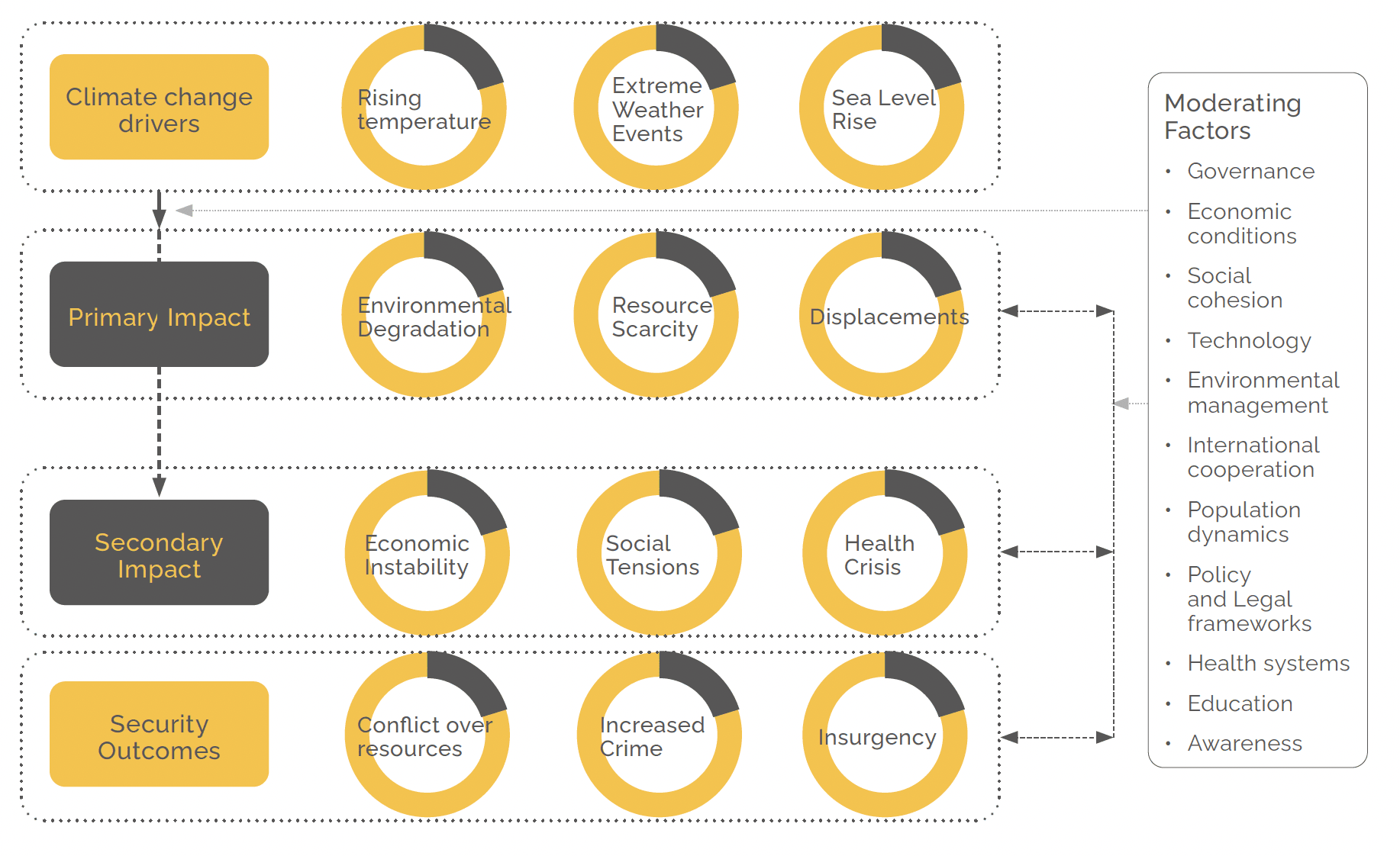
Figure 1 above offers a comprehensive visual representation of the intricate and multifaceted relationships between climate change drivers, their impact and resulting security outcomes.
The climate change drivers, which include rising temperatures, extreme weather events and sea-level rise represent the initial environmental changes induced by global climate change. Rising temperatures result in prolonged heatwaves, extreme weather events cause immediate and severe disruptions like hurricanes and floods and sea-level rise gradually submerges coastal areas, leading to long-term displacement and habitat loss.
The primary impacts are the direct consequences of these climate change-drivers and include environmental degradation, resource scarcity and displacement. Environmental degradation encompasses the deterioration of land and water resources, making them less productive and habitable. Resource scarcity arises from diminished availability of essential resources such as water and arable land, leading to increased competition. Displacements occur when communities are forced to leave their homes due to environmental degradation or extreme weather events, causing significant social upheaval.
The secondary impacts are the cascading effects resulting from the initial changes; the economic instability, social tensions and health crises. Economic instability emerges from disrupted agricultural production and loss of livelihoods, which undermines the economic foundation of affected regions. Social tensions are fueled by competition over scarce resources and the stresses of displacement, potentially leading to conflicts between different groups. Health crises arise from the exacerbation of conditions such as malnutrition, waterborne diseases and heat-related illnesses due to the degraded environment and poor living conditions.
The security outcomes, such as violent conflict over resources, increased crime and insurgency, are the direct consequences of the compounded primary and secondary impacts. For example, resource scarcity and social tensions can escalate into violent conflicts over access to essential resources. Economic instability and health crises may lead to increased crime rates as individuals and groups resort to illicit activities to survive. Insurgency can gain traction as vulnerable and displaced populations become targets for recruitment by extremist groups.
Violent conflict, increased crime and insurgency can further exacerbate environmental degradation, resource scarcity and displacement. For instance, conflicts over resources can lead to their overexploitation and displaced populations can create new pressures on the environments they move into.
Moderating factors influence the relationships between each stage. These factors include the effectiveness of governance, equitable resource distribution, inter-community mediation mechanisms and socio-economic conditions. Effective governance and fair distribution of resources can alleviate the adverse effects of climate change by ensuring all communities have access to necessary resources, thus reducing tensions. Inter-community mediation mechanisms can help resolve conflicts peacefully and foster cooperation. Socio-economic conditions, such as employment opportunities and social services, can enhance community resilience to climate-induced stressors.
Nigeria’s security architecture
Nigeria’s national security architecture is designed to address a wide range of traditional and non-traditional security challenges, including internal conflicts, terrorism, organized crime and regional instability. The framework is guided by several key policy documents, including the National Security Strategy (2019), the National Defense Policy (2019), the Police Act (2020) and the National Counter Terrorism Strategy (2020). These documents outline the strategic priorities and operational guidelines for various security agencies, such as the military, police and intelligence services, to ensure the protection of national sovereignty, territorial integrity and the safety of its citizens.
The National Security Strategy (2019) emphasizes the need for a holistic approach to security, integrating military, economic, political and social dimensions. The National Defense Policy underscores the importance of maintaining a robust defense posture to deter external aggression and manage internal insurrection threats. The Police Act (2020) focuses on enhancing law enforcement capabilities and improving public safety. The National Counter Terrorism Strategy addresses the multifaceted threat of terrorism, outlining measures for prevention, protection and response to terrorist activities. Additionally, the Nigeria National Development Plan (2021–2025) and Agenda 2050 highlight sustainable development goals, indirectly touching upon issues of security through socio-economic stability and resilience.
There are multiple institutions within the Nigeria security architecture of Nigeria that play different roles. However, within the context of climate change, the NPF is the most critical institution due to its central role in maintaining internal security as outlined in the National Security Strategy. As provided for by Section 214 of the 1999 Constitution and section 4 of the Police Act of 2020, the NPF is mandated to enforce all laws, which includes the protection of lives and property, prevention and detection of crimes, apprehension of offenders and preservation of law and order.
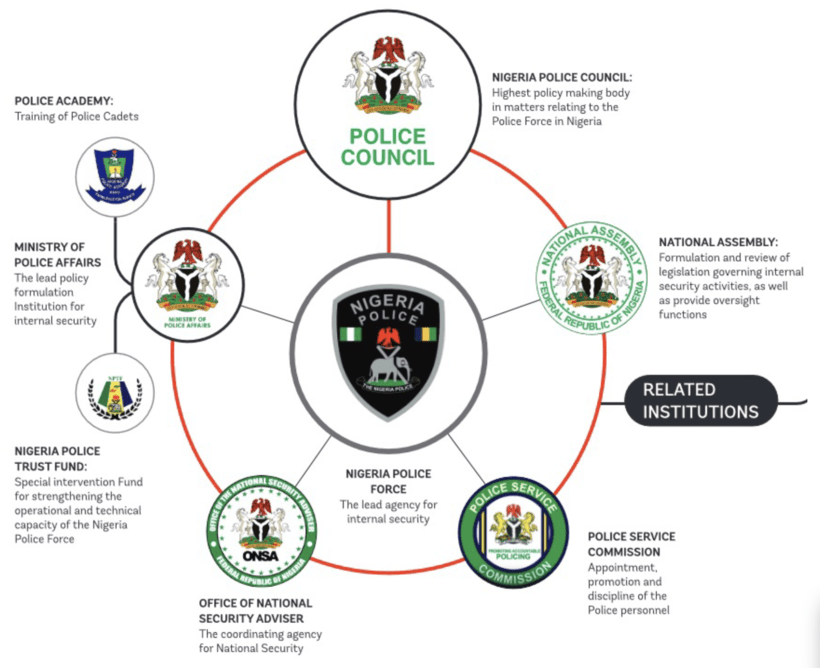
The NPF’s local enforcement capabilities and grassroots presence allow it to respond swiftly to climate-induced conflicts, such as those between farmers and herders over diminishing resources. Their ability to operate at the community level makes them essential in managing immediate security threats and implementing strategies for conflict prevention and resource management. The Nigeria Police Force is supported by the Ministry of Police Affairs, which provides policy direction and administrative support to the Nigeria Police Force. See figure 2, for key institutions within the Policing ecosystem.
Figure 2: Internal security architecture of policing in Nigeria
The NPF’s role in community engagement is vital for understanding and addressing the specific security challenges posed by climate change across different regions. Through community policing, the NPF gathers intelligence, mediates disputes and builds trust, which are all necessary for effective climate resilience. Additionally, by enforcing environmental protection laws, the NPF helps mitigate some drivers of climate-induced conflict, reducing long-term security risks associated with environmental changes.
Given the NPF’s strategic position as the lead agency in maintaining internal security, their involvement in climate resilience is crucial. The NPF’s legal mandate under the Police Act 2020 includes the protection of lives and property, which is increasingly threatened by climate change. Therefore, integrating climate considerations into the NPF’s operational framework is essential for a comprehensive national security strategy that can effectively manage and mitigate the emerging threats posed by climate change. The Nigeria Police Force and the Ministry of Police Affairs therefore form the core of this research.
Climate change frameworks in Nigeria
Nigeria’s climate change landscape is shaped by a robust legal and regulatory framework aimed at addressing the impacts of climate change and achieving long-term climate goals. The Climate Change Act of 2021 provides a comprehensive regulatory structure to guide Nigeria towards net-zero carbon emissions by 2060, ensure adequate climate financing and uphold environmental and economic accountability. Central to this framework is the NCCC, designated as the National Authority and Focal Point responsible for tackling climate-related issues across the country.
The National Climate Change Policy and Response Strategy outlines specific adaptation and mitigation actions across key sectors. In the energy sector, efforts focus on ensuring sustainable development without significant increases in greenhouse gas (GHG) emissions. The agricultural sector aims to reduce vulnerability to climate change and enhance productivity for food security and poverty reduction. Water management strategies include regulatory and fiscal measures to ensure sustainable supply, while coastal areas are addressed through the implementation of the Integrated Coastal Zone Management Plan. Forestry and land use policies emphasize afforestation, reforestation and the prevention of deforestation. The transport sector promotes low-emission vehicles, including electric vehicles and health sector strategies focus on building community resilience to environmental health challenges. Additionally, initiatives in culture, tourism and ICT are geared towards promoting adaptation and reducing GHG emissions through innovative applications.
In May 2024, the President established the Presidential Committee on Climate Action and Green Economic Solutions to enhance coordination and oversight of climate action and green economic development policies. This Committee aims to eliminate coordination constraints, foster a comprehensive government approach and ensure alignment with the President’s Renewed Hope Agenda on climate action. As a signatory to the Paris Agreement, Nigeria has committed to sustainable development measures through its Nationally Determined Contribution, reflecting its dedication to limiting global warming and mitigating the adverse effects of climate change.
Despite these frameworks and initiatives, there is weak evidence to suggest adequate integration of climate resilience into Nigeria’s national policing planning. The focus on sectoral adaptation and mitigation actions needs to be complemented by strategies that directly address the security implications of climate change. There is also the question of the capacity of the policing institutions to respond to climate-induced threats.
Situation analysis of climate vulnerabilities in Nigeria
Nigeria’s security environment is under threat from climate change-induced risk, which exacerbates pre-existing vulnerabilities while creating new ones. Over 41 million Nigerians, or 24% of the country’s total population, reside in locations with high climate exposure, according to the United States Agency for International Development (USAID) (2018). Moreover, 4.5 million people live in regions with extremely high exposure to the climate. Between 2000 and 2016, an estimated 40 climate-related disasters were reported in Nigeria, according to data from the EM-DAT International Disasters Database.
Declining rainfall and the increasing frequency and duration droughts in the Sahel region, stretching from Senegal in the west to Sudan in the east, have put immense pressure on rivers, lakes and groundwater supplies. Water scarcity and the continued encroachment of the Sahara Desert on fertile land have also led to a reduction in the availability of arable land for farming and grazing intensifying competition for these resources. The degradation of land also exacerbates food insecurity, contributing to social unrest and instability in affected regions (Ahmed and Aliyu, 2019). The ongoing shrinkage of Lake Chad, for instance, has escalated tensions among the neighboring communities of Nigeria, Chad, Niger and Cameroon, as they struggle over diminishing water resources. Desertification, particularly in northern Nigeria has led to conflicts not only between farmers and pastoralists but also within farming communities themselves.
Boko Haram has caused nearly 40,000 deaths and displaced around 2.4 million people in the Lake Chad Basin region (United Nations High Commissioner for Refugees, 2020). Banditry has also surged, with bandits, often from semi-nomadic Fulani communities, expressing grievances over cattle killings and disruptions caused by vigilante groups (International Crisis Group, 2020). This has led to increased organized violence between pastoralists and settled farmers. This violence has resulted in the displacement of 300,000 people and heightened insecurity in states like Adamawa, Benue, Nasarawa, Plateau and Taraba since 2018 (Internal Displacement Monitoring Centre, 2019). An anti-grazing law passed in Benue state forced Fulani pastoralists to move to Nasarawa and caused intercommunal violence in 2018 (Eberle et al., 2020).
Nigeria’s coastal states are exposed to a wide range of hazards, including negative rainfall anomalies in the southeast, inland flooding and wildfires in the Niger Delta region and storm surges throughout the whole coast. The country is predicted to experience a 0.5-meter rise in sea level by the end of this century. This is likely to exacerbate coastal erosion, forcing an estimated 27 to 53 million people to migrate inland (USAID, 2018). The floods that occurred in 2010 and 2012, which affected 1.5 million and 7 million people, respectively, stand out as having had a particularly significant effect. Communities around the Niger and Benue rivers, as well as those in the Niger River Delta of Bayelsa and Delta states, were all affected by the destruction caused by the 2012 floods. Similar flooding occurred in 2022, where communities across 34 States were significantly affected by flooding and this increased the IDP numbers from 3.1 million to 5.3 million.
Rising water temperatures, pollution and overfishing in Nigeria’s coastal and inland water bodies had led to a decline in fish stocks that many communities rely on for their livelihoods. This situation has sparked conflicts among fishing communities and between local fishers and industrial fishing operations. The resulting loss of livelihoods has driven some individuals toward criminal activities such as piracy and smuggling (Alves, et al.,2020).
In the Niger Delta region, rising sea levels, increased flooding and coastal erosion have exacerbated the environmental damage caused by oil extraction activities, leading to the loss of arable land and fisheries, which are vital for the local economy (Nwankwoala, 2015). The consequential socio-economic hardships have fueled militancy and criminal activities, as groups like the Niger Delta Avengers target oil infrastructure to protest perceived injustices and demand greater economic benefits from the region’s resources (Ikpe, 2013).
The displacement from ancestral lands also heightens social tensions and puts additional strain on the resources of the areas where these populations seek refuge. Rural to urban migration and the resultant rapid urbanization has led to the growth of informal settlements in cities like Lagos, Abuja and Kano, which are often overcrowded and lack adequate services. These underserved areas are hotbeds for crime, violence and conflict over limited resources such as water, electricity and housing. The inadequate infrastructure and services in these settlements further aggravate social tensions and create additional security challenges for urban authorities (Fasakin, 2018; Momoh et al., 2018).
Climate-related security initiatives in Nigeria
Nigeria is engaged in a regional stabilization strategy led by the Lake Chad Basin Commission, targeting the socio-economic recovery of conflict-affected areas in the broader Lake Chad region. This initiative is focused on enhancing service delivery and environmental sustainability, focusing on addressing climate change impacts. The Commission champions initiatives aimed at climate-proofing all future investments in socio-economic development, advocating for climate change fragility assessments to inform planning processes. Their goal is to build resilience to shocks, support adaptation and mitigation efforts and ensure long-term sustainability.
At the national level, Nigeria has passed laws and set up multiple initiatives related to climate change. The Nigerian legislative framework for climate change governance is established by the Climate Change (Establishment, Etc.) Act of 2021. The National Council on Climate Change was also established according to this law. The law provides an overview of methods for both mitigating and adapting to climate change, such as cutting greenhouse gas emissions and boosting resistance to its effects.
The National Adaptation Strategy and Plan of Action on Climate Change for Nigeria also offers a road map for various ’sectors ’climate adaptation initiatives. In order to improve resilience and lessen vulnerability to the effects of climate change, it identifies priority areas for action, such as agriculture, water resources, health and disaster risk reduction.1
The formation of the Presidential Committee to oversee Green Economic Initiatives represents the latest effort to address the challenges posed by climate change. Although this Committee does not have representation from the security sector, it is however expected to manage and supervise all policies and programs related to climate action and green economic development. Its primary aim is to eliminate barriers to coordination and promote a comprehensive government-wide approach to climate-action initiatives.
At the state level, several Nigerian states have also created their own projects and policies about climate change. A policy brief by APRI highlights that certain local communities, drawing on indigenous and traditional knowledge systems, often use creative, multi-faceted strategies, practices and tools to sustain their lives and livelihoods. However, given the scale, their impact remains very limited and yet to be seen. Key Findings from the Study by the Society for Planet and Prosperity (2023) are summarized table 1 below.
Table 1: Summary of key findings on the study of Sub-Nationals Climate Change policy and strategic framework
Description |
Summary of key finding |
|---|---|
|
States with Online Climate Policy Documents |
|
|
States with Climate Change Action Plans |
|
|
States with Climate Change Laws |
|
|
States with Environmental Policies: |
|
|
Climate Provisions in State Budgets (2023) |
|
|
Climate Mainstreaming Evidence |
|
|
Federal Government Climate Programs |
|
Source: Okereke, C., Ogenyi, T., &Adegbule, W. (2023).
What is clear from a review of the climate change framework at the national and sub-national level is that while these laws are directly targeted at climate change mitigation and adaptation efforts, they are expected to indirectly benefit the security of lives and property. The Government also seems to view climate change goals as ends in themselves rather than through the lens of development priorities, under which security falls. It is through this prism that Government intervenes in the sector.
There is significant room for enhancing the knowledge level of personnel of key policing institutions as relating to mainstreaming climate action in security frameworks and its implementation. Key knowledge gaps identified in the policing institutions that need to be tackled include climate science literacy, climate risk assessment and analysis, early warning system implementation, conflict analysis and mediation, adaptation planning and implementation and data collection and analysis.
Overall, the key positive takeaway from the situation analysis of climate vulnerabilities and climate-related security initiatives in Nigeria includes, but not limited to the following:
- Growing awareness and recognition: The security community in Nigeria is becoming more aware of the links between security challenges and climate change. The inclusion of climate change considerations in strategic planning and policy creation is a result of this increased knowledge. For instance, security personnel are well aware that events brought on by climate change, such as resource scarcity and droughts, can intensify conflicts over land and water, raising tensions and security hazards.
- Strengthening capacity: Measures have been taken to improve security officers’ capacity to respond to climate change-related security risks. To increase the resilience of security forces, training courses and seminars on disaster response and climate change adaptation have been held. For instance, to efficiently manage crisis situations and safeguard communities, some police officers and military personnel have undergone specific training on handling catastrophes brought on by extreme weather events like hurricanes and floods. The scope of the training and scale is however still very limited.
- Encouraging international collaboration: In order to handle security issues brought on by climate change, Nigeria has been aggressively encouraging international cooperation. Collaborations with international organizations and regional groups have made it easier to share resources and expertise, allowing for coordinated efforts to increase climate resilience. For instance, in order to address transboundary environmental challenges like deforestation and water scarcity, which have an impact on regional security, Nigeria works with neighboring nations and international institutions to exchange information and best practices.
There are also some key concerns based on the situation analysis and these include:
- Knowledge gap: Despite growing awareness and some progress in integrating climate change considerations into security frameworks, significant knowledge gaps remain among police personnel, particularly in understanding and applying climate and environmental laws. Many in the policing sector lack sufficient literacy in climate science, risk assessment and the legal frameworks that govern environmental protection. This gap hampers effective implementation of climate-responsive policies and hinders the ability to anticipate and manage climate-induced security risks. Comprehensive training and capacity-building efforts are needed to bridge these gaps, ensuring that security agencies are well-equipped to handle the complex challenges posed by climate change.
- Implementation challenges: Nigeria confronts considerable obstacles in putting policies and initiatives into practice, even while it recognizes the significance of tackling security issues associated to climate change. Effective implementation is hampered on the ground by elements including bureaucratic roadblocks, institutional capacity limitations and limited funds. For instance, notwithstanding the Government’s creation of a national action plan for climate security, many local communities are still without the resources and assistance needed to put adaptation measures into place, making them more susceptible to natural catastrophes and conflicts brought on by climate change.
- Problems with coordination and fragmentation: Efforts to promote climate resilience within Nigeria's security sector are often undermined by a lack of effective coordination and the fragmentation of responsibilities among various agencies and stakeholders. Multiple entities are engaged in climate-related security initiatives, but these efforts are frequently disjointed, leading to overlapping roles, duplicated activities and inefficient use of resources. For instance, while one agency might focus on reviewing the curriculum of training institutions to include climate change modules, another might simultaneously be developing separate training programs on disaster response without integrating the climate-specific content already being prepared. This lack of synchronization not only creates confusion but also results in missed opportunities to build a comprehensive and cohesive approach to climate resilience. Without a centralized coordinating mechanism to align these efforts, the sector's capacity to effectively manage and mitigate climate-induced security risks remains significantly compromised.
- Lack of robust monitoring and evaluation: Nigeria is devoid of strong systems for keeping an eye on and assessing the success of security activities pertaining to climate change. It is challenging to evaluate the effects of actions on security outcomes and to pinpoint areas in need of improvement in the lack of credible data. For instance, even though a number of programs have been put in place to lessen the security risks associated with climate change, little is known about how successful these efforts have been in lowering vulnerability to conflicts, displacement and other security issues. This has made it challenging to identify the best ways to improve the nation’s climate resilience efforts.
Review of case studies
Case Study 1: South Africa’s integration of climate change in policing
South Africa’s approach to integrating climate change into its policing strategy is anchored in its National Climate Change Adaptation Strategy (NCCAS), which acknowledges the security risks associated with climate impacts like floods and droughts. The South African Police Service (SAPS) plays a critical role in this framework by actively participating in disaster response and community resilience-building efforts. These roles emerged from reforms prompted by past severe environmental events, which highlighted the need for police involvement in managing the impacts of natural disasters.
To facilitate SAPS’s integration, South Africa has developed a multi-level governance structure involving the National Disaster Management Centre (NDMC) and local government units. This setup empowers local police units with greater autonomy, allowing them to engage in emergency planning forums and work directly with communities vulnerable to climate impacts. By building partnerships with various stakeholders, SAPS supports adaptive measures that go beyond immediate disaster response, strengthening the long-term resilience of communities.
Case Study 2: Kenya’s strategy for climate resilience through policing
Kenya’s strategy focuses on the arid and semi-arid lands (ASALs), where climate change has exacerbated conflicts over scarce resources like water and pasture. The National Climate Change Action Plan (NCCAP) integrates policing efforts as a crucial element in managing these climate-induced security challenges. The Kenya Police Service collaborates closely with the National Drought Management Authority (NDMA) and other agencies to develop early warning systems and implement conflict resolution strategies.
Recognizing that resource scarcity often leads to violence, Kenyan police officers receive specialized training in conflict mediation and resource management. The emphasis on community policing and proactive engagement has been key to Kenya's strategy, allowing the police to build trust and cooperation with local communities. By involving police officers in climate resilience networks, Kenya ensures that its law enforcement is well-equipped to manage both immediate and long-term climate risks.
Case Study 3: The role of police in bushfire management in Victoria, Australia
Victoria’s experience during the 2019–2020 Black Summer Bushfires demonstrates a model of police involvement in climate disaster management. The bushfires, which scorched over 24 million hectares of land, posed severe threats to remote rural communities in East Gippsland. The response was shaped by lessons learned from past disasters, such as the 2009 Black Saturday bushfires, which led to significant reforms in Victoria’s emergency management system.
According to Blaustein, Miccelli, Hendy, & Hutton (2023)2, the police force in Victoria operates within a multi-level governance architecture that enables police officers to play a stewardship role in disaster preparedness and response. Local sergeants, for instance, have been granted autonomy to participate in community forums and engage with residents and stakeholders, ensuring that local knowledge is integrated into emergency planning. The model supports a collaborative approach where police officers help facilitate community participation, strengthen local governance structures and enhance resilience. Victoria’s experience underscores the capacity of policing actors to contribute to climate resilience when they operate within a well-coordinated, adaptive management framework.
Key points
The integration of climate considerations into policing and security frameworks is crucial in enhancing the resilience and adaptive capacity of communities facing climate-induced challenges. Lessons from South Africa, Kenya and Victoria (Australia) offer valuable insights into the strategies and frameworks that can be employed to achieve this. These regions have implemented various models that leverage police institutions as key actors in climate adaptation and disaster response. The following key points outline the critical approaches these regions have adopted to build effective, resilient and community-engaged policing models that respond to the complexities of climate change.
- Multi-Level Governance: The experiences of South Africa and Victoria illustrate the effectiveness of a multi-agency, multi-level governance approach that integrates police forces into climate resilience efforts. Establishing frameworks that empower local police units to engage actively in disaster preparedness, response and resilience planning is essential.
- Specialized Training: Kenya’s approach emphasizes the need for specialized training for police officers in managing climate-induced threats, such as extreme weather events and resource conflicts. Investing in training programs improves the police force's capacity to act as mediators and first responders in regions affected by climate-related challenges.
- Community Engagement: The models implemented in Kenya and Victoria demonstrate the value of building trust and cooperation with local communities. Promoting community policing initiatives and fostering collaborative relationships with residents are key strategies for effective climate adaptation and security management.
- Institutional Reform: Effective integration of climate considerations into policing requires prioritizing institutional reforms that empower police forces to take proactive roles in adaptation planning. The frameworks in South Africa and Victoria highlight the importance of flexibility and autonomy within the police system to respond effectively to evolving climate challenges.
Assessment of the climate change gaps in Nigeria’s security framework
To identify and assess the deficiencies in the mainstreaming of climate change considerations within Nigeria’s security framework, the analysis is structured around six key dimensions:
- Policy Integration and Legal Frameworks
- Institutional Coordination and Resource Allocation
- Risk Assessment, Planning and Operational Readiness
- Public and Community Engagement,
- Monitoring, Evaluation and Technological Integration
- International Collaboration.
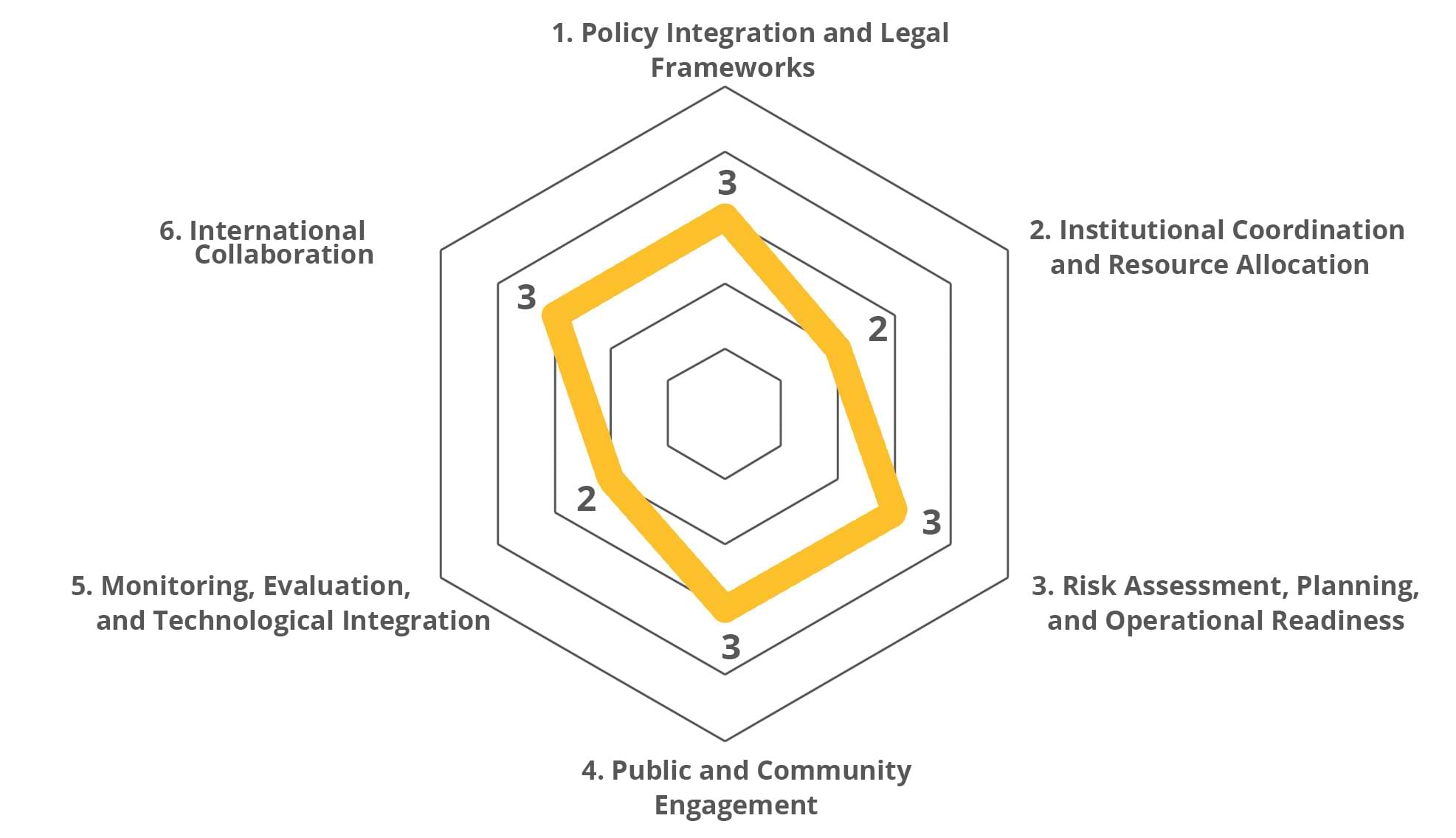
These dimensions cover the essential aspects required to develop a comprehensive understanding of how climate change impacts are being addressed within the security sector, highlighting areas that need improvement and guiding the integration of climate resilience into national security planning. Each dimension is scored between 0 and 5, establishing the degree of advancement in each area, with 0 being the complete absence of integration and 5 representing full integration and effective implementation of climate considerations within the national security framework. This scoring approach provides a clear, quantifiable measure of progress and pinpoint specific areas where further action is needed.
Figure 3 presents an overview of the final assessment. The rationale for the score of each of dimension presented in the following section.
Figure 3: Assessment of dimensions fro mainstreaming climate change into Nigeria's security framework
Policy integration and legal frameworks
This dimension examines the extent to which climate change considerations are embedded within Nigeria’s national security policies and legal frameworks. It evaluates the presence of explicit references to climate risks, the comprehensiveness of related legislation and the alignment with international climate agreements and protocols. Identifying gaps in this area helps to highlight the need for more robust and inclusive policy frameworks that address the multifaceted nature of climate-induced security threats.
Analysis and scoring
The National Security Strategy explicitly identifies climate change as a critical threat to national security. It highlights the impacts of environmental changes on conflicts, particularly in the North East region. Importantly, the NSS includes a dedicated section on environmental security, emphasizing the protection and conservation of the environment to achieve stability and prosperity. The strategy outlines several initiatives, such as building resilient communities, strengthening early warning mechanisms and enhancing disaster management capabilities through National Emergency Management Agency (NEMA) and State Emergency Management Agency. Despite these comprehensive measures, the strategy primarily addresses environmental issues descriptively rather than through detailed, actionable policy measures that integrate climate resilience into broader security operations.
The Police Act 2020 and accompanying regulations focus on the structural and operational aspects of the NPF. They emphasize law enforcement and public safety but do not incorporate climate change as a critical factor influencing security. This gap is significant given the increasing intersection of environmental degradation and security challenges.
The National Defense Policy provides a comprehensive framework for Nigeria’s defense operations but does not explicitly integrate climate change considerations. While it acknowledges the need to respond to environmental threats, it lacks specific strategies or protocols to address climate-induced risks, thus failing to mainstream climate resilience effectively. For instance, the policy does not address the growing threat of unauthorized geospatial analysis of critical mineral resources, such as lithium, by foreign actors—an issue that is increasingly relevant given the global race for clean energy and the shifting geopolitical landscape. Similar to the National Defense Policy, the Armed Forces Act provides a regulatory framework for military operations but remains silent on the incorporation of climate change considerations. The act focuses on conventional military threats and operations without addressing the emerging security risks posed by climate change, such as the illegal mining of critical minerals by actors sponsored by foreign entities, which could undermine national security.
Key informant interviews (KII) revealed that the Ministry of Police Affairs is developing a Police Reform and Transformation Roadmap with six dimensions: Infrastructure Development, Technical and Operational Efficiency, Policy and Regulations Development, Community Policing, Enhanced Welfare and Strategic Communications. While the roadmap mentions climate change consideration as a key consideration in implementing the reforms, it does not adequately mainstream climate considerations across its dimensions, reflecting a significant gap in policy integration.
Furthermore, a review of the composition of the Presidential Committee on Climate Change reveal a clear absence of the Nigeria Police Force, or any other key security institution. Conversely, key security committees -such as the Counter Terrorism Committee- also do not feature participation from the Climate Change ecosystem.
Based on the review of the relevant policy and legal frameworks within the security sector, with insights from key informant interviews, the integration of climate change considerations into Nigeria’s security framework is still at a nascent stage. While there are clear indications of a recognition of the risk that climate change poses to security, the absence of a systematic and comprehensive approach to mainstreaming climate resilience across all security policies and strategies is evident.
The score for this dimension is therefore 3 out of 5
|
Dimension |
Score 0 |
Score 1 |
Score 2 |
Score 3 |
Score 4 |
Score 5 |
|---|---|---|---|---|---|---|
|
Policy Integration and Legal Frameworks |
No consideration of climate change in policies and legal frameworks. |
Minimal mention of climate change; no actionable plans or policies. |
Climate change mentioned in policies and strategies in the sector, but no integration into legal framework for security |
Basic integration of climate change in some policies and legal frameworks in the security sector; lacks a comprehensive approach. |
Significant integration of climate change considerations in most policies and legal frameworks. |
Comprehensive integration of climate change considerations across all relevant policies and legal frameworks, with clear actionable plans. |
This score reflects the National Security Strategy’s explicit recognition of climate change as a security threat and its dedicated section on environmental security indicates a strong strategic intent to address climate-related risks. Despite the strategic intent reflected across various policies and frameworks, the mainstreaming of climate considerations remains fragmented across different policies and agencies. There is a lack of clear coordination of actionable plans within security frameworks to address climate-induced risks systematically.
Institutional coordination and resource allocation
Effective coordination among institutions and adequate resource allocation are crucial for addressing climate-induced security threats. This dimension assesses the mechanisms in place for inter-agency collaboration, communication and the capacity of relevant stakeholders. It also evaluates the allocation of financial, human and technological resources dedicated to climate security initiatives.
Analysis and scoring
Findings reveal persistent rivalry and competition among key security institutions, particularly between the military and the NPF. The expanded role of the military in complementing the NPF has not been effective, primarily due to their different orientations and operational approaches. with frequent clashes reported between the NPF and the Military, undermining coordinated security efforts. Such incidents, including the November 2023 attack on the Adamawa State Police Command by soldiers and past claims of police brutality against military personnel, exemplify the strained relationships. This rivalry extends to the Nigeria Security and Civil Defense Corps.
KIIs suggest that the relationship between security institutions, particularly the police and civilian entities, is improving. The growing emphasis on community policing has fostered better collaboration between the police and local security networks, such as vigilante groups. This development is crucial for building trust and enhancing community-based climate security measures.
The Presidential Committee to oversee the Green Economic Initiative, which is supposed to act as a coordination mechanism of key institutions that play a critical role in climate action, has 25 members, with none from the core security sector. This partly shows the lack of full government appreciation of the climate-security nexus.
There are, however, some pockets of positive developments in institutional coordination. The President’s mandate for the Ministry of Police Affairs to collaborate with the Ministry of Environment to develop a climate-smart security strategy is a promising step. Although still in the planning stages, this initiative could significantly reduce community vulnerability to climate-related risks and enhance resilience. Additionally, efforts to establish a ““Mine Marshal” initiative to combat illegal mining and the strengthening of Forest Guards reflect a growing recognition of the link between environmental management and security. However, these initiatives remain fragmented and lack a cohesive, integrated strategy for mainstreaming climate resilience across all security operations.
The security sector in Nigeria enjoys a significant share of the national budget, with allocations growing from 920 billion Naira in 2011 to over 3 trillion Naira in 2024. Despite this substantial budget, the allocation is heavily skewed towards the Military, driven by the ongoing insurgency in the North East. This skewed allocation has led to dissatisfaction among other security agencies, particularly the NPF, which feels under-resourced in comparison. Despite the high proportion of the total national budget allocated to security (averaging 12%), the funds are also insufficient to address critical climate change-induced security threats. A significant portion (over 80%) of the security budget is allocated to recurrent expenditure, leaving limited resources for capital expenditure needed for interventions that build climate resilience. This budgetary constraint hampers the ability of security institutions to effectively manage and mitigate climate-related security risks.
Figure 4: Nigeria's budgetary allocation to the security sector from 2011 to 2024
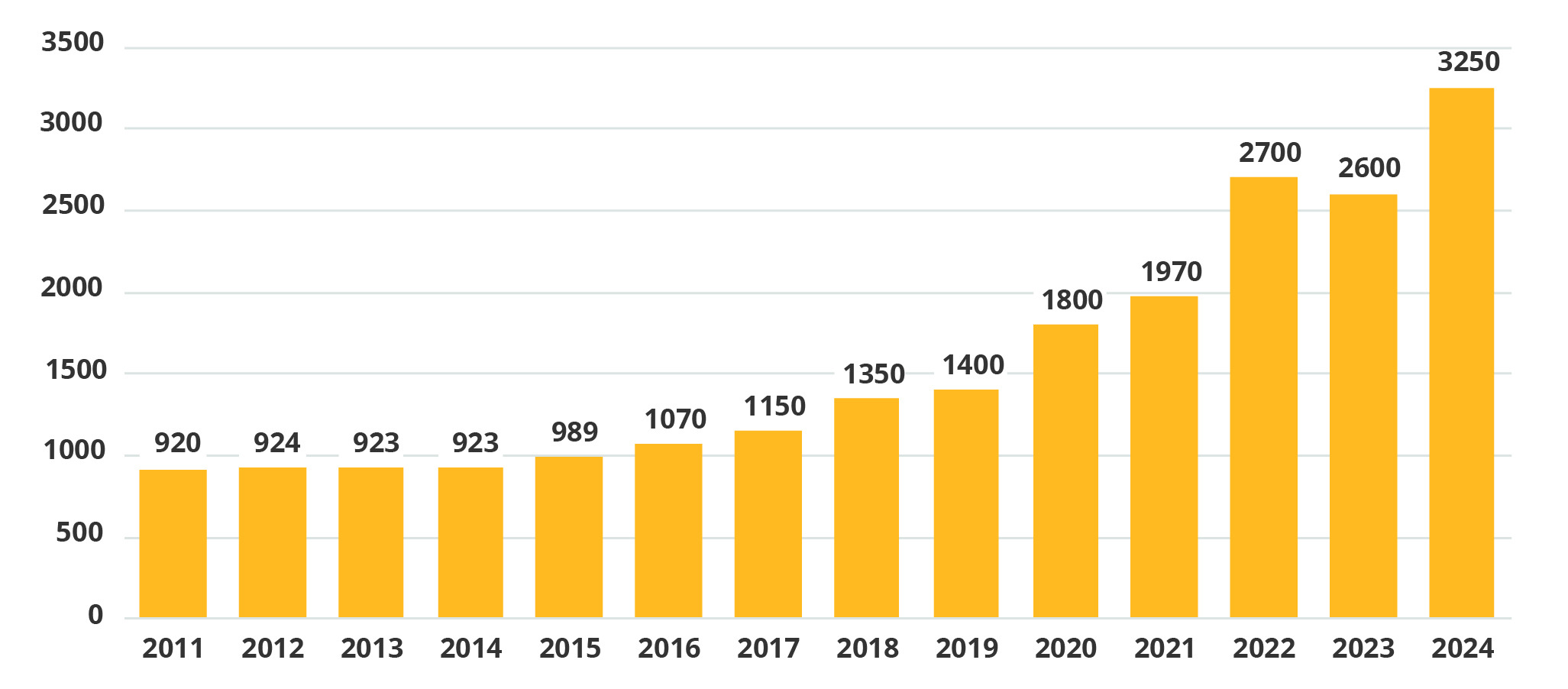
Based on the analysis, institutional coordination and resource allocation in Nigeria’s security sector show significant gaps, particularly in putting together a coordinated effort to tackle climate related security risk. While there are positive steps towards improving collaboration and recognizing environmental security issues, these efforts are still nascent and fragmented.
The score for this dimension is therefore 2 out of 5
|
Dimension |
Score 0 |
Score 1 |
Score 2 |
Score 3 |
Score 4 |
Score 5 |
|---|---|---|---|---|---|---|
|
Institutional Coordination and Resource Allocation |
No coordination between institutions; resources are not allocated for climate-related security threats. |
Minimal coordination; resources largely insufficient and poorly allocated. |
Some coordination attempts; resources allocated are inadequate for effective climate-related interventions. |
Moderate coordination; resources allocated are starting to address climate-related threats but remain insufficient. |
Good coordination; adequate resource allocation for climate-related security threats in most areas. |
Excellent coordination; optimal resource allocation ensuring effective response to climate-related security threats across all institutions. |
The score reflects the persistent rivalry and lack of cohesion among key security institutions, which undermine effective coordination and integration of climate considerations. Recent mandates and collaborative efforts signal a positive direction but require substantial development and implementation. The budgetary allocation is heavily skewed towards the military, with insufficient funding directed towards climate-resilient security measures. The high proportion of recurrent expenditure further limits the capacity for capital-intensive climate adaptation and mitigation projects.
Risk assessment, planning and operational readiness
A thorough understanding of climate-induced risks and preparedness to respond to them is essential for national security. This dimension evaluates the comprehensiveness of risk assessment frameworks, scenario planning and early warning systems. It also reviews the preparedness and response capabilities of security forces, including training, equipment and protocols for managing climate-related incidents and disasters.
Analysis and scoring
An evaluation of the relevant policies, strategies and operational processes within the Nigeria Policing ecosystem indicates significant gaps in comprehensive risk assessment frameworks, especially concerning climate-induced security threats. While scenario planning is a component of security training, it is generally focused on conventional security threats rather than those exacerbated by climate change. KIIs confirm that these frameworks are either non-existent or inadequately developed, which limits the preparedness of security agencies to handle the unique and increasingly frequent challenges posed by climate change. A key informant from the NPF noted that “We need better coordination and access to up-to-date climate risk data to enhance our operational readiness”
The NCCC and the Ministry of Environment, mandated to conduct and regularly update climate risk assessments, do not effectively share or utilize this critical information with security agencies. This disconnect hinders the ability of security institutions to anticipate and prepare for climate-related security threats. Despite the existence of disaster management frameworks such as the National Disaster Response Plan (2002), the National Disaster Framework (2010) and the National Disaster Risk Management Policy (2018), these documents lack specific provisions for addressing climate-induced security threats and their implementation remains inadequate.
Early warning systems, essential for anticipating and mitigating climate-induced security threats, are largely absent. This absence impedes proactive measures and timely responses to climate-related emergencies. Additionally, while some disaster management policies highlight disaster risk reduction, prevention, preparedness and mitigation, there is little evidence to suggest these measures are effectively implemented or integrated into the security sector’s operational readiness concerning climate change impacts.
According to a respondent, the NPF is also currently implementing an ambitious program called the NPF Green Initiative, which aims to leverage low-carbon, climate-resilient development to improve police infrastructure and operational efficiency. The initiative’s project portfolio includes solar power installation at 5,000 locations, deployment of 840 electric vehicles and 605 gas-powered vehicles, installation of 14 electric vehicle charging stations and 38 gas refill stations, a tree-planting program targeting one million trees and engagement with up to five million community members.
The NEMA has undertaken steps to address this gap. In May 2024, NEMA collaborated with the United Nations ’Children’s Educational Fund to conduct a hazard risk analysis for Nigeria, identifying and strengthening actions towards addressing common disasters across the country. NEMA has also conducted climate-related risk assessments and developed a National Contingency Plan based on these findings. This plan focuses on disaster preparedness, including continuous revision of risks and the development of early warning systems to enable communities to understand and respond to the risks they face. However, this plan is developed strictly for NEMA’s preparation and has not been shared with the Nigeria Police Force or other security institutions, highlighting a critical gap in inter-agency information sharing and coordination.
The score for this dimension is therefore 2 out of 5
|
Dimension |
Score 0 |
Score 1 |
Score 2 |
Score 3 |
Score 4 |
Score 5 |
|---|---|---|---|---|---|---|
|
Risk Assessment, Planning and Operational Readiness |
No risk assessment or planning related to climate-induced security threats. |
Initial steps towards risk assessment, but no comprehensive planning or readiness. |
Basic risk assessment conducted; limited planning and operational readiness. |
Moderate risk assessment; some planning and operational readiness, but lacks comprehensiveness. |
Significant risk assessment and planning; operational readiness improving, but some gaps remain. |
Comprehensive risk assessment, detailed planning and full operational readiness for climate-induced security threats. |
This score reflects some progress made by NEMA in conducting risk assessments and developing a contingency plan but also underscores the absence of comprehensive frameworks tailored to climate-induced security threats in policing, the critical gap in early warning systems and the underutilization of climate risk information due to disconnected institutional roles.
Public and community engagement
Public and community engagement is a critical dimension in addressing climate-induced security threats in Nigeria. This dimension examines how well security policies and strategies incorporate the input and participation of local communities, civil society organizations and the general public in planning and implementing climate resilience measures. Effective engagement not only fosters trust and cooperation between security agencies and communities but also enhances the capacity of these communities to anticipate, respond to and recover from climate-related risks.
Analysis and scoring
The involvement of local communities, civil society organizations and the general public in planning and implementing security measures is essential for fostering trust, cooperation and effective responses to climate-related risks. Respondents noted during the KIIs, that despite efforts to enhance community involvement, significant challenges and gaps remain.
A key issue is the general lack of trust between the public and security agencies, particularly the NPF. This distrust stems from historical grievances and perceived injustices, making it difficult to foster meaningful collaboration. However, there are ongoing efforts to bridge this gap. Respondents from the Ministry of Police Affairs reveal that the Ministry of Police Affairs has initiated nationwide town hall engagements with citizens. These town hall meetings provide a platform for direct interaction between the Ministry, citizens and critical policing stakeholders. The objective is to foster transparent dialogue, share insights on ongoing policing reforms and gather valuable feedback from citizens on strengthening policing strategies, including community policing.
In addition, the Ministry of Police Affairs has collaborated with the Ministry of Youth Development to improve the relationship between Nigerian youth and the police. This collaboration aims to secure the input, support and buy-in of the youth in the development and implementation of security policies and programs. Such initiatives are crucial as they address a significant demographic and leverage the energy and perspectives of young people to enhance community policing strategies.
"Through our town hall engagements, we are working to create a transparent dialogue bwetween citizens and the police. However, we recognize that there is still work to be done in integrating climate-related risks into these discussions."
Key informant from the Ministry of Police Affairs
Despite these positive developments, there is limited evidence that climate change considerations are explicitly integrated into these public engagement efforts. A review of the Concept Note of the town hall engagement, as provided by a respondent from the Ministry, shows clear gaps in integrating climate change risk or threat consideration in the program. While the town hall meetings and youth engagement initiatives are steps in the right direction, they tend to focus on general security issues rather than specific climate-related risks. This gap means that communities, particularly those on the frontlines of climate impacts, may not be adequately informed or prepared for the specific threats they face.
Overall, the dimension of public and community engagement in ’Nigeria’s security policies and strategies for climate resilience scores 3 out of 5
|
Dimension |
Score 0 |
Score 1 |
Score 2 |
Score 3 |
Score 4 |
Score 5 |
|---|---|---|---|---|---|---|
|
Public and Community Engagement |
No engagement with the public or communities regarding climate-related security threats. |
Minimal engagement efforts; largely ineffective. |
Some engagement initiatives; limited effectiveness and reach. |
Moderate engagement with the public and communities; more inclusive but not comprehensive. |
Significant public and community engagement; effective in most areas but could be more inclusive. |
Comprehensive and effective engagement with the public and communities on climate-related security threats; fully inclusive and participatory. |
There are commendable efforts towards involving local communities and enhancing public awareness, significant gaps remain in systematically integrating climate change considerations into these engagements. Addressing these gaps requires a concerted effort to build stronger, more inclusive and climate-aware community engagement frameworks that can effectively contribute to national security and resilience.
Monitoring, evaluation and technological integration
Effective monitoring, evaluation and technology integration are critical components of a resilient and adaptive security framework, particularly in the context of climate change. Technology plays a pivotal role in modernizing security operations and enhancing the ability to respond to complex threats, including those posed by climate change. Advanced technologies such as Geographic Information Systems (GIS), remote sensing and early warning systems (EWS) can provide real-time data and predictive analytics that are crucial for proactive security measures. These dimensions ensure that security agencies can accurately assess threats, evaluate the effectiveness of interventions and leverage advanced technologies to enhance operational readiness and response capabilities.
Analysis and scoring
The Ministry of Police Affairs has a Police Inspectorate Division responsible for monitoring and evaluating various aspects of policing in Nigeria. However, the current monitoring and evaluation (M&E) framework used by this division does not include assessments of climate-induced security threats or the responsiveness of the NPF to such issues. According to an official from the department, the department’s staff undergo regular training in M&E practices, the staff are well-versed in evaluating conventional policing metrics, but they lack the specialized knowledge needed to assess how climate change impacts security dynamics from a policing response perspective.
The integration of advanced technologies in the NPF shows significant potential for enhancing security operations. Key technologies include the Command-and-Control Centre (C4i) and the National Criminal Data Fusion Centre. The C4i Centre has been instrumental in preventing major security disasters and empowering citizens through the C4i RescueMe Mobile Application, resulting in numerous successful rescues. A key informant from the C4i noted that despite its capabilities, the C4i platform faces operational limitations due to funding challenges and remains centrally located, needing wider deployment across all states for optimal effectiveness. The National Criminal Data Fusion Center, which is nearing completion, aims to integrate data from various law enforcement and security agencies into a single database, allowing multiple users to generate actionable intelligence for crime prevention and investigation. This center represents a significant advancement in the use of technology for security purposes, providing a centralized platform for data integration and intelligence sharing.
Despite these technological advancements, several challenges and gaps need to be addressed. The absence of a climate-specific focus in the M&E framework limits the ability to track and assess the impact of climate change on security. Furthermore, the underutilization of advanced technologies like the C4i platform, due to funding constraints and limited deployment, hampers the full potential of these tools in addressing climate-induced security threats. Additionally, while institutions like the NEMA conduct climate risk assessments and develop contingency plans, these are not systematically shared with the NPF or other security institutions. This lack of coordination and information sharing impedes the development of early warning systems and the integration of climate risk assessments into security planning and operations.
The overall score for monitoring, evaluation and technology integration is 3 out of 5.
|
Dimension |
Score 0 |
Score 1 |
Score 2 |
Score 3 |
Score 4 |
Score 5 |
|---|---|---|---|---|---|---|
|
Monitoring, Evaluation and Technological Integration |
No monitoring or evaluation of climate-related security initiatives; no technological integration. |
Initial steps towards monitoring and evaluation; minimal technological integration. |
Basic monitoring and evaluation; limited technological integration in security operations. |
Moderate monitoring and evaluation efforts; some use of technology but not fully integrated. |
Significant monitoring and evaluation; good technological integration in many areas. |
Comprehensive monitoring and evaluation frameworks in place; advanced technological integration across all security operations. |
While there are foundational elements and notable technological advancements within the NPF, significant enhancements are required to fully address climate-related security threats. Developing comprehensive M&E frameworks, improving technological capabilities and fostering better inter-agency coordination are critical steps towards building a more resilient and adaptive security system.
International collaboration
There is a high degree of international collaboration ongoing within the security sector, particularly in the policing ecosystem. The Nigeria Police Force plays a critical role within the International Policing cooperation mechanism. Currently Garba Umar, a retired assistant inspector-general of police, serves as the vice-president of the International Criminal Police Organization (INTERPOL) for Africa and a member of the Executive Committee. In May 2024, the International Police Organization, INTERPOL, appointed Nigerian Police Commissioner, CP Ifeanyi Henry Uche, as the Chairman of the African Heads of Cybercrime Units comprising heads of 54 countries.
From a research standpoint, in terms of building a knowledge base on the climate-security nexus through international collaboration, the Ministry of Police Affairs has a Planning and Research department, the Nigeria Police Force has a Department of Research and Planning, as well as the National Institute of Police Studies. These research-focused departments and institutions have significant potential to explore international collaboration to deepen context-relevant understanding across key dimensions of the global climate transition, the shifting geopolitical landscape and the implications these changes may have for Nigeria’s security and influence. However, they have not fully leveraged this potential, often lacking the necessary resources, strategic partnerships and focus to systematically study and address the complex interplay between climate change and security, leaving critical knowledge gaps unaddressed.
Analysis and scoring
The NPF currently benefits from the support of several international partners, including but not limited to the German Government, the United Kingdom Government, USAID, the EU and various United Nations agencies. These collaborations span multiple programs aimed at improving police oversight, accountability and professional conduct. For instance, the United Nations Office on Drugs and Crime and the Office of the High Commissioner for Human Rights have initiated projects to support the ’NPF’s internal oversight mechanisms, particularly through the Complaints Response Unit. This unit is designed to handle public complaints about police misconduct, thereby enhancing transparency and accountability within the force.
Additionally, the Ministry of Police Affairs is actively engaging with the United Arab Emirates Ministry of Interior, which has pledged technical assistance and funding support for various reform initiatives within the NPF. This collaboration is expected to provide significant resources and expertise to advance the reform agenda and improve the overall effectiveness of the police force. The Ministry and the NPF also frequently participate in international conferences and workshops, which facilitate the exchange of knowledge and best practices with counterparts from other countries. These engagements are crucial for staying abreast of global trends and innovations in policing, particularly those related to climate security.
Despite these positive developments, there are areas where international collaboration could be further strengthened. While the existing partnerships focus on various aspects of policing, there is a need for more targeted collaborations that specifically address climate-induced security threats. This includes sharing climate risk assessments, developing early warning systems and implementing climate-smart security strategies. Additionally, better integration and coordination of international support with national policies and frameworks are essential to ensure that the assistance received is effectively utilized and aligned with Nigeria’s security priorities.
The overall score for international collaboration is 3 out of 5.
|
Dimension |
Score 0 |
Score 1 |
Score 2 |
Score 3 |
Score 4 |
Score 5 |
|---|---|---|---|---|---|---|
|
International Collaboration |
No international collaboration on climate-related security issues. |
Minimal international collaboration; largely ineffective. |
Some international partnerships; limited impact on addressing climate-related security threats. |
Moderate international collaboration; effective in some areas but not comprehensive. |
Significant international collaboration; effective in most areas, but could be more focused on climate-specific threats. |
Comprehensive and highly effective international collaboration on climate-related security issues; strong impact and alignment with national strategies. |
This score reflects the substantial support and partnerships already in place but also highlights the need for more focused and coordinated efforts to leverage this international collaboration to address climate-related security issues. Enhancing these collaborations to include specific climate resilience measures and ensuring better alignment with national security strategies will significantly improve ’Nigeria’s ability to mitigate and respond to climate-induced security threats.
Policy recommendations for integrating climate resilience into national security strategy and policies
Based on the assessment conducted, the following recommendations are advanced for mainstreaming climate resilience into national policing frameworks and they have been grouped into two categories: quick wins and strategic medium to long term Action.
Quick wins
- The ongoing preparation of the Renewed Hope Police Agenda and Transformation Roadmap, alongside the development of the National Policing Policy and Police Regulation, present critical opportunities to embed climate considerations. Mainstreaming climate resilience into all key pillars of the Police Roadmap—such as infrastructure development, technical and operational efficiency, policy development, welfare, strategic communication, rebranding and community policing—is imperative. This will involve integrating climate risk assessments into the planning and design of police infrastructure to ensure they are resilient to extreme weather events. Enhancing the technical and operational efficiency of the police by adopting climate-smart technologies and practices, such as using renewable energy sources and sustainable materials, will also be crucial. Recent efforts by the Nigeria Police Force with the launch of the Nigeria Police Green Initiative is a step in the right direction and it should be sustained and strengthened further. Policy development should include guidelines and protocols for responding to climate-induced security threats, ensuring that welfare policies address the impacts of climate change on police personnel. Strategic communication efforts should raise awareness about climate-related security risks within the police force and the communities they serve. Rebranding initiatives can highlight the police force’s commitment to sustainability and climate resilience. Lastly, community policing strategies should incorporate climate adaptation measures to build trust and cooperation with local communities in mitigating climate risks. Securing technical assistance for this mainstreaming effort is critical and urgent to ensure its successful implementation.
- Integrating the Ministry of Police Affairs into the Presidential Committee on Climate Action and Green Economic Development is essential to address the intersection of climate change and security effectively. This involvement will ensure that security dimensions are incorporated into national climate strategies, facilitating a comprehensive approach to resilience. By participating in the Committee, the Ministry can support efforts at aligning climate policies with security priorities, thereby enabling a coordinated response to climate-induced threats and fostering a safer, more resilient society.
- Revising the curriculum and designing refresher courses of the Nigeria Police Academy to include the climate-security nexus is vital for preparing future officers to address climate-induced security threats. Additionally, designing mandatory refresher courses on this topic for current officers, which they must complete as part of their promotion exercises, will ensure continuous professional development. Developing specialized training programs for key security agencies focusing on climate risk analysis, early warning systems and climate-resilient operations will build the necessary capacity to ineffectively integrate climate considerations into security practices.
- The NCCC could develop a centralized dashboard to disseminate and share climate-related information with various government agencies. This dashboard will serve as a critical tool for real-time data on climate risks, early warning alerts and risk assessments, enhancing inter-agency collaboration and coordinated responses to climate-induced threats. By providing a platform for comprehensive and accessible information, the dashboard will empower security and relevant agencies to make informed decisions, thereby improving national resilience and ensuring a proactive approach to climate security.
Strategic medium- to long-term action
- Increasing budget allocations specifically for climate-security initiatives is essential to ensure adequate resources are available for recurrent and capital expenditures. This entails earmarking funds within the national and state budgets to address climate-induced security threats, including infrastructure adaptation, training and operational needs. Additionally, exploring green bonds and international climate finance opportunities can provide supplementary funding sources to support these initiatives. Green bonds can attract investments focused on sustainable projects, while international climate finance can offer grants or low-interest loans to enhance the resilience of security agencies to climate impacts.
- Fully operationalizing and decentralizing the C4i to all states is crucial to improve climate-related data monitoring and response coordination across Nigeria. This involves ensuring that each state command of the Police has access to the C4i’s advanced capabilities, allowing for real-time data collection, analysis and response to climate-induced security threats. Additionally, completing and operationalizing the National Criminal Data Fusion Center is necessary to integrate climate-related security data from various agencies, creating a comprehensive and actionable intelligence framework. This decentralization will enhance the ability of security agencies to respond promptly and effectively to climate-related emergencies.
- Developing robust M&E frameworks that include climate-induced security threats as key indicators is essential for assessing the effectiveness of climate-security initiatives. These frameworks should mandate regular reporting and evaluation to track progress, identify gaps and inform policy adjustments. Using evidence-based assessments will help refine strategies and enhance the responsiveness of security agencies to climate-related threats. Incorporating these indicators into the M&E processes of the Nigeria Policing Institutions will ensure that climate-security considerations are systematically addressed and that initiatives are continuously improved based on data-driven insights.
- As part of the ongoing review of the Police Act of 2020, it is crucial that the Ministry of Police Affairs and the Nigeria Police Force ensure that the Act reflects the urgency and importance of addressing climate-induced security threats. This includes incorporating provisions that mandate the integration of climate risk assessments, adaptation strategies and response protocols into police operations and policies. By embedding climate considerations into the legal framework governing the police, these measures will become standard practice, thereby strengthening the capacity of the police force to anticipate, prepare for and respond to climate-related security challenges.
- Integrating climate risk assessments into daily security operations is essential to ensure that the NPF is prepared to address climate-related threats effectively. This can be achieved by embedding climate risk considerations into the various standard operating procedure (SOP) manuals of the Police. Response plans should be climate-informed, incorporating the latest data and projections on climate-related risks. Furthermore, developing and implementing contingency plans for climate-related disasters, with clearly defined roles and responsibilities for security agencies, will enhance the overall preparedness and operational readiness of the police force. These measures will enable the NPF to respond proactively to climate-induced challenges, ensuring the safety and security of communities.
- Engaging state governments to include security institutions, including local security bodies such as vigilante groups, in the implementation of their climate policies is crucial for a comprehensive and localized approach to climate security. This collaboration should be tailored to regional vulnerabilities and capacities, ensuring that the unique challenges and strengths of each area are addressed. By involving security institutions in state-level climate initiatives, these entities can contribute to and benefit from climate adaptation and mitigation strategies. This engagement will foster a more integrated and cohesive response to climate-related threats, enhancing the resilience and effectiveness of security operations at the local level.
Conclusion
The integration of climate considerations into Nigeria’s security framework is not just an imperative for sustainable development, but a necessity for ensuring the resilience of the nation’s security infrastructure in the face of escalating climate risks. The findings from the comprehensive assessment of the current state of institutional coordination, resource allocation, public and community engagement, monitoring and evaluation, technology integration and international collaboration underscore significant gaps and opportunities for enhancement.
To address these gaps, a multifaceted approach is required. This involves mainstreaming climate resilience across all strategic documents and operational plans, such as the Renewed Hope Police Agenda and Transformation Roadmap, revising training curricula to include climate-security nexus and ensuring robust monitoring and evaluation frameworks that incorporate climate-induced security threats. Additionally, enhancing international collaboration, securing increased budget allocations for climate-security initiatives and leveraging technology for data integration and response coordination are critical steps towards building a climate-resilient security sector.
Moreover, the engagement of state governments and local security institutions in the implementation of tailored climate policies, coupled with the operationalization of advanced technological infrastructures like the C4i and the National Criminal Data Fusion Centre, will significantly bolster the nation’s capacity to manage climate-related security challenges.
Ultimately, the success of these initiatives hinges on a coordinated effort across all levels of government, security agencies and stakeholders. By prioritizing climate considerations within the security framework, Nigeria can not only safeguard its environment but also protect its citizens from the multifaceted threats posed by climate change, thereby ensuring a secure and sustainable future.
Endnotes
[1] https://csdevnet.org/wp-content/uploads/NATIONAL-ADAPTATION-STRATEGY-AND-PLAN-OF-ACTION.pdf
[2] See https://www.sciencedirect.com/science/article/pii/S221242092300328X?via%3Dihub
Bibliography
Blaustein, J., Miccelli, M., Hendy, R., & Hutton Burns, K. (2023). Resilience policing and disaster management during Australia's Black Summer bushfire crisis. International Journal of Disaster Risk Reduction, 95, 103848.
Brown, O., Hammill, A., &McLeman, R. (2007). Climate change as the 'new' security threat: Implications for Africa. International Affairs, 83(6), 1141-1154.
Busby, J. W., Smith, T. G., White, K. L., & Strange, S. M. (2018). Climate security vulnerability in Africa mapping 3.0. Political Geography, 68, 1-12.
Craig, C. M., Overbeek, R. W., & Niedbala, E. M. (2021). A global analysis of temperature, terrorist attacks and fatalities. Studies in Conflict & Terrorism, 44(11), 958–970.https://doi.org/10.1080/1057610X.2019.1606992
CNA Military Advisory Board. (2014). National security and the accelerating risks of climate change. CNA Corporation.
Eberle, U. J., Rohner, D., & Thoenig, M. (2020). Heat and hate: Climate security and farmer-herder conflicts in Africa.
Homer-Dixon, T. (1999). Environment, scarcity and violence. Princeton University Press.
Ikpe, E. (2013). The impact of climate change on conflict in the Niger Delta. Journal of International Development, 25(4), 507-520.
Internal Displacement Monitoring Centre [IDMC]. (2019). Nigeria: Displacement overview.
International Crisis Group. (2020). Violence in Nigeria: Trends and policy responses.
Kaldor, M. (2007). Human security: Reflections on globalization and intervention. Polity Press.
Nwankwoala, H. O. (2015). Coastal flooding and wetland loss in the Niger Delta: A hydrological perspective. Journal of Environmental Management, 151, 9-14.
Obaze, O. H., Kwaja, C. M., Onuoha, F. C., Adejoh, S., Sulaimon, A., & Ugwu, C. (2022). Climate change as a security threat in Nigeria and the Sahel.
Okereke, C., Ogenyi, T., &Adegbule, W. (2023). Climate impacts, policies and actions at the subnational level in Nigeria. Society for Planet and Prosperity.
Oluoko-Odingo, A. A. (2011). Vulnerability and adaptation to food insecurity and poverty in Kenya. Annals of the Association of American Geographers, 101(1), 1-20.
Ostrom, E. (1990). Governing the commons: The evolution of institutions for collective action. Cambridge University Press.
United Nations Security Council. (2017). Resolution 2349 (2017) on the Lake Chad Basin region. United Nations.
United Nations Environment Program. (2020). The adaptation gap report 2020. United Nations Environment Programme.
USAID. (2018). Current support for global surgery and implications of reform. Surgery, 164(6), 1147-1155.
About the Author

Omokhagbo Mike Imafidor
Mike Imafidor is a Public Policy Expert, Certified Infrastructure Finance Professional, and Research Economist with over a decade of experience leading high-impact projects across infrastructure, climate finance, and public-private partnerships.
Topics:
Climate Change and Resilience