Nigeria’s Climate Transition in 2025: Moving from Ambition to Delivery
Nigeria's 2025 climate transition agenda gained momentum, moving decisively from ambition to delivery. Progress across energy, finance, and public-sector governance accelerates the groundwork laid for a just, inclusive climate transition.

In 2025, Nigeria made significant strides in advancing its climate transition agenda, moving from broad policy ambition towards concrete implementation. Key developments reflected a convergence of strategic policy updates, record financing commitments, and structural reforms aimed at delivering an inclusive, investment-driven transition. They also underscored the growing integration of climate action into Nigeria’s broader development framework, with tangible implications for emissions reduction, energy access, and long-term resilience.
President Bola Tinubu’s appointment of Mrs. Omotenioye Majekodunmi as the director-general of the National Council on Climate Change (NCCC) signalled renewed strategic direction and a stronger operational focus on climate governance. As the statutory body mandated to coordinate climate policy across the government, the NCCC’s leadership transition reinforced federal ownership of Nigeria’s climate agenda and strengthened prospects for cross-government alignment and more effective delivery of national climate goals.
The Tinubu administration replaced the outdated 2001 National Electric Power Policy (NEPP) with the National Integrated Electricity Policy (NIEP), a modern roadmap targeting 6.3 gigawatts of new installed capacity by 2030 and a 60 percent renewable energy share by 2060. If effectively implemented, the NIEP would modernise Nigeria’s power-sector regulatory framework, support grid upgrades, accelerate renewable energy deployment, and unlock greater private-sector investment.
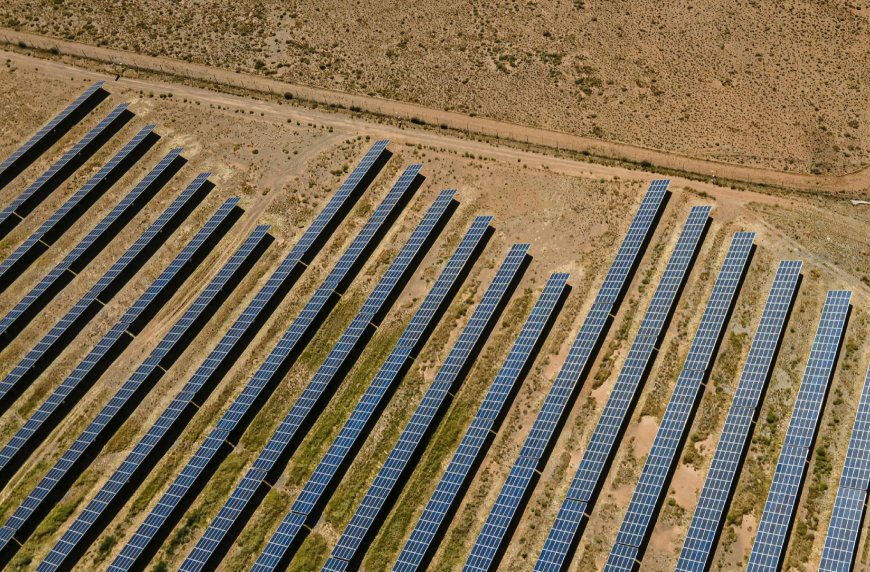
The launch of the National Public Sector Solarisation Initiative (NPSSI) in August 2025 marked another milestone in Nigeria’s drive for sustainable energy solutions and innovative financing. The 100-billion-naira (approximately $71.3 million) programme seeks to replace diesel-powered generators across public sector institutions with distributed solar systems, cutting emissions while reducing the long-term cost of governance.
Under the Nigeria Electrification Project (NEP), the Rural Electrification Agency (REA) deployed more than 200 mini-grids in underserved communities backed by a combined $1.45 billion financing package. Much of this funding was mobilised through the World Bank’s Distributed Access through Renewable Energy Scale-up (DARES) programme, with significant parallel support from the Japan International Cooperation Agency (JICA) and the African Development Bank (AfDB). Complementing these multilateral flows, the REA entered a $200 million partnership with pan-African energy company WeLight and signed memoranda of understanding worth $435 million with a consortium of renewable energy developers, including Oando Clean Energy, Sosai, and Okra Solar. Collectively, these initiatives position decentralised renewable energy (DRE) as the most immediate and viable pathway to delivering clean, reliable electricity to households, enterprises, and public institutions across Nigeria.
Nigeria’s climate finance architecture also entered a phase of consolidation in 2025 with the launch of the Nigerian Climate Investment Platform (NCIP), an initiative to mobilise up to $500 million for climate-relevant infrastructure, resilience and adaptation projects. By convening key actors such as the NCCC, Nigeria Sovereign Investment Authority, and the Green Climate Fund, the NCIP aims to improve project bankability, reduce fragmentation, and crowd in capital for large-scale mitigation and adaptation efforts. This push was complemented by an Industrial Development Fund arrangement with United Nations Industrial Development Organization (UNIDO), linking Nigeria’s climate agenda with efforts to advance clean-technology manufacturing, sustainable industrialisation, and the circular economy. Together, these measures signal a gradual repositioning of climate action from a narrow focus on emissions reduction to a broader engine for economic transformation.
In collaboration with the African Union, Regional Economic Communities and other continental partners, Nigeria advocated reforms of multilateral development aimed at lowering the cost of green capital and removing structural barriers to African energy transition projects. At the Second Africa Climate Summit, Nigeria advanced calls to scale up the use of guarantee instruments to derisk clean energy investments and unlock private capital for transition initiatives across the continent.
Nigeria officially submitted its updated Nationally Determined Contribution (NDC 3.0) in September 2025. The new NDC framed climate action as a national development and investment strategy requiring an estimated $337 billion between 2026 and 2035. It set ambitious targets, including an unconditional emissions reduction of 29 percent by 2030 and a conditional reduction of up to 32 percent by 2030, relative to 2018 levels, placing Nigeria on a credit pathway toward net-zero emissions by 2060. The following month, Tinubu approved the National Carbon Market Framework, marking a decisive step in Nigeria’s adoption of market-based climate mechanisms. The framework established the legal, institutional and operational foundation for carbon credit generation and trading, moving carbon markets from concept to practice.
Importantly, Nigeria demonstrated that near-term climate gains are achievable within its robust hydrocarbons sector. The Nigerian Gas Flaring Commercialisation Programme (NGFCP) reached a major milestone by issuing permits to 28 companies. These permits authorise firms to access designated sites and capture gas that would otherwise be flared, repurposing it for power generation, liquefied petroleum gas (LPG) production and industrial applications. The programme is expected to deliver rapid emissions reductions, unlock up to three gigawatts of power, expand LPG supply for households and industry and create jobs, thereby transforming waste and pollution into economic opportunity.
Coordination emerged as a central theme in Nigeria’s climate policy discourse. At the Global South Peer Learning Workshop convened by the Africa Policy Research Institute (APRI), stakeholders such as the NCCC, Federal Ministry of Budget and Economic Planning, Nigerian Economic Summit Group and the Shehu Musa Yar’Adua Foundation, emphasised the need to align fragmented policy initiatives under a coherent, government-led national platform. This would entail streamlining existing frameworks and ensuring that climate and energy priorities are fully integrated into the National Development Plan 2026–2030.
Looking ahead, the operationalisation of Nigeria’s carbon market, the implementation of NDC 3.0 sectoral roadmaps, the effectiveness of climate finance platforms, and Nigeria’s engagement at COP31 will serve as critical signals of the extent to which the momentum built in 2025 translates into tangible delivery of its climate objectives this year.
About the Author

Chibuikem Agbaegbu
Chibuikem Agbaegbu is a Climate & Energy Specialist with 12+ years in Sub-Saharan Africa. Expert in low-carbon electrification, energy nexus, climate transition & circular economy. Led donor/DFI projects with FCDO, USAID, EU, UNDP, GEF & more.