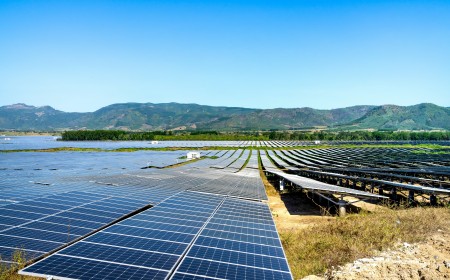

Osomobegbe Eugene’s startup journey: revolutionising post-harvest agriculture in Nigeria
Osomobegbe Eugene, founder of OGV, is revolutionizing Nigerian agriculture by providing solar drying solutions to smallholder farmers, significantly reducing post-harvest losses and empowering youth.
A vision born from adversity
Osomobegbe Eugene, a Nigerian entrepreneur based in the northern part of the country, grew up witnessing the alarming rate at which smallholder farmers lost their harvests due to poor storage and inefficient processing methods. Determined to address these post-harvest losses, particularly among perishable goods like tomatoes, he began exploring possible solutions in 2010 while still a student in the engineering department at his university. Although many people insisted that cold-chain storage was the only viable path forward, Osomobegbe remained convinced that solar drying presented a more affordable and sustainable option.
His enduring passion for this technology ultimately led to the establishment of Osomobegbe Global Ventures Limited (OGV) in 2019, when he was 26 years old. Now 34, Osomobegbe has grown OGV into a vibrant enterprise, providing solar drying solutions to thousands of smallholder farmers and empowering young people across Nigeria.
Founding OGV: from university project to thriving enterprise
Osomobegbe’s commitment to solar drying technology took shape as a final-year engineering project, when he built the first prototypes using his transport allowance and funds from a short teaching job. These prototypes, though crude at first, allowed him to test the feasibility of solar drying in local conditions. Over time, and with guidance from lecturers and peers, he refined the design, ensuring that the dryers became increasingly efficient and cost-effective.
Despite numerous challenges, Osomobegbe persevered by entering entrepreneurial competitions and exploring grant opportunities. His persistence paid off when he secured a USD 5,000 grant that enabled him to formally register OGV. This infusion of funds accelerated his research and development efforts, as well as the establishment of industrial-scale prototypes. Collaborations with organisations such as Palladium (a global advisory and management services firm), during which he set up three industrial dryers, further solidified OGV’s credibility and sparked interest among smallholder farmers eager to reduce their post-harvest losses.
OGV’s core solutions and business model
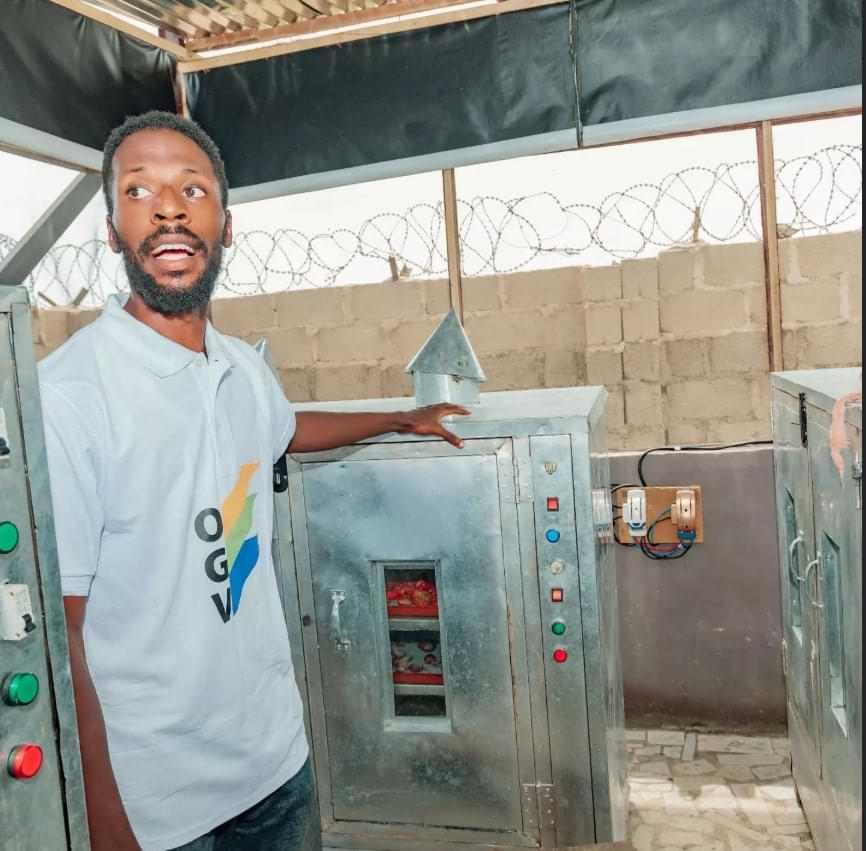
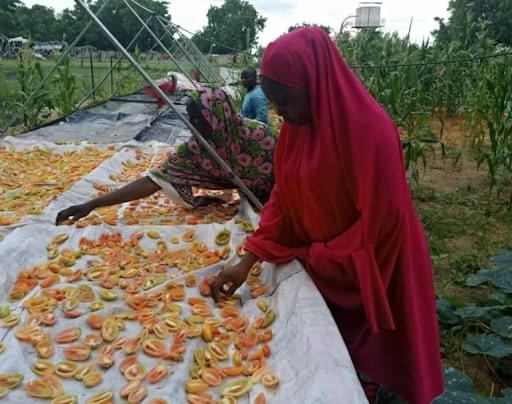
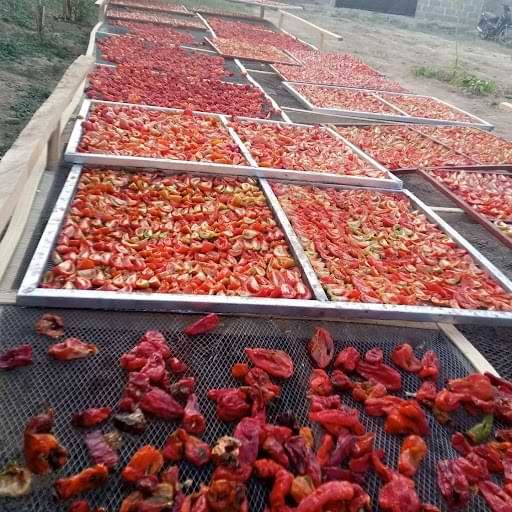
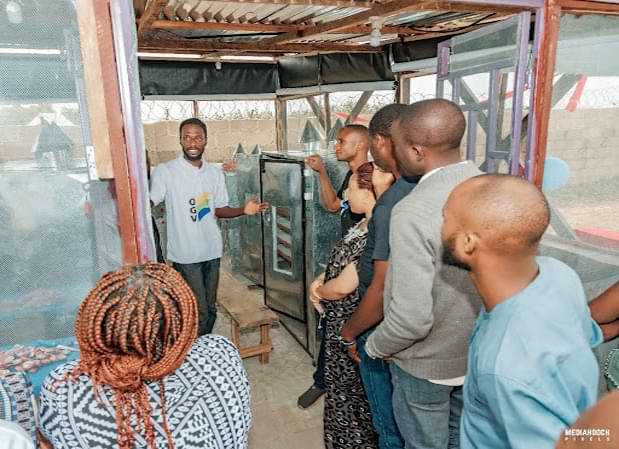
OGV focuses on creating and installing solar dryers constructed from locally available materials such as wood and metal. The dryers incorporate solar panels and blowers that circulate hot air to remove moisture from produce. This technology works for vegetables (e.g. tomatoes and peppers), proteins (e.g. fish and meat) and fruits (e.g. mangoes and pineapples). If properly dried, these products can last up to a year or more, thereby minimising food waste and providing farmers with a steady income stream.
To cater to farmers who cannot afford the cost of purchasing entire units, Osomobegbe set up solar drying centres. Here, small-scale producers can pay a fee to dehydrate their harvested crops. OGV also offers optional market linkage services, connecting farmers with off-takers for an agreed percentage. These drying centres not only preserve produce but also help stabilise the local food supply throughout the year, especially during off-seasons or rainy periods.
As a third pillar, OGV conducts training programmes to equip youth, farmers and budding entrepreneurs with practical skills in solar drying technology. By hosting workshops and webinars, the company raises awareness and builds a broader network of individuals familiar with modern post-harvest management techniques.
Resilience in action: conquering the odds
The main challenges Osomobegbe faced in building OGV included funding limitations, market awareness and continuous technical refinements. Funding stood out as an early and persistent hurdle. At first, Osomobegbe relied on his small teaching salary, transport allowance and personal savings to finance prototypes, leaving little room for scaling. Repeated refusals from government ministries to partner on projects pushed him toward alternative funding avenues, such as accelerator programmes and private competitions. Securing a pivotal grant not only addressed immediate financial needs but also allowed him to formalise OGV’s operations.
Another obstacle was identifying and reaching the right market. At first, Osomobegbe focused on educational institutions, though the most profound impact lay with smallholder farmers who were losing significant portions of their harvest every year. Understanding the realities facing farming communities and conducting grassroots demonstrations proved essential for building trust. Adapting to local conditions also required ongoing technical improvements. Each new region had its specific challenges, such as climate variation, produce type and farmers’ familiarity with processing methods, necessitating flexibility and constant iteration of the dryer design.
Despite these complexities, Osomobegbe’s perseverance and problem-solving paved the way for OGV to flourish. Farmers who benefited from reduced losses and enhanced earnings shared positive feedback, encouraging others to explore solar drying.
Fueling the vision: key factors driving success
The key factors that propelled OGV from an early-stage concept to a thriving enterprise revolve around perseverance, team building, a strong knowledge-base and strategic partnerships. First and foremost, Osomobegbe’s perseverance defined his journey. Starting in 2010, he devoted nine years tirelessly researching and refining solar drying technology before formally launching the company in 2019. His unwavering belief that solar drying could transform local agriculture sustained him through multiple setbacks.
Building the right team was also crucial. From lecturers who offered engineering insights to employees who worked tirelessly to perfect prototypes, Osomobegbe surrounded himself with individuals who shared his dedication to impact-focused innovation. A rigorous knowledge-base grounded in research, trial-and-error experimentation and feedback from the field ensured that OGV’s products met real-world needs.
Strategic partnerships were equally indispensable. Organisations like Palladium facilitated large-scale demonstrations, validating OGV’s industrial dryers in demanding conditions and attracting more stakeholders. Mentor-led programmes and accelerators helped Osomobegbe refine OGV’s business models, financial planning and record-keeping. These key elements have positioned OGV for sustainable growth.
Empowering youth: engagement and impact
From its inception, OGV has prioritised empowering young people, recognising them as the backbone of Nigeria’s future. Over 300 volunteers, mostly between 18 and 35 years old, have worked with the company, contributing to everything from produce sorting and drying operations to marketing campaigns in rural communities. Additionally, 100 interns have received hands-on training, equipping them with specialised skills in solar drying and post-harvest handling.
Currently, 20 youth fill paid positions at OGV, over 70% of whom are women aged 18 to 45. Their responsibilities range from technical operations and product packaging to community outreach and sales. By integrating these young people into the company’s day-to-day activities, Osomobegbe not only supports their professional growth but also ensures that local communities see tangible models of youth leadership and productivity.
Bridging the gap: overcoming youth engagement barriers
Despite this robust youth engagement strategy, OGV faces challenges in retaining its young workforce. Family obligations and limited financial resources often compel youth to leave prematurely. Some employees, for instance, must return home due to emergencies or take breaks when they secure admission to universities. Financial constraints pose an additional difficulty, particularly for those serving as primary breadwinners. If salaries do not sufficiently cover their needs, promising talent may feel pressured to seek higher-paying roles elsewhere.
Consequently, skills continuity also emerges as a hurdle, as new recruits require thorough training in solar drying processes, forcing the company to invest repeatedly in onboarding. This continuous cycle of hiring consumes time and resources.
Resources needed to address youth engagement challenges
Securing essential support and forming strategic partnerships are vital for resolving the youth engagement issues OGV faces. Osomobegbe highlights that targeted and supportive partners could mitigate many of these issues. If OGV could offer more competitive stipends or salaries, youth might remain longer, enhancing both productivity and funding stability. Collaborations with universities, nonprofits or governmental bodies could further reduce the financial and educational barriers young people face, potentially through scholarships or joint internship programmes. Additionally, establishing more community-based solar drying centres closer to where employees live would minimise relocation-related disruptions and help them balance work with personal or family commitments.
An enabling environment for innovation
Osomobegbe envisions a more supportive ecosystem for agritech innovations in Nigeria. For example, streamlined access to loans and grants would allow businesses like OGV to expand more swiftly. Reduced import and export taxes, along with policies friendly to renewable energy technology, would lower production costs and encourage manufacturers to embrace local solutions. He notes that many bureaucratic hurdles around documentation can disqualify otherwise deserving businesses from government tenders or private-sector opportunities.
In the long run, Osomobegbe hopes that better-aligned government programmes will integrate local ventures like OGV into official agricultural strategies. One government contract, for instance, can sustain a company for years, accelerating its ability to improve technology and hire more people. Proper collaboration, he argues, can position solar drying as a mainstream solution to chronic post-harvest losses across Nigeria.
Scaling for the future
OGV’s roadmap reflects Osomobegbe’s ambition to transform Nigeria’s agricultural sector. His company’s growth trajectory is both ambitious and purposeful. Having begun with 300 smallholder farmers, the company now supports nearly 4,000, with plans to reach 10,000 in the coming years. Over the next five years, he aims to install at least 1,000 solar dryers across Nigeria’s diverse agricultural regions and is considering deeper alliances with state and federal agencies to accelerate adoption. OGV also hopes to employ 1,000 people directly and 3,000 indirectly, creating ripple effects of skill development, job creation and improved food security.
Advice for aspiring entrepreneurs
Drawing on his own experience, Osomobegbe advises future entrepreneurs not to rush into business without validating their ideas. Small-scale trials and prototypes prevent large, debt-laden failures and offer time to refine concepts. He also underscores the importance of continuous learning through books, mentorship and accelerator support, to keep pace with evolving markets. Lastly, he cautions entrepreneurs to stay alert to policy and regulatory shifts, as sudden changes in taxes or energy costs can significantly affect operating budgets.
This series, produced in partnership with the Mastercard Foundation, focuses on young African entrepreneurs promoting economic growth through green tech innovation in Nigeria, Ghana, and Kenya. It showcases these founders' journeys, highlighting their contributions, successes, and challenges while identifying the support needed to expand their innovative ventures.