
Desmond’s startup success story: pioneering agricultural innovation for Africa’s sustainable future
"The birth of Complete Farmer: a foundation for innovation," says Desmond, a Ghanaian entrepreneur with a background in mechanical engineering, who founded Complete Farmer to revolutionise Africa's agricultural value chain by connecting smallholder farmers to global markets.
Early beginnings: the vision to transform agriculture
Desmond’s entrepreneurial journey began at the age of 27, with a bold vision to revolutionise agriculture and empower smallholder farmers in Africa. The idea behind his startup, Complete Farmer, was rooted in a desire to bridge the gap between modern technology and traditional farming, introducing innovative solutions to improve productivity and sustainability across the agricultural value chain.

The birth of Complete Farmer: a foundation for innovation
Desmond has a background in mechanical engineering. While still in school, however, he inherited his father’s farm. This event, coupled with his later experiences, set the foundation for his entrepreneurial journey.
After completing his studies, Desmond traveled to China, where he worked on manufacturing a bio-digester. This experience exposed him to the world of global supply chains and the potential for innovation in manufacturing.
While in China, he observed a thriving, small-scale manufacturing culture where individuals turned their garages into factories to produce goods sold on Alibaba, ultimately supplying to global markets. This observation sparked the idea to build a platform in Africa, similar to Alibaba, where small-scale agricultural production could feed into a global supply chain, ultimately transforming African agriculture.
With this vision in mind, Desmond decided to start Complete Farmer, a platform designed to connect smallholder farmers with global markets, similar to how Alibaba connected manufacturers in China with buyers worldwide. By digitising the agricultural value chain, he hoped to address the inefficiencies that plagued the industry and provide farmers with access to better markets, inputs and information.
Key enablers of success: persistence, learning and external support
Desmond credits several key factors as integral to the success of Complete Farmer, chiefly resilience, continuous learning and external support.
One of the most important aspects of Complete Farmer’s journey was the willingness to learn and adapt. From the very beginning, the team had the Meltwater Entrepreneurial School of Technology (MEST) onboard, playing a crucial role in the early stages of the company’s development. MEST provided the first major funding, which helped Complete Farmer start and validate its business model. This early-stage capital allowed the team to test their hypothesis, refine their processes, gain credibility with potential investors and connect with a network of mentors.
However, the company’s path to success was not straightforward. Desmond admits that, in the early stages, they weren’t entirely sure how to generate revenue, market the platform or ensure sustainability. The process involved a great deal of learning, experimenting and, at times, failure. But the team remained resilient, never giving up despite numerous setbacks.
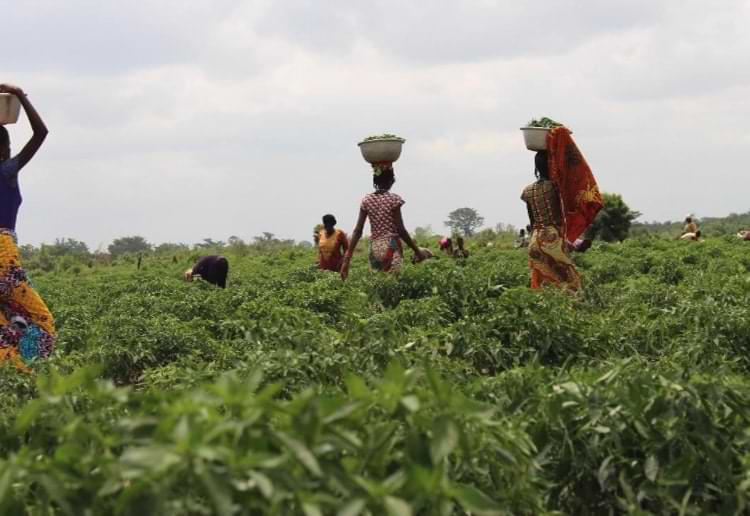
The turning point came with the outbreak of COVID-19 in 2020. The pandemic disrupted global sourcing methods, creating a surge in demand for the platform and revealing the opportunity for Complete Farmer to solidify its marketplace business model. The changes in how global buyers sourced commodities provided the clarity the team needed to pivot and optimise the agricultural value chain, ultimately enabling them to more effectively connect farmers with buyers.
While external support has played a pivotal role in Complete Farmer’s growth, Desmond recognises the ongoing efforts by the Ghanaian government to support the agricultural sector. Although Complete Farmer’s journey has been primarily driven by international investors, including those from Japan, who have provided crucial financial and technical assistance, Desmond believes there is great potential for enhanced collaboration between startups and government initiatives to further drive innovation and sustainability in agriculture.
Overcoming challenges
When Desmond founded Complete Farmer in 2017, he quickly realised that two major resources were crucial to the success of the venture: talent and infrastructure. Addressing these challenges would prove to be a multi-year effort.
The team required a blend of specialised skillsets to tackle the supply chain problems they sought to solve, including computer science, agronomy and business development. However, finding local technical talent was challenging. The highly specialised nature of these skills meant that qualified professionals were often already employed in more lucrative roles. To bridge this gap, Complete Farmer leveraged internship programmes and partnered with organisations like Engineers Without Borders. Additionally, the company participated in incubators like MEST, which played a significant role in helping Desmond and his team recruit talent early on.
Infrastructure was another major hurdle. Agriculture in Ghana and across Africa is often hindered by poor road networks, unreliable internet connectivity and inadequate storage facilities. The solution was to build fulfillment centres close to farming communities. These centres minimised post-harvest losses by offering farmers a place to store and process their crops before export. For the first few years, Complete Farmer had to operate with limited resources, renting old school buildings as warehouses until they raised enough capital to build their own facilities. The company has since established 10 fulfillment centres, six of which are owned by the company.
Adding to these obstacles have been the absence of reliable data on agricultural production, the presence of multiple middlemen in the value chain, the disconnect between farmers and suppliers, and the lack of standardised farming practices. Farmers often grow crops without understanding market demands, while agrochemical vendors push generic products onto them without considering the specific needs of the crops being cultivated.
Youth empowerment through agritech
Desmond’s commitment to youth involvement has been a cornerstone of Complete Farmer's success, both within the company and in the communities it serves. Recognising the critical role young people play in driving innovation, the organisation has intentionally built a team where approximately 80% of employees are under the age of 35. With a workforce of about 65 and growing, this approach has fostered a culture of fresh ideas and new perspectives, enabling Complete Farmer to challenge traditional agricultural practices and introduce cutting-edge solutions. While the organisation also benefits from the expertise of experienced agronomists and PhDs, its youth-focused strategy has been instrumental in creating a dynamic and forward-thinking environment.
Beyond direct employment, Complete Farmer has profoundly impacted young people across Ghana through its platform and community initiatives. One of its most notable efforts has been the introduction of a student ambassador programme, which encourages university students to engage in agriculture. By leasing land, accessing farm managers or training to become farm managers themselves, these young individuals can start their own farms through the platform. This initiative has significantly increased the number of young, tech-literate farmers, with an estimated 30–40% of farmers on the platform being under the age of 35.
The impact of Complete Farmer’s operations extends deeply into the surrounding communities, particularly through the vital role of its field agents. These agents are at the heart of the company’s mission, directly supporting farmers with the guidance and resources they need to succeed. In addition to this fieldwork, the presence of fulfillment centres creates diverse employment opportunities within the community, ranging from cleaning and loading to post-harvest processing. Women often find work in the processing activities, while young men actively contribute as field agents, playing a crucial role in connecting farmers to the broader network of support.
Unlocking growth: overcoming capital barriers to expansion
The demand for agricultural products from buyers, including global giants, far outpaces the Complete Farmer’s current capacity. The opportunity for expansion is clear: Desmond emphasises that the untapped potential is immense, with thousands of farmers ready to join the platform if the solution can be scaled to accommodate and support their needs effectively. However, expansion is being blocked by the lack of infrastructure in many regions within Ghana and neighbouring countries. Scaling the model to match the growing demand also requires investment, which has likewise been insufficient.
With greater access to capital, the company could significantly increase its impact, creating employment, supporting rural development and meeting global supply chain demands for African agricultural products. While Desmond’s company has achieved significant success in building fulfillment centres and connecting farmers to global markets, expansion into more geographies will unlock even greater opportunities, both for direct employment and for indirect initiatives empowering local youth.
Empowering local innovation through capacity building and seed funding
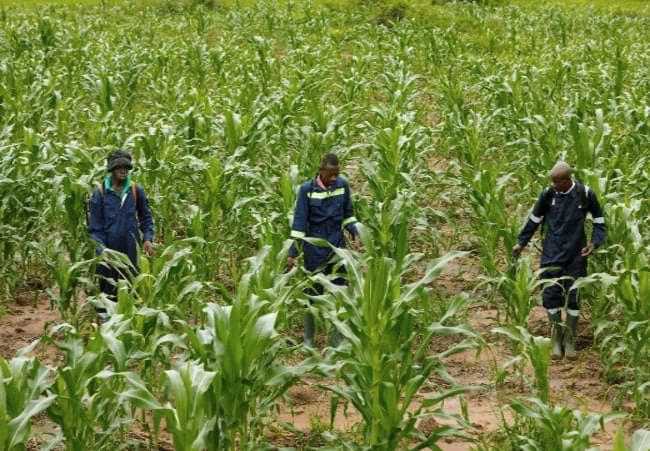
Desmond sees a wealth of untapped opportunities for young innovators in Ghana, particularly in addressing gaps in capacity building and access to seed funding. He has observed firsthand the challenges posed by a lack of specialised skills, especially in emerging fields such as AI and advanced technology development. To bridge this gap, Complete Farmer has initiated a graduate training programme offering intensive skill development for national service personnel. This approach has not only addressed the company’s talent needs but has also contributed to nurturing a skilled workforce in Ghana. Desmond believes that a widespread adoption of similar training programmes by corporate entities could transform the innovation landscape.
However, the challenges extend beyond talent development. Seed funding remains scarce for many young entrepreneurs in Ghana, with most early-stage investments coming from external sources. Desmond considers himself lucky to have accessed capital through the MEST incubator, but he highlights the absence of local investment networks as a significant barrier for others. To unlock the full potential of Ghana’s innovation ecosystem, he advocates prioritising both capacity-building initiatives and accessible seed funding channels.
Advice for aspiring entrepreneurs
Drawing on his journey, Desmond emphasises the importance of action and resilience for aspiring entrepreneurs. His first piece of advice is simple yet profound: just start. He acknowledges that the fear of challenges often paralyses potential entrepreneurs. However, taking action, even when conditions are less than perfect, is the first step toward success. Desmond also stresses the value of visibility, learning from diverse ecosystems and connecting with potential investors and experts. These experiences have not only shaped his entrepreneurial strategy but have also expanded his understanding of global trends and best practices. Finally, he underscores the critical role of building robust networks. Desmond’s journey has involved forging connections with agronomists, donors and industry peers who have provided critical support. According to him, networking doesn’t require significant financial resources, just a willingness to engage, learn and connect.
This series, produced in partnership with the Mastercard Foundation, focuses on young African entrepreneurs promoting economic growth through green tech innovation in Nigeria, Ghana, and Kenya. It showcases these founders' journeys, highlighting their contributions, successes, and challenges while identifying the support needed to expand their innovative ventures.