Informelle Stromversorgung als System: Ein neues Konzept der Energiesteuerung in informellen städtischen Siedlungen (EN)
Der informelle Zugang zu Strom in Siedlungen wird durch lokale Anreize, Defizite in der Regierungsführung und soziale Netzwerke geprägt. Wirksame Lösungen erfordern systemische Reformen, die diese Faktoren berücksichtigen.

Summary
- Despite formalisation efforts, informal electricity connections persist in Nairobi's informal settlements, revealing systemic complexity rather than a simple infrastructure deficit.
- Punitive top-down policies aimed at rooting out informal connections unintentionally strengthen them as these policies widen electricity access gaps and deepen mistrust.
- Informal electricity resellers provide electricity at affordable rates, but also increase safety risks.
- Community marginalisation, illegality and misaligned actor priorities sustain the issue.
- A deliberate shift towards formalisation, trust building and a well-coordinated urban upgrading programme offers a more realistic pathway to solving the issue.
Background
African cities are growing faster than formal planning processes and infrastructure development can keep pace, a pattern characteristic of the Global South, where rapid urbanisation consistently outstrips governments' capacity to respond (Mitlin & Satterthwaite, 2012; UN-Habitat, 2020; Spaliviero et al., 2020). With this population surge, informal settlements continue to expand not as temporary anomalies but as a central and enduring feature of how cities are growing (Samper et al., 2020; Kamalipour & Dovey, 2020; Satterthwaite et al., 2020). These trends are driving the demand for essential services, including electricity, laying bare a persistent structural gap between residents' needs and government provision.
Affordability issues further worsen this gap. Even where formal infrastructure exists, the cost of legally connecting to the grid and maintaining a metered supply remains out of reach for most settlement households, whose income is irregular and who already spend approximately 20 % of their household budget on energy (Karekezi et al., 2008; Shupler et al., 2021). In this context, informal electricity connections1 emerge not only as a deliberate act of non-compliance but as a practical response to structural exclusion (de Bercegol & Monstadt, 2018; Boamah et al., 2021).
Added to this complexity are the internal dynamics of informal settlements and the authorities' tendency to govern them formally. Informal settlements are characterised by poor infrastructure, insecure land tenure, lack of structured governance and largely informal economies (Arimah, 2010; Amankwaa & Gough, 2022). This makes electricity provision a challenge. Furthermore, government agencies are hesitant to operate in these areas due to factors such as hostility from residents who have experienced past enforcements as punitive, legal ambiguity over land tenure and institutional perspectives that have long treated informal settlements as low-priority areas (Njoroge et al., 2020; Satterthwaite et al., 2020). The challenge is further compounded by utilities and regulators who often fail to adapt their frameworks, which are structured around technical standards for formally planned urban environments, to the realities of informal settlements (van Welie et al., 2019).
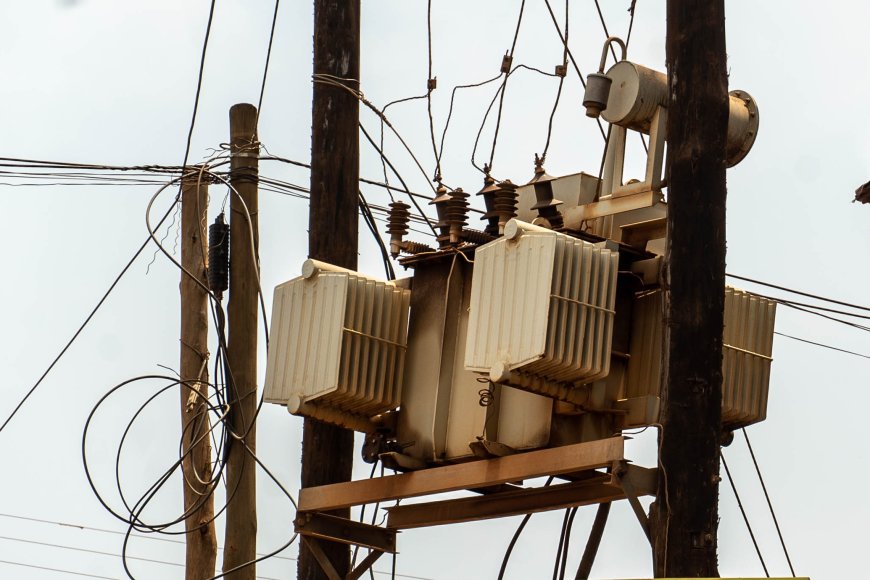
Due to the absence of formal supply, households eventually turn to informal electricity connections to meet their immediate needs (Karekezi et al., 2008; Besner et al., 2023). The persistence of informal supply cannot be explained simply as a delay in infrastructure delivery. Even where the grid is physically present, with transformers installed and distribution lines in place, households often continue to rely on informal resellers. This points to something more systemic. Electricity provision in informal settlements has become what Rittel and Webber (1973) termed 'a wicked problem': a challenge that resists resolution not because of insufficient resources or political will but because it is systemic, contested and shaped by interacting drivers that make a single intervention insufficient and often counterproductive. Technical solutions alone are unlikely to resolve the issue. As an intervention in one part of the system can shift risks and costs across others, policy responses must consider competing interests, institutional constraints and community dynamics.
Informal electricity connections and why they matter for policy
The dynamics outlined above are clearly visible in Nairobi's informal settlements, where, despite significant progress in expanding formal electricity access over the past decade, many households still rely on informal electricity connections (Nayema et al., 2023). This has serious implications for policy on grounds such as the uneven distribution of risks and costs across different actors, the interests of informal providers and the failure of past state-led efforts to disrupt informal supply.
Regarding the risks and costs of informal connections, for Kenya Power (the national utility), these illegal connections result in financial losses and strain the already overloaded grid infrastructure, leading to power instability and safety risks (Livingstone et al., 2020). Residents, on the other hand, face risks such as poor and unsafe wiring, recurring electricity-related fire outbreaks and the risk of electrocution (Christley et al., 2021). Past state-led efforts to address these gaps took the form of targeted electrification programmes. Through a collaboration with the Kenya Informal Settlements Improvement Programme and with support from the World Bank through the Global Partnership for Output-Based Aid (GPOBA) subsidy, informal settlements were mapped and segmented to identify areas most receptive to engagement. The strategy introduced community-based outreach, flexible payment arrangements and subsidised connections (World Bank, 2015).
These programmes lowered connection costs and upgraded the electricity distribution infrastructure to expand formal access. However, although they connected many households, they did not fully displace informal connections. In several settlements, progress slowed due to resistance from informal resellers and local actors such as community leaders, landlords and politicians who exercise influence over service provision and benefit from the status quo and persistent affordability constraints (de Bercegol & Monstadt, 2018). As a result, the programmes struggled to scale or sustain engagement, leading to a growing perception among the community that Kenya Power had stepped back. Consequently, residents reverted to informal connections because the cost of a formal metered supply remained too high, even after the subsidies, and maintaining a formal connection was perceived as burdensome and uncertain.
This pattern is indicative of a broader government tendency to treat informal settlements as illegal (Opanga & Müller-Mahn, 2025) and of authorities viewing informal connections as a matter of non-compliance with the rules provided (Guma et al., 2022). However, for many residents, these connections respond to the everyday realities of living in precarious conditions. Households must frequently make energy decisions under tight constraints, such as irregular incomes, rental arrangements controlled by building owners and limited to no influence over how services are planned or delivered in settlements (de Bercegol & Monstadt, 2018; Guma et al., 2022). In this context, informal electricity is more flexible in terms of payment, accessible and responsive to local needs (Boamah et al., 2021). What appears as non-compliance from the authorities' perspective is often a coping strategy within a constrained system.
Consequently, policy responses have typically entailed periodic crackdowns, disconnections and reactive enforcement to dismantle the connections. Although these measures show the utility's and authorities' intent to address the offence, they rarely tackle the underlying issues, such as affordability and lack of access, that drive residents to set up illegal connections in the first place (Njoroge et al., 2020; Christley et al., 2021). In many cases, the responses lead to temporary disconnections, infrastructure damage, community frustration and the quick return of informal connections. Sudden disconnections or attempts to regularise connections often result in disputes between residents and the utility (de Bercegol & Monstadt, 2018; Guma et al., 2022). In such cases, formal dispute-resolution channels are difficult for residents to access because they require documentation, time, and institutional knowledge, which most residents lack (de Bercegol & Monstadt, 2018). Within the Nairobi City County, this problem becomes more apparent during crises such as fire outbreaks and flooding, where accountability questions quickly turn political, as witnessed during the 2024 Mathare floods (Nderu, 2024). Over time, this cycle of disconnections, prolonged electricity supply gaps, informal re-supply, hostility from residents and eroded institutional trust has made reforms ever more difficult to sustain.
When formal reconnection takes too long, informal electricity providers step in (Nayema et al., 2023). They can move quickly to restore supply because they operate within the community, require no formal authorisation, use locally sourced materials, and already have established distribution networks (Christley et al., 2021). They derive their income and community support from these distribution networks, which are deeply embedded in the broader economies of the settlements. Kenya Power's standard response when it identifies an illegal connection is to dismantle the lines. If the problem persists, the utility escalates by removing the transformer serving the affected area entirely, leaving both legal and illegal customers without an electricity supply for weeks, months, or even years (Nayema et al., 2023). Thus, any attempt to dismantle informal electricity networks carries direct implications for the livelihoods of resellers and residents who depend on electricity to run their small businesses.
The main policy dilemma is therefore the tension between the formal regulatory structures governing electricity provision and informal urban realities through which services are organised and accessed (Baye, 2025). A second policy challenge is the misalignment of incentives across these actors. Reforms often fail to fully account for actors' interests and trade-offs (Guma et al., 2022). Over time, as the financial, social and political costs increase, even well-intentioned reforms become harder to implement. If informal and formal connections continue to coexist without coordination, the cycle of disconnection and informal reconnection will persist.
What the evidence reveals
The findings underpinning this brief are partly drawn from a participatory systems mapping exercise and a stakeholder workshop held in Nairobi in 2025, which involved residents of the Mathare informal settlement, community leaders, informal electricity resellers, researchers, utility representatives, and other sector actors. The settlement was chosen because it is one of the largest and most densely populated informal settlements in Nairobi and has long faced persistent electricity challenges, with 86% of households relying on informal electricity connections (Nayema et al., 2023). The workshop captured how these different actors interact with electricity and how these dynamics are experienced at the household, community and institutional levels. What emerged was not a simple cause-and-effect chain but a network of reinforcing dynamics.
Informality as adaptation
Our findings show that informal connections are the predominant coping response to the structural failure of formal electricity supply in Mathare. These networks are well-structured by informal electricity suppliers who understand household income levels and electricity needs and who capitalise on the strong community support they receive. Locally known as 'cartels', these suppliers establish connections more quickly than formal channels and offer flexible flat-rate payments that are more affordable for households. Residents typically pay between KES 2502 and KES 500 per month to an informal reseller, compared to KES 25.15 per kWh charged by Kenya Power (Energy and Petroleum Regulatory Authority [EPRA], 2026), with studies documenting the wider role of informal electricity reselling in Nairobi's low-income settlements (de Bercegol & Monstadt, 2018; Figueroa et al., 2019; Boamah et al., 2021). For households with monthly incomes between KES 10,000 and KES 18,000, this is very attractive (Njoroge et al., 2020; Mwangangi & Simiyu, 2014).
Formal connection processes, by contrast, require households to apply to the utility, provide identification and proof of occupancy and pay a connection fee before a meter is installed (de Bercegol & Monstadt, 2018). Historically, these connection costs have reached as high as KES 53000, although the Kenya Slum Electrification Programme later reduced the fee to around KES 1160 through subsidies (Lee et al., 2016; Kinyua & Wanyoike, 2017). Even with these subsidies, the process still faced challenges. In particular, the installation of load limiters, which capped household electricity consumption at 40 kWh per month at a flat rate of KES 300, was deemed by residents to be an unreasonable restriction. The resulting frustration led to widespread uproar and vandalism of the meters (de Bercegol & Monstadt, 2018).
In contrast, informal providers can connect a household immediately, offering flexible payment arrangements and requiring only a small, if any, upfront fee that varies among resellers depending on their relationship with clients. For many residents, whose income is irregular and low, these differences matter. This makes informality an adaptive solution or a coping strategy. There are, however, consequences to these adaptations: overloaded transformers, increased fire risks and dangerous wiring, leading to electrocutions. The same mechanisms that enable access also reproduce vulnerability.
Marginalisation as a structural driver
The results of the systems mapping and stakeholder workshop reveal that the most consistent driver of informal connections across mapped feedback3 loops is marginalisation. Informal settlements are often excluded from the formal planning processes (Ewnetu & Seo, 2025). Additionally, communication between the utility and the communities is limited and tends to occur mainly during crises, such as disconnections, prolonged outages or enforcement operations. As one community leader noted,
"We have sought dialogue to address this, but Kenya Power's silence drives us to alternatives" (Community leader, personal communication, 2025).
The institutional stigma from government institutions towards informal settlements widens this gap. Rather than viewing these areas as communities in need of basic services, the government has historically viewed them through a lens of illegality. It has also often been reluctant to extend basic services to informal settlements, fearing that doing so would legitimise residents' claims to occupied land (Mitlin & Walnycki, 2020). Over time, this perception has shaped how government institutions and public utilities engage with these communities and how the communities interpret institutions' actions (Christley et al., 2021).
The impact of Kenya Power's punishment cycle of dismantling illegal electricity lines and removing transformers serving the affected areas is not limited to those connected illegally. When a transformer is removed or supply lines are cut, the disruption affects everyone, including households and businesses legally connected. From the community's perspective, this is collective punishment rather than targeted enforcement, which deepens resentment by antagonising even legally paying residents. Unsurprisingly, they lose confidence in the formal system. The effect is the opposite of what the enforcement intends: Illegal connections become more entrenched, creating a reinforcing cycle (Kausya & Verrier, 2025).
The way forward: policy options
To address this problem, a set of practical measures will need to be introduced over time. The aim should not be to eliminate informal electricity service providers overnight, but to gradually reduce the risks they create while expanding safer, more reliable options for households.
Institutionalised dialogue and local energy platforms
Structured dialogue platforms convened by local administration or community-based organisations (CBOs) can help move communication beyond moments of conflict, such as disconnections and outages. These spaces allow communities to raise concerns early and help residents understand how formal processes work, building the trust needed for sustained reform. Crucially, CBOs can also enable informal resellers and residents to understand how transition pathways are designed, addressing the livelihood concerns of those currently dependent on informal supply.
Safety-first regularisation pathways
Rather than beginning with enforcement, the utility and relevant authorities should prioritise identifying the most dangerous connections and work with communities to replace them with safe alternatives. The utility and government programmes should cover infrastructure and safety upgrades, while households contribute a manageable connection fee through a staggered payment plan. Again, providing households with a short transition window and clear communication would help rebuild trust and encourage them to move to formal connections.
Flexible service and payment innovation
The major risk of innovation in connection-cost payments is that it may increase formal connections without ensuring meaningful or sustained electricity use. The Kibera electrification programme demonstrated that prepaid token meters and lifeline tariffs helped establish a formal customer-utility relationship and reduce billing disputes. However, access remained tightly linked to households' ability to pay. Many households limited their use to basic lighting or returned to informal supply when costs rose beyond the subsidised threshold. Instalment plans for connection fees and prepaid charges can reduce the upfront barrier to formalisation, but only if designed in tandem with appropriate tariff structures and subsidies. Policymakers must ensure that payment innovation does not formalise access in ways that continue to exclude the poorest households.
Safeguards: integration and distributional monitoring
The formalisation of electricity should be embedded within broader settlement upgrading programmes. Many settlements face infrastructure challenges, such as poor roads, inadequate drainage and limited site access, which compound the risks associated with unsafe electricity connections. Addressing these together will make settlements safer and reduce the vulnerabilities that informal electricity both responds to and reproduces. Reforms must also track how different groups within communities are affected over time. Infrastructure improvements can raise property values and rents, placing additional pressure on already vulnerable households. Monitoring these distributional effects will allow policymakers to respond early and ensure that gains in electricity access do not inadvertently displace lower-income residents.
Implementation realities and trade-offs
Policymakers face real trade-offs in these settlements. Tightening compliance often leaves many households without electricity, worsening tensions with communities. On the other hand, introducing flexible payment mechanisms may compromise the utility's revenue models. Again, decentralising distribution by working with informal resellers could expand access, but it introduces additional regulatory complexity. Acknowledging these trade-offs is essential for credible policymaking. Presenting reforms as simple technical fixes may create unrealistic expectations and deepen frustration when outcomes prove more complicated.
Actor-specific barriers are equally crucial, as informal resellers face income loss, while communities that have experienced repeated disruptions may question whether new initiatives will be sustained. Kenya Power should be more concerned about the financial losses and operational risks, which make gradual implementation essential. Pilot programmes will help the utility test new approaches and build trust, while clear and agreed roles split between national and county authorities will prevent confusion and delays. Resources must be allocated not only to infrastructure but also to community engagement across all reform initiatives, including dialogue platforms, safety-first regularisation, flexible services, payment innovation and electricity integration in informal settlement upgrading programmes. Progress will depend on steady learning, adaptation and genuine cooperation between institutions and communities.
Conclusion
Informal electricity provision in settlements across Nairobi is often described simply as a matter of illegality that needs to be corrected. The findings of this brief point to a more complex dynamic driven by electricity supply gaps, income constraints and strained relationships between the utility and communities. Attempts to rectify the situation through punitive top-down policies have only reinforced the problem. A more realistic goal is gradual formalisation and the reduction of risks. This entails rebuilding trust in the utility, communities and the authorities, and creating a more practical pathway for households in these settlements to formally access electricity.
Finding a workable pathway forward demands renewed engagement and a clear recognition that informal settlements are legitimate parts of urban energy systems, rather than temporary anomalies. Both the government's regulatory concerns and the communities' adaptive strategies are rational within their respective constraints. This mutual rationality is what makes this issue 'wicked'. Urban energy transitions in African cities will increasingly take place in areas that have developed outside formal planning frameworks. If energy access is to become more inclusive and sustainable, policies must recognise this reality.
Endnotes
[1] Electricity supply arrangements that bypass formal utility billing and metering systems and typically involve unlicensed informal resellers (cartels) who tap from the grid or from legal customers and redistribute power to others for a fee.
[2] KES 1000 = USD 7.74, as of 8th May 2026
[3] Feedback loop mapping is a participatory systems thinking method in which stakeholders collectively identify causal relationships between variables and trace hoaims to achievew they reinforce or balance each other over time. It produces causal loop diagrams that reveal which dynamics are self-reinforcing and which represent leverage points for change (Meadows, 2008).
References
Amankwaa, E. F., & Gough, K. V. (2022). Everyday contours and politics of infrastructure: Informal governance of electricity access in urban Ghana. Urban Studies, 59(12), 2468-2488. https://doi.org/10.1177/00420980211030155
Arimah, B. C. (2010). The face of urban poverty: Explaining the prevalence of slums in developing countries (No. 2010/30). WIDER working paper. https://www.econstor.eu/bitstream/10419/54181/1/636510395.pdf
Baye, F. (2025). Exploring urban infrastructure challenges in informal peri-urban Woldia: Barriers, implications, and informal strategies. Frontiers in Sustainable Resource Management, 4, 1555564. https://doi.org/10.3389/fsrma.2025.1555564
Besner, R., Mehta, K., & Zörner, W. (2023). How to enhance energy services in informal settlements? Qualitative comparison of renewable energy solutions. Energies, 16(12), 4687. https://doi.org/10.3390/en16124687
Boamah, F., Williams, D. A., & Afful, J. (2021). Justifiable energy injustices? Exploring institutionalised corruption and electricity sector 'problem-solving' in Ghana and Kenya. Energy Research & Social Science, 73, Article 101914. https://doi.org/10.1016/j.erss.2021.101914
Christley, E., Ljungberg, H., Ackom, E., & Nerini, F. F. (2021). Sustainable energy for slums? Using the Sustainable Development Goals to guide energy access efforts in a Kenyan informal settlement. Energy Research & Social Science, 79, 102176. https://doi.org/10.1016/j.erss.2021.102176
de Bercegol, R., & Monstadt, J. (2018). The Kenya slum electrification program. Local politics of electricity networks in Kibera. Energy Research & Social Science, 41, 249-258. https://dspace.library.uu.nl/server/api/core/bitstreams/8641d0fd-a4dc-4b67-b2eb-aba54408a411/content
Energy and Petroleum Regulatory Authority. (2026). Biannual energy & petroleum statistics report: Financial year 2025/2026. https://www.epra.go.ke/sites/default/files/2026-03/Biannual%20Statistics%20Report%202025-2026_1.pdf
Ewnetu, B. M., & Seo, B. K. (2025). Governance of urban informal settlements in Africa: A scoping review. Heliyon, 11(10). https://ira.lib.polyu.edu.hk/bitstream/10397/114314/1/1-s2.0-S2405844025018274-main.pdf
Figueroa, A., de Molière, L., Pegels, A., Never, B., & Kutzner, F. (2019). Show me (more than) the money! Assessing the social and psychological dimensions to energy efficient lighting in Kenya. Energy Research & Social Science, 47, 224-232. https://doi.org/10.1016/j.erss.2018.10.002
Guma, P. K., Monstadt, J., & Schramm, S. (2022). Post-, pre- and non-payment: Conflicting rationalities in the digitalisation of energy access in Kibera, Nairobi. Digital Geography and Society, 3, Article 100037. https://doi.org/10.1016/j.diggeo.2022.100037
Kamalipour, H., & Dovey, K. (2020). Incremental production of urban space: A typology of informal design. Habitat International, 98, Article 102133. https://doi.org/10.1016/j.habitatint.2020.102133
Karekezi, S., Kimani, J., & Onguru, O. (2008). Energy access among the urban poor in Kenya. Energy for Sustainable Development, 12(4), 38-48. https://doi.org/10.1016/S0973-0826(09)60006-5
Karobia, P. N., Ngoo, L., & Muriuki, J. (2020). Embedded power system monitoring of illegal power connections in Kenyan domestic supply. In 2020 IEEE PES/IAS PowerAfrica (pp. 1-5). IEEE. https://doi.org/10.1109/PowerAfrica49420.2020.9219799
Kausya, M., & Verrier, B. (2025, October 27). The dynamics of informal electricity demand in informal settlements in Kenya: A systems thinking approach. Nuvoni Centre for Innovation Research. https://nuvoniresearch.org/the-dynamics-of-informal-electricity-demand-in-informal-settlements-in-kenya-a-systems-thinking-approach/
Kinyua, I. W., & Wanyoike, D. (2017). Influence of subsidized connection and prepaid metering on successful implementation of slum electrification projects in Kenya: A survey of Kaptembwa slum in Nakuru county. IOSR Journal of Business and Management, 19(04), 34-39. https://doi.org/10.9790/487X-1904043439
Lee, K., Brewer, E., Christiano, C., Meyo, F., Miguel, E., Podolsky, M., Rosa, J., & Wolfram, C. (2016). Electrification for 'under grid' households in rural Kenya. Development Engineering, 1, 26-35. https://doi.org/10.1016/j.deveng.2015.12.001
Meadows. D.H. (2008). Thinking in Systems. A Primer. London: Earthscan.
Mitlin, D., & Satterthwaite, D. (2012). Urban poverty in the global south: scale and nature. Routledge.
Mitlin, D., & Walnycki, A. (2020). Informality as experimentation: Water utilities' strategies for cost recovery and their consequences for universal access. The Journal of Development Studies, 56(2), 259-277. https://doi.org/10.1080/00220388.2019.1577383
Mwangangi, A. S., & Simiyu, C. N. (2014). Analysis of low cost residential housing development for the urban poor: A case study of Kibera and Mathare slums in Nairobi. Journal of Economics and Sustainable Development, 5(16), 1-13. https://www.iiste.org/Journals/index.php/JEDS/article/view/15330
Nayema, K., Okoko, A., Kausya, M., & Onsongo, E. (2023). Accelerating the electrification of cooking in Kenya's urban informal settlements. MECS. https://mecs.org.uk/publications/accelerating-the-electrification-of-cooking-in-kenyas-urban-informal-settlements/
Nderu, W. (2024, June 12). Kenya: Inhumane demolitions render many dead and thousands homeless in Nairobi. International Society for Human Rights. https://ishr.org/kenya-inhumane-demolitions-render-many-dead-and-thousands-homeless-in-nairobi/
Njoroge, P., Ambole, A., Githira, D., & Outa, G. (2020). Steering energy transitions through landscape governance: Case of Mathare informal settlement, Nairobi, Kenya. Land, 9(6), Article 206. https://doi.org/10.3390/land9060206
Opanga, V., & Müller-Mahn, D. (2026). Cartel economies and urban governance: The interplay of performative politics, social embeddedness, and land control in Nairobi's informal settlements. Africa Spectrum, 1-34. https://doi.org/10.1177/00020397251411333
Rittel, H. W. J., & Webber, M. M. (1973). Dilemmas in a general theory of planning. Policy Sciences, 4, 155-169. https://doi.org/10.1007/BF01405730
Samper, J., Shelby, J. A., & Behary, D. (2020). The paradox of informal settlements revealed in an ATLAS of informality: Findings from mapping growth in the most common yet unmapped forms of urbanization. Sustainability, 12(22), Article 9510. https://doi.org/10.3390/su12229510
Satterthwaite, D., Archer, D., Colenbrander, S., Dodman, D., Hardoy, J., Mitlin, D., & Patel, S. (2020). Building resilience to climate change in informal settlements. One Earth, 2(2), 143-156 https://doi.org/10.1016/j.oneear.2020.02.002
Shupler, M., Mwitari, J., Gohole, A., Anderson de Cuevas, R., Puzzolo, E., Čukić, I., Nix, E., & Pope, D. (2021). COVID-19 impacts on household energy & food security in a Kenyan informal settlement: The need for integrated approaches to the SDGs. Renewable and Sustainable Energy Reviews, 144, Article 111018. https://doi.org/10.1016/j.rser.2021.111018
Spaliviero, M., Pelling, M., Lopes, L. F., Tomaselli, C., Rochell, K., & Guambe, M. (2020). Resilience planning under information scarcity in fast growing African cities and towns: The CityRAP approach. International Journal of Disaster Risk Reduction, 44, Article 101419. https://doi.org/10.1016/j.ijdrr.2019.101419
UN-Habitat. (2020). World cities report 2020: The value of sustainable urbanization. United Nations Human Settlements Programme. https://unhabitat.org/world-cities-report-2020-the-value-of-sustainable-urbanization
van Welie, M. J., Truffer, B., & Gebauer, H. (2019). Innovation challenges of utilities in informal settlements: Combining a capabilities and regime perspective. Environmental Innovation and Societal Transitions, 33, 84-101. https://doi.org/10.1016/j.eist.2019.03.006
Energy Sector Management Assistance Program. (2015, September). Bringing global best practices to transform Kenya's slum electrification program: ESMAP impact (Impact Issue No. 9). World Bank. https://www.esmap.org/node/70842
About the Authors

Mourice Kausya
Mourice Kausya is a Research Associate at Nuvoni Centre for Innovation Research (NCIR), which hosts the International Centre for Frugal Innovation (ICFI) Kenya Hub.

Dr. Brunilde Verrier
Dr. Brunilde Verrier is a senior research fellow at UCL's Energy Institute and the Institute for Sustainable Resources (ISR) at the Bartlett School of Environment, Energy and Resources (BSEER).
The Global Center of Spatial Methods for Urban Sustainability (SMUS) is funded by the German Academic Exchange Service (DAAD) with funds from the German Federal Ministry for Economic Cooperation and Development (BMZ).