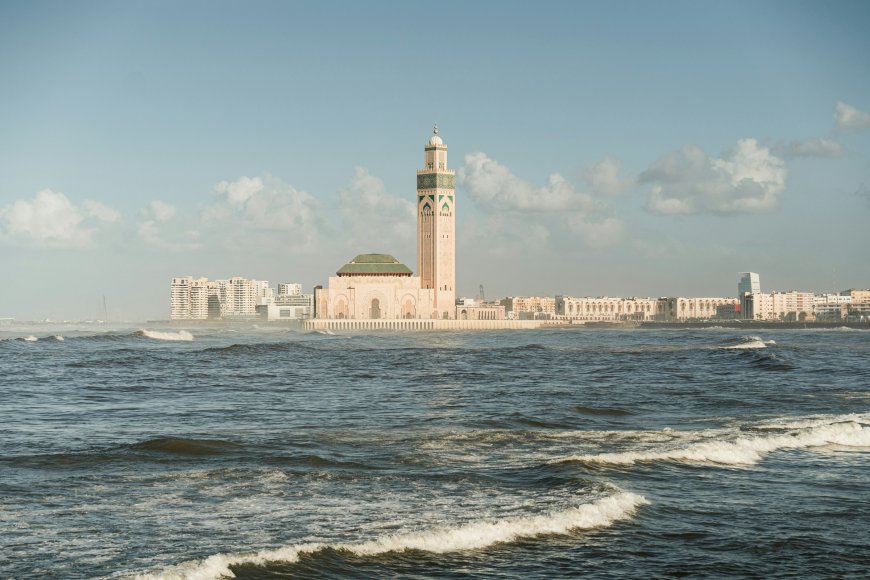
Photo by Ahmed via Unsplash.com
Zusammenarbeit in Zeiten des Wandels: Stärkung der deutsch-senegalesischen Partnerschaft in Zeiten globaler Neuausrichtung (EN)
Vom Hilfsbeziehungsmodell hin zu einer Partnerschaft. Wie lässt sich die deutsch-senegalesische Partnerschaft neu gestalten, um die Herausforderungen in den Bereichen Energie und Migration zu bewältigen und einen Weg zum gegenseitigen Nutzen einzuschlagen?
Summary
- The German-Senegalese relationship is moving from a traditional aid paradigm to a 'win-win' partnership emphasizing joint ownership and mutual benefit, driven by global geopolitical realignments and Senegal's renewed focus on sovereignty.
- The partnership is constrained by four major structural challenges: balancing German domestic priorities (like migration and security) with Senegal's development agenda, addressing the trade imbalance that favours Germany, overcoming centralized German bureaucratic procedures, and clarifying underlying interests to ensure genuine mutual benefit.
- Cooperation is increasingly focused on climate and energy, most notably through the Just Energy Transition Partnership (JETP). This initiative, however, raises concerns regarding power asymmetries, conditionality, and potential debt burdens for Senegal due to the reliance on concessional loans.
- The migration component remains a contentious issue, characterized by a gap between German-funded programs prioritizing control and migrant reintegration, and Senegalese priorities focused on legal mobility, addressing domestic skills gaps, and long-term community resilience.
- The brief concludes that deepening the partnership requires strengthening existing systems to function with shared ownership, transparency, and inclusion, achieved through two approaches: Decentring the partnership (e.g., supporting Senegalese value chains and co-developing energy roadmaps) and devolving power (e.g., empowering local Senegalese partners and systematically prioritizing local expertise).
Executive Summary
Senegal and Germany have long cultivated a relationship grounded in mutual respect, shared interests and a commitment to cooperation. Today, evolving domestic and international dynamics - including renewed debates on sovereignty in Senegal and a rearticulation of Germany's approach to cooperation with Africa - are prompting both partners to reflect on how best to update their collaboration in a rapidly changing global context. These shifts are unfolding against a backdrop of geopolitical realignments in the Global South and more inward-looking tendencies in parts of the Global North, which together are encouraging a move from traditional aid paradigms toward more explicitly 'win-win' partnerships. Based on 18 interviews, six roundtables and additional discussions conducted between June and October 2025, this policy brief suggests that the German-Senegalese relationship already contains many of the elements of a modern, partner-centred cooperation. At the conceptual level, both sides increasingly emphasise joint ownership, dialogue and mutual benefit. At the operational level, however, a number of shared structural constraints make it difficult to fully realise these ambitions, limiting room for manoeuvre on both sides.
The analysis points to four areas where existing cooperation frameworks should be strengthened:
- Balancing domestic priorities with a partner-centric approach. Migration management and, more recently, security considerations have featured prominently in Germany's broader engagement with Africa. Ensuring that these priorities are embedded within a broader, development-oriented agenda will help preserve the comprehensive nature of the partnership and support Senegal's strategic objectives.
- Mitigating structural imbalances in the global market. While trade and investment relations are well established, the current trade balance remains clearly in Germany's favour. Building on existing instruments to deepen support for Senegalese value chains and attract private investment would foster more diversified, value-added exports and a more balanced economic relationship that benefits both countries.
- Navigating bureaucratic and regulatory procedures. Germany's cooperation architecture aspires to be partner-centred, yet implementation is still shaped by centralised procedures and accountability requirements. These can be challenging for both parties, as they seek to reconcile funder regulations with local priorities and implementation realities. Working together to make existing mechanisms more flexible and co-owned would enhance efficiency and local appropriation without undermining accountability.
- Clarifying interests for mutual benefit. Senegal and Germany remain strategic partners, and both sides recognise the potential of a more interest-based, mutually beneficial cooperation. At times, however, Senegalese actors perceive the underlying motives of development initiatives as lacking in transparency, while Senegal's renewed emphasis on sovereignty raises questions about how far ambitions can be realised in the current international environment. Ongoing dialogue around converging interests, including in areas such as energy, trade, migration and regional stability, would help translate the frequently invoked notion of 'gagnant-gagnant' (win-win) into concrete, shared priorities.
Against this backdrop, the brief argues that the task ahead is less about creating entirely new instruments than about enabling existing systems and principles to function as intended: transparently, inclusively and with shared ownership. It proposes a set of policy recommendations aimed at moving beyond a simple rebranding of development cooperation. By consolidating joint agenda-setting mechanisms, further empowering Senegalese institutions and experts, and making co-leadership the norm rather than the exception, Senegal and Germany can deepen an already robust partnership and contribute to a cooperation model that aligns domestic priorities with genuinely shared benefits.
Introduction
In a 2012 report, the GIZ (German implementing agency for technical cooperation) described Germany as 'a trusted development partner of Senegal since 1960 [that] supports the country's economic development'.1 This long-held relationship, grounded in a shared commitment to social democracy, was first nurtured through the personal rapport between President Léopold Sédar Senghor and Chancellor Willy Brandt. It is in this context that, in the early 1970s, the Friedrich Ebert Stiftung became the first German political foundation to establish an office in Senegal.
Since then, ties between the two countries have steadily deepened, leading to the presence of several German political foundations alongside the GIZ, the KfW (German implementing agency for financial cooperation) and the German Embassy. Together, these actors constitute the current architecture of Germany's bilateral cooperation with Senegal. This can be framed within two principal modes of interaction: bilateral cooperation, involving direct state-to-state engagement, and multilateral cooperation, embedded in wider regional and global initiatives.
For many years, international development cooperation was often presented as a framework through which partners in the Global North supported the development efforts of countries in the Global South. Over time, however, this narrative has been enriched by a recognition that cooperation over shared interests and strategic considerations benefits all parties involved. Across Africa, a growing number of countries, including resource-rich economies such as Nigeria, Angola and the Democratic Republic of Congo, as well as diversified economies such as Kenya, Rwanda and Senegal, are redefining their external partnerships in light of their demographic weight, regional roles and contributions to global value chains. In this context, African governments are engaging with an expanding set of partners, including China, Russia, Turkey, Gulf states and other actors from the Global South and beyond.
Within this wider geopolitical realignment, Senegal's strategic importance has become more visible. As a politically stable country with a dynamic services sector, emerging energy resources and ambitions in the fields of digitalisation and renewable energy, Senegal is reassessing how external partnerships can best support its national development objectives and regional responsibilities. At the same time, European partners such as Germany are reflecting on how to adapt their cooperation approaches in a more competitive and multipolar environment, including through renewed commitments to 'win-win' cooperation that seeks mutual benefit and balanced responsibilities.
The purpose of this policy brief is to provide an analysis of the current relationship between Senegal and Germany in this changing context. We examine how shifting geopolitical dynamics and evolving domestic priorities on both sides may influence the future of the partnership. We then put forward policy recommendations aimed at moving beyond a narrow aid narrative towards a more mature, interest-based and mutually beneficial cooperation. The analysis draws on primary and secondary sources. Primary data come from 18 interviews and six roundtable discussions conducted between June and October 2025. These were coded and thematically analysed to identify recurrent issues in discussions on development cooperation. Respondents, whose identities are kept anonymous, include officials from Senegalese and German administrations, staff of German implementing agencies and political foundations, as well as experts on development cooperation. Secondary data include academic literature, macroeconomic indicators from international organisations (e.g., the World Bank) and official reports and public statements from both governments.
Conceptualising German development cooperation: rhetoric, motivations and realities
Development cooperation, long conceptualised around 'humanitarian aid and infrastructure development,'2 emerged as a key instrument through which countries in the Global North sought to support post-independence development efforts in lower-income countries of the Global South.3 For many partner countries, it has also been understood as one of several mechanisms for addressing historical legacies that have shaped contemporary development pathways. The long-term effects of colonialism and imperialism, combined with the persistence of certain institutional and economic structures, have constrained the capacity of a number of states to drive socio-economic transformation primarily through domestic resources.
In this context, natural resources and other assets are often integrated into global value chains in ways that largely benefit industrialised economies in the Global North. Within academic and policy debates, development cooperation has therefore been scrutinised for sometimes reproducing international power asymmetries and reinforcing an already unequal relationship between many countries of the Global South and those of the Global North.4 This has, at times, sustained narratives in which partner countries are predominantly portrayed as 'aid-dependent' or 'development-needy' rather than as equal actors with their own strategic priorities and agency.
From rhetoric to reality
In the Federal Government's Africa Policy Guidelines, published in January 2025,5 cooperation with African partners is recognised as essential for addressing shared global challenges, including climate change, demographic change and peace and security. The document situates Germany within the broader frameworks of the EU and Team Europe, operating in a 'multipolar and unstable' international order in which Africa is increasingly described as a 'centre of gravity' due to its demographic dynamism, growing markets and geopolitical weight, as well as the significance of the critical raw materials which are 'key factors for a successful energy transition in Africa, Europe and Germany'.
This new orientation builds on Germany's National Security Strategy, while emphasising partner-centred cooperation, mutual respect and reciprocity. Germany has introduced various mechanisms to involve bilateral partners in strategic planning processes, including structured consultations where partner governments are invited to discuss and negotiate the framing and priority areas of cooperation. In this model, once priorities have been jointly identified, Germany, acting through its implementing agencies and other institutions, mainly focuses on providing financial support and technical expertise to accompany partners in their own development agendas through programmes and projects.
While Germany's financial and technical contributions in this regard have been significant, questions remain about the extent to which such interventions can catalyse broader structural transformation. For instance, despite the goodwill of partners to 'strengthen trade relations with Africa', tariff regimes and trade rules can hinder value-added industrialisation, while financial outflows, through debt servicing, profit repatriation and capital flight, can at times approach inflows of Official Development Assistance (ODA). UNCTAD, in its 2020 Economic Development in Africa Report,6 estimated that Africa loses nearly USD 88.6 billion annually in illicit capital flight, roughly half the amount it receives in development aid. This creates a liminal space in which aid tries to address development gaps that are simultaneously widened by structural leakages. In this light, some analysts argue that, without complementary reforms to global economic governance, development cooperation will primarily address the symptoms rather than the underlying drivers of divergence.
Thus, at both the global level and within donor countries such as Germany, development cooperation is navigating a complex web of interactions. Assessing its impact requires going beyond programme-level indicators and situating results within the wider macroeconomic and institutional environment in which African partner countries such as Senegal operate. On one hand, experts and practitioners reflect on how effectively cooperation contributes to sustainable and inclusive transformation in partner countries. However, political debates and public opinion in donor states increasingly scrutinise external spending, especially in times of domestic fiscal pressure. As German officials underline, there is a growing expectation that they should explain and justify development budgets to constituencies that may perceive a tension between financing international commitments and addressing domestic needs.7
In this light, the German-Senegalese partnership offers an instructive case for understanding the evolving dynamics of development cooperation in West Africa. Alongside countries such as Ghana, Senegal is frequently described in Western diplomatic discourse as a regional anchor of stability within a neighbourhood affected by recurrent coups, insecurity and democratic backsliding. For partners such as Germany, therefore, Senegal is a strategic actor in maintaining regional security and shares key democratic and multilateral values. As a result, cooperation is shaped not only by bilateral development objectives but also by broader geopolitical considerations such as managing risks related to violent extremism, irregular migration and political fragility across the Sahel.
Nonetheless, recent political changes in both countries invite us to renew our outlook of how this partnership may evolve. In Senegal, the newly elected administration has placed a strong emphasis on sovereignty and on advancing a 'win-win' agenda that prioritises structural equity and domestic value creation. Many of the voices that are now part of the government are notorious for their activism against 'neo-colonial' or 'neo-imperialistic' powers, including Europe, China and other potential partners. In Germany, evolving strategic priorities and budgetary debates require reconciling a long-standing commitment to partner-centred cooperation with new constraints and expectations. While the concept of 'win-win' has been a staple of German and international development rhetoric for years, the renewed emphasis from the Senegalese side demands attention. Clarifying what 'true sovereignty' and 'win-win' mean in concrete sectoral terms will be central for the next phase of cooperation.
At the interface where these ambitions meet, established institutional procedures, funding mechanisms, terms and conditions, and accountability requirements still shape day-to-day cooperation. Germany's own fiscal pressures and the global geopolitical realignment may limit the speed and scope with which it can support far-reaching structural reforms, even where there is political will to do so. Consequently, despite positive momentum in diplomatic language and the reaffirmation of mutual interest, there is a perception among many observers that the partnership is in a transitional phase: The discourse of transformation has advanced more rapidly than the operational instruments available to both sides. The coming years will therefore be critical for aligning rhetoric and practice in ways that strengthen a relationship already characterised by trust, while expanding the shared policy space for genuinely co-created solutions.
Situating the motives for German development cooperation
While historians trace Germany's development policy and development cooperation back to the 1920s, political scientists assign its starting point to the 1950s. Considering the latter, better defined point of entry, we can distinguish five phases of development: the early phase (1950s-60s), growth and diversification (1960s-80s), consolidation (1980s-90s), modernisation (2000s-2015) and adaptive strategies (2015-2024).8
Germany's motives for development cooperation can be described as a combination of official humanitarian goals with clear political, economic and security interests. The official rhetoric is framed around poverty reduction, social progress and sustainable development as primary aims.9 At the same time, development cooperation is key to soft power and economic statecraft, which in turn are used to maintain influence with political elites in partner countries, open markets and improve the overall investment climate for German firms, especially in Africa.10
Empirical analyses of aid allocation show that geo‑strategic and commercial motives do matter: German aid is shaped by voting alliances in the UN and by export interests, and these drivers can even be stronger under left‑of‑centre governments than conservative ones.11 12 Region‑specific studies find that in the Middle East and North Africa, rising aid volumes after the Arab uprisings in the early 2010s have largely supported short‑term stability, energy and migration priorities for Germany and Europe rather than transformative political change, reflecting a tendency to privilege security interests.13 Climate and energy have become additional structuring motivations: International climate finance and green industrial initiatives are promoted both as contributions to global public goods and as tools to de‑risk supply chains, diversify energy partners and counter rival powers.14 15 Overall, German development cooperation is best understood as a layered policy arena where genuine development ambitions coexist with - and are often filtered through - Germany's long‑term interests in security, reputation, export promotion and the preservation of a liberal global order from which it benefits.
Germany's cooperation with Senegal: recalibrating the partnership in the face of global geopolitical shift
Profound political shifts in Senegal, Germany and globally are reshaping the framework of development cooperation and narrowing the policy space. The long‑standing cooperation between the two countries, though stable, is entering a more complex and strategically charged phase. In the United States, the return of Trumpism has reinforced what Masood Ahmed terms a global 'crisis of development cooperation', while in Europe the rise of far‑right forces and in West Africa the spread of military rule - including the creation of the Alliance of Sahelian States (AES) and the withdrawal of its members from the Economic Community of West African States (ECOWAS) - signal wider regional reconfigurations and new alliance patterns. These shifts are unfolding in a context of intensifying policy competition in which Western democratic models are increasingly questioned because they are perceived as paternalistic rather than universal benchmarks.16 17 18
As a result, the EU-Africa relationship is undergoing an important re‑orientation. The EU's Global Gateway is widely interpreted as a response to the growing presence of China, the Gulf states and India in Africa's infrastructure, energy and digital sectors.19 20 21 Competition is particularly acute around Africa's 'green minerals', which are central to global decarbonisation, although approximately 40% of African mineral exports currently go to China.22 23 Yet African countries still face deep structural obstacles to industrialisation, many of which are rooted in colonial legacies: high transport costs tied to extractive transport networks, fragmented markets shaped by artificial borders and concession regimes that make local value addition difficult.
Within this global setting, Germany's cooperation with Senegal has evolved from a largely sectoral development engagement to a broader, more strategically designed partnership. In the late 1990s and early 2000s, German support focused on rural development and water management, addressing water scarcity and agricultural productivity through technical and financial cooperation.24 25 These programmes helped ease rural water conflicts and promoted more sustainable resource use, with co‑management and inclusive local governance as important aspects of this engagement. Over time, cooperation expanded to climate adaptation, energy access and economic development. Climate‑related aid and development finance from Germany and other partners have helped reduce investment risks and attract foreign direct investment, particularly in the face of Senegal's climate vulnerabilities.26
More recent initiatives reflect an adjustment of the partnership. On the German side, development cooperation is increasingly linked to wider objectives such as improving the investment climate for German and European firms, supporting green industrialisation and diversifying energy partnerships, while contributing to migration management and regional stability.27 28 29 Senegal, on the other hand, is actively positioning itself as a regional hub in West Africa's evolving energy and green‑transition landscape, including through the discoveries of offshore natural gas and its participation in new instruments such as the Just Energy Transition Partnership (JETP) with Germany and other International Partners Group countries.30 31 Emerging discussions about how natural gas fits into Senegal's energy mix, and how external partners should engage with these resources, have sparked critical debates on issues of neo‑colonialism, equity and 'leaving fossil fuels in the ground,'32 as well as analyses of a potential German-Senegalese gas partnership. The relationship is gradually being re-balanced as the two countries' traditional focus areas for cooperation are being complemented by energy, climate and investment agendas.
Domestic politics in both countries will shape this recalibration, even if it plays a limited role in practical cooperation. In German federal politics, conservative and coalition government (e.g., the CDU/CSU) policies emphasise immediate economic benefits and migration control. Migration, in particular, has become a populist pressure point, reinforced by the opposition right-wing AfD. The growing influence of these positions in the Bundestag has already shifted the focus towards migration control, security and economic competitiveness, and has increased expectations that development cooperation should more clearly reflect national interests. At the same time, instruments such as the JETP and bilateral energy partnerships draw on Germany's Energiewende as a soft‑power resource and seek to support partner countries in expanding renewables while managing fossil‑fuel dependencies.33 34
In Senegal, the 2024 election of Bassirou Diomaye Faye and the African Patriots of Senegal for Work, Ethics and Fraternity (PASTEF) expressed a popular demand for greater sovereignty and a recalibration of external relationships within an outward‑looking, pan‑African project rather than an isolationist one. Senegal's leadership is increasingly articulating sovereignty in substantive terms encompassing food and energy security and using this as a basis for negotiating the terms of cooperation with external actors. In this context, it is important not to portray Senegal primarily as constrained. Senegal has long combined its reputation as one of West Africa's more stable democracies with an active, strategic engagement of partners, using energy, infrastructure and climate agendas to pursue national development goals.
At the same time, policymakers and observers on both sides acknowledge underlying tensions. Power asymmetries linked to colonial legacies and to Germany's position within the broader Western framework can, in practice, limit the room for purely autonomous policy-making in Senegal, even when cooperation is supportive. Critical scholarship on partnerships such as the JETP warns that, unless carefully designed, they risk reproducing old patterns of agenda‑setting and conditionality under new labels.35
Overall, the Senegal-Germany relationship is best understood as an evolving partnership undergoing gradual adjustment rather than a sharp break. Traditional post-Cold War assumptions that liberal economic policies and Western‑style democratic governance are the default route to development are being re‑examined in light of donor fatigue, domestic political pressures in donor states and growing demands from formerly colonised countries for greater policy autonomy. In Germany, security and cost‑of‑living concerns often rank higher in public debate than climate change, even as official policy documents emphasise Africa's strategic importance. In Senegal, calls for clearer accountability and more transparent 'checks and balances' in external assistance sit alongside an interest in maintaining and deepening partnerships that respect national priorities. These parallel shifts create an opportunity to re‑align German-Senegalese cooperation around more explicitly negotiated interests on both sides. The challenge is therefore to adapt the current instruments so that they support Senegal's development and sovereignty objectives while responding to Germany's evolving economic, climate and security concerns, and to do so in ways that make the partnership more mutually accountable and politically sustainable over time.
Senegal's development landscape and strategic importance
The timeframe leading to Senegal's 2024 presidential election was shaped by heightened political uncertainty and tightening conditions in both international and regional financial markets, which exacerbated fiscal and external imbalances.36 Despite these pressures, the country demonstrated economic resilience. Inflation, which had peaked at 9.7% in 2022, declined to 5.9% in 2023, aided by falling global commodity prices and the normalisation of supply chains following disruptions from the COVID-19 pandemic and the war in Ukraine.37 Real GDP growth reached 4.3% in 2023, surpassing both the previous year's 3.8% and initial forecasts, reflecting the dynamism of the service sector and a relatively stable macroeconomic environment.38 These trends reinforce Senegal's status as a key regional actor, though ongoing political and economic uncertainties, both domestically, regionally and globally, continue to affect sectors such as services, particularly in terms of consumer spending and business investment.
Politically, Senegalese authorities have advanced structural reforms and measures aiming to improve transparency, with the success of these initiatives hinging on the maintenance of strong macroeconomic fundamentals. Pertaining to development cooperation, Senegal has positioned itself as a leading economic player in sub-Saharan Africa, leveraging its strategic geographic location to connect regional markets with global supply chains and serve as an essential pillar for trade and transit.39 This positioning continues to make Senegal an attractive partner for a diverse array of international actors, including Germany, and has been a staple of its advocacy for deeper economic integration on the international stage. While Senegal's trajectory is marked by cautious optimism, persistent challenges, including fiscal pressures, regional disparities, and the need for continued reforms, underline the importance of maintaining great efforts to consolidate its role as a regional power and reliable partner in development cooperation.
In the face of crisis, cooperation principles under pressure
At the onset of the COVID-19 pandemic, African countries initially faced constrained vaccine access due to global supply shortages, advance purchase agreements by high-income states, their refusal to share vaccine formulas, patents or access equitably, and limited local manufacturing capacity. This prompted many governments to diversify partnerships, including with India, China and Russia, in order to secure doses.40 In parallel, rapid travel and border restrictions introduced by several European countries in response to new variants such as Omicron were perceived in parts of Africa as reinforcing long-standing concerns about equity and reciprocity in global health governance, even as European policymakers framed these measures as precautionary steps under conditions of uncertainty. In the aftermath of the acute phase of the pandemic, European actors launched initiatives to strengthen health systems and local pharmaceutical production in Africa, aligning with a broader continental agenda for health sovereignty and reduced import dependence. In Senegal, this included support for expanding vaccine and pharmaceutical manufacturing capacities, generally welcomed as a chance to build long-term resilience.41 42
As stated by the GIZ,43 these initiatives aimed at 'Empowering Senegal's pharmaceutical sector, providing opportunities for German companies in Senegal in partnership with German Development Cooperation' that would result in the SenPharm Project.44 Yet, in the light of pandemic experiences, stakeholders in Senegal and across the wider Global South are paying close attention to how such crisis-driven initiatives are framed and implemented, particularly regarding the balance between commercial opportunities for foreign firms and the prioritisation of local public-health needs. These debates illustrate how, in the face of crisis, cooperation principles such as equity, mutual accountability and ownership come under pressure, underscoring the need for transparent communication, jointly defined priorities and more balanced risk- and benefit-sharing in future German-Senegalese partnerships.
Climate policy, the debt crisis and maintaining credibility on both sides
Germany's and Senegal's evolving priorities are most evident in climate and energy policy. Insights from the series of interviews and roundtables used in this analysis corroborate findings from wider research showing the distance that sometimes exists in Germany between political elites, who increasingly frame climate action as an industrial and strategic project, and fractions of the general public, who are more sensitive to the personal and distributional costs associated with climate action and may prioritise economic and energy security over environmental goals, especially in times of crisis. Indeed, over the past three decades, representative surveys for Germany have found that support for more ambitious climate policies declines when personal costs are expected to rise, and that concerns about one's own economic situation significantly reduce acceptance of climate measures, especially when these imply higher daily costs.45 46 47
This pattern is consistent with broader EU evidence of a persistent knowledge-action gap: Public concern about climate change is high and rising, but policy ambition and implementation lag. These dynamics have fuelled debates about 'double standards in climate justice', particularly after Russia's invasion of Ukraine, when Germany sought alternative liquified natural gas (LNG) supplies - including from Senegal - and recalibrated elements of its fossil-fuel stance in the name of energy security. This has raised questions about the coherence of its international climate engagement.48
Senegal, meanwhile, is navigating its own energy polycrisis, marked by limited energy access deficits,49 costly fossil-fuel-based power, and structural debt vulnerabilities. Energy subsidies and a gas-to-power strategy are being used to contain domestic prices and expand supply,50 but they generate significant fiscal risks and crowd out other priorities. A recent analysis by Kai Koddenbrock characterises Senegal's situation as one of 'earnest struggles'51: Successive governments have sought to expand fiscal space and diversify the economy, yet high debt levels and opaque public-private partnerships leave the country vulnerable to a renewed debt crisis.
These challenges contextualise the German-Senegalese Just Energy Transition Partnership (JETP). JETPs bundle finance from G7 and allied countries into multi-billion-dollar packages to support power-sector decarbonisation, combining grants, guarantees and concessional loans. Nevertheless, the share of loans raises concerns about conditionality, power asymmetries and debt burdens in recipient countries.52 53 The Senegal JETP, announced alongside those for South Africa, Indonesia and Vietnam, foresees an initial USD 2.5 billion over 3-5 years for power-sector climate and energy targets.54 Comparative JETP analyses highlight that while such partnerships can align national trajectories more closely with a 1.5 °C pathway, their effectiveness and 'justice' depend on the balance between grants and loans, the degree of domestic ownership and the strength of accountability and participation mechanisms.55 56 57
In Senegal's case, this financing mix is met with an already elevated debt risk and limited fiscal space, echoing continent-wide concerns that climate- and energy-related lending can aggravate external debt vulnerabilities if not carefully structured. Emerging evidence from Africa more broadly indicates that official development assistance is increasingly associated with renewable energy expansion, but also that interest payments on long-term external debt can undermine the developmental benefits of such flows.58
Developing the JETP investment plan is therefore not just a technical issue of prioritising projects based on greenhouse-gas reduction, cost-effectiveness, renewable-energy adoption and progress toward universal access. It is also a political process. Questions of transparency, civil-society participation and alignment with locally identified needs will shape perceptions of fairness and sovereignty. Studies of other JETPs and transition plans (notably in South Africa and Indonesia) show that limited inclusiveness, fragmented finance and an overreliance on loans can weaken accountability, heighten transaction costs and provoke social and political resistance.59
Ultimately, both the credibility of the German-Senegalese JETP and the broader trajectory of climate and development cooperation hinge on achieving a better balance between external support and domestic sovereignty. Research on just energy transitions shows that partnerships are most likely to advance justice when they mitigate debt risks, expand access and embed strong mechanisms for participation and accountability, rather than reproducing existing North-South power asymmetries.
A critical assessment of German-Senegalese cooperation
German-Senegalese development cooperation has evolved in important ways, with stronger emphasis on partnership language, local ownership and joint programming. At the same time, interviews and research suggest that structural constraints in agenda-setting and funding still shape what is possible in practice.60 Rather than indicating intentional disregard for Senegalese priorities, these dynamics often reflect institutional mandates, legal obligations and domestic political pressures on both sides.
A recurring concern raised in interviews is the perceived gap between local perspectives and final strategic decisions. In concrete terms, country offices and Senegalese partners are often consulted and provide input, but overall orientations and macro-priorities are defined at headquarters in Germany, in line with the strategies of the Federal Ministry for Economic Cooperation and Development (BMZ) and parliamentary expectations.61 62 This means, for instance, that local GIZ staff and Senegalese partners typically enter the process once broad thematic frames (e.g., the migration-development nexus or climate-energy cooperation) have already been set. The critique is therefore less about an absence of consultation, and more about the limited influence that local actors have at the earliest conceptual stages, where objectives and indicators are fixed and later become difficult to adjust.
This agenda-setting interacts with Germany's broader migration framework. In line with wider EU trends, several German-funded programmes in Senegal implicitly link support for training, employment and reintegration to the goal of addressing 'root causes of irregular migration' and encouraging return.63 64 65 Research on EU and member-state policies in Senegal reveals a dominant discourse that seeks to 'fix populations in place' and prioritises migration control, even when framed in developmental terms.66 67 68 However, this does not mean that other sectors are ignored. In fact, governance, economic development, gender equality and climate adaptation remain significant pillars of cooperation, and local perspectives are consulted in all projects.
Another insight from local respondents was the involvement of German and European consulting firms, which are frequently perceived as sidelining local expertise. This also needs to be placed in its institutional context. In the GIZ's case, outsourcing to European consultancies is partly linked to procurement rules and to the consulting quota associated with its mandate to receive BMZ commissions without competitive tendering. From a Senegalese vantage point, this can nonetheless appear as a form of 'aid conditionality', particularly when German organisations implement training and advisory services under migration-related programmes such as 'Migration for Development' and 'Successful in Senegal'.69 In practice, however, these same projects usually cooperate with local authorities, NGOs and training centres, combining external and local expertise.
The migration-development nexus is further complicated by Germany's own demographic reality. There is broad recognition in German policy debates that an ageing society and skills shortages require sustained immigration, and reforms to labour-migration law aim to attract qualified workers from third countries. At the same time, access remains restricted to specific profiles, sectors and legal channels, which limits the extent to which this demand translates into broader mobility opportunities.
Research on return and reintegration highlights a mismatch between European and West African priorities. European programmes tend to focus on narrowly defined target groups and economic outcomes, while West African actors place greater emphasis on social and psychosocial dimensions of reintegration and long-term community resilience. Some evidence points to the fact that 'Eurocentric expectations and rationales of migrant integration come to shape their reintegration support schemes in the countries of return'.70 Although the case study we consulted is specific to perceptions from 'Germany and Switzerland, with those of their counterparts in Guinea and Senegal', more empirical work on EU-Africa migration governance and aid influence underlines that these tensions are widespread. European funding and political incentives shape the framing of migration projects, but African governments and bureaucracies also exercise agency, accepting, reshaping or contesting elements of the agenda in line with domestic priorities.71 72 73
In Senegal, this results in what has been described as 'intermestic' policy-making, where diaspora engagement, legal mobility ambitions and regional integration goals coexist, and sometimes clash, with externally driven expectations around return, border control and irregular migration prevention.74 From this standpoint, local perspectives are far from absent. Indeed, Senegalese ministries, municipal actors, civil society and diaspora organisations contribute to the design and implementation of migration-related projects, and street-level implementers often adapt or subtly contest dominant messages in their everyday work.75 The challenge lies less in a simple lack of consultation than in the imbalance of voices when priorities are decided, and in the structural incentives, both European and Senegalese, that continue to privilege certain narratives, sectors and implementing partners.
A more balanced reading of German-Senegalese cooperation must therefore hold two elements at once. On the one hand, there has been genuine progress in dialogue, co-operation on shared priorities and the inclusion of local actors in implementation. Meanwhile, power asymmetries embedded in funding structures, legal obligations and domestic politics still shape the scope and direction of cooperation, particularly in the sensitive field of migration. Recognising both dimensions makes it easier to identify entry points for widening the space for Senegalese agenda-setting, strengthening local expertise and exploring mobility pathways that align with both Germany's labour needs and Senegal's development strategies.
Another theme raised during recent roundtable discussions concerns the prevailing perceptions of Africa within segments of the German public and business community. Participants noted that German media coverage often emphasises challenges such as crisis, conflict and corruption, which can contribute to a risk-averse attitude among small and medium-sized enterprises (SMEs), a key pillar of the German economy. This perception may inadvertently limit the willingness of German businesses to engage with African markets, despite the significant opportunities. There is therefore a need for more knowledge transfer and information-sharing about Africa's diverse business environments in a manner which fosters a more welcoming and mutually beneficial investment climate.
Trade dynamics reinforce these perceptions. Recent data from the German Federal Foreign Office highlights that bilateral trade between Germany and Senegal is valued at approximately EUR 270 million, with German exports to Senegal significantly exceeding imports from Senegal.76 This trade imbalance, while not unique to this partnership, can contribute to a situation where Senegal becomes increasingly reliant on foreign goods. Such dependency may, over time, affect the competitiveness of local industries and expose the economy to external price fluctuations, potentially increasing vulnerability to global shocks.77 Within this context, it is understandable that development cooperation often reflects the broader structural dynamics of the trade relationship.
German institutions, such as the BMZ, are increasingly aware of these dynamics. The BMZ's new Africa Strategy, developed with input from African partners, reflects a growing need to address historical imbalances and articulate mutual interests more transparently. This shift acknowledges both the legacy of global inequalities and the reality that Germany, too, is dependent on strong international partnerships, particularly for access to raw materials and resilient supply chains. At the same time, respondents from both sides highlighted the importance of maintaining long-term, trust-based partnerships, even as budgetary pressures and shifting geopolitical priorities create new challenges.
Ultimately, the durability and effectiveness of Senegalese-German cooperation will depend on the ability of both sides to increase and maintain dialogue, ensure transparent governance and create more space for local agency. By framing cooperation around clearly articulated mutual benefit, both countries can work toward a partnership that is more adaptive, resilient and responsive to the evolving needs of their societies.
Policy recommendations
Building on the important advances and cooperation mechanisms already in place, this brief argues that Senegal and Germany now have an opportunity to consolidate and deepen their partnership. Interviewees and existing research point to a shared recognition that Africa has long been underrepresented in German political debates and that recent progress remains fragile. The task ahead is therefore less about inventing entirely new instruments than ensuring that current systems for joint agenda-setting and implementation operate as they were intended: transparently, inclusively and with shared understanding and ownership of the mechanisms.
In this view, we suggest a two-fold approach: (1) decentring the partnership by more systematically aligning cooperation with mutual interests and Senegal's strategic autonomy; and (2) devolving power within existing structures by making co-creation and local leadership the default rather than the exception.
Decentring the partnership
A more decentralised partnership starts from an explicit, interest-based dialogue. Existing formats for political consultations, government-to-government negotiations and multi-stakeholder roundtables already provide spaces where both partners' interests and needs can be articulated. The next step is to use these platforms more systematically to reflect Senegal's strategic role as a regional interlocutor, energy partner and democratic actor, and to translate converging interests into jointly defined priorities.
Addressing trade and investment asymmetries: Germany and Senegal already cooperate through EU trade frameworks, bilateral agreements and investment promotion instruments. However, while mechanisms for trade and investment cooperation are in place, there is still room to further support Senegalese value chains and facilitate fairer market access. This can be achieved by encouraging private sector investment in priority sectors and by supporting local economic growth through targeted capacity-building and technology transfer. This can be achieved by:
- Increasing the share of value-added Senegalese exports to Germany (e.g., processed agricultural products, light manufacturing) through jointly agreed sectoral roadmaps.
- Supporting Senegalese value chains (e.g., agro-industry, manufacturing, digital services) via targeted investment guarantees, blended-finance instruments and SME partnerships.
- Facilitating access to German and EU markets by expanding support for quality infrastructure, standards compliance and trade facilitation measures co-designed with Senegalese ministries and the private-sector.
Reframing the energy partnership: Germany and Senegal have already established the basis for energy cooperation with a focus on renewables, grid modernisation and capacity building. This offers a solid basis for a more strategic, co-owned alliance. The next step is to co-develop a long-term roadmap for energy transition that includes measurable targets for renewable capacity, local job creation and, more importantly, technology transfer. Building on ongoing initiatives, Germany could also:
- Increase support for vocational training and university partnerships in green technologies, with a clear target for training Senegalese technicians and engineers.
- Co-invest in local manufacturing or assembly of selected green-technology components (e.g., solar equipment), ensuring a minimum share of local content and local employment.
Re-thinking the migration nexus: Germany has already introduced new labour-migration pathways and academic exchange schemes. To more fully align these with Senegal's development priorities, Germany should:
- Increase the number of Senegalese students, trainees and skilled workers benefiting from legal mobility programmes.
- Expand scholarship and traineeship schemes with built-in return or circular-migration options, co-designed with Senegalese institutions to address domestic skills gaps.
- Pilot co-managed mobility programmes where Senegalese and German authorities jointly identify priority sectors and profiles, ensuring that mobility contributes to Senegal's long-term human capital strategy rather than further contributing to the brain drain.
Acknowledging co-dependency and positive asymmetries: Analysts and policymakers in both countries increasingly recognise that interdependence runs in both directions. Senegal often has greater political and social embeddedness in parts of the region than external partners, and Germany relies on stable and diversified partnerships for energy, trade and diplomacy. Regularly communicating these positive asymmetries can help rebalance narratives and reinforce Senegal's role as a central actor in regional and global cooperation. This should be operationalised through:
- Joint analytical work and policy briefs authored by mixed Senegalese German teams.
- Regular inclusion of Senegalese experts and institutions in German and EU policy debates on the Sahel, migration and climate security.
Devolving power
German and Senegalese actors are already engaged in internal reflections on decolonising partnerships and enhancing local ownership. The challenge is to ensure that these conversations translate into everyday practices in project design, staffing and evaluation, using and adjusting existing procedures.
Confronting colonial continuities in practice: Self-reflective debates within German ministries, implementing agencies and foundations have opened the door to change. To consolidate this shift, a joint German-Senegalese 'partnership review' should be introduced in at least a few major programmes (in terms of investment and impact), assessing whether decision-making, communication and staffing reflect the stated commitments to local ownership and equity.
Empowering local offices and partners: Local offices of German foundations and agencies already have valuable contextual knowledge and networks. New bilateral programmes in Senegal, concept notes and initial results frameworks - where they are not already in practice - should be drafted in collaboration with Senegalese partners (government, civil society, private sector) before final approval in Berlin.
Prioritising and mobilising local expertise: Several organisations already prioritise Senegalese experts when they are available. Making this a more systematic practice would strengthen trust and capacity. Complementary measures should include creating a joint roster of Senegalese experts maintained by Senegalese and German institutions. A progressive reporting and monitoring model should be established that allows for mutual oversight, provides Senegalese institutions with full access to information and co-defines evaluation criteria in a timely manner.
Involving local communities in cooperation discussions: Many cooperation instruments already envisage stakeholder participation, but implementation can be uneven. Strengthening community-level involvement would increase relevance and support, especially in sensitive areas such as climate and energy. Structured community consultation and feedback mechanisms in all new climate and energy-related programmes should therefore be introduced in Senegal, along with consultations and publicly available summaries. This could be achieved by integrating participatory diagnostics in project preparation to understand how communities perceive fossil fuels and renewable energies, and how they weigh short-term gains against long-term risks. Furthermore, developing communication strategies in collaboration with local leaders, youth and women's groups would help ensure that information on energy transition, employment prospects and environmental impacts is accessible and context-sensitive. Finally, German and Senegalese agencies would benefit from continuous investment in organisational learning, using both formal and informal channels to adapt practices based on feedback and changing contexts. This includes regular joint reviews and the sharing of lessons learned.
Concluding remarks
Paving a smooth path for the future of German-Senegalese relations will depend on how existing commitments are implemented. Senegal's recent democratic mobilisations remind both partners that when citizens feel heard and respected, they can drive profound change. The voices emerging from Senegal call for greater autonomy and a partnership that recognises the country as a sovereign actor with its own development trajectory. Germany, for its part, has already signalled, politically and institutionally, its intention to listen differently and to learn from partners, especially those on the African continent, as attested by its new Africa Strategy.
The recommendations outlined above aim to support this shift by helping both countries make fuller use of the systems already in place, while gradually transforming them into platforms for equitable, effective and mutually beneficial cooperation. By making full use of existing systems and by setting clear, measurable objectives for deepening mutual interests and strengthening local agency, both countries can ensure that their partnership remains resilient and responsive to future challenges. Continuous improvement, increased transparency and shared ownership will be strengthened through deliberate action and ongoing dialogue.
References
Adam, I., Trauner, F., Jegen, L., & Roos, C. (2020). West African interests in (EU) migration policy. Balancing domestic priorities with external incentives. Journal of Ethnic and Migration Studies, 46, 3101 - 3118. https://doi.org/10.1080/1369183x.2020.1750354
Ahmed, M. (2025, July 22). The end of development cooperation?. 2025 Annual Bank Conference on Development Economics, 'Development in the Age of Populism'. Retrieved from https://www.cgdev.org/publication/end-development-cooperation
ANSD Senegal (Agence Nationale de la Statistique et de la Démographie). (2024, July 19). Répartion des ménages par mode d'éclairage. 2023 data. Retrieved from https://senegal.opendataforafrica.org/rreedf/r%C3%A9partion-des-m%C3%A9nages-par-mode-d-%C3%A9clairage?accesskey=dfxpiy
Balima, S. (2024, April). The AES countries' exit from ECOWAS and the building of regional security. Friedrich Ebert Stiftung. Retrieved from https://library.fes.de/pdf-files/bueros/fes-pscc/21558.pdf
Basedau, M. (2025, August). The decline of Western influence in Africa: three consequences. GIGA Focus Africa. Retrieved from https://www.giga-hamburg.de/en/publications/giga-focus/the-decline-of-western-influence-in-africa-three-consequences
Ba, H. A., Kouame, W. A., Backiny-Yetna, P. R., Valderrama Gonzalez, D., Diallo, A., & Gallegos Vargas, G. A. (2024, June 6). Senegal rapport sur la situation économique: saisir l'opportunité. World Bank Group. Retrieved from http://documents.worldbank.org/curated/en/099061024131049923
Banerjee, A. (2024). Transforming the rhetoric of Just Energy Transition Partnerships into reality: The devil lies in the details. PLOS Sustainability and Transformation. https://doi.org/10.1371/journal.pstr.0000121
Csősz, C. (2025). GLOBAL TRADE IN A POST-PANDEMIC WORLD: SUPPLY CHAIN DISRUPTIONS, ECONOMIC IMPACT, AND THE PATH TO RESILIENCE. Oradea Journal of Business and Economics. https://doi.org/10.47535/1991ojbe204
Dabo, B. (2025, June 10). Senegal in search of 6 billion euros for its energy transition. CRADESC. Retrieved from https://cradesc.org/en/senegal-in-search-of-6-billion-euros-for-its-energy-transition/
Deutsche Gesellschaft für Internationale Zusammenarbeit (GIZ). (2014). Shaping corporate social responsibility in sub-Saharan Africa: guidance notes from a mapping survey. Eschborn. Retrieved from https://www.deutsche-digitale-bibliothek.de/item/GHZZZDDNJ5PT23FQCKZIZETMGZHOZO4G
Deutsche Gesellschaft für Internationale Zusammenarbeit (GIZ). (2023). Expanding the local vaccine and pharmaceutical industry in Senegal. Retrieved from https://www.giz.de/en/worldwide/130108.html
Deutsche Gesellschaft für Internationale Zusammenarbeit (GIZ). (n.d.). Empowering Senegal's pharmaceutical sector opportunities for German companies in Senegal in partnership with German Development Cooperation. Retrieved from https://wirtschaft-entwicklung.de/fileadmin/user_upload/Downloads/CRM_und_Events/Flyer_Opportunities_Senegal_Pharma.pdf
Dimé, M, & Jaji, R. (2023, October). Co-operation or mutual co-option? The Senegal-EU partnership on migration. (Policy brief). German Institute of Development and Sustainability (IDOS). https://doi.org/10.23661/ipb10.2023
Dreher, A., Nunnenkamp, P., & Schmaljohann, M. (2015). The Allocation of German Aid: Self‐Interest and Government Ideology. Political Economy: Structure & Scope of Government eJournal. https://doi.org/10.1111/ecpo.12053
(2024, July 16). Au Sénégal, l'Allemagne plaide pour un Sahel plus stable. Retrieved from https://www.dw.com/fr/senegal-stabilite-politique-transparence-sous-region-cooperation/a-69676997
(2024, November 26). Germany: 288,000 foreign workers needed annually until 2040. Retrieved from https://www.dw.com/en/germany-needs-288000-foreign-workers-annually-until-2040-study/a-70885279
Earsom, J. (2024). Fit for purpose? Just Energy Transition Partnerships and accountability in international climate governance. Global Policy. https://doi.org/10.1111/1758-5899.13324
Enercap. (2025, March 17). Elaboration du plan d'investissement de la transition énergétique juste (JETP) au Sénégal. Annexes du livrable L4 plan d'investissement de la transition energétique du Sénégal. Repulique du Senegal, Ministere de l'Energie, du Petrole et des Mines. Retrieved from https://www.itie.sn/wp-content/uploads/2025/06/Plan-dInvestissement-Annexes-1-a-7-et-9-a-19.pdf
European Comission. (2020). Équipe Europe: l'Union européenne et l'Allemagne soutiennent le Sénégal avec plus de 200 millions d'euros. Retrieved from https://ec.europa.eu/commission/presscorner/detail/fr/ip_20_2108
Federal Foreign Office. (2025, May 19). Germany and Senegal: bilateral relations. Retrieved from https://www.auswaertiges-amt.de/en/aussenpolitik/senegal-209152
Federal Ministry of Interior. (n.d.). Labour migration. Retrieved from https://www.bmi.bund.de/EN/topics/migration/immigration/labour-migration/labour-migration-node.html
Furness, M. (2020). “Donorship” and strategic policy‐making: Germany's Middle Eastern and North African aid programme since the Arab uprisings. Development Policy Review, 38, O70-O90. https://onlinelibrary.wiley.com/doi/10.1111/dpr.12461
German Federal Foreign Office. (2024, July 15). Discours d'Annalena Baerbock, ministre fédérale des Affaires étrangères, le 15 juillet 2024 sur le chantier du nouveau Goethe-Institut au Sénégal. Retrieved from https://www.auswaertiges-amt.de/fr/newsroom/2667302-2667302
Gieler, W., & Nowak, M. (Eds.). (2024). Understanding German Development Cooperation. Springer.
Global Perspectives Initiative. (2025, May). Final report of the commission. A changing world - Germany and the Global South. Recommendations for the realignment of Germany's relations with the countries of the Global South. Retrieved from https://api.globalperspectives.org/wp-content/uploads/2024/08/Global-Perspectives_-A-Changing-World-Germany-and-the-Global-South_Final-Report.pdf
Glyniadaki, K., Ratzmann, N., & Stier, J. (2025). Migrant returnees as (anti‐)migration messengers? A case of street‐level representative bureaucracy in Senegal. International Migration. https://doi.org/10.1111/imig.13382
Goerg, S., Pondorfer, A., & Stöhr, V. (2025). Public support for more ambitious climate policies: Empirical evidence from Germany. Ecological Economics. https://doi.org/10.1016/j.ecolecon.2025.108538
Heering, J., & Gustafson, T. (2021). Germany's Energiewende at a Crossroads. German Politics and Society. https://doi.org/10.3167/gps.2021.390203
Höflinger, T. (2022). Partner Country Characteristics as Factors in Foreign Policy Behaviour: Germany's Relations with Developing Countries. European Review of International Studies. https://doi.org/10.1163/21967415-09020003
Jerving, S. (2021). The long road ahead for COVID-19 vaccination in Africa. Lancet (London, England), 398(10303), 827. https://pmc.ncbi.nlm.nih.gov/articles/PMC8412836/
Jurt, L., & Odermatt, E. (2024). How European integration rationales shape reintegration assistance in Guinea and Senegal. International Migration. https://doi.org/10.1111/imig.13362
Koddenbrock, K. (2024). Earnest struggles: structural transformation, government finance and the recurrence of debt crisis in Senegal. Review of International Political Economy, 31, 1788 - 1813. https://doi.org/10.1080/09692290.2024.2357290
Lietaer, S., & Durand-Delacre, D. (2021). Situating 'migration as adaptation' discourse and appraising its relevance to Senegal's development sector. Environmental Science & Policy. https://doi.org/10.1016/j.envsci.2021.09.008
Mearsheimer, J. J. (2014). The tragedy of great power politics. New York, NY: WW Norton.
Maru, M. (2021). Migration Policy-making in Africa: Determinants and Implications for Cooperation with Europe. ERN: Africa (Development) (Topic). https://doi.org/10.2139/ssrn.3858532
Michalski, B., & Morozowski, T. (2024). Benign Economic Statecraft in the Making: the Case of German Approach towards Africa. Stosunki Międzynarodowe - International Relations. https://doi.org/10.12688/stomiedintrelat.17894.1
Nsakaza, K., & Chilipaine, T. (2025). Can aid foster Africa's attainment of a just energy transition and external debt sustainability?. Heliyon, 11. https://doi.org/10.1016/j.heliyon.2025.e42507
Olivié, I. (2022). How is aid used to exert power? Gender equality promotion and migration control in Senegal. Journal of International Development, 34, 1509 - 1526. https://doi.org/10.1002/jid.3650
Ordonez, J., Vandyck, T., Keramidas, K., Garaffa, R., & Weitzel, M. (2024). Just Energy Transition Partnerships and the future of coal. Nature Climate Change, 14, 1026 - 1029. https://doi.org/10.1038/s41558-024-02086-z
Roos, C., Trauner, F., & Adam, I. (2023). Bureaucratic Migration Politics in West Africa: Opportunities and Dependencies Created by EU Funding. International Migration Review, 58, 296 - 318. https://doi.org/10.1177/01979183221142775
Schmidt, T., Schmid, N., & Sewerin, S. (2019). Policy goals, partisanship and paradigmatic change in energy policy - analyzing parliamentary discourse in Germany over 30 years. Climate Policy, 19, 771 - 786. https://doi.org/10.1080/14693062.2019.1594667
Schenetti, C., & Mazzucato, V. (2024). Doing and contesting borderwork in Senegal: local implementers of migration information campaigns. Journal of Ethnic and Migration Studies, 50, 2803 - 2821. https://doi.org/10.1080/1369183x.2024.2323670
Schwerdtle, P., Cavan, E., Pilz, L., Oggioni, S., Crosta, A., Kaleyeva, V., Karim, P., Szarvas, F., Naryniecki, T., & Jungmann, M. (2023). Interlinkages between Climate Change Impacts, Public Attitudes, and Climate Action—Exploring Trends before and after the Paris Agreement in the EU. Sustainability. https://doi.org/10.3390/su15097542
Singh, G. S. (2025, June 18). Germany needs 500,000 immigrants yearly, but 43% may not stay for long. Business Standard. Retrieved from https://www.business-standard.com/immigration/germany-needs-500-000-immigrants-yearly-but-43-may-not-stay-for-long-125061800655_1.html
Venghaus, S., Henseleit, M., & Belka, M. (2022). The impact of climate change awareness on behavioral changes in Germany: changing minds or changing behavior?. Energy, Sustainability and Society, 12. https://doi.org/10.1186/s13705-022-00334-8
Vision Senegal 2050, Présidence de la République du Sénégal.
Endnotes
[1] Deutsche Gesellschaft für Internationale Zusammenarbeit. (2014). https://www.deutsche-digitale-bibliothek.de/item/GHZZZDDNJ5PT23FQCKZIZETMGZHOZO4G
[2] Gieler, W., & Nowak, M. (Eds.). (2024). Understanding German Development Cooperation. Springer.
[3] The terms 'Global North' and 'Global South' are value loaded concepts. The former usually refers to countries that are considered socially, politically and economically developed; the latter refers to disadvantaged countries striving towards developed status.
[4] Geiler & Nowak (2024:2) make the distinction between development aid, development policy and development cooperation. The concepts are linked but refer to different scales and mechanisms. Development aid concerns assistance to 'developing countries', whether technical or financial. Development policy is broader and more dependent upon individual country orientation. The policy element includes 'various policy areas, including foreign, foreign economic, education, health, migration, environmental and security policy'. Development cooperation can be articulated around development aid and development policy.
[5] Federal Foreign Office. (2025, January 8). Shaping partnerships together in a changing world: The Federal Government's Africa policy guidelines. https://www.auswaertiges-amt.de/resource/blob/2693698/7aa8540c03a85fcb9b993e5b83b5bf7b/afrikapolitische-leitlinien-data.pdf
[6] United Nations Conference on Trade and Development. (2020). Africa could gain $89 billion annually by curbing illicit financial flows. https://unctad.org/news/africa-could-gain-89-billion-annually-curbing-illicit-financial-flows
[7] Interview with German official, October 2025.
[8] Gieler, W., & Nowak, M. (Eds.). (2024). Understanding German development cooperation. Springer.
[9] Höflinger, T. (2022). Partner Country Characteristics as Factors in Foreign Policy Behaviour: Germany's Relations with Developing Countries. European Review of International Studies. https://doi.org/10.1163/21967415-09020003
[10] Michalski, B., & Morozowski, T. (2024). Benign economic statecraft in the making: The case of German approach towards Africa. Stosunki Międzynarodowe - International Relations. https://doi.org/10.12688/stomiedintrelat.17894.1
[11] Dreher, A., Nunnenkamp, P., & Schmaljohann, M. (2015). The allocation of German aid: Self-interest and government ideology. Economics & Politics, 27(1), 160-184. https://doi.org/10.1111/ecpo.12053
[12] Höflinger, T. (2022). Partner country characteristics as factors in foreign policy behaviour: Germany's relations with developing countries. European Review of International Studies, 9(2), 200-223. https://doi.org/10.1163/21967415-09020003
[13] Furness, M. (2020). “Donorship” and strategic policy-making: Germany's Middle Eastern and North African aid programme since the Arab uprisings. Development Policy Review, 38(S1), O70-O90. https://doi.org/10.1111/dpr.12461
[14] Michalski, B., & Morozowski, T. (2024). Benign economic statecraft in the making: The case of German approach towards Africa. Stosunki Międzynarodowe - International Relations, 4, 14. https://doi.org/10.12688/stomiedintrelat.17894.1
[15] Federal Foreign Office. (2025, January 8). Shaping partnerships together in a changing world: The Federal Government's Africa policy guidelines. https://www.auswaertiges-amt.de/resource/blob/2693698/7aa8540c03a85fcb9b993e5b83b5bf7b/afrikapolitische-leitlinien-data.pdf
[16] Van Vliet, L., Herzog-Hawelka, J., & McDonnell, C. (2025). Neo-colonialism and leaving fossil fuels underground: A discourse analysis of the potential German-Senegalese gas partnership. Energy Research & Social Science, 125, 104121.https://doi.org/10.1016/j.erss.2025.104121
[17] Martz-Sigala, S., & Raa, T. (2025). How would the adoption of French energy technology reduce German and Japanese CO2 emissions? Asia Europe Journal. https://doi.org/10.1007/s10308-025-00731-6
[18] Menge, J. (2025). The change in German gas policy. EPIS Thinktank. https://www.epis-thinktank.com/publications/the-change-in-german-gas-policy
[19] Interview with German official, October 2025.
[20] Gieler, W., & Nowak, M. (Eds.). (2024). Understanding German development cooperation. Springer.
[21] Michalski, B., & Morozowski, T. (2024). Benign economic statecraft in the making: The case of German approach towards Africa. Stosunki Międzynarodowe - International Relation, 4(14). https://doi.org/10.12688/stomiedintrelat.17894.1
[22] Interview with German official, October 2025.
[23] Gieler, W., & Nowak, M. (Eds.). (2024). Understanding German development cooperation. Springer.
[24] Brauers, H., Braunger, I., & Jewell, J. (2021). Liquefied natural gas expansion plans in Germany: The risk of gas lock-in under energy transitions. Energy Research & Social Science, 76, 102059. https://doi.org/10.1016/j.erss.2021.102059
[25] Halser, C., & Paraschiv, F. (2022). Pathways to overcoming natural gas dependency on Russia - the German case. Energies 5(14), 4939. https://doi.org/10.3390/en15144939
[26] Klagge, B., & Meister, T. (2018). Energy cooperatives in Germany - an example of successful alternative economies? Local Environment, 23(7), 697-716. https://doi.org/10.1080/13549839.2018.1436045
[27] Van Vliet, L., Herzog-Hawelka, J., & McDonnell, C. (2025). Neo-colonialism and leaving fossil fuels underground: A discourse analysis of the potential German-Senegalese gas partnership. Energy Research & Social Science, 125, 104121. https://doi.org/10.1016/j.erss.2025.104121
[28] Martz-Sigala, S., & Raa, T. (2025). How would the adoption of French energy technology reduce German and Japanese CO2 emissions? Asia Europe Journal. https://doi.org/10.1007/s10308-025-00731-6
[29] Banerjee, A. (2024). Transforming the rhetoric of Just Energy Transition Partnerships into reality: The devil lies in the details. PLOS Sustainability and Transformation, 3(8): e0000121. https://doi.org/10.1371/journal.pstr.0000121
[30] Niang, S., Cisse, A., Dramé, M., Diallo, I., Diedhiou, A., Ndiaye, S., Talla, K., Dioum, A., & Tchakondo, Y. (2024). A tale of sustainable energy transition under new fossil fuel discoveries: The case of Senegal (West Africa). Sustainability, 16(23). https://doi.org/10.3390/su162310633
[31] Van Den Bold, M. (2023). Discursive trends and their socio-ecological implications in Senegal's renewable energy turn. Renewable and Sustainable Energy Transition, 4, 100070. https://doi.org/10.1016/j.rset.2023.100070
[32] Van Vliet, L., Herzog-Hawelka, J., & McDonnell, C. (2025). Neo-colonialism and leaving fossil fuels underground: A discourse analysis of the potential German-Senegalese gas partnership. Energy Research & Social Science, 125, 104121. https://doi.org/10.1016/j.erss.2025.104121
[33] Quitzow, R., & Thielges, S. (2020). The German energy transition as soft power. Review of International Political Economy, 29(2), 598-623. https://doi.org/10.1080/09692290.2020.1813190
[34] Banerjee, A. (2024). Transforming the rhetoric of Just Energy Transition Partnerships into reality: The devil lies in the details. PLOS Sustainability and Transformation, 3(8): e0000121. https://doi.org/10.1371/journal.pstr.0000121
[35] Banerjee, A. (2024). Transforming the rhetoric of Just Energy Transition Partnerships into reality: The devil lies in the details. PLOS Sustainability and Transformation, 3(8): e0000121. https://doi.org/10.1371/journal.pstr.0000121
[36] International Monetary Fund. (2022). Senegal: Selected issues. IMF staff country reports, 2022(009). https://doi.org/10.5089/9781616359072.002
[37] World Bank. (n.d.). Inflation, consumer prices (annual %) - Senegal. https://data.worldbank.org/indicator/FP.CPI.TOTL.ZG?locations=SN
[38] World Bank. (n.d.). GDP growth (annual %) - Senegal. https://data.worldbank.org/indicator/NY.GDP.MKTP.KD.ZG?locations=SN
[39] African Development Bank Group. (2021, April 19). Senegal country strategy paper 2021-2025. https://www.afdb.org/en/documents/senegal-country-strategy-paper-2021-2025.
[40] Jerving, S. (2021). The long road ahead for COVID-19 vaccination in Africa. The Lancet Infectious Diseases, 21(10), 1337-1338. https://doi.org/10.1016/S1473-3099(21)00410-0
[41] European Commission. (2020, November 19). EU and Germany support Senegal with €200 million. https://ec.europa.eu/commission/presscorner/detail/en/ip_20_2108
[42] Sahoo, A., Nechifor, V., Ferrari, E., Ferreira, V., & Amany, D. S. D. (2025). On the positive economic impacts of port infrastructure development and seaborne trade efficiencies in Sub-Saharan Africa: The case of Senegal. Maritime Economics & Logistics, 27(3), 525-548. https://doi.org/10.1057/s41278-024-00293-1
[43] German Development Cooperation. (n.d.). Empowering Senegal's pharmaceutical sector: Opportunities for German companies in Senegal in partnership with German development cooperation. https://wirtschaft-entwicklung.de/fileadmin/user_upload/Downloads/CRM_und_Events/Flyer_Opportunities_Senegal_Pharma.pdf
[44] Deutsche Gesellschaft für Internationale Zusammenarbeit (GIZ). (n.d.). Strengthening vaccine and pharmaceutical production in Senegal. https://www.giz.de/en/projects/strengthening-vaccine-and-pharmaceutical-production-senegal
[45] Venghaus, S., Henseleit, M., & Belka, M. (2022). The impact of climate change awareness on behavioral changes in Germany: changing minds or changing behavior?. Energy, Sustainability and Society, 12. https://doi.org/10.1186/s13705-022-00334-8
[46] Goerg, S., Pondorfer, A., & Stöhr, V. (2025). Public support for more ambitious climate policies: Empirical evidence from Germany. Ecological Economics. https://doi.org/10.1016/j.ecolecon.2025.108538
[47] Schwerdtle, P., Cavan, E., Pilz, L., Oggioni, S., Crosta, A., Kaleyeva, V., Karim, P., Szarvas, F., Naryniecki, T., & Jungmann, M. (2023). Interlinkages between Climate Change Impacts, Public Attitudes, and Climate Action—Exploring Trends before and after the Paris Agreement in the EU. Sustainability. https://doi.org/10.3390/su15097542
[48] Heering, J., & Gustafson, T. (2021). Germany's Energiewende at a Crossroads. German Politics and Society. https://doi.org/10.3167/gps.2021.390203
[49] ANSD Senegal (Agence Nationale de la Statistique et de la Démographie). (2024, July 19). Répartion des ménages par mode d'éclairage. 2023 data. https://senegal.opendataforafrica.org/rreedf/r%C3%A9partion-des-m%C3%A9nages-par-mode-d-%C3%A9clairage?accesskey=dfxpiy
[50] Vision Senegal 2050, Présidence de la République du Sénégal.
[51] Koddenbrock, K. (2024). Earnest struggles: Structural transformation, government finance and the recurrence of debt crisis in Senegal. Review of International Political Economy, 31(6), 1788-1813. https://doi.org/10.1080/09692290.2024.2357290
[52] Ordonez, J., Vandyck, T., Keramidas, K., Garaffa, R., & Weitzel, M. (2024). Just Energy Transition Partnerships and the future of coal. Nature Climate Change, 14, 1026-1029. https://doi.org/10.1038/s41558-024-02086-z
[53] Earsom, J. (2024). Fit for purpose? Just energy transition partnerships and accountability in international climate governance. Global Policy, 15(1), 135-141. https://doi.org/10.1111/1758-5899.13324
[54] Ordonez, J., Vandyck, T., Keramidas, K., Garaffa, R., & Weitzel, M. (2024). Just Energy Transition Partnerships and the future of coal. Nature Climate Change, 14, 1026-1029. https://doi.org/10.1038/s41558-024-02086-z
[55] Ordonez, J., Vandyck, T., Keramidas, K., Garaffa, R., & Weitzel, M. (2024). Just Energy Transition Partnerships and the future of coal. Nature Climate Change, 14, 1026-1029. https://doi.org/10.1038/s41558-024-02086-z
[56] Earsom, J. (2024). Fit for purpose? Just energy transition partnerships and accountability in international climate governance. Global Policy, 15(1), 135-141. https://doi.org/10.1111/1758-5899.13324
[57] Nsakaza, K., & Chilipaine, T. I. (2025). Can aid foster Africa's attainment of a just energy transition and external debt sustainability? Heliyon, 11(4), e42507. https://doi.org/10.1016/j.heliyon.2025.e42507
[58] Nsakaza, K., & Chilipaine, T. I. (2025). Can aid foster Africa's attainment of a just energy transition and external debt sustainability? Heliyon, 11(4), e42507. https://doi.org/10.1016/j.heliyon.2025.e42507
[59] Earsom, J. (2024). Fit for purpose? Just energy transition partnerships and accountability in international climate governance. Global Policy, 15(1), 135-141. https://doi.org/10.1111/1758-5899.13324
[60] Olivié, I. (2022). How is aid used to exert power? Gender equality promotion and migration control in Senegal. Journal of International Development, 3(8), 1509-1526. https://doi.org/10.1002/jid.3650
[61] Olivié, I. (2022). How is aid used to exert power? Gender equality promotion and migration control in Senegal. Journal of International Development, 3(8), 1509-1526. https://doi.org/10.1002/jid.3650
[62] Maru, M. (2021). Migration policy-making in Africa: Determinants and implications for cooperation with Europe. SSRN. https://doi.org/10.2139/ssrn.3858532
[63] Olivié, I. (2022). How is aid used to exert power? Gender equality promotion and migration control in Senegal. Journal of International Development, 3(8), 1509-1526. https://doi.org/10.1002/jid.3650
[64] Jurt, L., & Odermatt, E. (2025). How European integration rationales shape reintegration assistance in Guinea and Senegal. International Migration. https://doi.org/10.1111/imig.13362
[65] Lietaer, S., & Durand-Delacre, D. (2021). Situating 'migration as adaptation' discourse and appraising its relevance to Senegal's development sector. Environmental Science & Policy, 126, 11-21. https://doi.org/10.1016/j.envsci.2021.09.008
[66] Lietaer, S., & Durand-Delacre, D. (2021). Situating 'migration as adaptation' discourse and appraising its relevance to Senegal's development sector. Environmental Science & Policy, 126, 11-21. https://doi.org/10.1016/j.envsci.2021.09.008
[67] Maru, M. (2021). Migration policy-making in Africa: Determinants and implications for cooperation with Europe. SSRN. https://doi.org/10.2139/ssrn.3858532
[68] Schenetti, C., & Mazzucato, V. (2024). Doing and contesting borderwork in Senegal: Local implementers of migration information campaigns. Journal of Ethnic and Migration Studies, 50(12), 2803-2821. https://doi.org/10.1080/1369183x.2024.2323670
[69] Olivié, I. (2022). How is aid used to exert power? Gender equality promotion and migration control in Senegal. Journal of International Development, 3(8), 1509-1526. https://doi.org/10.1002/jid.3650
[70] Jurt, L., & Odermatt, E. (2025). How European integration rationales shape reintegration assistance in Guinea and Senegal. International Migration. https://doi.org/10.1111/imig.13362
[71] Olivié, I. (2022). How is aid used to exert power? Gender equality promotion and migration control in Senegal. Journal of International Development, 3(8), 1509-1526. https://doi.org/10.1002/jid.3650
[72] Carrera, S., R. Radescu,& N. Reslow. (2015). EU external migration policies. A preliminary mapping of the instruments, the actors and their priorities. Brussels: EURA-net project. https://sites.tuni.fi/app/uploads/2020/12/bdc49e96-task-3.1-report_um_ceps_final_v4.pdf
[73] Roos, C., Trauner, F., & Adam, I. (2023). Bureaucratic migration politics in West Africa: Opportunities and dependencies created by EU Funding. International Migration Review, 58(1), 296 - 318. https://doi.org/10.1177/01979183221142775
[74] Adam, I., Trauner, F., Jegen, L., & Roos, C. (2020). West African interests in (EU) migration policy. Balancing domestic priorities with external incentives. Journal of Ethnic and Migration Studies, 46(15), 3101-3118. https://doi.org/10.1080/1369183x.2020.1750354
[75] Glyniadaki, K., Ratzmann, N., & Stier, J. (2025). Migrant returnees as (anti‐)migration messengers? A case of street‐level representative bureaucracy in Senegal. International Migration, 63, e13382. https://doi.org/10.1111/imig.13382
[76] Federal Foreign Office. (2025, November 3). Germany and Senegal: Bilateral relations. https://www.auswaertiges-amt.de/en/aussenpolitik/senegal-209152
[77] Csősz, C. (2025). Global trade in a post-pandemic world: Supply chain disruptions, economic impact, and the path to resilience. Oradea Journal of Business and Economics, 10(1), 42-52. https://ojbe.steconomiceuoradea.ro/wp-content/uploads/2025/09/3-OJBE-paper-373-Csosz.pdf
About the Authors
Dr. Sokhna Rosalie
Sokhna Rosalie Ndiaye is an Assistant Professor and Head of the Division of Research and Scientific Cooperation at the Université Rose Dieng France–Sénégal in Dakar.

Dr. Selly Ba
Selly Ba holds a doctorate in sociology, specializing in gender issues related to religion, migration, and security.