

Chiemela's Journey: From Vision to Impact with Solaris
"Resilience is key," says Chiemela, a 27-year-old Nigerian entrepreneur tackling the country’s renewable energy crisis through her company Solaris, which provides clean energy solutions to underserved communities.
Introduction
In the dynamic and challenging landscape of Nigeria's renewable energy sector, 27-year-old entrepreneur Chiemela is making waves. As the founder of Solaris, she adeptly tackles the obstacles in policy, logistics, and market dynamics, turning them into opportunities to establish a company committed to providing clean and sustainable energy solutions.
Solaris Genesis
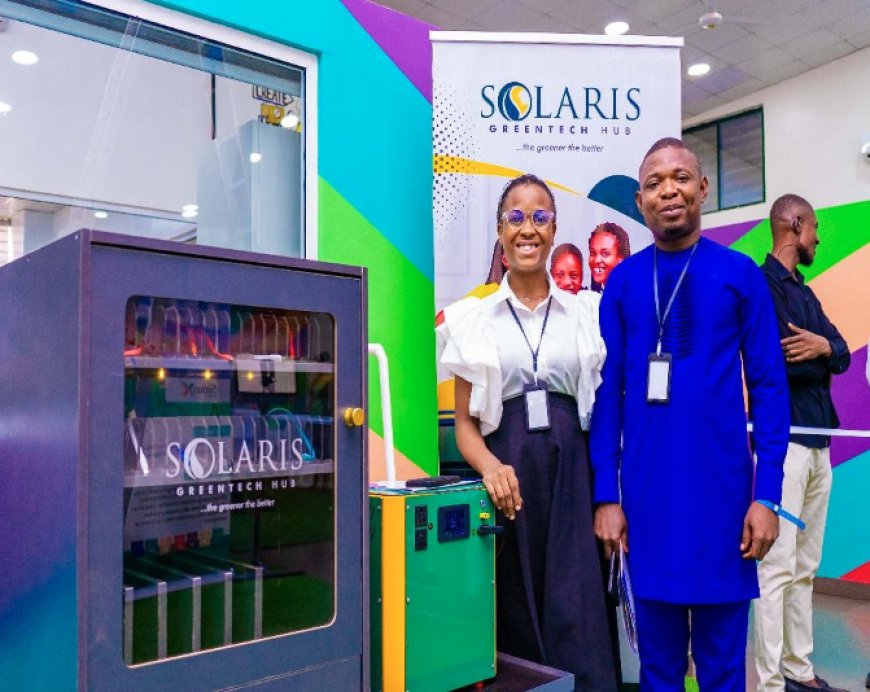
Solaris was founded in 2021 to address the energy crisis in various parts of Africa. The company's founder, Chiemela, studied without an engineering or STEM background, but she transitioned into the energy sector in 2019. She gained experience working for an engineering company involved in designing and manufacturing emerging technologies, which sparked her passion for solving energy problems. Chiemela and her team conducted extensive research to understand the unique energy needs of African rural and urban communities. They discovered that many people in rural areas only required essential energy services, such as charging their mobile devices and lighting their homes. This led to the idea of offering energy as a service rather than selling costly solar infrastructure. Solaris developed solar booths with solar panels as roofs, serving as community energy hubs where residents can charge devices and access energy for their homes. The company also rents energy bulbs and sells micro-energy kits, providing clean energy access to marginalized communities. Since its inception, Solaris has successfully deployed more than ten solar solutions in rural communities and sold over 3,000 units of Pico kits across Nigeria.
Solaris aims to be Africa's leading clean energy and sustainability brand, promoting clean energy inclusion, expanding access through rural electrification, and building capacity for emerging green industries in Nigeria and across the continent.
Overcoming the Hurdles
When Chiemela started Solaris, she prioritized finding skilled workers over money. However, it was challenging to attract talent as many preferred working in big cities. Availability of talent is a significant obstacle, as startups like Solaris could not compete with the salaries offered by larger companies. To overcome this, Chiemela tapped into local talents. Another obstacle was the infrastructure for operation. Here, Chiemela partnered with organizations such as Clintonel Innovation Centre for necessary machinery.
Additionally, Solaris received support from Hardware Garage in exchange for a 20% stake in the business. Obtaining funding was another challenge. Initially, Solaris relied on Chiemela's savings but later secured grants from organizations such as Clean Tech Hub, Nigeria Climate Innovation Center (NCIC), and Res4 Africa Foundation.
As a female entrepreneur in a male-dominated space, Chiemela faced bias and skepticism from clients. To combat this, she strategically positioned her male team members at the forefront during technical discussions, while she focused more on securing funding. Despite these challenges, Chiemela remains optimistic about decreasing gender biases in the industry over time.
The Building Blocks of Success: The Resources to Kick Off and Succeed
Chiemela's dedication to continuous learning was crucial to Solaris's success. When she started the company, she lacked a strong engineering background and startup experience, so she took numerous business development courses and mini-MBAs to gain the necessary skills. Her commitment to self-improvement was instrumental in navigating the complexities of running a hardware startup and effectively leading it. Chiemela conquered challenges with her relentless drive and belief in her vision. Despite facing skepticism, she used feedback to refine Solaris's business model and approach. Furthermore, winning competitions and securing grants validated Solaris's business model and impact. Notable achievements, such as winning the Nigerian Communication Commission-organized Hackathon and receiving grants from international foundations, boosted the company's credibility and visibility.
Empowering Young People
Solaris attributes its success to engaging and empowering young people. Chiemela and her team have developed a model that not only incorporates youth as users but also as key contributors to their operations and growth.
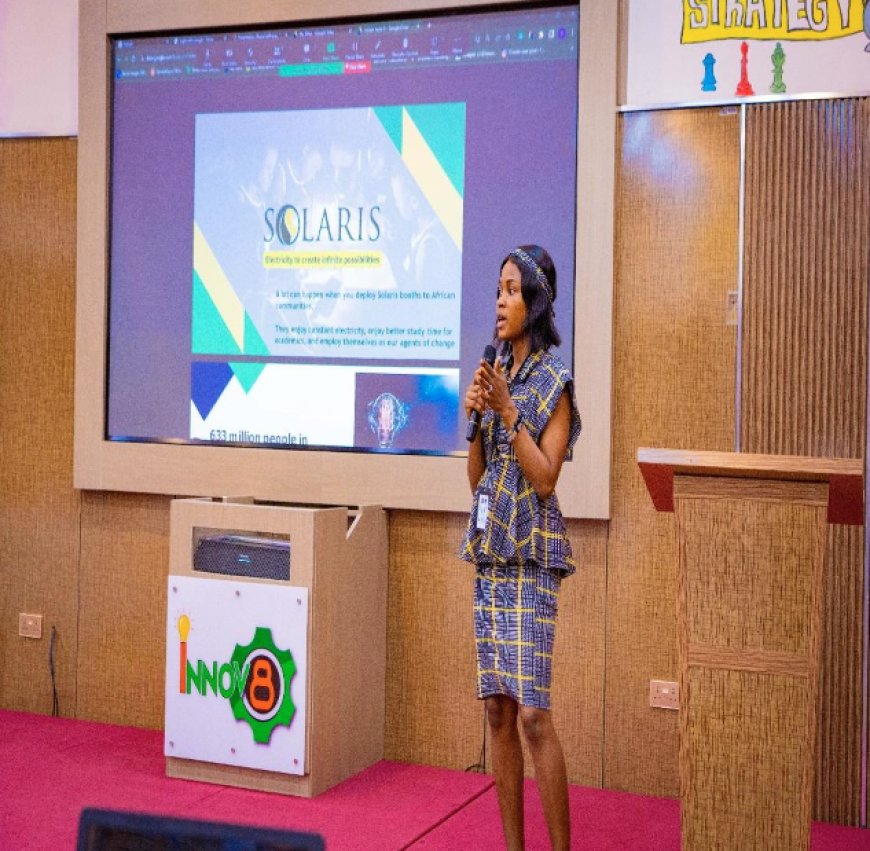
The organization has a young and vibrant team, including nine full-timers aged between 27 and 36, with Chiemela herself being the youngest at 27. Additionally, over ten young individuals in the technical team are involved in solar installations. Solaris offers extensive youth training programs in solar system design, installation, and maintenance. The company aims to spark interest in young individuals and encourage them to pursue careers in the renewable energy industry. Over 50 individuals have been trained to date.
Engaging Young People as Agents and Entrepreneurs
Solaris enables young individuals to become energy entrepreneurs through a lease-to-own model. Agents, mostly aged 18 to 30, receive basic training on how to use and set up the energy system and sign a 15-month contract to pay back an agreed amount. Ultimately, they own the system, empowering them to set up micro-businesses. Agents can earn up to ₦200,000 from reselling energy and other activities conducted through the booths while only remitting about ₦30,000 to ₦40,000. This model provides a sustainable way for young people to engage in energy distribution and offers a stable business opportunity.
Empowering Young Women in a Male-Dominated Industry
Solaris is addressing the gender gap in the energy sector by actively seeking to attract and empower young women. Chiemela has made it a core part of Solaris's mission to create opportunities for young women in the green technology field. Currently, Solaris is working on a program to train girls in secondary schools on solar system design and green technology to spark interest in renewable energy and engineering from a young age. The program is under development, and Solaris is reaching out to potential partners for support. The goal is to provide young girls with hands-on training and mentorship, preparing them for careers in a male-dominated industry.
Overcoming Barriers to Empower the Next Generation of Renewable Energy Innovators
When working with young individuals in Nigeria, it's important to address specific challenges, according to Chiemela. There is a notable skills gap among recent graduates, many of whom lack the practical knowledge required for the renewable energy sector. One significant obstacle is the outdated curriculum at universities and educational institutions. Numerous students graduate without the hands-on experience necessary for the renewable energy industry. To address this issue and make these graduates more employable, extensive youth training programs are essential, albeit resource-intensive and potentially straining for startups like Solaris. Another challenge is retaining skilled, young employees. Once Solaris has developed the necessary skills and expertise in its employees, many of them move on to larger companies offering higher salaries, posing a significant setback to the company's progress and development.

An Enabling Environment from Chiemela’s Vision
Chiemela asserts that while Nigeria's policy frameworks are commendable, there are challenges in effectively implementing these for small businesses, especially in areas where Solaris operates. The prevailing policies appear to favor the affluent, creating obstacles for startups striving to compete in the market. An enabling environment is crucial for Solaris. Despite being located in Nigeria, Solaris encounters significant delays, up to 8 months, in receiving necessary imported components such as electronics and lithium-ion batteries due to policy intricacies and bureaucratic hurdles. This disrupts operational efficiency and leads to undue expenses, including tariffs and inflation from international sourcing. Substantial infrastructure disparities persist in the eastern region of Nigeria, where Solaris operates, leading to connectivity and electricity reliability challenges and hindering operational capacity and access to growth opportunities. Chiemela posits that the company's journey would have been different if Solaris had been situated in Lagos or Abuja, where the investor ecosystem and confidence are more developed. As investors often prioritize locations with established startup ecosystems, perceiving them as more sustainable, profitable, and lower risk. Hence, establishing a presence in Lagos is part of Solaris' strategy to enhance credibility and access larger markets while upholding a commitment to rural communities across Nigeria.
Solaris Future Visions and Youth Empowerment
Solaris plans to become a significant entity in the next four to seven years by establishing a green technology hub focused on sustainability, solar energy, clean technology, and waste management that are inclusive and beneficial to everyone, especially marginalized groups. It aims to promote clean energy inclusion, especially in Nigeria and Africa, and prioritize youth empowerment through education and capacity building in the clean energy sector.
One unique project in this hub involves recycling leather waste into lifestyle items, benefiting nearly 2,000 artisans. The goal is to create a sustainable community where sustainability and clean technology concepts are easily understandable.
Advice for Aspiring Entrepreneurs
Chiemela emphasizes the promise for female entrepreneurs and recommends taking advantage of tailored opportunities for growth. She underscores the importance of laying a solid foundation, understanding legal aspects, and developing a well-structured business model. Continuous learning and acquiring in-depth industry knowledge are crucial. Lastly, resilience and commitment are essential for startup success, demanding immense effort, patience, and unwavering dedication to vision and goals.
This series, produced in partnership with the Mastercard Foundation, focuses on young African entrepreneurs promoting economic growth through green tech innovation in Nigeria, Ghana, and Kenya. It showcases these founders' journeys, highlighting their contributions, successes, and challenges while identifying the support needed to expand their innovative ventures.