The Year of Modest Regulatory Clarity, but Every Little Helps
2025 highlighted Africa’s uneven green tech transition as global trade rules tightened and finance gaps widened, underscoring the need to strengthen institutions and expand climate‑tech finance.
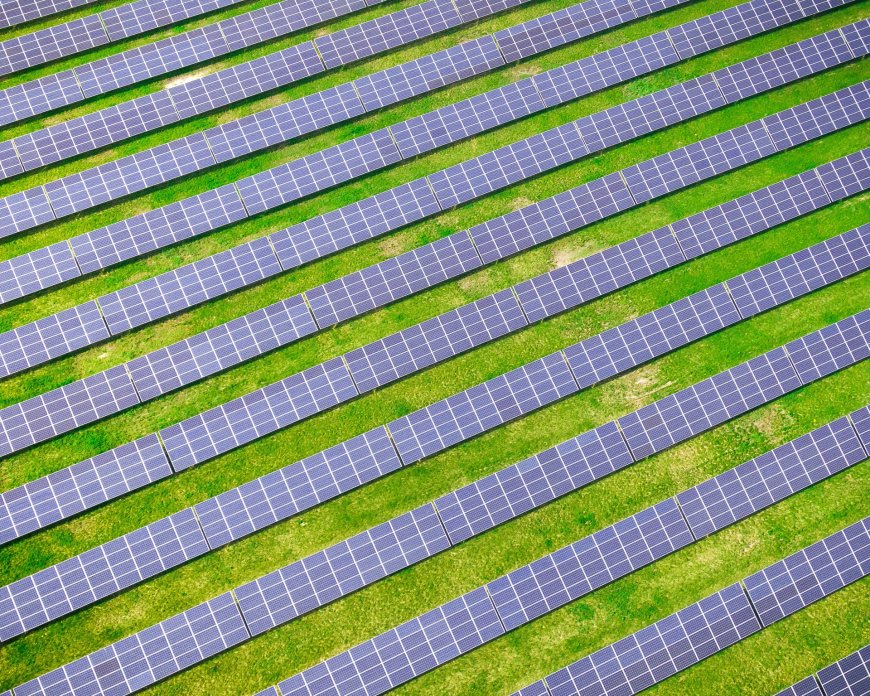

Although green technologies like solar1 and electric vehicle (EV) batteries2 have become more affordable and widely available, the political economy of the green transition continues to shape the distributional effects of climate policy, economic restructuring, and global power hierarchies. For African nations, constraints on green technology innovation and transfer stem from limited access to finance, inadequate infrastructure, weak regulatory frameworks and deficits in human capital. Efforts to scale up green technology are further hampered by persistent gaps in project bankability and fragile public institutions. These challenges intensified in 2025 as multilateral climate rules governing green technology tightened, external trade and compliance requirements grew more stringent, and mounting domestic fiscal pressures compelled governments worldwide to make politically costly decisions about tariffs, subsidies and public investment priorities aimed at advancing green industrialisation.
The expiration of the African Growth and Opportunity Act (AGOA)—a non-reciprocal trade preference programme that grants eligible African countries duty-free access to the US market—introduced significant uncertainty, disrupting supply chains and threatening thousands of jobs across the continent. UN Trade and Development warned that African market access to the US could deteriorate further if AGOA were not renewed ahead of its September 2025 deadline. Although a one-year extension was eventually signed into law in February 2026 to retroactively cover the lapse, it failed to provide the multi-year certainty required for long-term investment planning. AGOA’s renewal, while welcome, should not obscure the reality that the Trump tariffs have eroded much of the programme’s practical value. Flagship sectors such as apparel lost their competitive edge, leaving African producers with little more than a symbolic preference. African governments should treat AGOA’s short-term renewal as a cautionary signal and move proactively to diversify export markets.
Meanwhile, the EU’s Carbon Border Adjustment Mechanism (CBAM) moved closer to launching its definitive regime3, which is scheduled to commence in 2026. Under the new regime, African exporters to Europe will face higher border carbon taxes at the European border, effectively turning market access into an economic stress test. Process efficiency and credible measurement, reporting, and verification (MRV) of carbon emissions will become central to economic competitiveness. To ensure that the shift to a green economy is equitable, however, CBAM compliance must be matched by affordable decarbonisation finance and shared MRV capacity between the EU and its partners from developing nations. Without such support, smaller firms and local innovators in the Global South risk being priced out of the EU market by the bloc’s compliance requirements.
In 2025, President Donald Trump withdrew the United States from the 2015 Paris Agreement for a second time. Although other parties to the agreement warned that the decision jeopardised global climate cooperation, they reaffirmed their commitment to the agreement’s objectives. Washington’s exit underscored the urgency for African countries to pursue sovereign pathways for climate innovation and finance in order to ensure that progress does not depend on policy reversals in external capitals.
Multilateral climate governance in 2025 was marked more by procedural consolidation than by higher ambition4. At the COP30 UN Climate Change Conference, negotiations centred on process and voluntary implementation, while high-profile mitigation deliverables such as deforestation roadmaps were sidelined. The Global Implementation Accelerator and Belém Mission to 1.5, embedded in the broader global mutirão decision, were designed primarily to accelerate the delivery of Nationally Determined Contributions and National Adaptation Plans, encouraging rather than mandating bolder ambition amid persistent trust deficits over finance. Even so, they incrementally strengthened programme architecture and measurement frameworks that determine which projects are financeable and shape implementation support for developing countries, especially in relation to the new adaptation finance target and the Belém Technology Implementation Programme.
The conference approved the Belém Package, which included a commitment to triple adaptation finance by 2035. Parties also adopted the Belém Adaptation Indicators—a framework to measure adaptation progress and clarify project financeability—alongside the Belém Technology Implementation Programme, which will guide support for technology priorities in developing countries. Elsewhere, the Fund for Responding to Loss and Damage operationalised its start-up phase through the Barbados Implementation Modalities and approved a Just Transition Mechanism5 to enhance international cooperation, technical assistance and capacity building towards a just climate transition. However, the Fund faces mounting uncertainty in mobilising new resources following the US withdrawal from the UN Framework Convention on Climate Change and the Loss and Damage Fund. With capitalisation already limited, Washington’s exit risks deepening the Fund's fragility, eroding political momentum and complicating efforts to secure larger and more predictable contributions from other countries.
At the continental and national levels, African states and institutions moved to strengthen finance mobilisation and regulatory coordination. The Second Africa Climate Summit in Addis Ababa, co-hosted by the AU and the government of Ethiopia, produced the African Leaders' Addis Ababa Declaration on Climate Change and Call to Action, which, among other things, pledged to mobilise up to $50 billion annually for initiatives aimed at scaling climate solutions across the continent.6 The Mission 300 Africa Energy Summit delivered the Dar es Salaam Energy Declaration and elevated National Energy Compacts as core instruments for energy-sector reform across Africa.7
A third strand of institutional reform focused on circularity and environmental governance. African states adopted the Tripoli Declaration on Environmental Action in Africa and the Continental Circular Economy Action Plan for Africa, both aimed at strengthening commitments to environmental sustainability. A fourth set of measures addressed market integration in the power sector, driven by the imperative to provide electricity to 600 million people, support industrialisation and meet rising energy demand. In this context, the AU and the continent’s Regional Economic Communities (RECs) took concrete steps towards establishing the African Single Electricity Market. The West African Power Pool completed a historic synchronisation test, connecting the power grids of all West African countries simultaneously for the first time. This marked an important milestone towards a functioning regional electricity market and full synchronisation by June 2026.
In 2025, the UNFCCC Technology Executive Committee convened the first AI for Climate Action Forum, placing AI squarely on the climate technology agenda and examining its application in both mitigation and adaptation.8 At the continental level, the African Centre of Meteorological Applications for Development integrated AI into its climate services strategy, deploying it to strengthen forecasting systems and agricultural advisory services. These steps signalled the institutional mainstreaming of AI within global climate frameworks and Africa’s resilience and early-warning systems.
At the same time, concerns about AI’s environmental footprint became more pronounced. AI-enabled climate services rely on energy-intensive computational infrastructure that, if poorly governed, can undermine climate goals. Policymakers therefore face the challenge of designing sustainable governance frameworks for responsible AI deployment while balancing innovation with risks related to data protection and questions of AI sovereignty.
At the national level, policy responses across the continent emphasised price signals, project bankability, and regulatory compliance in the green technology sector amid tightening fiscal conditions. Governments in Nigeria, Ghana, Tunisia, South Africa, Kenya, and Zambia announced adjustments to subsidy and tariff regimes and introduced measures to strengthen the performance and the financial viability of energy utility firms. In the e-mobility sector, Kenya introduced value-added tax (VAT) exemptions for electricity-powered bicycles and buses, while Rwanda maintained VAT exemptions for EVs and charging equipment, helping to reduce upfront costs. However, although reforms to strengthen price signals, bankability, and regulatory compliance, together with subsidy and tariff adjustments and VAT incentives, might improve short‑term viability, they must be matched with investment in industrial capabilities and a skilled workforce. Only then can African countries build competitive local assembly and manufacturing capacity in clean‑energy technologies.
Taken together, compliance and MRV systems became increasingly critical for scaling green technology projects in 2025. Looking ahead, approaches that connect local innovation with efficient, standards‑aligned delivery are the most likely to succeed. Yet these same requirements will impose disproportionate adjustment pressures on late industrialisers with limited fiscal space, risking the marginalisation of smaller firms in African markets. A just transition approach is therefore required to link innovation to concessional decarbonisation finance and sustained technical assistance, ensuring that the shift to a low‑carbon economy is both equitable and inclusive.
Endnotes
[1] Solar PV cost declined by 45% between 2023 and 2024, and about 80% reduction over the last decade (IEA, 2025).
[2] EV batteries recorded almost a 20% decline in prices, and recorded almost 80% drop in the last decade. (IEA, 2025). Battery Storage - Battery storage experienced about 30% drop in prices, and observed a general price reduction across all markets. (IEA, 2025)
[3] CBAM will enter its mandatory compliance where authorized CBAM importers would be required to report on embedded emissions and surrender CBAM certificates on CBAM goods, after exceeding the 50 tonnes annual threshold. The transitional period ended in December 2025, and the compliance stage commenced Jan 1.
[4] The final agreed text missed out on the phasing out of fossil fuels. https://www.wri.org/insights/cop30-outcomes-next-stepsMutirao decision
[5] The purpose of the JTM is to enhance international cooperation, technical assistance, capacity-building and knowledge-sharing, and enable equitable, inclusive just transitions.
[6] At ACS2 (2025), leaders launched the Africa Climate Innovation Compact and African Climate Facility to mobilize $50 billion per year in catalytic finance and steps to operationalize the African Climate Change Fund to strengthen Africa’s climate financing architecture.
[7] Reforms energy sector. Activities aimed at expanding energy infrastructure to strengthen structure at competitive costs, deepening regional power integration, scaling distributed renewables and clean cooking solutions, mobilizing greater private‑sector investment, and improving the performance of nationally-recognized utilities.
[8] This followed the exploratory #AI4ClimateAction Initiative of 2023–2024, which had mapped potential applications but remained outside formal processes.
About the Author

Dr. Serwah Prempeh
Dr. Serwah Prempeh is the Senior Fellow and Head of APRI's Just Green Technology Transition Programme, which is focused on aligning African technology innovation priorities with its development goals and bridging Africa-Germany-EU relations on just green technology innovation and development.