Expert interview with Kulthoum Omari-Motsumi on climate adaptation at COP30
Africa's climate adaptation crisis demands urgent action at COP30. Kulthoum Omari-Motsumi reveals critical needs: planning, funding and direct access.
Kulthoum Omari-Motsumi is the Lead Coordinator for the African Group of Negotiators (AGN) on adaptation and the special advisor of the Africa Adaptation Initiative. In this interview, Ms Omari-Motsumi discusses Africa's urgent and overwhelming climate adaptation challenges, emphasising the need for intentional planning, institutional arrangements, data and financing. She advocates for direct access to funds and a re-evaluation of private sector involvement in vulnerable communities.
The interview was conducted by Dr Serwah Prempeh, Head of the Just Green Technology Transition Programme, APRI, and edited by Isabella Roberts, Programme Manager, APRI. The transcript has been shortened, and the responses have been slightly edited for clarity.
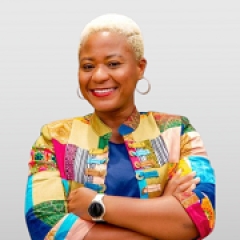
Serwah Prempeh
Ms Omari-Motsumi, thank you for joining us. To begin, could you paint a picture of Africa's current adaptation reality?
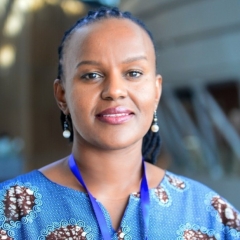
Kulthoum Omari-Motsumi
Adaptation is such a loaded word, and this is part of the problem. Africa has been pushing adaptation as a key priority. However, despite clear definitions from the IPCC and the UNFCCC, many international partners still struggle to grasp its meaning – perhaps intentionally. Yet, they're sitting at the negotiating table. And I'm talking about our international partners, not necessarily us as Africans, because we get it. We experience it. We live it.
The continent is highly vulnerable to climate change, facing intensifying heat stress, extreme temperatures and flooding. These impacts are increasingly leading to loss and damage, largely due to insufficient adaptation finance.
Africans are experiencing unprecedented extreme conditions, such as food and yield losses and unexpected frost in semi-arid regions, as in my country, Botswana. These impacts necessitate adaptation for survival. And we are being forced to address those impacts at the expense of our development.
Governments face difficult choices in allocating limited funds, having to prioritise between critical areas like healthcare (e.g., malaria), infrastructure (e.g., schools, clinics), disaster relief (e.g., floods) and food security (e.g., crop losses, starvation).
An increasing proportion of the limited available financing is being diverted to adaptation as it becomes an urgent reality. That obviously affects our national growth and development. The scale of the challenge is overwhelming. Effective adaptation requires intentional planning, as outlined in National Adaptation Plans (NAPs), while implementation requires robust institutional arrangements and data. Crucially, adaptation demands adequate financing. All these factors are currently lacking. I don't like to paint a doom and gloom picture, but this is the stark reality. These gaps need to be addressed.
Serwah Prempeh
Now, let's start with the word ‘access’ and the definition of ‘accessible’. In the context of African governments seeking adaptation finance from funds, especially like the Green Climate Fund (GCF) and the Adaptation Fund, what does ‘accessible’ truly entail?
Kulthoum Omari-Motsumi
The GCF provides an avenue for developing NAPs, yet fewer than 70% of African countries currently have theirs. This adoption rate is primarily due to the challenging access requirements of GCF funds. Many African countries lack the necessary institutional arrangements for climate change action, yet they are expected to submit completed proposals to access funding.
The process of securing funding involves proposal development and programming, which are crucial for increasing access levels. However, challenges persist in project implementation, capacity in monitoring and evaluation, and execution. This process demands training capable people in the effective development and execution of projects.
GCF access requirements fail to acknowledge the substantial hurdles African nations face in securing financing. Do we, as African countries, have the right data in place? I'm not sure that we do. Do we have the right institutional arrangements in place? I don't know that we do. Do we have the human resources capacity? The GCF should identify these gaps in target countries and create access mechanisms that enable African countries to utilise the available funding.
Serwah Prempeh
Now I want to push you: If you had to pick one action that would change these operational modalities and challenges, which would you pick to have the most impact on access?
Kulthoum Omari-Motsumi
Direct access is the key. If we unlock the formula to getting our countries direct access, it will unlock a lot of resources. But I must add, now that the Global North has other priorities, public funding for adaptation from those countries has dwindled. Additionally, the US withdrawing from the Paris Agreement and stopping all projects related to climate has significantly affected the amount of adaptation finance available.
Serwah Prempeh
You've already answered the question about how funding gaps manifest in the lives of ordinary Africans. I’d therefore like to ask: How do we get private capital into adaptation finance? There's a lot of talk about mobilising private finance for adaptation, but investment remains minimal due to perceived risks and low returns. But we know the issue is not finance; the issue is directing finance to fund adaptation. So what really needs to change?
Kulthoum Omari-Motsumi
Involving the private sector in adaptation presents challenges because the return on investment is often unclear or absent. After all, most of the time, adaptation is a public good. For instance, financing a village water supply in Botswana, which should be a government responsibility, yields low returns if structured as a private investment.
I think we all need to take a step back and ask ourselves where specifically we need the private sector to play a role in adaptation. We do need the private sector, but their participation is not universally applicable. There are places where they can make a significant impact, and there are places where they can't. In highly vulnerable communities, private sector engagement can exacerbate existing vulnerabilities, if profit takes precedence over public good. Moreover, African countries are highly indebted, so things like loans, which come with private sector involvement, will further burden African countries and thus weaken our adaptive capacity.
Furthermore, the term ‘private sector’ encompasses a wide range of actors, from large multinational corporations to small-scale farmers. Each category requires a distinct approach and focus, in recognition of their respective capacities and impacts on adaptation efforts.
Serwah Prempeh
Quickly going into COP30, a very common question: What are the common African positions? What are the priorities?
Kulthoum Omari-Motsumi
This year’s COP, termed the ‘implementation COP’, prioritises the Global Goal on Adaptation (GGA). For me, success hinges on addressing issues around the implementation of the GGA, which has established 11 targets. A successful COP30 will clearly outline how these targets are going to be met with well-defined indicators. Finance, technology development and capacity building must constitute the package that parties should adopt. These indicators should reveal how much funding developing countries have received to implement a GGA that protects all people, economies and ecosystems, while outlining the funding gap. A strong GGA must guide finance and investment and also turn ambition into accountability. But I'm sceptical.
Serwah Prempeh
Why are you sceptical?
Kulthoum Omari-Motsumi
Because we've been getting a lot of pushback around climate finance in general, not just adaptation. Many new sources of finance have been introduced to the conversation.
Domestic finance should not be discussed at the UNFCCC; that's not its mandate. It is an important element, but what business does the international community have telling countries how to allocate their own money for climate related projects? That is, unless there is a clear climate finance architecture where we can say, ‘We are providing X amount and this is how it needs to be used’. So the UNFCCC can't tell countries how to use their own money, especially countries, such as those in Africa, that did not cause the climate problem. Sorry, but they can't. Developed countries must take the lead in providing finance to increase global resilience and reduce the vulnerabilities of frontline communities to the hazards and impacts of climate change.
About the Expert
Kulthoum Omari-Motsumi
Kulthoum Omari-Motsumi is the Lead Coordinator for the African Group of Negotiators (AGN) on the Africa Adaptation Initiative. She’s also a PhD candidate at the University of Cape Town, where, with the African Climate Development Initiative, she studies adaptation governance, with a particular focus on drought governance in Botswana.