Europe and Africa at 25: partnership in an age of shared vulnerability
For the first time, both regions share a sense of vulnerability, creating an opening to overcome long-standing ‘othering’ and build a more equal, mutually relevant partnership.
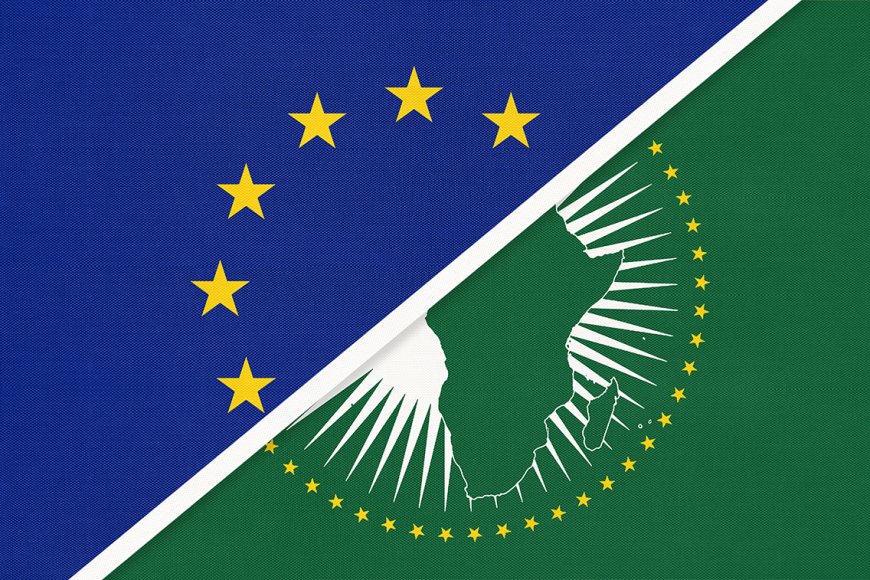
Image by Anastasiia Guseva on Shutterstock

Summary
- The 2025 AU-EU Summit marked the partnership’s 25th anniversary but delivered no major breakthroughs, reiterating familiar commitments without clear implementation.
- Both Europe and Africa enter this moment facing deep instability – Europe from geopolitical shocks, economic strain and democratic pressures; Africa from coups, conflicts, weakened institutions and economic stress.
- For the first time, both regions share a sense of vulnerability, creating an opening to overcome long-standing ‘othering’ and build a more equal, mutually relevant partnership.
- Realising this opportunity requires internal reforms: Africa must strengthen continental institutions and governance, while Europe must translate self-reflection into tangible shifts in policy and engagement.
- Despite ongoing power asymmetry, Europe’s need for diversified alliances and Africa’s drive for economic transformation now provide joint incentives to build a partnership that truly delivers.
Introduction
On 24-25 November 2025, African and European leaders gathered in Luanda, Angola, for the African Union (AU) - European Union (EU) Summit – the 25th anniversary, the silver jubilee, of the partnership launched in Cairo in 2000.
Developments earlier in the year had raised expectations for a productive, even celebratory gathering. The AU-EU Ministerial in Brussels in May unfolded in a constructive atmosphere. The AU Peace and Security (PSC) - EU PSC meetings in October in Addis Ababa produced a joint communiqué – the first since the war in Ukraine. And the EU’s Global Gateway Summit in Brussels, also in October, brought together high-level African and European delegations, offering the rare sight of President Tshisekedi addressing President Kagame directly.
The Luanda Summit itself produced no major breakthroughs. Its joint declaration leaned heavily on familiar language – ‘we commit’, ‘we recognise’, ‘we support’ – across an expansive list of shared priorities, yet offered little clarity on how these commitments would be realised. As often is the case, the summit felt like more of the same: a forum for diplomacy, dialogue and public signalling.
Still, there is reason for cautious optimism. For the first time in a long while, not just Africa, but both Europe and Africa are engaging the world from a position of vulnerability. This shared exposure creates the possibility for a more equitable, mutually attentive partnership.
A world reordered
The Luanda Summit took place in a dramatically altered global environment. Many would agree that 2025 was a historically significant year. The escalating brutality of the war in Gaza – and the United Nations Independent International Commission of Inquiry’s September 2025 conclusion that Israel was committing genocide – has tested international law and shaken the global moral conscience. The return of President Trump in January 2025 has further unsettled the foundations of international aid, trade and law.
Europe, meanwhile, has been navigating what many now call a polycrisis. Competitiveness and strategic autonomy – particularly vis-à-vis China – were already on the agenda, but Russia’s invasion of Ukraine in February 2022, arriving just after the previous AU-EU Summit, forced a dramatic reorientation of European foreign policy, from frantic energy diversification to rising defence spending.
European insecurity was pushed to new heights by the unexpected rupture in the transatlantic partnership – first signalled by Vice President Vance’s castigating speech at the Munich Security Conference in February 2025, and followed by President Trump’s live rebuke of President Zelensky later that month. If Russia’s invasion struck at Europe’s sense of safety, Trump’s reassessment of the transatlantic relationship – especially on Ukraine – was a blindsiding shock. For a continent so dependent on American defence and deterrence, the prospect of an unreliable partner is a profound shift, exposing vulnerabilities long assumed to be settled. (In)Security now dominates both political rhetoric and the continental imagination in much of Europe.
Africa, too, has felt the shake-up of the past three years – albeit differently. Rising costs of grain, fertiliser and energy after the Ukraine war, the need to assert independent and diverse foreign policy positions and bearing the flag of international law in the face of Gaza have all demanded political agility. African states have also felt the sting of Trump’s February tariffs, while the dissolution of the United States Agency for International Development (USAID) – along with cuts to health financing – carries direct consequences. Moreover, Washington’s skepticism toward multilateralism and its retreat from global institutions troubles both African and European states, even if their visions of reform diverge. Yet, given Africa’s ambivalent relationship with the United States (US), Trump's ‘America First’ policy was less shocking for Africa than it was for Europe.
Parallel Unravelling and shared vulnerabilities
Leaders from both continents thus attended the summit with some reckoning, as both are grappling not only with external shocks, but also internal turbulence.
Africa has experienced a series of coups across the Sahel and Central Africa, including the events in Guinea-Bissau just days after the summit and the recent attempted coup in Benin. The devastating war in Sudan since April 2023 and the renewed conflict in the Democratic Republic of Congo (DRC) since March 2022 have further darkened the peace and security landscape. From the Horn of Africa to the Sahel and Mozambique, peace remains elusive. At the same time, conflicts are becoming internationalised, while African leadership – AU, regional economic communities and key member states – has left a lot to be desired in ineffectively managing these crises. This suggests that the continent is slowly unravelling parts of its once-celebrated African Peace and Security Architecture – and with it, the principle of ‘African solutions to African problems’.
Internationally, however, the AU and its member states, with support from Caribbean and European partners, have made tangible progress in advancing their global agenda. From shaping debates on reforming the global financial architecture to securing AU membership in the G20, there are some notable wins. While such thematic engagements are no substitute for a coherent, long-term AU strategy to guide Africa’s global engagement, they can serve as a foundation. Building on this, the AU needs a strategy for engagement with key partners, including the EU, China, the US and others.
Europe, too, is in flux. The continent’s economies are stagnating, and its share of the global economy and overall competitiveness have been in decline for the past two decades. At the same time, civic space, media freedom and systems of checks and balances are under pressure across the EU, underscoring that the struggle for democracy and rule of law has become as much a European challenge as an African one. The rise of populism and the far right, as well as the fixation on and vitriol around the issue of migration, are symptoms of the moral, legal, cultural and historical pressures bearing down on European democracy.
Externally, the EU faces a diminished global footprint, a looming security threat from the east and a ‘downgrade’ in its once-privileged relationship with a global superpower. In sum, it is confronting the erosion of reliable security guarantees and adopting an increasingly defensive diplomatic posture – a familiar reality for much of the Global Majority.
New incentives, new possibilities
None of this is to paint a picture of doom – neither for Africa nor for Europe. Rather, it is to argue that shared vulnerability, even if experienced differently, offers a rare chance to dismantle one of the partnership’s most persistent barriers: othering.
For decades, Europe – a continent of stable, relatively wealthy and established democracies who have been ‘norm-setters’ closely aligned with a global hegemon – has struggled to relate to African realities: emerging economies, evolving democracies and the constant effort to navigate a global system never designed with itself as a centre – even if these realities are linked to Europe’s colonial history.
Africa’s priorities have often been treated as secondary in the AU-EU partnership. While African partners have sought legal and policy compromises on trade barriers, access to affordable capital, illicit financial flows, and legal migration pathways - areas with transformative potential - the EU has frequently defaulted to an aid-centric approach. The EU has also been criticised for insufficient consultation with African partners, including when implementing policies that can harm African economies, further weakening the prospects for a genuinely mutually beneficial partnership.
On the other hand, African stakeholders have not fully appreciated the scale of the shock the war in Ukraine has posed for Europe, nor the seriousness of the threat—real or perceived—that Europe associates with Russia. The weakening of the transatlantic partnership, combined with Europe’s economic slowdown, has only deepened the concern.
Africa doesn’t need to share Europe’s position on Russia, nor its views on the changing global context and its place within it. It should, however, recognise Europe’s heightened sense of insecurity, which it is increasingly framing in existential terms, whether justified or not. This recognition can enable both sides to better anticipate ramifications for the relationship.
While Europe has historically approached the partnership from strength, its new positioning could allow for greater humility – and more importantly, with incentives to turn a new page. The EU has long benefited from this overtly asymmetric relationship. However, facing security and economic challenges, along with uncertainty over EU-US relations, it now has strong incentives to make the AU–EU partnership meaningful, forge new alliances, and diversify its partners.
Similarly, if the AU wants to seize opportunities that flow from the reordering of the global landscape, it must adopt a new mode of engagement with key partners like the EU. This requires a formulation of a strategy that enables proactive engagement to secure long-term goals. At the same time, the AU must match its global outreach with efforts to demonstrate continental leadership in conflict management and crisis prevention. Progress abroad while neglecting core continental mandates would not only betray the Pan-African principles on which the AU is founded but also do a disservice to the 1.5 billion African citizens behind it.
By being candid on their respective vulnerabilities and objectives, rather than putting on a façade of harmony, the AU and EU can draw joint agendas, shared solutions and realistic compromises, making the partnership mutually beneficial not only on paper, but in practice.
About the author

Lidet Tadesse Shiferaw
Lidet Tadesse is a senior peace and security analyst and advisor. Her areas of focus include African peace and security management, geopolitics of the Horn of Africa, Africa-EU partnerships, multilateralism and Africa’s role in global governance.