Agency beyond Extractivism: African Economies and Societies in a New Global (Dis-)Order
In 2025, Africa gained bargaining power for critical mineral leverage but faced extractive debt and fiscal challenges. Gen Z uprisings toppled governments, triggering more political repression.

In 2025, shifting global geopolitics brought both economic and political headwinds to African societies while renewing international interest in the continent as a source of strategic raw materials and a partner in emerging political alignments. Western engagement intensified following China's export restrictions on critical minerals, highlighting Africa's growing importance to global value chains linked to the energy transition and artificial intelligence. As major and middle powers compete more actively for African markets and partnerships, new opportunities are emerging for African countries to exercise greater agency in shaping external relationships.
Political transitions - Change and Entrenchment
Growing restrictions on international mobility, partly driven by the rightward shift across the West, are adding to political pressure across the Global South. In many countries, majority-young populations face joblessness, weak economic prospects, and largely gerontocratic governments, even as opportunities for international mobility through business and education - long an aspirational outlet - are narrowing.
These dynamics have helped fuel Gen Z-led uprisings in a broader "fix things at home" moment, contributing to the toppling of governments in Madagascar and intensifed repression against protesters demanding systemic change in Uganda and Kenya. Meanwhile, weakening norms around human rights and democratic accountability within the US-led international order have created greater space for repression, electoral violence and coup attempts to proceed with limited external pushback.
Debt - a costly burden
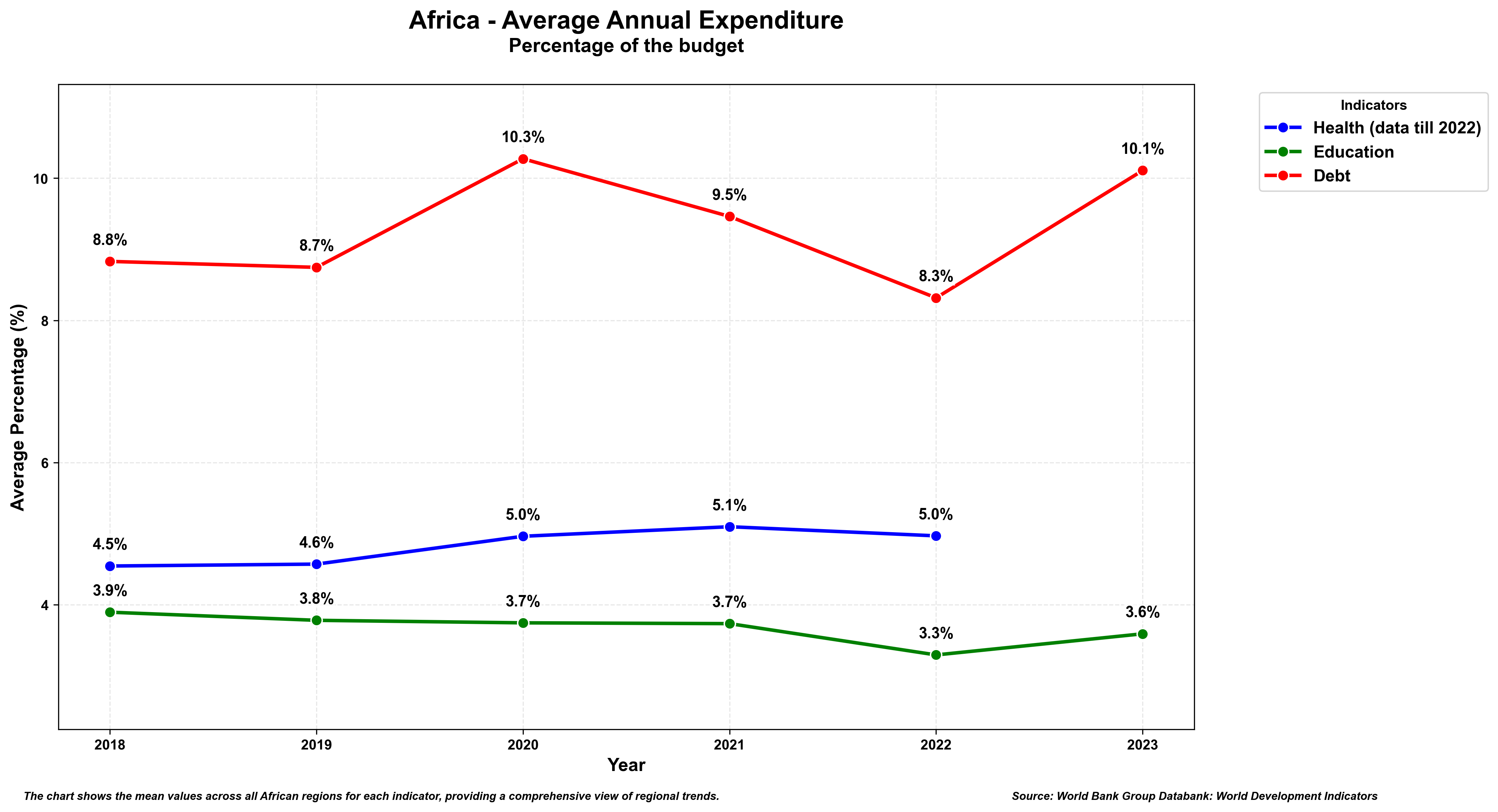
Africa's rising debt burden is increasingly constraining governments' fiscal space, limiting their ability to invest in essential services. In many countries, debt-servicing costs now exceed combined spending on healthcare and education, straining development progress and reducing political maneuvering room.
To address these structural pressures, the AU's Common Position on Debt proposes measures including the strengthening of Africa's own credit-rating capacity. This mirrors European efforts to diversify the global ratings landscape, exemplified by the emergence of Scope Ratings - a European credit rating agency - amid concerns over the objectivity and impartiality of major US-based agencies. African policymakers highlight persistent discrimination in global debt markets, often described as an informal "Africa tax" imposed on countries with strong macroeconomic fundamentals, in the form of higher borrowing costs.
Strengthening an African rating agency, alongside the Common Position on Debt, could enhance Africa's fiscal autonomy and open space for more equitable engagement with global creditors. It also presents a critical test for the European Union's willingness to turn rhetorical support for African economic sovereignty into concrete action in global finance.
Development Cooperation - Extractive Realities and new roles
Western development cooperation is increasingly pressured by right-wing actors across Europe and North America, who selectively critique aid to delegitimise non-extractive forms of international cooperation. Their argument frames aid as ineffective and suggests funds would be better spent addressing domestic concerns. In response, development policy increasingly emphasises links between cooperation and geopolitical objectives - such as economic benefits and migration control - often at the expense of global public goods or acknowledgement of Western climate debt. In reality, however, the combined effect of bilateral aid, loans, and debt repayments represent a net extraction from African countries, turning what is portrayed as altruism or even waste into a mechanism that drains resources from recipient countries.
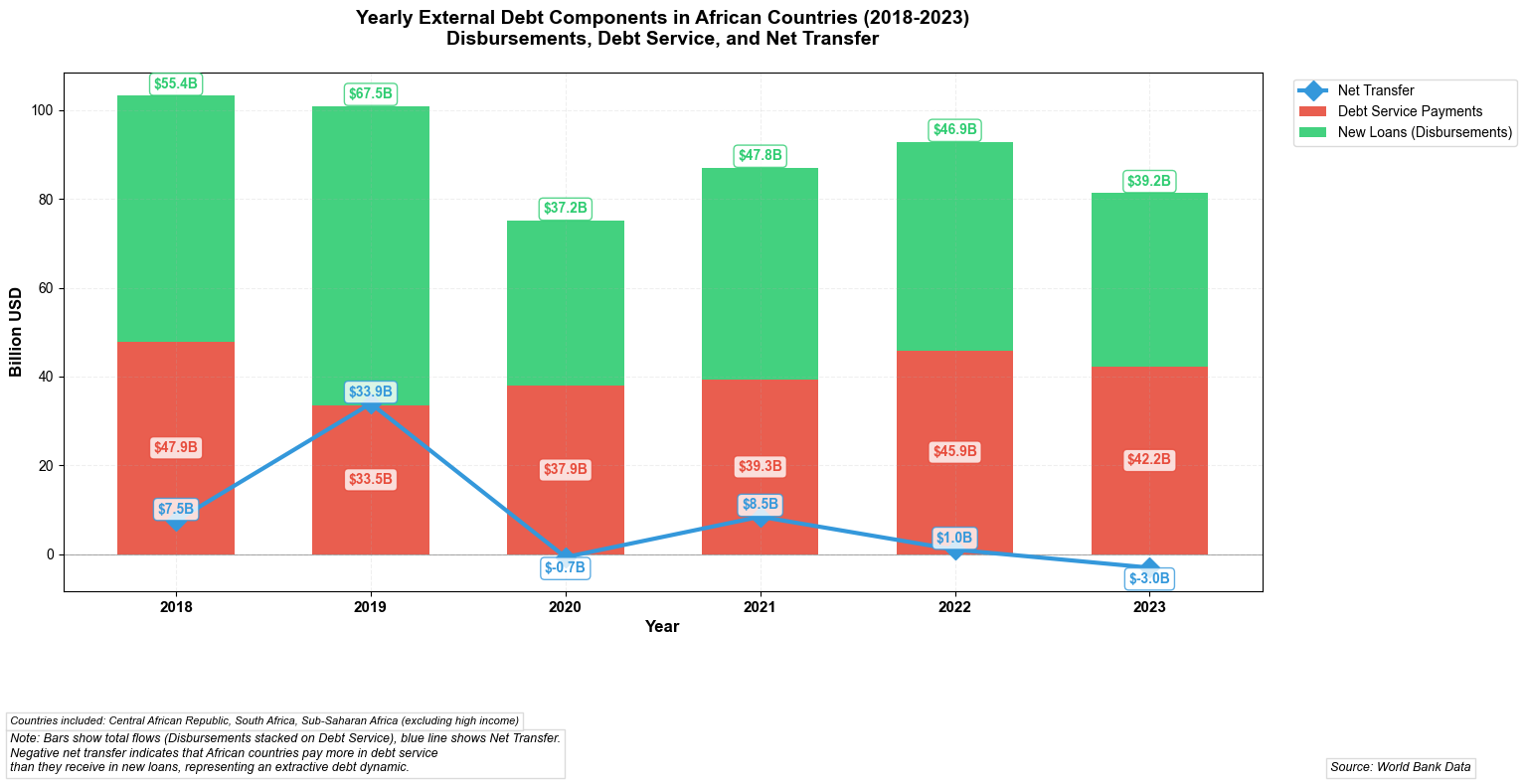
APRI's Economy and Society programme has examined African debt, and the need to recalibrate German development assistance in light of a long history of overlooked African agency within asymmetric donor-recipient relationships. These themes will be explored in greater depth in this year's publication, produced under the "Identifying and addressing Colonial Continuities in German Development Cooperation" project report. Following the de facto dissolution of the United States Agency for International Development - which catapulted Germany to the top of the bilateral donor rankings despite cuts of its own - debates on reforming German development cooperation and reshaping Germany's engagement with the Global South have gained renewed momentum.
African Trade - Unseen Dimensions
Research by the Organisation for Economic Co-operation and Development's Sahel and West Africa Club suggests that intra-African trade is far more integrated than the commonly cited 15 percent figure implies, largely because a significant share remains unrecorded. In West Africa alone, annual food trade is estimated at $10 billion - roughly six times higher than official statistics suggest. Contrary to perceptions of largely subsistence activity, about 90 percent of this unrecorded trade depends on large-scale logistics, including heavy lorries, coordinated by influential commercial actors such as Ghana's "market queens".
Yet this organic integration increasingly sits in tension with protectionist food-sovereignty policies and export bans across the Sahel. Border inefficiencies create arbitrage opportunities that benefit a narrow set of actors while undermining broader regional market integration. In 2026, we plan to commission research to better capture this empirical reality and identify policy options to safeguard and deepen those trade networks within the framework of the African Continental Free Trade Area.
Outlook 2026 - The Davos Gap and Beyond
At the 2026 meeting of the World Economic Forum in Davos, Canadian Prime Minister Mark Carney acknowledged the erosion of the current hegemonic order and called for new alliances among middle powers. In doing so, he invoked the concept of "value-based realism," popularised by Finnish President Alexander Stubb. From an African perspective, a central element of this framework is Stubb's argument - articulated both in his book-length treatment of the concept and in his remarks at Davos - that forging a new relationship with the Global South is essential to value-based realism and the reorientation towards new partnerships that Carney advocated.
Such a shift requires a more reflexive assessment of colonial continuities in development cooperation, international relations, and the global financial architecture.
In 2026, the depth of Western engagement with the Global South, whether through multilateral initiatives or bilateral agreements including those addressing migration and mobility, will depend on the extent to which European and North American governments heed this call. In this context, analysing colonial continuities and developing cooperative policy responses takes on renewed importance. The Economy And Society Programme has already contributed to this debate and will expand its work through a forthcoming final project report on colonial continuities in development cooperation, accompanied by an interactive online tool mapping the academic, civil society and policy discussions surrounding the topic.
About the Authors

Joshua Kwesi Aikins
Joshua Kwesi Aikins is a Senior Fellow and head of the Economy and Society Programme. He is a political scientist who studied, researched and worked in both Germany and Ghana.

Amara Phillips
Amara is a project coordinator for the Decolonizing Development project within the Economy and Society programme. Previously, she managed projects at Global Solutions Initiative in Berlin.