Africa in a Multipolar World: Navigating Power in Shifting Global Order, 2025
In 2025, Africa navigated a shifting multipolar world shaped by US retrenchment, strained AU–EU relations, the first G20 summit on the continent, intensifying competition over critical minerals, and rising tensions in the Horn of Africa.
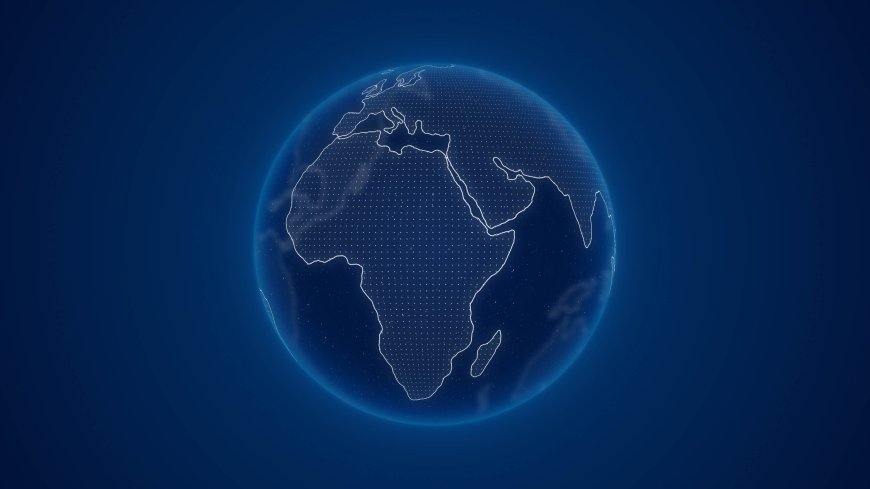

In 2025, the geopolitical landscape underwent a pronounced shift from a Western-centric order towards a fragmented, multipolar configuration. This transition has compelled African states to navigate both existing and emerging risks and opportunities through proactive diplomatic engagement, diversified partnerships and greater fiscal autonomy.
Several developments accelerated this transformation, including Washington’s strategic retrenchment under the second Trump administration’s “America First” agenda; the seventh African Union (AU)—European Union (EU) Summit, which commemorated 25 years since the inaugural 2000 Cairo summit; the G20 Summit in South Africa; the global race for critical minerals along the Lobito Corridor; and heightened geopolitical competition in the Horn of Africa, compounded by Israel’s recognition of Somaliland.
Trump’s return to the White House in January 2025 ushered in a starkly transactional approach to US-Africa relations, marked by drastic aid cuts, new tariffs and what his administration branded “commercial diplomacy.” The abrupt reduction in Washington’s aid immediately triggered humanitarian crises and instability across the continent. Yet it also forced a reckoning. Rather than reflexively seeking alternative benefactors, several African governments accelerated domestic resource mobilisation and began reassessing their structural dependency on external donors. Nigeria and Kenya, for instance, have intensified revenue drives and expanded domestic tax collection to close widening fiscal gaps, signaling a cautious shift towards greater self-reliance. Yet the gains are constrained by structural headwinds: record-breaking revenues are increasingly absorbed by mounting debt-service obligations, limiting space for development spending. This fiscal pivot is unfolding alongside persistent integration challenges, not least the slow and politically fraught harmonisation of trade and fiscal regimes under the African Continental Free Trade Area.
The AU and EU commemorated 25 years of partnership against the backdrop of the war in Ukraine and the continued rise of right-wing populism across Europe. African governments’ scepticism towards flagship EU initiatives such as Global Gateway and the Carbon Border Adjustment Mechanism (CBAM), which many view as shifting the cost of Europe’s decarbonisation onto their countries, remains largely unchanged. The summit also underscored a growing crisis of relevance for European diplomacy, exposing the EU’s difficulty in recalibrating its approach to an increasingly competitive and fragmented global order.
South Africa hosted the historic 2025 G20 Leaders Summit in Johannesburg, which marked the first time that the gathering convened on African soil and the first since the AU’s elevation from an “invited international organisation” to a permanent G20 member. Among the key outcomes was the G20 Africa Engagement Framework, a five-year plan aimed at better aligning international financial support with Africa’s economic development priorities. Central to this initiative was a push to reform sovereign credit rating practices, challenging methodologies that have historically skewed assessments of African economies and contributed to inflated borrowing costs.
To promote fairer lending terms, South Africa proposed a Cost of Capital Commission and championed the African Credit Rating Agency as credible homegrown alternatives to the three US-based rating firms—S&P, Moody’s and Fitch—which dominate the global credit rating market. The G20 Leaders’ Declaration further endorsed a review of the International Monetary Fund-World Bank Debt Sustainability framework and pledged to double support for domestic resource mobilisation by expanding aid for tax capacity-building and technical assistance, with the goal of helping developing countries achieve a tax-to-GDP ratio of 15 percent.
However, South Africa’s diplomatic tensions with the US threatened to weaken Pretoria’s position and overshadow the achievements of its G20 presidency. Trump, who boycotted the summit in Johannesburg and whose administration’s officials skipped several G20 ministerial-level meetings, announced plans to block South Africa from participating in the next summit in Miami.
Elsewhere, Israel’s recognition of Somaliland as a sovereign state highlighted the Horn of Africa’s growing significance as an arena for regional and global geopolitical competition. The move aims to secure Israel’s strategic foothold along the Red Sea, deepen economic and security cooperation with Somaliland, and counter the influence of actors such as Iran, Saudi Arabia, Turkey and Houthis in Yemen.
Intensifying competition among external powers in the Horn of Africa risks destabilising the region, echoing patterns in the Sahel. Rivalry over strategic locations, natural resources and political leverage heightens the danger of regional fragmentation, as regional states increasingly prioritise bilateral security and economic arrangements over regional and continental frameworks. Countries like Ethiopia, Djibouti and Somalia are leveraging their geographic position, trading port access for economic rents, infrastructure investment and diplomatic partnership.
The rivalry among Gulf Arab states—particularly between Saudi Arabia and the United Arab Emirates—has deepened instability, fuelled proxy wars, and fostered competing alliances across the Horn of Africa. This dynamic exposes a stark contradiction between their stated commitment to regional stability and the destabilising effects of their interventions. In turn, it constrains the capacity of the AU and the Intergovernmental Authority for Development to uphold sovereignty norms and effectively manage conflicts in the region.
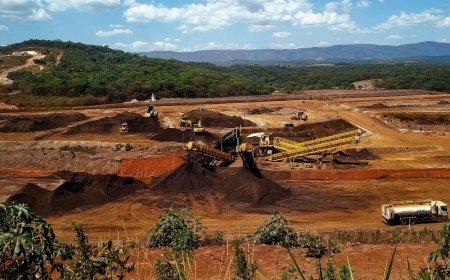
The Lobito Corridor has emerged as a central theatre of strategic competition, particularly for the US and the EU, both of which aim to diversify critical mineral supply chains and counter Chinese dominance of the global market. While China retains its lead in mineral refining, 2025 saw intensifying competition over local midstream processing capacity. This was reflected in US-backed financing for the Lobito Atlantic Railway and Western-aligned investment advancing Zambia’s Kobaloni Energy Refinery. African states along the Lobito Corridor increasingly prioritize domestic processing and industrialisation through Special Economic Zones (SEZs), leveraging streamlined regulations, tax incentives, and dedicated infrastructure to attract processing and manufacturing investment. Since 2021, the Democratic Republic of Congo (DRC) and Zambia have taken concrete steps towards establishing a cross-border battery and electric vehicle SEZ. However, recent reports point to significant governance risks, including forced evictions in the DRC and regulatory fragmentation that weakens labor and environmental safeguards. Ultimately, the Lobito Corridor is positioned as both a prospective engine of economic growth and a focal point for intensifying great-power competition.
In 2025, Africa navigated a competitive and fragmented global landscape, requiring states to balance external pressures from major powers while safeguarding their own interests. In 2026, we will continue to monitor and analyse how these shifting global dynamics affect Africa's bargaining power and generate evidence-based recommendations to inform policymaking. This includes assessing how African states advance national development priorities with regional and continental commitments; tracking Africa-Europe relations and Africa+1 summit diplomacy, and monitoring the implementation of partnership frameworks - such as mineral agreements we have mapped—to determine the conditions under which they can translate into durable African leverage.
About the Author

Dr. Amandine Gnanguênon
Amandine Gnanguênon is Senior Fellow and Head of the Geopolitics and Geoeconomics Program. She holds a PhD in political science from the University Clermont Auvergne (France). Her areas of focus include regional integration, peace and security, governance, artificial intelligence (AI) and digitalization, and climate-related issues.

Olufolake Adegoke
Olufolake Adegoke is a Geopolitics Intern at APRI, where she supports the Geopolitics and Geoeconomics Programme through policy research and administrative coordination. Her work focuses on analyzing shifts in the global landscape and their impact on governance, development, and regional cooperation across Africa.

Lili Gabadadze
Lili Gabadadze is a Project Coordinator at the Africa Policy Research Institute (APRI), where she manages strategy implementation, finances, and partner communications for the Geopolitics and Geoeconomics Programme. She brings extensive international experience in project management, election observation, and transatlantic relations to her role.

This commentary is funded by the Stiftung Mercator Foundation as part of the Geopolitics and Geoeconomics of Africa-Europe Relations Project.