Foto von Ground Picture auf Shutterstock.com
Was Afrikas Abfallkrise über Macht, Politik und Menschen verrät (EN)
Abfälle in afrikanischen Städten offenbaren Lücken in der Regierungsführung, soziale Ungleichheit und die Notwendigkeit einer systemorientierten Stadterneuerung.

Summary
-
Rapid urbanisation in cities like Abuja has caused waste generation to outpace management systems, resulting in overflowing bins, clogged drainage and environmental degradation.
-
Abuja's lack of a modern sanitary landfill reflects a broader national inability to translate well-conceived policies into funded, implemented infrastructure projects.
-
Significant disparities exist in waste service delivery, where wealthy areas receive consistent collection while low-income neighbourhoods are often forced to resort to harmful open burning and dumping.
-
Integrating informal waste pickers and supporting community-driven recycling initiatives can transform waste from a logistical burden into a driver of social inclusion and job creation.
-
Lasting change requires enforcement of waste management systems, developed infrastructure and a shift in social consciousness where residents take personal ownership of waste management, drawing inspiration from successful collective models.
Introduction
Waste management is a critical but often neglected challenge in many African cities. With rapid urbanisation, population growth and increased economic activity, waste generation has surged, but the systems for managing it have not kept pace1. As a resident of Abuja, the capital of Nigeria, I witness firsthand the growing waste crisis, including overflowing bins, clogged drainage systems and illegal dumpsites. I see how waste is indiscriminately discarded, how informal recyclers, often called Baban Bola2 , pick through garbage to find recyclables and how residents struggle to dispose of their waste properly in the absence of efficient collection systems. Through my travels across other African cities, I have observed that the situation in Abuja mirrors broader challenges across the continent. In many cities, from Accra to Nairobi, inadequate infrastructure, poor policy implementation and a lack of public awareness contribute to similar struggles3 .
However, these problems are not insurmountable. Drawing from my experience as both a resident and a climate change policy advocate, I often find myself reflecting on the need to explore the political, economic and social incentives required to create sustainable waste management systems in cities like Abuja, which I now call home, as well as in other cities with similar socio-economic conditions.
A growing waste crisis in Abuja
Abuja is one of the few capital cities that was intentionally planned and built from scratch. Envisioned as a model city, it enjoys the advantage of having been designed with proper infrastructure from the very beginning. It is ironic, therefore, that its waste management challenges contrast so starkly with the city's ideal nature. The sight of litter-strewn streets and neglected waste bins is a daily reality in many parts of the city, from the bustling Wuse4 and Garki5 markets to residential neighbourhoods like Gwarimpa6 and Kubwa7.
The city's waste disposal practices vary significantly by income level, which points to broader structural issues in governance and service delivery. Wealthier neighbourhoods like Asokoro8 and Maitama9 tend to have better waste collection services, while low-income areas within the city, such as Garki Village and Durumi, as well as satellite towns like Kubwa, Karshi10 and Gosa11 , struggle with uncollected waste, leading to unhygienic conditions. Often, residents have no choice but to burn their trash or dispose of it in unauthorised locations, with significant climate implications. When organic waste is openly dumped or poorly managed, it decomposes anaerobically and releases methane, a highly potent greenhouse gas. Open burning of waste, while often seen as a quick solution, does not eliminate methane risks entirely and contributes to broader air pollution and public health concerns.
Other African cities face similar struggles. For example, Accra, Ghana, is dealing with a plastic waste crisis and has recently introduced policies to curb plastic pollution12 . Some cities have explored more decentralised and biologically driven approaches to resource recovery. In South Africa, successful composting initiatives have helped divert organic waste from landfills while creating nutrient-rich soil amendments. Black soldier fly farms in countries like Kenya are also being used to convert organic waste into high-protein animal feed. In Rwanda, small-scale anaerobic digesters are providing biogas for cooking and lighting in rural and semi-urban communities. Although these cities have not yet fully addressed their waste management challenges and continue to face both unique and general obstacles, Abuja can still learn from their successes. Beyond improving sanitation and resource recovery, these approaches also contribute to climate change mitigation by diverting organic waste away from open dumping and landfills, reducing methane emissions and in some cases replacing fossil fuels through composting, biogas production and other low-emission waste treatment pathways. By identifying and adopting the areas where these cities have made progress, Abuja can gain valuable insights and adapt strategies that could improve its own waste management system.
Political barriers and the need for stronger policies
It is important to note the absence of a proper landfill in Abuja. This is closely tied to the lack of political will to enforce waste management regulations both in the city and across Nigeria. This, however, is not the only challenge facing waste management in the city: Structural and fiscal constraints also limit action at both the federal and local levels. In my role as a Member and Secretary of the Working Group on Solid Waste Management under Nigeria's Climate Change Response Programme, I have seen how policies are often well-conceived on paper but falter during implementation. At the local level, governments are burdened with competing priorities such as road construction, education and healthcare, leaving waste management underfunded and undervalued. In many cities, waste services already consume a significant portion of municipal budgets, yet they still fall short of what is needed to ensure proper collection and disposal. This persistent mismatch between the scale of funding allocated to waste services and the efficiency with which those funds are used perpetuates inefficiency and discourages long-term planning.
At the national level, Nigeria's National Environmental (Sanitation and Waste Control) Regulations, 2009, and the National Policy on Solid Waste Management provide a framework for action but are fragmented and outdated. They do not adequately define responsibilities across tiers of government or establish clear financing mechanisms for urban waste infrastructure. Strengthening these national frameworks to align with climate and urban development policies, while empowering local governments with resources and enforcement authority, is essential for meaningful progress. Without coherent national direction and realistic funding models, even the best-crafted waste management policies will remain unenforced aspirations.
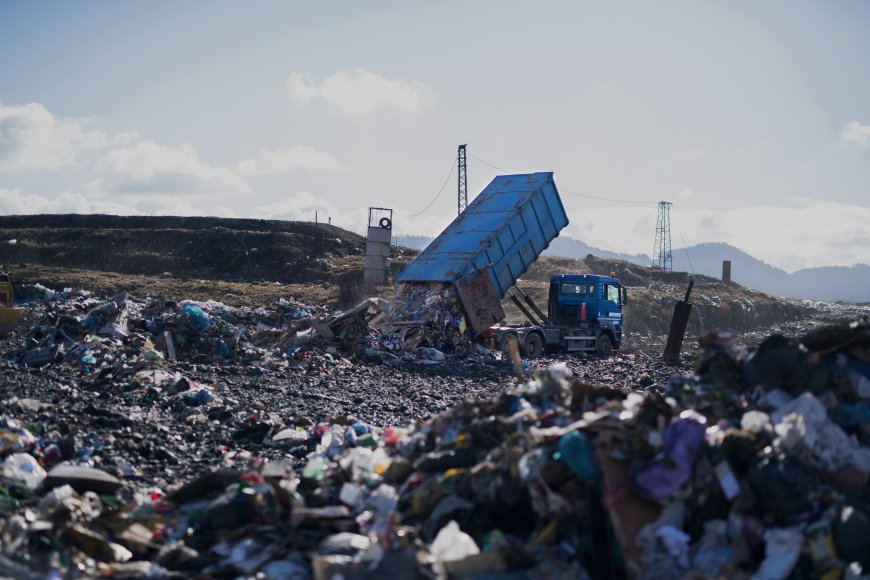
At the institutional level, the absence of a modern landfill in Abuja illustrates how weak implementation frameworks translate into infrastructure gaps. Although several proposals have been made, including plans for a sanitary landfill at the Gosa dumpsite, progress has stalled due to bureaucratic delays and financing constraints. What exists at Gosa today is not a true landfill but an open dumping site that poses risks to both public health and the environment. This situation reflects a broader national problem in which policies are developed without sustained investment or coordination between ministries and agencies. Lagos, Nigeria's commercial hub, offers a similar example. Here, the Olusosun site is officially designated as a landfill but operates largely as an unmanaged dumpsite, lacking the essential engineering systems found in sanitary landfills such as liners, leachate collection and gas recovery13 . These shortcomings – both technical and institutional – are rooted in fragmented responsibilities and inconsistent oversight.
In contrast, other West African countries, such as Ghana and Côte d'Ivoire, have made more progress in landfill development, despite having a combined population that is 3.5 times smaller than Nigeria's. Their success cannot be attributed to political will alone but also to stronger institutional coordination and access to external financing. In Ghana, for instance, the Kpone Landfill in Tema was developed through a public-private partnership supported by the World Bank and other international development agencies as part of the Urban Environmental Sanitation Project14 . This model combined public oversight with private operational efficiency, ensuring that the facility was constructed to modern engineering standards. Côte d'Ivoire followed a similar pathway in the Kossihouen Technical Landfill and Valorisation Centre in Abidjan, which received funding support from the African Development Bank (AfDB) and the European Union15 . These countries also benefited from policy coherence at the national level, where waste management is recognised as a core component of urban infrastructure and environmental protection. By contrast, Nigeria's institutional fragmentation and limited cost recovery at the municipal level have slowed progress in building sanitary landfills. Without a dedicated financing strategy or incentives for private investment, proposed landfill projects in Abuja and other cities have remained on paper.
Building an inclusive and prosperous waste economy
One recurring issue in waste management, particularly in developing countries, is the role of informal waste pickers. Often referred to as informal recyclers, or Baban Bola, these individuals are indispensable contributors to material recovery and resource efficiency, yet they remain excluded from formal policy discussions and city-level planning. Increasingly, governments and development partners are recognising the importance of integrating their voices into waste management frameworks as part of broader efforts to formalise the sector. This inclusion is both a matter of fairness and an opportunity to strengthen the circular economy.
Across Africa, innovative initiatives are emerging that link social inclusion with environmental sustainability. In Kigali, Accra and Lagos, city authorities and local entrepreneurs are supporting organised recycling cooperatives, composting programmes and small-scale biogas facilities that provide livelihoods while reducing landfill pressure. These low-emission, community-driven approaches stand in contrast to large-scale waste incineration projects, which often face financial and environmental challenges and can disrupt the livelihoods of informal recyclers. For Abuja, prioritising local investment in recycling infrastructure, composting and material recovery facilities can create jobs, reduce pollution and turn waste management into a driver of urban renewal and social inclusion.
One especially promising strategy is incentivising waste separation at the source. When households and businesses separate waste into recyclables, organic materials and general waste, it becomes easier and more cost-effective to process. For example, implementing deposit-return schemes for plastic bottles can significantly reduce plastic pollution while creating jobs in the recycling industry16. Informal waste pickers, who already play an important role in salvaging valuable materials from dumpsites in Abuja, could be integrated into these emerging systems. Many of these people come from low-income backgrounds and currently operate without any formal recognition or support. Organising them into structured waste collection and recycling networks would improve their working conditions but also enhance the overall efficiency of the waste management system. However, while integrating informal recyclers into the formal system is an important first step, we must also consider the long-term trajectory of waste management in African cities. If cities are to modernise and align with global standards, the traditional form of informal recycling as we know it today may become obsolete. As such, any plan to include these groups must also involve a forward-looking strategy to transition them into more sustainable roles within the waste value chain.
The role of public awareness and social change
Public attitudes and behaviours play an important role in determining the success or failure of waste management efforts. In Abuja, and indeed many other African cities, there is still a prevailing mindset that waste disposal is the sole responsibility of government agencies. Many residents feel little personal accountability for the waste they generate and often dump refuse indiscriminately or burn it without considering the environmental and health consequences.
From my own experience living in Abuja and engaging with communities both formally and informally, I have seen how this disconnect between citizens and their environment perpetuates poor waste practices. During my tenure as an adviser on climate change to the Nigerian Minister of State for the Environment, I came to understand just how difficult it can be to galvanise meaningful public participation in environmental programmes, particularly when issues like waste management are not perceived as immediate priorities by the public. Many people simply do not believe that their individual actions matter17 , and some even see waste collection as beneath their social status. As such, without a shift in social consciousness, no amount of investment in infrastructure or policy reform will yield lasting results.
This is where the power of public education and community mobilisation becomes necessary. A city like Kigali, Rwanda, has shown what is possible when citizens take ownership of waste issues. The success of Kigali's clean city model is not just about strong laws but equally about instilling a shared civic pride and responsibility among residents18 . Monthly community clean-up days, or Umuganda19 , public education campaigns and school-based programmes have helped cultivate a culture of cleanliness and collective accountability. Abuja can draw inspiration from such models but must tailor its approach to the city's diverse socio-economic and cultural context. Grassroots efforts such as neighbourhood clean-up drives, market-based waste separation points and school recycling competitions can all contribute to building a waste-conscious society. Religious and traditional leaders also have a powerful role to play in reshaping attitudes. In many communities, their voices carry more weight than those of local government officials. Integrating messages about environmental responsibility into sermons, community gatherings or traditional festivals could help to amplify public awareness campaigns.
In the end, for Abuja, and cities like it, to turn the tide on the waste crisis, social change must be at the core of the solution. This means cultivating a sense of ownership and responsibility at the individual, household and community levels. People must come to see proper waste disposal not just as a civic duty but as a reflection of the kind of city they want to live in. From my personal journey as a resident and climate policy advocate, I have come to believe that genuine transformation in waste management must begin with a change in mindset. When people start to care, they act, and when they act, systems improve.
Personal reflections and the way forward
Working at the intersection of climate policy and sustainability, first within Nigeria's public sector and now through a global environmental organisation, has deepened my conviction that waste is not merely a logistical challenge. It is a defining test of governance, equity and vision in African cities. In Abuja, I have participated in high-level meetings where ambitious strategies were outlined with energy and optimism, only to witness those same plans stall due to shifting political priorities or a lack of funding. In contrast, I have visited places like the Gosa dumpsite, where I spoke with informal recyclers who endure harsh conditions yet hold an unwavering belief in the value of their work20 . These experiences have left me not disillusioned but with a sharper clarity that change is possible.
Abuja's waste crisis mirrors the broader struggle of urban Africa. It reveals the disconnect between policy and execution, the uneven distribution of services between affluent and low-income communities, and the complex relationship between informal labour and formal governance. But within these challenges lies untapped potential. Waste should not be viewed only as a burden to be managed but a resource that, if strategically harnessed, can drive job creation, clean energy generation and the restoration of dignity for marginalised populations.
Moving forward requires a holistic, multidimensional strategy that integrates political, economic and social actions. African cities like Abuja must revise and enforce waste management policies with transparency and consistency. Infrastructure must move from concept to reality, with adequate maintenance and upgrades. From a climate perspective, these actions are also essential for reducing emissions, particularly methane from organic waste that is currently dumped, burned or left unmanaged. Informal waste pickers must be acknowledged as vital contributors to the circular economy. Rather than being excluded, they should be supported and gradually transitioned into more structured roles within the formal system. Public awareness should not be limited to government campaigns: It must evolve into a culture of civic responsibility, reinforced by grassroots action and the influence of community and religious leaders.
I believe African cities have the potential to become global leaders in inclusive and innovative waste solutions, provided we commit to bold and collaborative action. Perhaps there are valuable lessons to draw from Kigali's civic-minded approach21 and from Accra's proactive plastic policies22 (Republic of Ghana, 2020). The most meaningful transformation, however, begins with collective ownership. Governments must lead with vision and integrity, businesses must invest in sustainable practices and citizens must take responsibility for the environment they live in. Waste reflects the society that produces it. When managed properly, it also becomes a powerful lever for emissions reduction, public health protection and sustainable urban growth. If we confront what waste reveals with honesty, accountability and courage, we will clean our cities and unlock new pathways for opportunity and progress.
Endnotes
[1] Kumar, C., Bailey-Morley, A., Kargbo, E., & Sanyang, L. (2022, August). Waste management in Africa: A review of cities’ experiences [Working Paper]. ODI.
[2] A Hausa term referring to informal waste pickers/recyclers who collect and sell recyclable materials from waste.
[3] Douti, N., Abanyie, S., Ampofo, S., & Nyarko, S. (2017). Solid waste management challenges in urban areas of Ghana: A case study of Bawku Municipality. International Journal of Geosciences, 8, 494-513.
Haregu, T. N., Ziraba, A. K., Aboderin, I., Amugsi, D., Muindi, K., & Mberu, B. (2017). An assessment of the evolution of Kenya’s solid waste management policies and their implementation in Nairobi and Mombasa: Analysis of policies and practices. Environment and Urbanization, 29(2), 515–532.
Ogutu, F. A. (2019). Assessment of the effectiveness of the policy framework on solid waste management in Nairobi, Kenya [Master’s thesis, University of Nairobi].
[4] A commercial district known for its markets and central location.
[5] One of Abuja’s major districts, containing both residential and commercial zones.
[6] Considered one of the biggest housing estates in West Africa.
[7] A densely populated satellite town with growing residential communities.
[8] An upscale residential district, home to many government officials and embassies.
[9] A high-income district, known for its affluence and diplomatic presence.
[10] A rural and peri-urban settlement located on the outskirts of the city.
[11] A suburban area, notable for housing a major dumpsite.
[12] Gonçalves, G. (2023, May 31). The threat of plastic pollution in Ghana. One Ocean Hub.
Awewomom, J., Ashie, W. B., & Dzeble, F. (2024). Microplastics in Ghana: An in-depth review of research, environmental threats, sources, and impacts on ecosystems and human health. Heliyon, 10(11), e32554.
[13] Oyebode, O., Jimoh, F., Ajibade, S., Afolalu, A., & Oyebode, F. (2023). Strategic monitoring of groundwater quality around Olusosun landfill in Lagos State for pollution reduction and environmental sustainability. Nature Environment and Pollution Technology, 22(2), 565–577.
[14] Infrastructure Global. (2021). Kpone landfill decommissioning and re-engineering.
[15] African Development Bank Group. (2019). Côte d’Ivoire – Project for the construction and operation of a technical landfill centre in Kossihouen for the disposal of household and similar solid waste in the Abidjan Autonomous District (DAA): ESIA summary.
[16] Clean Up Kenya. (2021). A business case for a deposit return scheme for Kenya.
Alliance to End Plastic Waste. (2024). Studying a single-use deposit return system for South Africa.
[17] Asekun-Olarinmoye, E., Bamidele, J. O., Odu, O. O., Olugbenga-Bello, A. I., Abodunrin, O., Adebimpe, W., et al. (2014). Public perception of climate change and its impact on health and environment in rural southwestern Nigeria. Research and Reports in Tropical Medicine, 1, 1–7.
Olukanni, D. O., Pius-Imue, F. B., & Joseph, S. O. (2020). Public perception of solid waste management practices in Nigeria: Ogun State experience. Recycling, 5(2), 8.
[18] Byringiro, I. G. (2024). How Rwanda’s capital became Africa’s cleanest city. DW Nature and Environment.
The Daily Scrum News. (2024, August 25). Kigali: Africa’s cleanest city and a model for urban transformation.
[19] A Rwandan practice of community service that includes monthly clean-up days to promote civic responsibility and cleanliness.
[20] Namla, D., Mangse, G., Koleoso, P. O., Ogbaga, C. C., & Nwagbara, O. F. (2022). Assessment of heavy metal concentrations of municipal open-air dumpsite: A case study of Gosa Dumpsite, Abuja. In A. D. Mambo, A. Gueye, & G. Bassioni (Eds.), Innovations and interdisciplinary solutions for underserved areas (pp. 165–174). Springer Nature Switzerland.
[21] Chen, S., & Redkar-Palepu, V. (2023). Umuganda: Rwanda’s audacity of hope to end plastic pollution. UNDP.
[22] Republic of Ghana. (2020). National plastics management policy.
About the author

Dr. Mohammed Dahiru Aminu
Dr. Mohammed Dahiru Aminu serves as the Policy Manager for Methane Pollution Prevention in Africa at Clean Air Task Force, a globally renowned environmental organisation dedicated to mitigating the severe impacts of climate change.