

Chibunna, an ambitious young entrepreneur, discusses overcoming policy and regulatory challenges on the road to startup success is Nigeria’s dynamic solar energy sector.
Chibunna Ogbonna, a 27-year-old entrepreneur from Nigeria, is the founder of Kiru Energy, a cleantech startup addressing climate change issues in Nigeria's energy sector. The company initially focused on portable solar energy kits for educational and household use and has extended its vision to include minigrids and microgrids for businesses, households and individuals. Chibunna, who studied engineering at the Federal University of Technology in Nigeria, launched Kiru Energy in 2017 and officially incorporated the company in 2019, drawing inspiration from pioneers like Bill Gates, who started Microsoft at the same tender age of 19. His solo efforts soon attracted like-minded individuals who shared his vision of revolutionising the energy sector.
Chibunna views himself not only as a businessman but as an ecosystem enabler, always seeking to fill gaps where they exist. Besides leading Kiru Energy, he works as co-chair of the CleanTech Business Club, a global organisation focused on advancing the cleantech industry by connecting industry players from academia, policymakers, governments and business leaders. His role involves bringing more young people from Africa into these cleantech conversations and initiatives, ensuring their participation and contribution to the industry's future.
Chibunna’s entrepreneurial drive stems from his analysis of the challenges and opportunities within his community. From 2017 to 2020, Kiru Energy focused on ideation and pivoting. By 2022, Kiru Energy was ready with solid ideas for commercialisation, shifting the focus from portable solar energy kits to residential solar rooftop installations and battery inverter solutions. Despite financial limitations, he established a sustainable business model and laid the groundwork for future success. His team is now poised to steer Kiru Energy into a new era of growth and sustainability. They continue to inspire and empower communities through renewable energy solutions, and Chibunna’s commitment to innovation and impact remains more vital than ever as they prepare for the company's next chapter.
Chibunna’s journey with Kiru Energy is defined by his unwavering commitment to his vision. Despite initial doubts, he maintained a firm belief in the potential of the renewable energy sector. He also embraced a beginner's mindset, remained receptive to new ideas and actively sought opportunities for learning and growth. As a founder of Kiru Energy, Chibunna realised that success in the challenging landscape of entrepreneurship requires more than simply a brilliant idea; it demands a profound belief in the mission and the resilience, driven by a powerful combination of conviction, courage and commitment, to weather any storm. Moreover, community and supportive networks proved to be a critical resource for Kiru Energy’s success. From the dynamic ecosystem of student entrepreneurs at the Federal University of Technology Owerri (FUTO) Business Club to the invaluable mentorship he received along the way, Chibunna understood the power of collaboration, collective expertise and interactions with peers.
In terms of finances, the company started with modest resources, including a USD 5 personal investment for the logo design. Starting with a modest grant of USD 250 in 2018, Chibunna and his team laid the foundation for their vision by officially incorporating the company. Subsequent grants and strategic re-investment of profits facilitated the company's successful scaling efforts. The turning point came in 2020 when Kiru Energy participated in an accelerator programme with Clean Technology Hub, receiving, as one of the top startups, a substantial grant of USD 10,000, which enabled them to accelerate product development and expand their operations. Chibunna's strategic engagement in international fellowship programmes also provided invaluable insights, connections as well as personal savings to invest back in the company. At the same time, a shift to a customer-focused revenue generation approach led to substantial success, with the company achieving a revenue of 15 million Naira (approximately USD 105,560), serving over 30 customers and installing over 250 kilowatts of solar energy. Kiru Energy's impact has remained palpable despite the challenges associated with scaling without substantial investment.
Chibunna's entrepreneurial journey is driven by a strong desire to make a real impact through youth empowerment and job creation. His company focuses not only on revolutionising the renewable energy market but also on providing opportunities for young individuals. For him, this defines success as an entrepreneur. He points to the youthful dynamism of his team, noting that all members are in their 20s. As a 27-year-old entrepreneur, he co-founded the company with his 28-year-old co-founder. The team also includes a 28-year-old intern, a 27-year-old digital marketer, a 26-year-old finance analyst and a social media marketing expert, also in his mid-20s.
As it continues to expand, Kiru Energy remains committed to creating a supportive environment that encourages innovation and motivates employees with the opportunity to be part of something meaningful. Mentorship, leadership and community in driving the company forward are factors that Chibunna considers vital in maintaining the spirit of the company. He hopes to create more jobs for young talent, but for this to happen, the company must attract investment to fuel expansion, create job opportunities and empower more individuals to contribute to the company's mission and success.
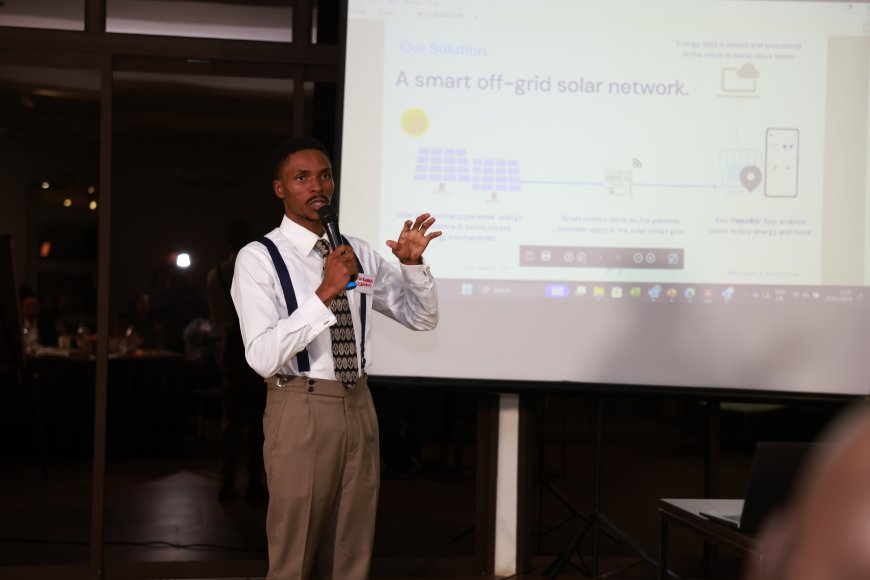
One of the major challenges, and opportunities, facing Africa is how to electrify the continent, where over 50% of the population lacks access to electricity. Additionally, a significant portion of the continent’s citizens, mostly aged between 15 and 35, either lack access to quality employment or are in vulnerable jobs. It was in this context that Chibunna set out to establish Kiru Energy. Further complicating his mission, he had to face his lack of industry experience, unpredictable Nigerian policies, fluctuating forex rates and customer affordability concerns. Sourcing high-quality components has also demanded careful navigation, as has reaching out to manufacturers, which can be daunting because, as he says, you often don't know who you're dealing with or how to start those conversations. According to Chibunna, African entrepreneurs need substantial support in these endeavours, especially when it comes to product development and establishing connections with external partners.
And then there is the question of scaling up innovation. This is challenging because many companies are working in silos, a fragmentation which makes it difficult to achieve meaningful scale, as there is little uniqueness in the innovations being developed. The lack of collaboration leads to unnecessary repetition of innovations, further hindering progress. There is also the risk that investors hesitate because everyone seems to be doing the same thing. Effectively positioning Kiru Energy for investment has therefore emerged as a key objective.
Chibunna reflects on the challenges and doubts he's faced along his entrepreneurial journey, often questioning why he didn't choose a simpler path. However, he has remained resilient and focused on overcoming adversity to propel his startup toward success in Nigeria's dynamic business landscape. His greatest reward has been his personal growth and development, gaining valuable knowledge and experience across a range of sectors that far surpasses any material success.
Chibunna highlights the regulatory challenges startups face due to the gap between policymakers and the startup ecosystem, which stifles innovation. He stresses the need for a supportive environment that encourages innovation instead of perceiving it as a threat. He also points to funding challenges and the negative perception of Nigeria and Africa as unstable investment destinations, advocating for a shift in mindset to attract investors. Creating an enabling environment for startups involves addressing infrastructure challenges, such as reliable electricity and internet connectivity, and supporting government policies that cater to entrepreneurs' needs. Chibunna also advocates for regulatory support and more affordable startup incorporation processes to facilitate the entry of aspiring entrepreneurs into the business ecosystem. Additionally, he emphasises the value of supportive communities, including accelerators, investors, mentors and successful entrepreneurs in driving innovation and growth.
Chibunna's five-year plan includes pursuing an MBA and an EMBA, starting a family and transitioning into an investor role. He recognises the significance of job quality over quantity, and that decent employment opportunities are pivotal for sustainable long-term growth. He aims to create at least 300 such decent jobs through Kiru Energy. This ambitious but realistic goal demands supportive policies, international partnerships and a robust network of investors.
This series, produced in partnership with the Mastercard Foundation, focuses on young African entrepreneurs promoting economic growth through green tech innovation in Nigeria, Ghana, and Kenya. It showcases these founders' journeys, highlighting their contributions, successes, and challenges while identifying the support needed to expand their innovative ventures.