Die Belém-Erklärung auf dem Prüfstand in Afrika: Wer darf den grünen Wandel vorantreiben? (EN)
Afrika liefert wichtige Mineralien für den ökologischen Wandel, erwirtschaftet dabei jedoch weniger als 1 % des Wertschöpfungsvolumens der verarbeitenden Industrie. Kann die Erklärung von Belém noch vor der COP31 eine echte grüne Industrialisierung vorantreiben?
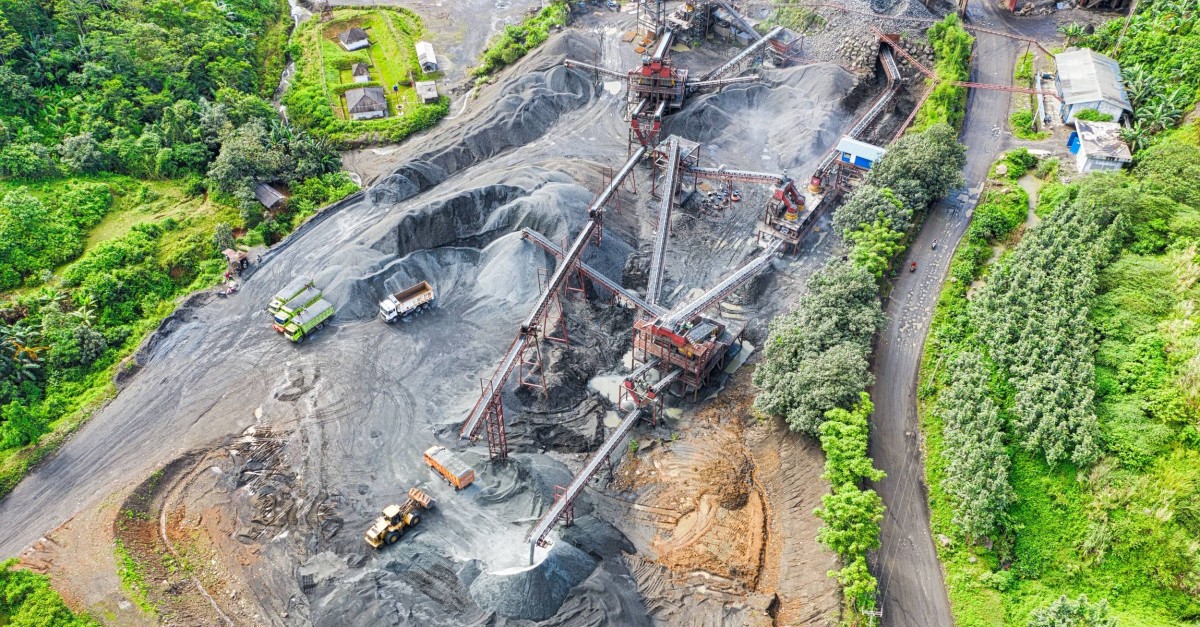
Foto von Tom Fisk auf Pexels.com

Summary
- Africa supplies a major share of the world’s critical minerals—such as cobalt, manganese and copper—for the global green transition, yet captures less than 1% of the value generated from manufacturing clean-energy technologies.
- The Belém Declaration, launched at COP30, offers a cooperative framework for green industrialisation and addressing global inequalities, but currently lacks binding requirements, explicit critical mineral provisions or dedicated financing for developing economies.
- Mineral-producing nations are experimenting with domestic policies like export restrictions and national critical mineral strategies, though these measures alone are insufficient to build complete clean-technology manufacturing ecosystems without adequate infrastructure, skills and power.
- Moving from national beneficiation to regional industrialisation—supported by the African Continental Free Trade Area (AfCFTA)—allows countries to combine complementary mineral endowments and build interconnected cross-border production networks.
- COP31 will serve as a crucial test for whether the Belém Declaration’s emerging implementation architecture can successfully mobilise finance for downstream processing, foster technological cooperation, expand market access and support regional value chains.
The global energy transition is driving unprecedented demand for critical minerals such as lithium, cobalt and manganese. Africa is already central to this transition’s mineral supply, providing large shares of key unprocessed minerals required for global decarbonisation. However, as the continent lacks domestic industrial processing and manufacturing, the International Energy Agency estimates that it currently captures less than 1% of the value generated from manufacturing clean-energy technologies and their components, despite supplying around 75% of global manganese, 70% of cobalt and nearly 20% of copper.
This imbalance reflects a much older development challenge. Historically, many African economies have exported minerals in raw or minimally processed forms, while much of the value from refining, manufacturing, technology and industrial development has been captured elsewhere. The global green transition risks reproducing this extractive pattern, where African countries supply the minerals required for global decarbonisation, while much of the industrial and economic value created from those resources is captured outside the continent.
Breaking this cycle requires more than increasing Africa’s share of global mineral production. Africa’s mineral endowment must become a foundation for local value addition, industrial capability, regional value chains and green industrialisation that support its own structural economic transformation. This is where the Belém Declaration on Global Green Industrialisation faces its African test: Who gets to industrialise the green transition?
Launched at COP30, the Belém Declaration places green industrialisation more firmly alongside decarbonisation and recognises that green industrial transformation must also address global inequalities. Though the declaration does not explicitly mention Africa, it does highlight the potential of diversified and integrated green industrial supply chains to create economic opportunities and build more resilient economies, particularly in the Global South.
However, this is only the starting point. For mineral-producing African economies, the question remains whether investment extends beyond extraction to processing and refining, manufacturing, technological capabilities, infrastructure and higher-value employment, and whether African firms and economies can capture a greater share of the value generated from the resources they supply.
The Belém Declaration: a framework for commitment
The Belém Declaration commits its supporters to coordinated action to accelerate green industrialisation, with particular attention to emerging and developing economies. Its implementation framework focuses on mobilising finance and technical assistance, accelerating technology transfer and co-development, supporting innovation, strengthening digital and industrial infrastructure, developing workforce capabilities, and building secure and sustainable supply chains for clean technologies and critical minerals. It also provides a framework for international coordination through the Global Green Industrialisation Dialogue.
As of April 7th, 2026, 19 countries support the declaration, alongside international organisations, development banks, industry associations, research institutions, civil-society organisations and philanthropic foundations. Among the African countries on the United Nations Industrial Organisation’s (UNIDO’s) updated list of supporters of the declaration are Ghana, Kenya, Namibia, Nigeria, South Africa and Egypt. Other supporters include Australia, Brazil, Germany, Indonesia, Japan, Mexico, the Republic of Korea, Spain, Sweden, Germany, Turkey, Tuvalu, the United Arab Emirates and the United Kingdom. As the COP31 host, Turkey’s participation is particularly relevant. However, China, the United States and India were not listed as government supporters and the European Union was not listed as a supporter as a bloc. Their absence means that several of the world’s largest centres of mineral demand, refining and clean-technology manufacturing remain outside the declaration’s current framework.
While the declaration provides a framework for cooperation, it does not establish a binding requirement for mineral beneficiation or downstream processing in producing countries. Nor does it create a dedicated financing envelope for mineral-producing developing economies, set measurable targets for increasing their share of mineral processing or clean-technology manufacturing, or require investment in mineral extraction to be accompanied by downstream industrial capacity or technology transfer. Nevertheless, the coordination framework it creates could support those outcomes. The African test is whether its emerging implementation architecture can translate broad commitments on finance, technology and supply chains into a measurable shift where industrial value is created and retained and whether mineral-producing African economies can capture a greater share of that value.
Africa is not waiting for COP31
Several African countries are already experimenting with policies designed to capture more value from mineral production. Indonesia, for example, uses mineral export restrictions to encourage domestic processing.Zimbabwe, Africa’s largest lithium producer, also uses mineral policy to push production downstream: In February 2026, the government suspended exports of raw minerals and lithium concentrates, accelerating an existing policy trajectory towards greater domestic processing. Chinese companies, including Huayou, Sinomine, Chengxin Lithium and Yahua, have already made substantial investments in Zimbabwe’s lithium value chain and processing facilities.
The Zimbabwe case also demonstrates the limits of equating beneficiation with export restrictions. The location of processing capacity should not be confused with the distribution of its benefits. Foreign-owned facilities can create jobs, supplier opportunities, infrastructure and tax revenue; how much value is retained locally depends on the depth of processing, skills and technology transfer, domestic linkages, ownership and public policy. Export restrictions can encourage initial beneficiation but cannot by themselves build a competitive clean-technology manufacturing ecosystem. Moving further downstream requires reliable and affordable electricity, transport and logistics infrastructure, skills, technology, capital, industrial suppliers and access to sufficiently large markets. These enabling conditions ultimately determine how far mineral-producing economies can move along clean-technology value chains.
South Africa’s 2025 Critical Minerals and Metals Strategy links mineral development to local processing and beneficiation, value addition and localisation, research and development, infrastructure and energy security, financial instruments, and regional integration. It places critical minerals within a wider industrial ecosystem designed to support downstream sectors, including electric vehicles (EVs), renewable-energy technologies and advanced manufacturing. However, few African economies individually possess all the minerals, infrastructure, technologies, industrial capabilities and market scale required to establish complete clean-technology supply chains within their national borders. This is where the beneficiation debate needs to develop.
From national beneficiation to regional industrialisation
The Democratic Republic of Congo–Zambia battery initiative provides an important test of a different model. The two countries, working with the United Nations Economic Commission for Africa (UNECA), the African Export-Import Bank (Afreximbank) and other partners, are developing a transboundary Special Economic Zone intended to support the production of battery precursors, batteries and, eventually, EVs. The initiative is explicitly built around their complementary mineral endowments and the ambition to develop a regional battery value chain.
This model points to regional specialisation rather than national replication. Not every mineral-producing country needs to establish an entire mine-to-battery, mine-to-solar-panel or mine-to-EV industry within its own borders. Modern clean-technology supply chains depend on combinations of minerals, specialised chemicals, engineering capabilities, infrastructure, finance, intellectual property, manufacturing capacity and large markets. These assets are distributed unevenly across the continent. A regional industrial strategy could link these complementary strengths: extraction in one economy, refining and precursor production in another, specialised chemical production elsewhere and component manufacturing and final assembly in countries with established industrial capabilities.
The African Continental Free Trade Area (AfCFTA) could help support this system by expanding the effective market size, reducing barriers to intra-African trade and fostering cross-border industrial clusters and production networks. Regional cooperation would allow countries to pool complementary mineral endowments, infrastructure and industrial capabilities; achieve greater economies of scale; reduce duplication of costly processing and manufacturing capacity; and create larger, more reliable markets for intermediate and finished products. It could also strengthen the commercial case for investment in shared infrastructure, processing facilities and supplier networks that may be difficult to sustain within smaller national markets.
The objective should not be to create dozens of vertically integrated national battery industries competing to reproduce the same value chain. Instead, it should build a connected African production system in which countries specialise in different but complementary stages of regional and global value chains. The broader measure of success should be whether mineral development builds and retains productive capabilities within African economies: engineering knowledge, technology, competitive firms, supplier networks, skilled employment and industrial infrastructure. Those capabilities can ultimately turn resource endowment into structural economic transformation.
Follow the finance
None of this is possible without capital. The Belém Declaration recognises the importance of mobilising and aligning financial and technical assistance for green industrialisation. For mineral-producing economies, however, the critical issue is what that finance enables and where it builds productive capacity. Too much mineral investment remains concentrated in extraction and early-stage processing designed to supply existing global value chains. A more transformative financing model would extend further downstream, supporting refineries, precursor production, component manufacturing, industrial parks, power and transport infrastructure, research and technological capabilities, and African firms seeking to enter higher-value segments of clean-energy supply chains. Financing extraction more efficiently is not the same as financing industrialisation.
Regional value chains require financing instruments that can support projects across both industrial stages and national borders. Some African financial institutions are beginning to respond to this challenge. In October 2025, Afreximbank announced plans for a dedicated financing window for strategic-mineral processing, alongside a Strategic Minerals Development Programme intended to finance value chains from extraction and refining through to the manufacture of finished components. However, the effectiveness of such initiatives will depend on where along the value chain that capital is deployed and what capabilities it leaves behind. Finance that expands mineral output without building infrastructure, firms, technology, skills and manufacturing capacity may increase exports without fundamentally changing Africa’s position within global value chains.
COP31’s African test
COP31 in Antalya will provide an early test of whether the declaration’s institutional architecture can turn its general commitments into practical support for mineral-producing economies. The declaration calls for a UNIDO-hosted coordination and delivery mechanism to be developed for formal launch at COP31. As the framework moves from declaration towards implementation, the critical question for African mineral-producing economies is whether these priorities will translate into tangible action across four interconnected areas: finance, technological capability, market access and regional integration.
On finance, emerging mechanisms should support downstream and regional industrial projects rather than concentrating on upstream extraction. Technology cooperation will need to translate into meaningful co-development, licensing, skills development, research partnerships and stronger domestic industrial capabilities. On the demand side, procurement, product standards, trade arrangements and long-term offtake agreements will help create sustained markets for goods processed and manufactured within African economies. Regional integration will be equally important. International partners, financial institutions and African governments should support cross-border industrial ecosystems that connect complementary mineral resources, infrastructure and manufacturing capabilities, rather than approaching each mineral-producing country as a separate investment destination.
These measures of implementation are more meaningful than mineral production alone. Rising global demand for African cobalt, copper, lithium, graphite or manganese does not, by itself, demonstrate that Africa’s position within green industrial supply chains has changed. A more consequential measure would be whether a greater share of the knowledge, technology, processing, manufacturing, firms and employment associated with those resources is being created and retained within African economies. Regional value chains offer one route to achieving the industrial scale required. They allow mineral endowments, infrastructure, industrial capabilities and markets to be combined across borders, while enabling countries to specialise in different stages of production.
The Belém Declaration has opened an important space by recognising that decarbonisation, industrialisation and development must advance together. However, its relevance to African mineral-producing economies will depend on how these ambitions translate into practice, particularly given the absence of explicit commitments on critical minerals and downstream processing on the continent. The Zimbabwe example illustrates an important distinction: Investment in African processing capacity need not originate from countries supporting the declaration to contribute to its broader ambitions. What matters is whether such investments enable African economies to develop lasting technological and industrial capabilities and capture a greater share of mineral value chains.
As attention turns to COP31, the critical test will be whether the emerging coordination framework can mobilise finance, strengthen technology partnerships, expand market access and support regional value chains. Without tangible progress on these fronts, the global energy transition risks changing the minerals the world depends on without fundamentally transforming Africa’s position in global value chains. No longer should it be a mere supplier of raw materials. Instead, the continent must capture greater value through processing, manufacturing and industrialisation.
About the Author

Dr. Munira Raji
Dr. Munira Raji is a Senior Research Fellow translating scientific evidence into actionable policy and strategies for critical minerals and green industrialisation in mineral-rich countries.