Bericht zur Kartierung von Maßnahmen zur Eindämmung und Reduzierung von Methanemissionen im nigerianischen Öl- und Gassektor (EN)
Dieser Bericht gibt einen Überblick über die Maßnahmen zur Eindämmung und Reduzierung von Methanemissionen im nigerianischen Öl- und Gassektor und zeigt Möglichkeiten auf, wie nationale Prioritäten mit globalen Klimazielen in Einklang gebracht und positive Nebeneffekte für die öffentliche Gesundheit und die wirtschaftliche Entwicklung erzielt werden können.

Executive Summary
This report provides a multi-dimensional analysis of methane mitigation in Nigeria's oil and gas sector. It examines national priorities, existing policies, stakeholder roles, and financing landscapes to identify opportunities for progress and alignment with national and global climate goals.
Methane, a potent greenhouse gas with significant warming potential compared to carbon dioxide, poses a major threat to global climate goals. According to the Short-Lived Climate Pollutants (SLCPs) National Action Plan, Nigeria recorded an estimated 439.8 kilotons of methane emissions within the oil and gas sector.1 Notably, 27% of these emissions were associated with oil production, while a significant majority, 73%, emanated from gas production, processing, and distribution. Reducing methane emissions, particularly from this sector, offers a strategic opportunity.2 By acting, Nigeria can strengthen climate action and unlock co-benefits for public health, food security, and economic development, aligning with national and multiple sustainable development goals (SDGs).
Methodology and Approach
This report demands a mixed-method research approach in combination with several tools. It is built on early-stage engagement, desk-based study, and a national stakeholder validation workshop to provide a holistic understanding of the current state, challenges, opportunities, and potential pathways for enhancing methane mitigation strategies in alignment with national priorities and global climate action imperatives.
The approach and methodology adopted for this task have been designed to make the procedure compatible with Nigeria's socio-economic context and realities. The methodology conceptualized ensures that the approach is representative and captures the entire landscape (policies, regulatory frameworks, strategies, finance, and stakeholder layout) of Nigeria’s oil and gas sector.
Key findings
Assessing Local Policy Alignment with National Needs
On paper, Nigeria’s existing policies are fairly coherent with the country’s international commitments and national objectives for methane mitigation and reduction. The Nigerian Upstream Petroleum Regulatory Commission (NUPRC) Guidelines for Management of Fugitive Methane and Greenhouse Gases Emissions in the Upstream Oil and Gas Operations in Nigeria (NUPRC Guide 0024 - 2022) are aligned with the Global Methane Pledge's target of a 30% reduction by 2030 and are consistent with the IPCC's requirement for a 20% to 60% reduction by 2030. Similarly based on national needs, at the 2022 maiden national stakeholders’ summit on the use of satellite for tracking gas flare and emissions monitoring in the oil and gas sector in Nigeria, the National Oil Spill Detection and Response Agency (NOSDRA) announced a policy decision to develop a Satellite-based Methane Emission Tracking (SMET) platform to promote the use satellite remote sensing technologies for detecting, measuring, and quantifying methane emissions in Nigeria’s oil and gas industry.
The preliminary findings reveal that there is a need for coherent and ambitious methane action plans that align with Nigeria’s national development priorities. Strategically implementing policies and regulations that incentivize low-carbon investments, promote sustainable land use practices, and foster innovation in clean technologies can accelerate progress towards climate mitigation goals.
Stakeholder Mapping and Analysis
In mind of the climate and broader societal transformation, understanding the stakeholder-landscape is vital for effective and sustainable actions around methane mitigation and reduction. The preliminary stakeholder mapping process was therefore developed using a blend of Mendelow's Matrix and the Salience Model.
Mendelow's Matrix categorizes stakeholders based on their power (influence) and interest (stake) related to the project. The Salience Model analyzes stakeholders based on their power, legitimacy, and urgency regarding the project. Table ES1 sets out the power, interest, and influence of the stakeholders on the project, using the “Mendelow and Salience Mapping Model.”
| Stakeholders | Mendelow’s Mapping | Salience’s Mapping |
|---|---|---|
| Governments, Commercial and Environmental Regulators, Policymakers | High Power/High Interest | High Salience |
| Oil and Gas Operators (Production, Processing, Transmission/Storage, Distribution) | High Power/High Interest | High Salience |
| Science & Technology Innovation (Research and Development) | Low Power/High Interest | Medium Salience |
| Public International Finance Institutions | Low Power/High Interest | Medium Salience |
| Private Corporations and Financial Institutions | Low Power/High Interest | Medium Salience |
| Civil Society Organizations, Host Communities, the International Community | Low Power/Low Interest | Low Salience |
Drawing from previous experiences and lessons learnt, the implementation of effective and sustained methane mitigation and reduction in Nigeria requires robust support and coordination among all relevant stakeholders.
C. The Financing Landscape
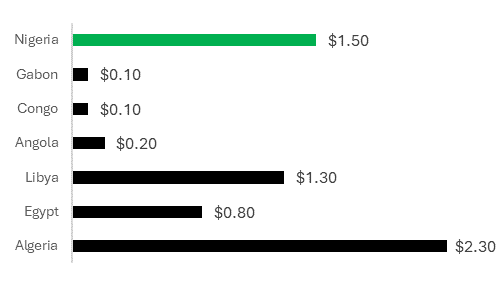
According to the IEA data on emissions spending needed by 2030 (ES2), US$1.5 billion will be needed between 2023 and 2030 to reduce methane emissions within Nigeria’s country’s oil and gas sector. According to the report, oil and gas majors operating in the country have a responsibility to contribute US$300 million to meet the target.
Figure A: IEA data on emissions spending needed by 2030
Policymakers hold the key to unlocking this vital capital at the global stage. Directing new grants and concessional resources towards the highest mitigation potential opportunities, particularly in challenging technological areas and geographical regions, can significantly impact the fight against methane emissions. However, sustainability is crucial: Sustained increases in public finance support are therefore needed to offer long-term confidence and truly unlock private investment in these hard-to-tap areas.
Observed Challenges
Nigeria encounters multifaceted obstacles in mitigating methane emissions within its oil and gas sector. They are mapped out as follows:
- The establishment and enforcement of stringent regulatory frameworks proves daunting. For more holistic and effective methane mitigation across industry segments, there is a need for greater coordination between NUPRC and NMDPRA.
- The complexity of stakeholder engagement exacerbates the issue. Divergent interests and priorities among government agencies, oil companies, local communities, and environmental organizations hinder collaboration.
- Technological limitations and infrastructure gaps constrain the adoption of advanced methane capture and reduction technologies, further impeding progress in emission reduction and mitigation initiatives.
- The low interest in researching methane emissions by Nigerian academics and researchers has created a knowledge gap. Supporting research efforts in this area will lead to the development of more effective mitigation strategies tailored to the Nigerian context.
Opportunities
Implementing methane mitigation and reduction measures within Nigeria's oil and gas sector presents a myriad of opportunities with far-reaching benefits.
- Firstly, there are substantial economic advantages to be gained, as the adoption of methane mitigation and reduction measures can lead to cost savings for oil and gas companies.
- Through the recovery and sale of captured methane, as well as the potential revenue from carbon credits, these measures can bolster financial sustainability and competitiveness within the industry.
- Prioritizing methane reduction and mitigation contributes significantly to environmental sustainability, aligning with Nigeria's commitments to global climate change mitigation efforts.
- Effective methane mitigation directly translates to improved air quality in areas surrounding oil and gas operations, leading to reduced respiratory illnesses and healthcare costs for communities. This fosters a healthier, more resilient society.
- Investing in research and development of methane mitigation technologies will propel the growth of the clean energy sector, fostering technological innovation and creating new job opportunities in a sustainable industry.
- By demonstrating a strong commitment to methane reduction, Nigeria can elevate its international reputation and attractiveness for foreign investment in the oil and gas sector, fostering greater trust and collaboration on the global stage.
- The pioneering nature of Nigeria's methane regulations in the African oil and gas sector presents a valuable opportunity. This leadership role can facilitate the exchange of best practices and lessons learned with other oil-producing countries, both established and emerging. By fostering peer-to-peer knowledge sharing, Nigeria can contribute to a collective effort towards implementing effective methane mitigation and reduction measures across the continent. This, in turn, will empower new oil producers to adopt cleaner practices from the outset, accelerating progress towards a more sustainable oil and gas sector in Africa.
Key Take-Aways:
Emissions Context:
- High methane emissions from the sector necessitate a transition to cleaner energy sources (solar, wind, blue economy) and reduced emissions from oil and gas production.
- Urgent action is needed to address rising methane emissions. Existing technologies and policies offer cost-effective solutions with immediate benefits.
Policy Framework and Coherence:
- Ambitious and coherent methane action plans aligned with national development goals are essential.
- Policies should incentivize low-carbon investments, promote sustainable land use, and foster clean technology innovation to accelerate climate mitigation.
- Existing legislation lacks specific references to methane mitigation beyond gas flaring reduction targets.
- Existing Nigerian policies demonstrate some coherence with international commitments and national objectives for methane reduction.
Stakeholder Engagement:
- Public awareness and participation are critical for achieving climate mitigation goals.
- Education and outreach campaigns promoting climate-friendly behaviors (energy conservation, waste reduction, sustainable transport) are crucial.
- Effective implementation requires robust coordination among government, private sector, civil society, and research institutions.
Financial Landscape:
- An estimated US$1.5 billion is needed between 2023-2030 to reduce methane emissions in Nigeria's oil and gas sector.
- Bridging the funding gap and scaling up investments are crucial to unlock the potential of methane mitigation as a climate solution.
- Policymakers play a key role in attracting investment by directing resources towards high-impact opportunities and challenging areas.
- Sustained public finance support is needed to provide long-term confidence and unlock private investment in these critical areas.
Stakeholder Validation Workshop:
- Data-driven Approach: Utilize satellite technology and establish independent data sources for robust emissions tracking and reporting.
- Policy Development: Employ analytical tools like SWOT and PEST analyses to design holistic, data-driven methane mitigation policies.
- Comprehensive Strategy: Address all segments of the oil and gas value chain, including midstream and downstream considerations, with a focus on innovative technologies, capacity building, and public awareness.
- Collaboration and Resource Utilization: Leverage existing initiatives like SMET and NOSDRA programs and collaborate with bodies like the National Council on Climate Change (NCCC) to maximize impact.
- Actionable Data: Disaggregate data and translate it into actionable insights for policymakers and stakeholders.
- Community Protection: Integrate practical solutions for protecting host communities from methane emissions into mitigation strategies.
- Multi-level Governance: Ensure inclusive engagement with relevant subnational agencies and stakeholders in oil-producing regions.
Potential Pathways Forward
To chart a successful course forward in mitigating methane emissions within Nigeria's oil and gas sector, several strategic pathways should be pursued.
- Nigeria should prioritize policy coordination among relevant government agencies, fostering collaboration to develop cohesive policies and regulations tailored to methane mitigation.
- Exploring innovative financial mechanisms by establishing a firm climate financing basis with the Federal Ministry of Finance and the Central Bank of Nigeria through public-private partnerships and green bonds can unlock much-needed investment for methane reduction projects, ensuring financial sustainability and scalability.
- Investing in capacity building and technology transfer initiatives is imperative to facilitate the adoption of methane reduction technologies and practices among local stakeholders, promoting widespread implementation and impact.
- Fostering inclusive stakeholder engagement processes that involve local communities, subnational, industry players, and environmental groups is essential to garner broader buy-in and support for methane mitigation initiatives, fostering a sense of ownership and commitment.
- Establishing robust monitoring and reporting mechanisms is paramount for tracking progress, verifying emissions reductions, and ensuring accountability, underpinning the effectiveness and credibility of methane mitigation efforts.
- Support research and development: Encourage and invest in research focused on innovative methane mitigation technologies, best practices, and cost-effective solutions specifically tailored to the Nigerian context. This will ensure continuous improvement and adaptation of mitigation strategies over time.
Endnotes
[34] Nigeria’s National Action Plan to Reduce Short-Lived Climate Pollutants (2018). Department of Climate Change, Federal Ministry of Environment. Link
[35] Ibid.
About the Author

Dr. Mahmoud Ibrahim Mahmoud
Dr. Mahmoud Ibrahim Mahmoud is an accomplished Geospatial Information and Environmental Scientist specializing in satellite remote sensing and Geographic Information System (GIS) applications. He is currently a Senior Climate Change Fellow working on Methane Mitigation and Reduction in Nigeria with the Africa Policy Research Institute (APRI). His research interests include emission detection, gas flare, spatial land-use planning, urban ecology, methane emission reduction for climate change mitigation, and environmental sustainability.