Africa+1-Gipfeltreffen: Ein genauerer Blick auf die Geometrie der globalen Diplomatie (EN)
Die Ausweitung der Africa+1-Gipfeltreffen spiegelt sowohl den verschärften globalen Wettbewerb um Einfluss in Afrika als auch eine allmähliche Stärkung der afrikanischen Handlungsfähigkeit wider.
Foto von James Wiseman auf Unsplash

Summary
- Africa+1 summits have become a core instrument of Africa's external relations, reflecting the continent's growing strategic relevance in a multipolar international system shaped by demographic change, resource competition and geopolitical rivalry.
- The expansion of Africa+1 summitry mirrors both intensified global competition for influence in Africa and a gradual strengthening of African agency, as African states seek to diversify partnerships and leverage shifting power dynamics.
- Despite their growing prominence, Africa+1 summits continue to exhibit structural imbalances, with agenda-setting power concentrated among external actors and limited mechanisms to ensure implementation, accountability and measurable outcomes.
- Increasing African scrutiny of the summit format is generating proposals for reform, including stronger coordination through continental institutions and adjustments to summit design aimed at improving coherence, follow-up and substantive impact.
Introduction
Over the past fifty years, high-level summits, forums and international conferences between African states and external powers - commonly referred to as 'Africa+1' summits - have become a central pillar of the continent's diplomatic engagement with the world. Once limited in number and scope, these events are now a prominent fixture in global diplomacy, convening heads of state, business leaders and policymakers in increasingly frequent and elaborate formats to establish international partnerships.
Although long regarded as merely symbolic, summitry has become a strategic arena where African states and external powers articulate interests, contest influence and reshape partnerships in a multipolar world. As Africa+1 summits proliferate and occupy a central place in the geometry of international diplomacy, they invite critical reflection on their significance, evolution and implications for Africa - particularly the strategies deployed by African and non-African actors and the power asymmetries embedded in these encounters.
This article complements APRI's mapping of Africa+1 summits by offering additional insights and analysis to better understand a key aspect of Africa's relationships with external partners. By examining the historical evolution of these gatherings, their growing appeal to global actors, the critiques they elicit and their possible futures, this piece seeks to illuminate the diplomatic logic underpinning Africa's contemporary relations with global actors.
Although the European Union (EU), as an intergovernmental organisation, has played a major role in organising Africa+1 summits since 2000, APRI has chosen to begin this mapping with a focus on government-to-government summits. European engagement nevertheless remains visible, as two EU member states, France and Italy, are active organisers of African summits. Moreover, this first mapping does not cover African Union (AU) internal meetings or global business summits. The focus is on Africa+1 leader-level summits and ministerials from 1973 to 2024.
Explaining the 'summit fever': Africa's repositioning in the global order
Demographic and economic dynamics reinforce the growing interest in Africa and contribute to the continent's strategic repositioning. With a rapidly growing and youthful population - projected to double by 20501 - Africa will be home to the world's largest working-age population at a time when many other regions are ageing and facing labour shortages. On the economic side, Africa is projected to outpace Asia in terms of growth as soon as 20272. Africa's demographic dividend, coupled with increasing urbanisation, digital innovation and access to natural resources, is transforming the continent into a future economic powerhouse. In turn, these trends are driving heightened interest from foreign powers seeking economic and strategic partnerships.
Beyond these structural trends, Africa's mineral wealth has become a strategic asset that places the continent at the forefront of global efforts to combat climate change and sustain a new energy era. Legislation and strategies such as the United States' (US') Energy Act (2020), the United Kingdom's (UK's) Critical Minerals Strategy (2022) and the European Critical Raw Materials Act (2024) highlight the strategic pivot to Africa. Access to natural resources - particularly raw materials 'critical' to clean energy technologies, batteries and digital infrastructure - has become central to contemporary geopolitical calculations. This has led to a proliferation of multilateral, bilateral and state-to-state agreements aimed at boosting production and diversifying supply chains to reduce dependence on China.
This resource dimension of Africa's mineral wealth has intensified competition among external actors seeking to secure supply chains, diversify sourcing away from geopolitical rivals and reduce strategic dependencies. A clear illustration is the competition between the US and China over the concession to operate the Lobito Atlantic Railway, which secures access to Zambian and Congolese mines. However, Africa is more than a repository of resources: The continent's evolving strategic importance has provoked rivalry among external actors seeking political, economic and security influence on the continent. The proliferation of Africa+1 summits reflects this dynamic, as states increasingly rely on bilateral or '+1' formats to negotiate and operationalise resource, infrastructure and security deals more rapidly than comparatively rigid, rule-bound multilateral institutions allow.
These developments are often framed through the contested notion of a 'new scramble for Africa'. The 'scramble' analogy captures a key parallel: Just as colonial-era powers once competed for control over African raw materials and territory, external actors are vying for diplomatic alignment and access to Africa's critical resources and markets. At the same time, the analogy has clear limits: Unlike the colonial period, when African governments were treated as passive recipients of foreign ambition, they are now active participants. They increasingly leverage geopolitical rivalries to maximise their bargaining power and advance national and regional interests. African agency, defined as the capacity of African actors to act autonomously and shape their place in the world, has therefore become a defining feature of Africa's contemporary relations with external actors.
The 2025 Africa Green Minerals Strategy epitomises this shift: Rather than merely reacting to external agendas, the strategy outlines a distinctly African framework for driving the global green transition on the continent's own terms, a willingness that could translate into an Africa+1 agreement. Moreover, African states can exploit rivalries to negotiate favourable investment terms, technology transfers or diplomatic visibility. The multipolar landscape thus offers African leaders opportunities to diversify partnerships and reassert agency.
The evolution of Africa+1 summitry reflects this transition from postcolonial dependency to diversified diplomatic agency. To understand this evolution, it is useful to examine how these summits have progressed over time and how earlier events contributed to their multiplication. The summits can be divided into two distinct 'generations'.
Figure 1: Africa+1 summit hosts in 2007
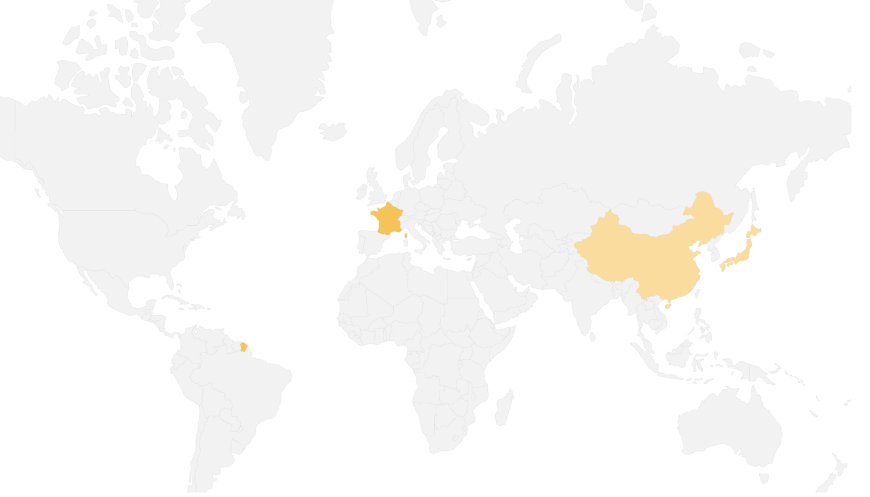
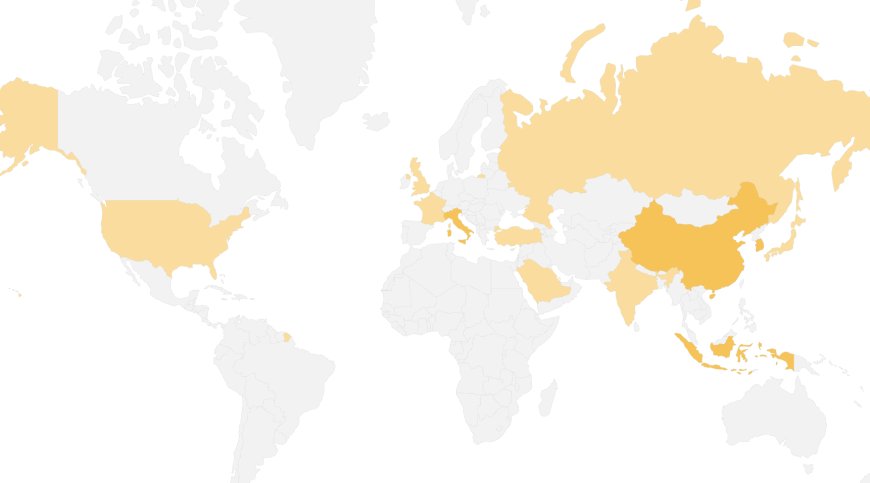
Figure 2: Africa+1 summit hosts in 2024
The first generation of summits: from Paris to Beijing
France-Africa: the birth of the Africa+1 summit format
France was the first country to establish an Africa+1 summit. The format is rooted in France's efforts to redefine its post-colonial relations with African states following the independence wave of the 1960s. The first summit, held in Paris in 1973 under the title 'A New Framework for Dialogue', was requested by three African heads of state, signalling African leaders' desire for structured engagement. France intended the summit to reaffirm its privileged position as a key partner for its former colonies - its so-called Pré Carré (backyard). With few alternative forums available at the time, the format emerged as a predictable and structured mechanism for multilateral dialogue, which not only reinforced France's influence but also offered tangible benefits for African states. It produced concrete cooperation tools (aid funds, development projects) and channels for political and economic dialogue. Participation grew from 10 countries in 1973 to 40 in 1982, with 12 out of the 28 summits hosted by African countries, illustrating the format's attractiveness and effectiveness. The success of the summits prompted other global powers to adopt and adapt the format, making summits a key vehicle for African countries to expand and diversify their diplomatic engagements.
Japan-Africa: TICAD's success and the endorsement of the summit model
The end of the Cold War marked another turning point for Africa's international engagement. In 1993, Japan launched the Tokyo International Conference on African Development (TICAD). This conference was driven by two dynamics: Japan seeking new markets following its post-war economic boom, and many African countries struggling economically. TICAD held its first and second editions in 1993 and 1998, respectively. Just as global aid fatigue towards the continent was growing, the conference's success, highlighted by the first edition, emphasised the need for international support for Africa. Consequently, Japan's trade with Africa increased from USD 10 billion in 2000 to USD 35 billion in 2008, triggering a wave of summitry by Asian nations and signalling a broader shift in international engagement with Africa from Europe towards Asia.
China-Africa: summitry as a lens of geoeconomic rivalries
Reflecting the effectiveness of Japan's TICAD I and II, China followed suit with the launch of the Forum on China-Africa Cooperation (FOCAC) in 2000. The forum was driven by two main motivations3: First, African diplomats had requested that China establish its own forum. Second, the first EU-Africa summit in April 2000 prompted Beijing to hold its own event in October of the same year, to counterbalance European influence on the continent. Coinciding with FOCAC's 'going out' strategy - a push to foster foreign direct investments (FDIs) in developing countries - the forum quickly became China's flagship diplomatic platform in Africa. It would later be integrated with Xi Jinping's Belt and Road Initiative.
The shift toward a second generation of Africa+1 summits
Despite covering a much shorter timeframe (2008-2025), the second generation of Africa+1 summits has already hosted nearly as many meetings as the first generation did over 35 years (31 compared with 30). With India and Turkey organising their first summits in 2008, African countries further consolidated the trend toward diversified summit engagement and diminished the once-exclusive influence of France. This reflects a broader shift in South-South cooperation, emphasising mutual interest, infrastructure development and resource diplomacy. Russia's first Africa summit in 2019 means that every BRICS country except Brazil has now convened an Africa+1 summit. South Africa, the only African BRICS member until the bloc's expansion in 2024, has acted simultaneously as host and participant, helping sustain intra-BRICS-Africa dialogue.
Following TICAD in the 1990s, the wave of Asia-Africa+1 summits in the 2000s has since been overtaken by a broader global proliferation of summit diplomacy targeting Africa. In 2024, dubbed the 'Africa+1 summit season in Asia', countries beyond this region also initiated summits to signal new commitments to Africa. New actors such as South Korea and Saudi Arabia organised summits, while other powers - including China, Indonesia and Russia - renewed their engagement with African countries through additional meetings. To illustrate this evolving global dynamic, we here focus on three of these recent actors.
Indonesia: a rising Africa+1 actor
Indonesia has revitalised Afro-Asian relations through a pragmatic, business-driven approach that highlights state-business partnerships and South-South cooperation. The country held its first Indonesia-Africa Forum (IAF) in 2018, followed by a second in Bali in 2024, highlighting its aim to institutionalise engagement through initiatives in infrastructure, energy and the digital economy.
The 2024 IAF resulted in major agreements, including a cross-border study between Pertamina NRE and South Africa’s Guma Group for gas-to-power opportunities. At the same time, questions remain about the viability of Indonesia's cooperation with Africa. While Indonesia can serve as a supplementary partner for African countries, its administrative capacity and the scale of its financial resources are limited compared to major global actors. This explains why only 29 nations attended the 2024 summit, compared to 47 in 2018. China's FOCAC, which took place the same week, attracted more African leaders.
Saudi Arabia: Africa engagement at a turning point
The 2023 Saudi Arabia-Africa Summit marked a significant turning point in global geopolitics, positioning Gulf countries as emerging alternative partners to both the West and China. This shift does not rely only on explicit anti-Western rhetoric. Rather, it is part of a strategy to respond to Africa's call for alternatives, especially in the context of COVID-19 and Russia's war in Ukraine, which has pushed European attention inward. Through the Saudi Arabia-Africa Summit, Riyadh emphasised partnerships based on mutual investment, energy cooperation and development without the political conditionalities often associated with Western aid or the debt concerns linked to Chinese financing. By promoting a vision of balance and pragmatic collaboration, Saudi Arabia presented itself as a credible partner capable of offering African nations diversified options for economic growth and sovereignty. However, the first summit raised concerns about Saudi Arabia's commitments to good governance in Africa, as some of the states, such as Mali, Niger and Burkina Faso, which had been suspended from the AU due to coups, were invited and participated.
Italy: a new era of Italian engagement in Africa with 'Piano Mattei'
Presented in late 2023 and launched at the Italy-Africa Summit in January 2024, the Italian 'Piano Mattei per l'Africa' (Mattei Plan) is a major initiative aimed at rebuilding Italy's relations with African partners at a strategic moment. It adopts a cross-cutting approach encompassing energy diplomacy, development cooperation and migration, and positions Italy as an alternative to France, which is currently losing influence on the continent. The plan pledged an initial EUR 5.5 billion in budgetary allocations, state guarantees and climate fund contributions to attract investments in key sectors such as energy, agriculture, water, education and health.
At the launch, Prime Minister Giorgia Meloni described the plan as a partnership of equals, aiming to move beyond traditional aid toward investment-based collaboration. However, questions remain regarding implementation capacity and guiding principles, which are closely linked to Italian priorities in energy security and migration control. Critics also raised concerns about the plan's outcomes, emphasising that its success will depend on whether projects embed climate resilience and enable local benefit sharing.
Africa+1 summits: between symbolism and substance
Despite their increasing frequency and diplomatic fanfare, Africa+1 summits have faced growing criticism from policymakers, analysts and civil society organisations. A recurring concern is the structural asymmetry these gatherings often reproduce. Rather than fostering genuine dialogue, summits are frequently skewed toward the agendas of external actors who dominate the terms of engagement and overshadow African priorities, raising concerns of potential neocolonial behaviour.
A prominent example is China's FOCAC. While FOCAC claims to promote South-South cooperation, its format allows Beijing to set the agenda, advance governance norms such as the Global Security Initiative, and institutionalise its strategic influence across African policy landscapes. Although African leaders attend with specific goals, overarching narratives often draw African nations into China's geostrategic orbit, potentially compromising their independent stance in global rivalries.
France's Africa summits have also faced criticism, particularly the 28th edition held in Montpellier in 2021. That event excluded African heads of state in favour of young entrepreneurs and civil society actors. Although presented as innovative, it was widely interpreted as paternalistic. African political parties and grassroots organisations staged a parallel 'counter-summit' to protest what they viewed as France's ongoing neocolonial posture. Critics also accused President Emmanuel Macron of using the event to boost domestic political positioning ahead of the 2022 French presidential elections.
Beyond external influence, the summit format itself raises concerns. Africa+1 summits are visually, symbolically and substantively imbalanced, often portraying African leaders as supplicants rather than partners of equals. Kenyan President William Ruto, for instance, sharply criticised this dynamic, noting the indignity of over 50 African leaders being 'sometimes loaded into a bus like school kids'. In such settings, each African leader is often given only a few minutes to speak - a narrow window that compresses complex national and continental priorities into a handful of sentences, rendering summits potentially more performative than transformative. That said, some gatherings have been more inclusive and participatory, even though most Africa+1 summits follow broadly similar protocols and organisational formats.
Another challenge is the gap between ambitious commitments and tangible results. Multi-billion-dollar investment or climate partnership announcements often lack timelines, accountability frameworks or local implementation partners. Turkey, for example, has struggled to operationalise some of its initiatives, while India's 2008 and 2011 summits reflected 'ambition with limited outputs'. This underscores that summit declarations often overstate a country's actual engagement, and that consistent follow-through remains a challenge for all hosts. African leaders have repeatedly called for monitoring and evaluation mechanisms, including during the third India-Africa Forum Summit in 2015 or more recently at the seventh AU-EU summit, held on 24-25 November 2025 in Luanda.
Where global institutions struggle to deliver finance, rapid partnership frameworks or targeted (geo)economic cooperation, summits fill the gap with headline pledges and tailored cooperation formats. Yet, launching initiatives without adequate background assessments often leads to duplication, inefficiencies or projects that fail to meet Africa's expectations. Without institutionalised follow-up mechanisms, these events risk becoming public relations spectacles rather than platforms for genuine partnership. Overall, summit diplomacy places strong emphasis on symbolic gestures - sometimes to the point of overshadowing the substantive gains that are realised.
The future of Africa+1 summits: reform or reinvention?
Despite mounting critiques, the Africa+1 summit format shows no signs of decline. In fact, it continues to expand, with multiple high-level events already scheduled in the coming years. At the same time, the past decade has seen a significant and accelerating assertion of African agency from heads of state, academics and civil society, raising questions about whether the format can be reformed from within or whether it requires a more radical overhaul to align with Africa's evolving strategic aspirations.
In response to the perceived limitations of summitry, a growing number of African actors are articulating proposals for change. Some leaders argue that the format should end altogether. For example, in 2023, Kenyan President William Ruto proposed the creation of a 'delegation of seven' representatives - primarily from the AU - to attend summits on behalf of the continent. The objective is twofold: reduce logistical burdens and strengthen Africa's negotiating position through unified representation. This reflects a broader push among African policymakers to move from fragmented bilateralism toward more cohesive, continent-wide diplomacy. Academics and think tanks have also contributed proposals, calling for a genuine reconsideration of the summit format. A recurring idea is the need for an 'open, frank discussion' between African governments and their external partners to address the built-in asymmetries of these gatherings and to encourage foreign actors to recognise their own biases.
These reform efforts are unlikely to reshape upcoming summits in the short term. The most notable change on the horizon concerns France's next Africa+1 summit, scheduled for 2026 in Nairobi. This will be the first French summit hosted in a non-Francophone country, a direct consequence of France's deteriorating relations with its traditional Francophone partners. Paris is seeking other allies as English-speaking African countries experience significant economic and demographic growth. Whether the format itself will evolve, however, remains uncertain.
Other announced summits - such as the third Russia-Africa summit, the fourth Turkey-Africa summit in Libya, both in 2026, and the tenth FOCAC in 2027 hosted by the Republic of the Congo - are expected to follow existing templates. Unless African governments proactively pursue reforms, the Africa+1 summit model risks continuing to reproduce the very dynamics that observers have repeatedly criticised.
Conclusion
The proliferation of Africa+1 summits reflects two interconnected dynamics. First, it underscores Africa's rising global importance as foreign powers increasingly bypass traditional multilateral mechanisms to engage directly with the continent's economic and demographic potential. Second, it highlights the widening gap between the performative nature of summitry and the substantive empowerment of African states.
This momentum is creating space for stronger African voices. Growing dissatisfaction with the traditional summit model among African policymakers, scholars and civil society is beginning to crystallise into concrete proposals for reform. These include unified continental representation through the AU and redesigned formats that prioritise mutual accountability, transparent commitments and long-term follow-up. Africa is no longer a passive recipient of diplomatic overtures: Through more coordinated and assertive engagement, African actors are steering summit diplomacy to reflect their development priorities and geopolitical agency.
However, the responsibility for reform does not rest with African actors alone. External public and private partners must also rethink their approaches. Genuine partnership requires humility, reciprocity and a willingness to move beyond old hierarchies. For Africa+1 summits to remain relevant in the decades ahead, they must evolve into spaces where power is shared rather than imposed, and where successful collaboration is measured by delivery, not declarations. The future of Africa's international partnerships will depend as much on how summits are reimagined as on who sits at the table.
Endnotes
[1] Mo Ibrahim Foundation, Global Africa.
[2] Ibid.
[3] Murphy, D. C. (2022). China's rise in the Global South: The Middle East, Africa, and Beijing's alternative world order. Stanford, California: Stanford University Press.
About the authors

Amandine Gnanguênon
Amandine Gnanguênon is Senior Fellow and Head of the Geopolitics and Geoeconomics Program. She holds a PhD in political science from the University Clermont Auvergne (France). Her areas of focus include regional integration, peace and security, governance, artificial intelligence (AI) and digitalization, and climate-related issues.

Elie Herzog
Elie Herzog is a former intern for the Geopolitics and Geoeconomics Program and holds a dual bachelor’s degree in history and geography.

Daouda Thiam
Daouda Thiam is a former APRI Research Fellow focused on West African development and climate security. He holds an MSc in International Development Studies from Wageningen University and a BA in International Relations from the University of Trieste.