Zu teuer, bevor man umweltfreundlich wird? Wie CO₂-Grenzausgleichszahlungen Afrikas industrielle Ambitionen auf die Probe stellen (EN)
Da die EU-Vorschriften zur CO₂-Grenzausgleichsabgabe die industriellen Ambitionen Afrikas auf die Probe stellen, drängen Exporteure und politische Entscheidungsträger auf faire Überprüfungsverfahren, CO₂-Preisgutschriften und gezielte Unterstützung, um ein grünes Wachstum zu sichern.
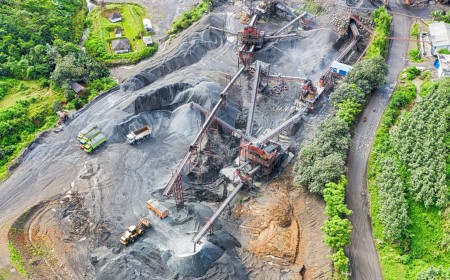
Foto von Richard Williams auf Unsplash
Summary
- While designed to accelerate global decarbonisation, Carbon Border Adjustments like the EU’s CBAM threaten to undermine Africa’s green industrialisation by penalising developing producers for their emissions before they have access to the financing, technology or reporting infrastructure needed to adapt.
- In the near term, the primary barrier is not just the phased-in carbon price, but the administrative burden of monitoring, reporting and verification (MRV); unable to supply plant-level data, most African exporters face punitive default values even when their plants are cleaner than the national average.
- Impact is concentrated in North and Southern Africa across fertilisers, steel and aluminium; to navigate this, policymakers must look beyond broad COP declarations and coordinate targeted diplomatic demands directly in Brussels, securing support for verification, credit for carbon prices paid at home and a share of CBAM revenues.
Introduction
At the intersection of climate policy and economic development, African countries face a fundamental tension. Across the continent, governments are under immense pressure to drive green industrialisation, create jobs and extract greater value from their natural resources; an agenda that will once again take centre-stage at COP31.
Yet the rules governing access to international markets are increasingly shaped by the carbon intensity of production. This raises a question: Can African countries industrialise green if the markets it exports to are pricing out its exports first?
The European Union, one of Africa’s most consequential commercial partners, is at the forefront of this shift through its Carbon Border Adjustment Mechanism (CBAM). In January 2026, CBAM entered its definitive phase, imposing carbon-related costs on imports of cement, iron and steel, aluminium, fertilisers, electricity and hydrogen. Its scope is also set to widen: The Commission has proposed extending CBAM to around 180 steel- and aluminium-intensive downstream products, while the European Parliament’s negotiating mandate, adopted on 15 September 2026, covers 450. A first trilogue on 20 October 2026 ended without agreement; the next is scheduled for 30 November, and the extension is due to apply from January 2028. The United Kingdom will follow with its own CBAM from January 2027, covering aluminium, cement, fertilisers, hydrogen and iron and steel.
Consequently, CBAM represents an important case study of a broader challenge confronting developing economies: How to reconcile increasingly ambitious climate policies with the imperative of green industrialisation, particularly when access to major export markets becomes contingent on the capacity to decarbonise production.
African economies enter this transition from a fundamentally different starting point. The continent is seeking to overcome decades of constrained industrial development, capitalise on the African Continental Free Trade Area (AfCFTA) and leverage its abundant energy and mineral resources to move up global value chains. It accounts for less than 4% of global greenhouse gas emissions, yet many of its industrial producers face high financing costs, unreliable electricity and limited access to clean technologies. While it is true that EU importers are legally responsible for purchasing CBAM certificates, part of that cost is likely to be passed back to suppliers through lower prices or lost orders. Exporters must also meet demanding monitoring, reporting and verification (MRV) requirements. The risk is that African firms face additional costs to access European markets before they have the means to decarbonise.
It is worth being precise about what bites in the near term. CBAM’s financial obligation is being phased in alongside the withdrawal of free allowances under the EU Emissions Trading System. In 2026, importers deduct 97.5% of an EU benchmark from embedded emissions, so a plant at that benchmark pays for only 2.5% of its emissions and a dirtier one also pays for the gap above it. The deduction falls to zero by 2034. The immediate pressure is therefore less the carbon price itself than the burden of proof. Producers that cannot supply verified, plant-level emissions data are assessed on default values, which, since 2026, are country-specific and include a mark-up (10% in 2026, rising to 30% from 2028 for most goods; 1% for fertilisers). For a producer without MRV capacity (a description that fits most African firms), the default value works as a penalty, unless its actual emissions are well above its country’s average. The cost then rises steeply over eight years. The plants that will export at full CBAM exposure in 2034 are being financed, or not, now.
Where exposure is greatest
Exposure is unevenly distributed, and the continental aggregate can be misleading. A 2023 study found that the EU accounted for 26% of Africa’s fertiliser exports, 16% of its iron and steel exports and 12% of its aluminium and cement exports. Under the scenarios the study modelled, with CBAM applied to its current sectors, African exports to the EU could fall by 11.6% for aluminium, 8.2% for iron and steel, 3.9% for fertilisers and 3.1% for cement. The continent’s GDP could fall by 0.91%. Under that scope, no African least developed country (LDC) would lose more than 0.17% of GDP; only in a hypothetical scenario extending CBAM to all goods would 11 African LDCs face losses above 1.5%. These are projections made before CBAM took effect, not evidence of its actual impact. But they show where the risk sits: in a handful of countries, sectors and plants rather than across ‘Africa’ as a whole.
Fertilisers are the clearest case. The EU is the most important market for African fertilisers, and this exposure is concentrated in North Africa. In 2025, Egypt supplied around 44% of the urea the EU imported from outside the bloc, and fertilisers made up more than half of the EUR 2.8 billion of CBAM-covered goods the EU bought from Egypt that year. Egypt is not the only exposed supplier: Algeria is the EU’s third-largest source of urea and also a major ammonia supplier. Morocco’s phosphate fertilisers are covered by CBAM as well: In 2025, the EU imported about one million tonnes of phosphate fertilisers from Morocco, some 60% of what it bought from outside the bloc. Fertiliser production uses large amounts of energy, so reducing its emissions will require investment in new technologies and production methods.
Iron and steel producers face a similar challenge. Egypt sends over a third of its iron and steel exports to the EU, and iron and steel is South Africa’s most exposed sector under CBAM. In both countries, cutting emissions may require new equipment, cleaner energy and changes to production processes. These investments are expensive, especially where finance is hard to obtain. In 2027, the EU Commission is due to report on whether to count electricity emissions for iron and steel, as well as for aluminium and hydrogen. For steel, this would raise costs for producers on coal-based grids such as South Africa’s.
While the 2023 study projected the largest fall for aluminium, this needs qualification. Aluminium production uses large amounts of electricity, yet CBAM currently does not count emissions from electricity for aluminium, even though they make up around 80% of its emissions. Under current rules, the charge on aluminium is therefore narrower than the study’s figures suggest. The bigger issue is design: A smelter running on hydropower is treated the same way as one running on coal, so CBAM gives no credit to producers that use clean energy. Mozambique shows that the issue is less hydro versus coal than how the power is attributed. The Mozal smelter, which produced virtually all of the country’s aluminium and sent most of it to the EU, operated in a country where hydropower supplies over 80% of electricity, yet that gave it no advantage under CBAM. It was placed on care and maintenance in March 2026. Electricity prices, not CBAM, were the main trigger (ODI’s estimated price gap of USD 50/MWh comes to roughly USD 700 per tonne of aluminium, against a 2026 CBAM charge on direct emissions of tens of euros at most), but the CBAM liability may have narrowed the room for a deal, and one of Africa’s largest aluminium smelters is now offline. If the EU later decides to count electricity emissions, the effect will split African producers, helping those on clean power and penalising those on coal-based grids. Mozal also shows why the detail of the 2027 review matters: whether electricity emissions are attributed by national grid factor or by contracted supply. For cross-border arrangements like Mozal’s, that rule decides whether a smelter is credited for Mozambican hydropower or charged for Eskom’s coal.
Cement is less dependent on the European market, but it is hard to decarbonise because a large share of its emissions comes from the production process itself, not only from the fuel used. Fertilisers and cement are also important for Africa’s own food security and infrastructure, so how these industries adjust matters well beyond trade with Europe.
What African policymakers can ask for
At COP30, parties agreed to hold a dialogue on trade and climate at the June sessions in Bonn from 2026 to 2028, with a high-level event in 2028, rather than the permanent agenda item many developing countries had sought. The decision reaffirms that climate measures, ‘including unilateral ones’, should not amount to disguised restrictions on trade, but this restates the convention rather than creating new obligations. COP31 is therefore a platform for setting out positions, not a venue where CBAM’s rules will change.
The decisions that truly matter in the short term are being made in Brussels, where EU lawmakers are finalising rules on extending CBAM to downstream products and preparing upcoming policy reviews. African diplomats will gain the most traction by aligning their COP31 demands directly with legislative proposals already being debated in Europe: the downstream extension, the Temporary Decarbonisation Fund and the 2027 review of electricity emissions.
Their priorities fall under three headings: what to do at COP31, what to ask of the EU and what to do at home.
- At COP31: African negotiators should use the summit to speak with one voice on CBAM. A common position would set out the support they need to adapt, not just the costs. It would also give them more weight in the follow-up talks in Bonn and Brussels.
- To the EU: First, make verification reachable. A cleaner plant only gets credit for its actual emissions if a verifier accredited by an EU national accreditation body checks it. In the first cycle, that means an in-person site visit. Verifiers based in Egypt or Nigeria can apply, but the first accreditations only came in late September 2026, and the first declarations are due on 30 September 2027. African governments should ask for recognition of African accreditation bodies – such as Egypt’s EGAC and South Africa’s SANAS – for CBAM purposes, remote verification for the first cycle and EU funding for first verification engagements, so that producers can prove what they emit. Without that, they will pay higher default charges even when their production is cleaner. Second, while the EU has already proposed using a quarter of CBAM revenues to support its own energy-intensive producers, a similar logic could apply to the countries whose exports bear the cost. That way, CBAM would support Africa’s green industrialisation rather than work against it. However, only EU producers are eligible for that fund, and the precedent is not encouraging: During the negotiation of the CBAM regulation, the European Parliament called for revenues to support decarbonisation in LDCs, but the final text did not take this up.
- To African policymakers: Use the AfCFTA as a buffer, not a substitute. Regional markets could, over time, absorb part of the pressure if European demand weakens, buying producers time to adapt. How much depends on regional demand for these products and on whether AfCFTA tariff schedules and rules of origin are actually applied in these sectors, which remains uneven. But selling within Africa does not by itself make production greener. To turn that time into green industrialisation, African countries could work towards shared approaches to measuring emissions and according to low-carbon standards across the continent. There is also a way to keep part of the money on the continent: Article 9 of the CBAM Regulation allows any carbon price effectively paid in the country of production to be deducted from the CBAM bill, so a levy collected in Pretoria or Cairo is one that is not collected in Brussels. The detailed rules on how the deduction works are still being finalised, and South Africa, which already has a carbon tax, will be the first test. For other African governments, a domestic carbon price need not be just another cost for producers. Rather, it can keep revenue at home that would otherwise go to the EU and channel it into their own transition.
Conclusion
Can African countries industrialise green if the markets it exports to are pricing out its exports first? The answer depends less on the direction of CBAM than on its timing. African countries and the EU largely agree on where industry should be heading, i.e., towards cleaner production. The tension lies in the sequence. CBAM asks African producers to pay for their emissions now, while the finance, clean energy and technology they need to cut those emissions are still largely missing. For many exporters, the result could be higher costs without the means to adapt.
This puts African governments in a difficult position. They are asked to industrialise, create jobs and add value to their resources, and to do so along low-carbon lines. Yet the main tool Europe has chosen to drive decarbonisation risks making that industrialisation harder in the short term. The tension can be managed, but not by African countries alone. If the EU pairs CBAM with real support to measure, finance and reduce emissions, it could help drive Africa’s green industrialisation. Without that support, CBAM risks widening the gap it is meant to close. COP31 is an opportunity to make that case clearly.
About the Authors

François Sennesael
François Sennesael is the EU Senior Fellow within the Geopolitics and Geoeconomics Programme at APRI. Based in Brussels, François brings a decade of experience working at the intersection of diplomacy, public policy and geopolitical risk advisory.