

Summary
- Nigeria’s climate policy has evolved through distinct phases marked by shifts in institutional emphasis and policy direction. These ‘policy moments’ highlight both progress and recurring challenges, underscoring the need for a more cohesive, streamlined approach to climate governance.
- Nigeria's climate governance is weakened by overlapping mandates and poor coordination among institutions. This fragmentation dilutes international messaging and creates internal competition. Strengthening existing structures within the President’s Office, rather than introducing new ones, could reduce friction and improve policy effectiveness.
- Nigeria needs to strengthen its technical and diplomatic capacity to effectively implement climate policies and engage global partners. This includes understanding evolving international initiatives like China’s Belt and Road and the EU’s Global Gateway, while building skills in project execution, climate finance, and strategic communication to better advocate for its climate priorities.
- The Petroluem Industry Act (PIA) and related policies currently lack alignment with Nigeria’s broader climate goals. They also do not reflect the shifting realities in global energy markets. Additionally, the lack of a Divestment Policy to manage the exit of long-standing International Oil Companies (IOCs) presents further challenges. Gas flare commercialization, hydrogen, and divestment policies provide specific areas of focus for integrating petroleum policy into the development of climate finance and energy transition frameworks.
Introduction
When Nigeria’s ruling party, the All Progressives Congress (APC), pledged to make international climate advocacy a central component of its foreign policy1, it acknowledged two main imperatives: navigating the escalating climate crisis amid shifting global power structures and collaborating with other African nations to advance equitable climate finance and justice. This commitment aims to elevate Nigeria’s position as a key African actor, safeguard its national interests, and champion regional autonomy, signaling a new focus in Nigeria’s foreign policy while remaining consistent with longstanding objectives such as Pan-Africanism.
President Bola Ahmed Tinubu had provided concrete form to this agenda by creating the Office of the Special Presidential Envoy on Climate (OSPEC)2, tasked with overseeing climate-related policy and diplomacy across existing institutions, and by establishing the Presidential Climate Action Committee (PCAC) to integrate climate measures into Nigeria’s broader development goals. These bodies were intended to build upon an existing framework of ministries and agencies, including the Ministry of Environment and the National Council on Climate Change, against a backdrop of evolving global climate commitments and shifting domestic priorities.
Nigeria’s intent to pursue a low-carbon future is reflected in key policies such as the Petroleum Industry Act 2021, Climate Change Act 2021, Energy Transition Plan 2021, Low Emissions Development Strategy 2024, and the Renewable Energy and Energy Efficiency Policy 2023. However, their impact is diminished by overlapping institutions, inadequate coordination, and unclear mandates. While the country already has much of the necessary policy and institutional architecture, fully integrating climate objectives into its foreign policy requires stronger coordination, enhanced technical capacity, and a focused diplomatic strategy—all while aligning domestic goals with international partners’ priorities.
Agency and episodic development in a multipolar world
The extent to which Nigeria holds agency in its interactions with international partners plays a critical role in shaping both its foreign policy and development strategies. Agency, in this context, refers to the capacity of state actors to make autonomous decisions and take purposeful actions to achieve desired outcomes on the global stage (Archer 1995). This concept emphasises that even within the constraints of international systems, state actors have the potential to influence events, form partnerships, assert national interests and skillfully navigate power dynamics (Mbembe 2001). In climate policy, this translates to Nigeria’s ability to negotiate favorable terms, employ diplomatic skills, leverage alliances and use soft power to amplify its position and objectives.
However, internal dynamics within state institutions also significantly influence the exercise of agency in international relations. Competition and a lack of coordination among government entities often inhibit Nigeria’s ability to act as a unified front in securing optimal outcomes in climate negotiations and other areas. Drawing on insights from the works of Folashade Soule, Naa Adjekai Adjei and Zainab Usman, this framework explores how internal institutional dynamics shape the degree of Nigeria’s agency and the implications for its climate negotiations.
Institutional competition and collective agency
Folashade Soule’s study on Benin-China relations provides insights into the impact of internal government competition on the exercise of state agency. Soule describes a “lack of collective agency” within the Beninois government, where coordination issues and ministerial competition hinder a coherent strategy in negotiations with China on infrastructure projects (Soule, 2018)3. While individual bureaucrats in Benin utilized personal tactics to negotiate favorable terms, the lack of a unified, strategic approach limited their overall success. Nigeria’s application for membership in the Asian Infrastructure Investment Bank (AIIB) and the BRICS Group presents a case in point. Poor coordination between and within ministries meant that it took five years for Nigeria, one of the earliest applicants to AIIB, to become a member. A similar story can be said of BRICS.
Unlike AIIB and BRICS, however, there are express statutory and policy instruments on the issue of climate and energy transition. Yet, similarly, Nigeria’s climate policy faces the challenges of inter-ministerial competition and fragmented responsibilities across various governmental bodies, from energy to environment, finance and foreign affairs. This fragmentation constrains Nigeria's ability to present a cohesive front in climate negotiations, diminishing its potential leverage, an issue that the NCCC and the OSPEC were created to address.
Strategic agency and host State actions
Adjei’s comparative analysis of hydropower projects in Ghana and Uganda underscores the impact of a host state's strategic agency on project outcomes4. This analysis emphasizes the role of coordination and clarity of purpose in achieving successful outcomes. Adjei found that Ghana’s coordinated approach led to a more cost-effective and efficient project completion compared to Uganda, where fragmented agency hindered project performance (Adjei, 2024). In the context of Nigeria’s climate negotiations, Adjei’s findings highlight that without clear alignment among relevant institutions, Nigeria’s potential to negotiate and secure favorable terms diminishes. This lack of a unified strategy hinders Nigeria’s ability to secure favorable terms, timelines and support for climate initiatives, ultimately undermining its agency and bargaining power.
Elite consensus and episodic development
In her work on economic diversification in Nigeria, Zainab Usman analyzes how elite consensus or political settlements can drive episodic development. This is particularly evident under external economic pressures such as low oil prices (Usman, 2020). Usman notes that such pressures encourage political consensus, which can enable focused development efforts like Nigeria’s telecommunications revolution. In the context of climate policy, Usman’s framework suggests that Nigeria’s ability to project a cohesive agency in climate negotiations would benefit from a similar elite consensus. Current economic challenges create pressures conducive to such reforms. Climate action, however, differs from other reform sectors because it requires deep integration across oil, energy and environmental domains - areas often subject to entrenched institutional interests. Without a political settlement or consensus on the urgency of climate action, Nigeria’s agency remains fragmented, relying on episodic rather than sustained initiatives.
Multipolarity and shifting global trends in energy markets
Shifts in global oil market dynamics are affecting Nigeria’s traditional export markets. The war in Ukraine has shown how “oil flow is no longer determined solely by market economics and refinery configurations. Embargoes and sanctions have created new walls and partitions, reshaping export patterns from Russia, Latin America and the Middle East” (Cahill & Ismirovic). This shift is evident in recent trade data. Data from China’s customs office reveals a 61% drop in Chinese imports of Nigerian crude oil between 2019-2022, while imports from the United Arab Emirates increased by almost 244% during the same period.
Nigeria’s exports to India have also declined, as India now imports more from Russia because of the war in Ukraine. Before the war, Nigeria exported around 250,000 barrels per day (bpd) to India, which dropped to about 120,000 bpd. Some of this loss was offset by increased demand from Europe, with exports rising from 678,000 bpd to 730,000 bpd after the conflict began. However, the net loss from India has not been fully compensated by European gains.
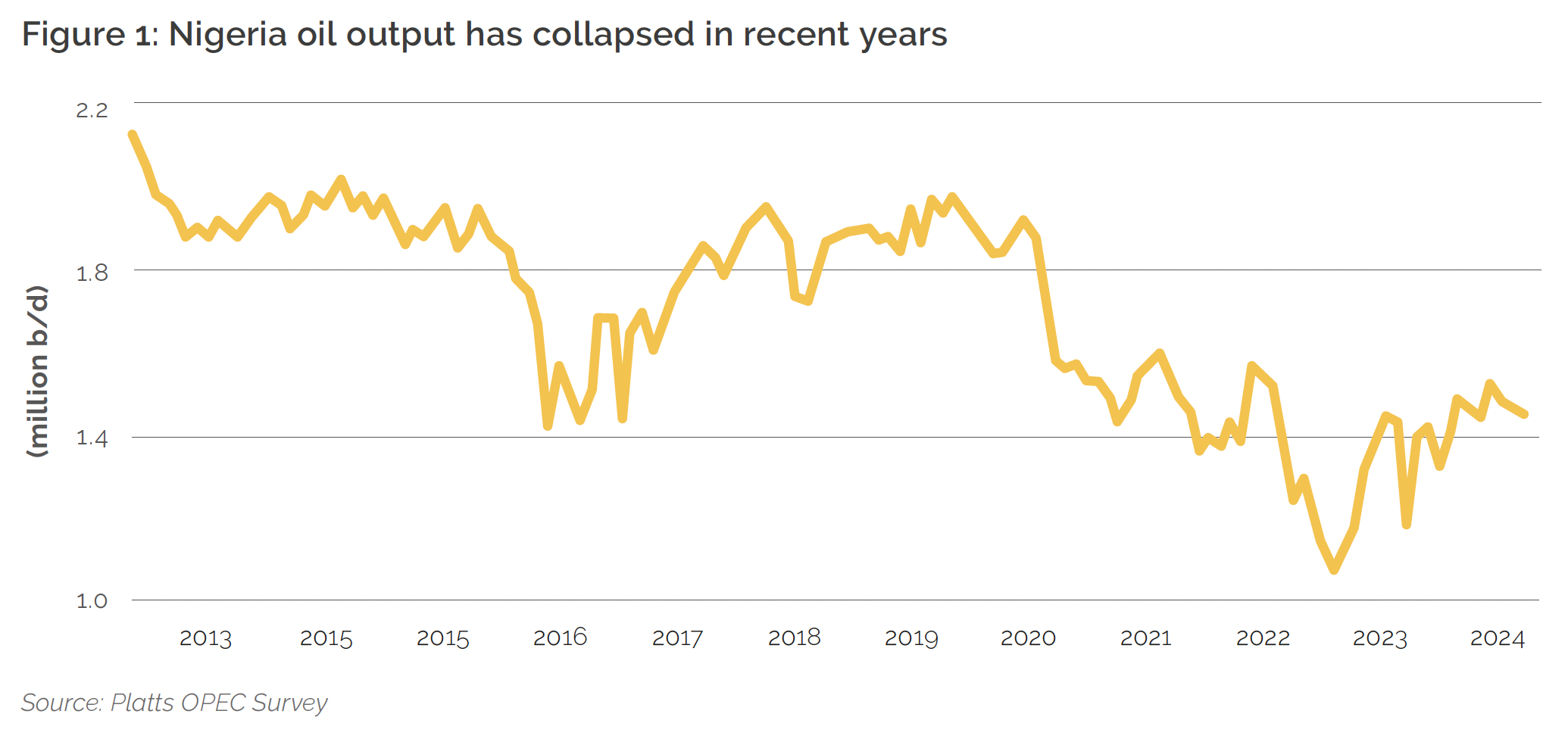
Since signing the Paris Agreement in 2015, the United States has increased its share of liquefied natural gas (LNG) production, becoming the largest supplier of gas to Europe. This increased oil production directly competes with Nigeria for European markets. Furthermore, the US has increased oil production by over 2 million barrels per day, directly competing with Nigeria not only in Europe but also in domestic markets that were key export destinations for Nigerian petroleum for two decades. In that period, Nigeria’s production has declined as shown in Figure 1.
Institutional dynamics and constraints on agency in climate policy
The frameworks developed by Soule, Adjei and Usman collectively illustrate the essential roles that internal institutional coordination, strategic alignment and elite consensus play in enabling states to exercise cohesive agency. In Nigeria’s case, however, the fragmented institutions and the prevalence of competitive interests within government ministries limit its ability to secure the best possible outcomes in climate negotiations. These constraints underscore the need for coordinated agency, such as NCCC or OSPEC, to effectively advance Nigeria’s climate interests.
Climate and foreign policy in Nigeria
Understanding the Climate-Foreign Policy Nexus
Nigeria's vulnerability to climate change significantly impacts its foreign policy objectives. As Africa's most populous nation, Nigeria faces diverse climate challenges. Agriculture, a cornerstone of its economy, is threatened by erratic weather patterns and degradation (United Nations Development Programme5, 2023). Coastal communities, crucial for foreign exchange earnings from the petroleum sector, are at risk from sea-level rise and erosion. Flooding is perennial threat from Nigeria’s arid Sahel borders to its coastal communities.
Insecurity in regions like the Niger Delta and Sahel is linked to climate impacts, highlighting the multidimensional crisis in the Sahel (United Nations Environment Programme [UNEP], 2022). The Sahel's vulnerability to temperature increases exacerbates political instability and raises questions of governance, insurgency and foreign involvement (International Crisis Group, 2021). Regionally, “three countries in the Sahel, Chad, Niger, and Mali, rank among the top seven most vulnerable countries to climate change.The Sahel region is expected to experience temperature increases 1.5 times greater than the world average” (UNDP 2023). Political instability, with coup d’états occurring in Mali, Burkina Faso and Niger, has proximate links to climate change at the nexus of security and foreign policy, as they “raise questions of government legitimacy and accountability and the involvement of foreign mercenary groups” (UNDP 2023)6 “Climate impacts are crucial to understanding the complex multidimensional crisis in the Sahel and provide an essential lens for interpreting the root causes of insecurities” (UNDP 2023).
Nigeria's Foreign Policy Framework
Historically, Nigeria's foreign policy has emphasized African unity, non-interference and economic cooperation (Anyaoku, 2015; Osuntokun, 2018). However, policy inconsistencies and challenges within the foreign service have impacted Nigeria's international standing (ibid.)
Historically, Nigeria's foreign policy has emphasized African unity, non-interference, and economic cooperation (Anyaoku, 2015; Osuntokun, 2018). However, the Ministry of Foreign Affairs, once a cornerstone of Nigerian diplomacy, has suffered from a gradual decline in capacity and influence. This atrophy has resulted impacted the ministry’s ability to influence how policies are shaped and presented on the international stage.7
To enhance Nigeria's global projection, the current administration introduced a "4D" foreign policy framework (Tuggar, 2023). However, its initial foreign policy actions, particularly regarding the Niger coup, have faced criticism and led to regional repercussions (BBC News, 2023). Further, perceived missteps in international communication have contributed to a perception of Nigeria as "diplomatically diminished" (Financial Times, 2023). This perception, however, overshadows Nigeria's historical contributions to African unity and its potential for impactful foreign policy.
Nigeria played a pivotal role in the formation of the African Union, demonstrating its commitment to regional integration and cooperation. Moreover, Nigeria has a strong track record of successful boundary dispute resolutions with its neighbors through peaceful negotiations, both on land and at sea. Its consistent provision of military and security support to the West African sub-region further highlights its commitment to regional stability.
Debt, diplomacy and climate investments
Nigeria, while not in debt distress, faces significant economic challenges stemming from its debt burden. The need to implement politically sensitive reforms, such as removing fuel and currency subsidies, while simultaneously transitioning to a greener economy, creates a complex policy environment. Access to climate finance is constrained by geopolitical tensions, debt servicing costs, and limited global resources. Domestically, Nigeria must improve its investment climate, address infrastructure gaps, and enhance its capacity to absorb and utilize climate finance effectively. While the recent overhaul of climate governance aims to streamline climate action and access finance, its effectiveness remains to be seen.
Contextualising Tinubu's historic overhaul of climate governance
The establishment of PCAC and OSPEC by the Tinubu administration signifies a pivotal shift towards centralized climate governance in Nigeria. Historically, the country’s climate policy has been marked by fragmentation and a misalignment between policy design and implementation. This recent consolidation of authority seeks to address longstanding challenges in climate governance, streamline institutional roles and align Nigeria’s climate agenda with broader socio-economic goals, thereby positioning the country as a regional leader in climate diplomacy.
Unlike earlier approaches, which dispersed climate responsibilities across multiple agencies, often with overlapping mandates, this new structure aims to avoid inefficiencies and political hurdles that have historically impeded progress. By anchoring climate governance at the highest levels of executive power, the Tinubu administration signals a commitment to integrating climate action within Nigeria’s core policy framework. This initiative also aims to attract international investments necessary to finance an ambitious energy transition.
Analysis of policy moments
Evolution of policy moments
As Figure 2 depicts, four key 'policy moments' have defined the trajectory of Nigeria's climate policy. These periods, marked by significant policy shifts influenced by both international pressures and domestic priorities, reveal the persistent challenges that continue to shape its current strategic approach.
The first policy moment (2003-2019)
This period was marked by emerging political settlements and persistently low oil prices. Key achievements included Nigeria's accession to the Paris Climate Agreement, the initiation of the Ogoni Clean-Up Project and the introduction of Sovereign Green Bonds (Nigerian Federal Ministry of Environment, 2019). The introduction of green bonds, a novel financial instrument for Nigeria, created opportunities to raise capital for sustainable development projects at a time of significant fiscal constraints.
Around the same time, the Nigerian National Petroleum Corporation (NNPC) began integrating energy transition considerations into its business strategy and allocating budgetary provisions for them. Although these initiatives indicated a potential convergence between climate policy and petroleum strategy, they remained uncoordinated and largely confined to NNPC. The change in NNPC leadership and the onset of the COVID-19 pandemic further disrupted this potential synergy, as NNPC prioritized core operations and immediate investment needs and experienced a change of leadership with different priorities. In this first policy moment, there appeared to be policy alignment between key institutions acting largely independently of one another. This period presented a unique policy moment with a narrative and convening platform that individual institutions and sectors could adapt and deploy to achieve sectoral goals.
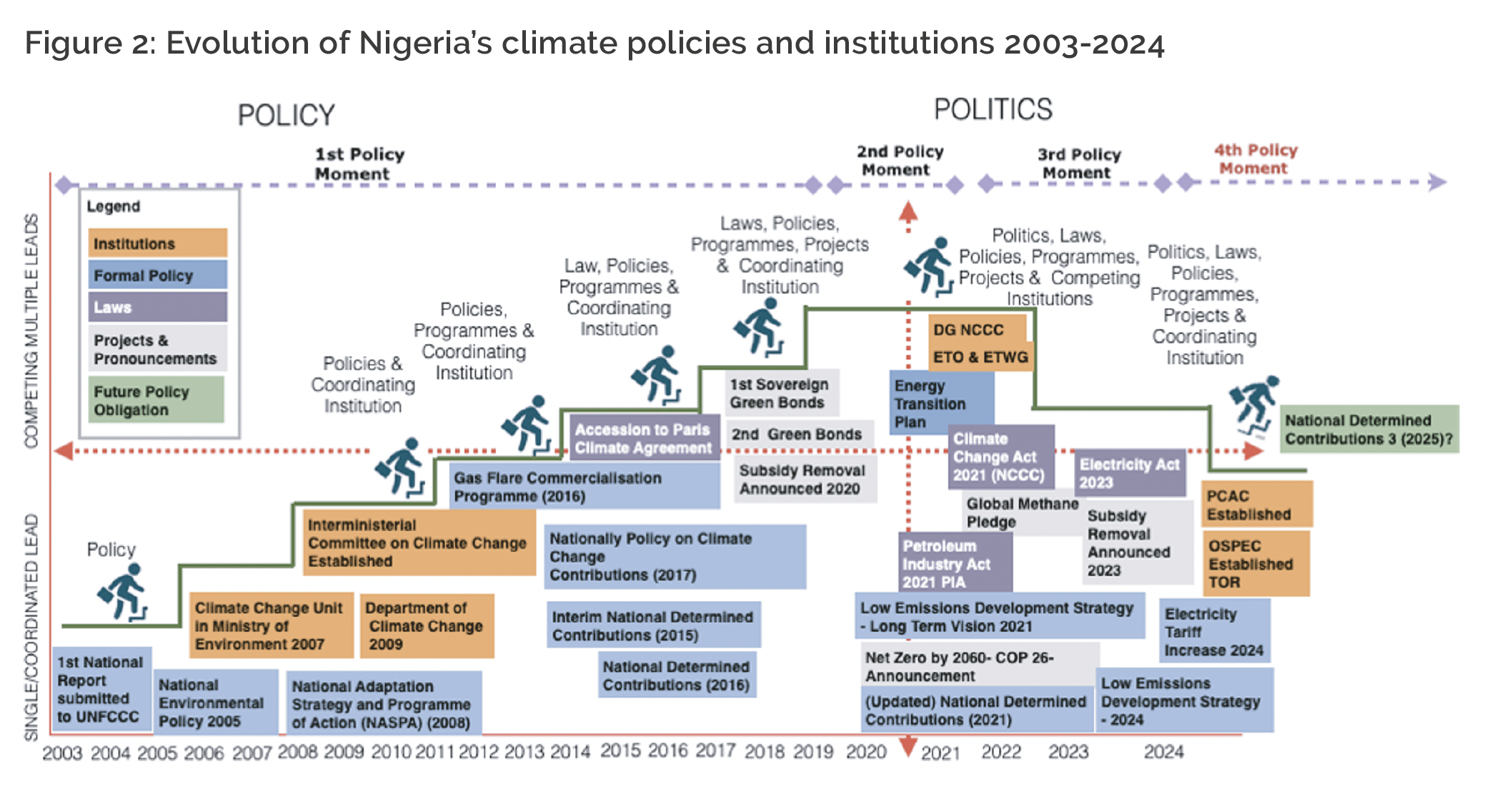
Despite these challenges, the Interministerial Committee on Climate Change (ICCC) facilitated the successful issuance of Green Bonds, demonstrating the potential for effective coordination within a limited institutional framework. This period, while marked by early successes, ultimately fell short of achieving significant, sustained climate action due to fragmented policy implementation and a lack of strong political will.
The second policy moment (2019-2021)
The COVID-19 pandemic upended the policy and institutional landscape in Nigeria. The economic downturn resulting from the pandemic, coupled with declining oil prices and production cuts, led to a sharp drop in petroleum revenues (International Monetary Fund, 2021). The resulting fiscal constraint increased the urgency for the Buhari administration to explore climate finance options. By the end of lock down, the monopoly enjoyed by DCC and ICCC in climate policy faced challenges from both emerging policies and new institutions.
This period also accelerated the divestment of onshore assets by IOCs and the exit of multinational manufacturing companies from Nigeria. While regulatory uncertainty, economic and security concerns were primary drivers, climate considerations and the global shift towards renewable energy also contributed to this trend. Table 1 details the timeline of IOC divestments, while Table 2 highlights their new investment destinations. Although IOCs typically employ a portfolio approach to investments, some are providing financing and support to the indigenous companies acquiring their divested assets. Furthermore, as Shell’s acquisition of Daystar Solar demonstrates, IOC investments in Nigeria’s energy future has not evaporated entirely.
Table 1: Timeline for IOC Divestments-1
| Decade | Company | Year | Divestment Activity |
|---|---|---|---|
| 2010 | Move to Offshore | ||
| Shell | 2010 | Shell begins gradual reduction of onshore assets. | |
| ExxonMobil | 2017 | ExxonMobil reduces onshore presence, focusing on offshore operations. | |
| Chevron | 2018 | Chevron sells some onshore assets, focuses on deepwater projects. | |
| 2020 | The COVID-19 pandemic and associated oil price crash accelerate the need for IOCs to re-assess their portfolios, pushing divestment plans forward. | ||
| Shell | 2021 | Shell announces $2.4 billion sale of onshore assets pending government approval. | |
| TotalEnergies | 2021 | TotalEnergies announces plan to sell minority stakes in onshore oil joint ventures. | |
| ExxonMobil | 2022 | ExxonMobil announces sale of shallow water assets to Seplat Energy for $1.3 billion. | |
| Eni | 2022 | Eni enters agreement to sell Nigerian Agip Oil Company Ltd (NAOC) to Oando. | |
Source: Author from publications of Petroleum Companies
Table 2: New Investment Destinations for IOCs Divesting from Nigeria
| Company | Divestment Details | Status of Divestment | New Investment Regions |
|---|---|---|---|
| Shell | Selling onshore oil assets in Nigeria | Sale of SPDC to a consortium for $2.4 billion in progress | Increased investments in the US and Brazil and in renewables |
| ExxonMobil | Selling offshore shallow water business | Agreement with Seplat Energy for $1.283 billion; awaiting regulatory approval | Significant investment in Guyana |
| TotalEnergies | Divesting 10% stake in 13 onshore oilfields | Process ongoing; focusing on sustainable energy | Investments in Brazil, US, Angola & Renewables |
| Eni | Selling stakes in various onshore blocks (NAOC) | Process ongoing; regulatory and political approval needed | Investments in Egypt and Mozambique |
Source: Author (from Publications and Reports of the Petroleum Companies)
Exodus of IOCs
The divestment of onshore assets by IOCs, as detailed in Table 2, coincided with the enactment of the Petroleum Industry Act (PIA) in 2021. While the PIA aimed to address challenges in the oil sector and incentivize development, it did not fully stem the tide of divestment. Several factors appear to be driving this trend:
- Regulatory uncertainty: The prolonged period of uncertainty preceding the PIA's enactment created a hesitant investment environment for IOCs.
- Carbon intensity: Increasing global pressure to reduce carbon emissions has made Nigeria's carbon-intensive onshore operations less attractive to oil companies seeking to align with sustainability goals.
- Declining production: Nigeria's oil production has been steadily declining since 2013, reflecting a shift in the production profiles towards deepwater assets and challenges in maintaining onshore operations.
The decision by TotalEnergies to redirect a $6 billion investment from Nigeria to Angola exemplifies these challenges. TotalEnergies' CEO, Patrick Pouyanne, attributed this reversal to Nigeria's “unpredictable legal and regulatory environment,” highlighting concerns about ongoing debates surrounding petroleum laws and the lack of long-term stability (Reuters, 2023). This reversal underscores the urgency for Nigeria to address regulatory hurdles and create a stable investment climate. While the PIA represents a step forward, it may not be sufficient on its own to attract and retain crucial investments in the oil sector.
Exodus of non-oil and gas foreign companies from Nigeria
Several factors contributing to IOC divestments from onshore Nigeria also influenced the decision of several multinational companies, including Diageo, Procter and Gamble and Unilever, to scale down or pull out of Nigeria. These factors include long-standing infrastructure deficits, recent policy changes like fuel subsidy removal and exchange rate liberalization, and increased competition from agile local firms.
The rise of competition from agile local firms presents a valuable area for the government to investigate as part of its energy future, industrial and trade policy. While the growth of local companies is promising, they also face challenges, including rising costs, constrained government investment and infrastructure deficits hindering their transition to renewable energy.
The success of nimble local firms, such as those showcased in Figure 2, which understand Nigerian market dynamics and raise capital locally, highlights a potential model for future partnerships. These companies demonstrate a readiness to navigate Nigeria's complexities, even as global brands retreat.
Box 1: Innovation in fast-moving consumer goods sector challenging multinational brands
Case Study 1: How So-Klin’s innovative packaging nearly took Unilever to the cleaners
In the late 1990s and early 2000s, the Nigerian detergent market experienced a significant shift when Klin, produced by Eko Supreme Resources, introduced detergents in small sachet forms. This innovative packaging proved highly effective due to its affordability, aligning with the financial planning of many Nigerian households who budgeted on a daily or weekly basis. The widespread availability and convenience of sachets increased accessibility for a broader range of consumers, particularly low-income households who previously might not have afforded premium brands like Omo, produced by Lever Brothers (now Unilever).
The affordability and accessibility of Klin’s sachets rapidly gained popularity, posing a serious threat to Omo’s market dominance. In response, Lever Brothers introduced their own sachet packaging for Omo and increased promotional efforts to maintain their market position. Leveraging affordability, accessibility and convenience, this strategic innovation by Klin, challenged established brands and prompted a reevaluation of market strategies within the Nigerian detergent industry.
Case Study 2: How “La Camera revolutionized the soft drinks industry in Nigeria
The introduction of the PET (Polyethylene Terephthalate) bottle to the Nigerian market by Classic Beverages, specifically for their apple-flavoured soft drink “La Casera”, had a transformative impact on the soft drinks market. Unlike competing directly in the cola segment, Classic Beverages focused on fruit-flavoured drinks packaged in a PET bottle. The PET bottle’s durability, lightweight nature and resealability offered significant advantages over traditional glass bottles, which required consumers to swap an empty bottle for a full one. This packaging innovation improved product portability and convenience for consumers, contributing to an increase in soft drink consumption. PET bottles also reduced breakage and shipping costs for manufacturers, making distribution more efficient and cost-effective.
Classic Beverages further strengthened its position by acquiring the liquidated bottling plant of “Tandi Guarana” previously owned by Cadbury Plc to produce its drinks. This strategic move, along with the innovative use of PET packaging, has produced a wave of new competitors in the soft drinks, juice and dairy products markets, forcing industry giants like Coca-Cola and Pepsi Co to adapt and others to exit.
Box 2: A case for divestment policy: New partners hiding in plain sight
In the petroleum sector, companies such as Sterling Energy have adapted to Nigeria’s specific operating conditions to optimize their production. Currently producing 150,000 barrels per day with plans to increase production, Sterling Energy has addressed challenges related to host communities and transportation by opting to transport petroleum using barges in areas where pipelines have proved unreliable. However, as an industry expert observed, Sterling Energy is not an IOC but a smaller foreign petroleum operator that operates with the agility of an indigenous company while retaining access to foreign capital, which indigenous companies often struggle to secure.
Subsidy removal in Nigeria: A perilous political maneuver
Successive Nigerian governments have attempted to remove the petrol subsidy by abruptly increasing prices, often leading to significant political backlash. Historically, such attempts have been feasible only during periods of low oil prices, and even then, they often carry a high political cost (McCollough 2021)8.
Both the Buhari and Tinubu administrations have sought to eliminate subsidies on petrol and electricity. In 2020, the Buhari administration's attempt during the COVID-19 pandemic was met with resistance. The rising oil prices and subsequent increase in subsidy costs exposed the disconnect between Nigeria's climate ambitions and political realities, potentially creating mixed signals for international partners. Table 3 outlines the impact of the subsidy on government spending and debt.
Table 3: Impact of Subsidy on Government Spending and Debt
| Year | Petrol Subsidy (USD millions) |
Electricity Subsidy (USD millions) |
Combined Subsidy (USD millions) |
Debt Service to Revenue Ratio (%) |
Combined Subsidy as % of Revenue |
Combined Subsidy + Debt Service as % of Revenue |
|---|---|---|---|---|---|---|
| 2021 | 3,490 | 612 | 4,102 | 50.0% | 25.32% | 75.32% |
| 2022 | 10,580 | 347 | 10,927 | 60.46% | 64.96% | 125.42% |
| 2023 | 14,930 | 1,433 | 16,363 | 60.15% | 70.21% | 130.36% |
Source: Author (from the Nigerian Bureau of Statistics)
The International Monetary Fund (IMF) projected that fuel subsidies could exceed NGN 8.4 trillion (USD 5.4 billion) in 2024. The World Bank offered loans for palliative support, anticipating subsidy removal in 2022, but delays added USD 7.5 billion to the bill, pressuring the Naira and causing Central Bank defaults on foreign exchange forwards.
The third policy moment (2021-2024): Fragmentation of climate policy
The COVID-19 pandemic severely limited Nigeria's fiscal options, causing the Federal Government to remove the petroleum subsidy and hindering its capacity to invest in renewable energy projects. Simultaneously, international pressure to implement an energy transition led to divestments by IOCs and policy shifts from institutions like the European Investment Bank. These factors prompted Nigeria to develop the ETP to align with global trends and attract investment.
The introduction of the ETP and subsequent policy changes, including leadership transitions within the Ministry of Environment, created institutional competition and policy fluidity. The ETP, Net Zero Pledge and CCA, developed outside traditional processes, led to parallel institutions and duplicated existing roles. In retrospect, a more focused ETP and a less expansive CCA may have been more effective in attracting financing and gaining support from key stakeholders like NNPC and the Ministry of Environment.
By 2021, three primary institutions were competing for climate policy governance:
- Department for Climate Change (DCC): Held institutional memory and served as the UNFCCC focal point until 2021.
- National Council on Climate Change (NCCC): Created under the CCA with statutory authority.
- Energy Transition Office (ETO): Secretariat to the ETWG, chaired by the Vice President and supported by Sustainable Energy for All (SEforAll).
This competition underscores the dynamic nature of Nigeria's climate policy landscape, shaped by internal fiscal pressures and influenced by various domestic and international stakeholders.
Third policy moment’s catalytic and disruptive effects
Competition has played a dual role in shaping Nigeria's climate and energy transition goals. On one hand, it has served as a catalyst, providing a platform for the country to assert its ambitions both domestically and internationally. This visibility attracted interest from major global philanthropies and motivated existing development partners to increase their support. Domestically, competition also elevated climate issues within political discourse, evident in the climate-focused platforms of several prominent presidential aspirants in the 2023 elections (Saraki, 2023; Obi, 2023; All Progressives Congress, 2023).
However, competition has also had disruptive effects. The development of the ETP and CCA outside existing governance structures disrupted the organic integration of climate policy into national development strategies. The PIA consciously avoided including climate considerations (Van Meurs, 2021). This fragmentation, coupled with a lack of cohesive domestic framework and institutional inefficiencies, has hampered Nigeria's ability to access the scale of climate finance it aspires to, despite attracting over USD 1.9 billion (EUR 1.81 billion) and being one of the top three recipients of climate finance in Africa.
Nigeria's climate and energy transition journey is influenced by a complex interplay of domestic and international forces. While competition has spurred action, it has also created challenges in policy coherence and implementation. Aligning with global climate priorities is crucial, but success hinges on developing a robust domestic framework and addressing institutional fragmentation
Tinubu’s reforms and a fourth policy moment
Presidential signaling can set the tone for attracting funding and support. However, the Tinubu administration's initial approach to climate policy was characterized by continuity rather than innovation. High-profile engagements like those at COP28 were largely carryovers from the previous administration. It wasn't until May 2024 that more substantial policy shifts began to emerge.
The PCAC and the OSPEC
The establishment of PCAC and the appointment of a SPEC signaled a notable shift in Nigeria's climate governance. This new structure consolidates climate policy coordination under the President, reminiscent of earlier models but contrasting with the reforms introduced by the Buhari administration in 2021. This approach requires strong presidential commitment and a dedicated team to manage the complexities of inclusive planning and effective implementation.
An oil and gas expert observes, "the intervention seems aimed at driving projects and attracting investments”. While the PCAC's mandate appears broad on paper, its primary focus is on overseeing specific energy transition projects. Notably, the petroleum sector is excluded, and special initiatives like the ETWG and Project Evergreen have been "grandfathered" in. This suggests a preference for policy entrepreneurs over traditional institutions.
Excluding Oil and Gas: Inconsistent with Past Practice
The exclusion of oil and gas from PCAC's remit, despite the President's dual role as Minister of Petroleum, raises concerns about the committee's ability to address energy transition and financing challenges affecting the sector's competitiveness. This exclusion underscores the centrality of petroleum in Nigeria's energy landscape and the current administration's emphasis on its continued exploitation. However, given the ongoing transition in the petroleum industry – driven by new legislation and the accelerated divestment by existing partners – these issues are as pressing for climate and energy transition as they are for the petroleum sector.
Legacy Influences and Institutional Competition
The PCAC's mandate to guide ETWG initiatives and the specific mention of Project Evergreen City highlight the prioritization of pre-existing projects and interventions. While this is common in Nigerian reforms, questions remain regarding the effectiveness and sustainability of these projects, particularly renewable energy interventions under the Rural Electrification Agency, have been questioned.
The elevation of ETWG and Project Evergreen reflects a preference for private sector-adjacent policy promoters, potentially sidelining formal institutions like the NCCC. The inclusion of the ETWG implicitly mandates the implementation of the ETP, duplicating NCCC's responsibilities and risking the fragmentation observed during the second and third policy moments.
Project Evergreen City's prominence further demonstrates how preferred projects are embedded within the new institutional arrangements. Its development, led by the Infrastructure Corporation of Nigeria (InfraCorp), depends on pending capitalisation from the Central Bank of Nigeria, raising questions about its operational readiness.
Nigeria's current climate policy landscape reflects a complex interplay of domestic and international forces. The Tinubu administration's recent moves signal a preference for project-driven approaches and private sector collaboration. However, challenges persist, including ensuring policy coherence, addressing institutional fragmentation and securing adequate climate finance.
Institutional orphans and misaligned models: NCCC and OSPEC
Both the NCCC and OSPEC, modelled after British and American institutions, face challenges in their design and implementation within the Nigerian context. The NCCC, sidelined by the PCAC and OSPEC, struggles with funding limitations and an inability to fulfill its statutory obligations, reflecting the situational opportunism that led to the CCA's passage in 2021.
OSPEC, inspired by the U.S. Special Presidential Envoy on Climate Change, diverges from its US counterpart by combining both domestic and international climate policy roles. This dual role creates a structural imbalance, as its mandate exceeds its remit and institutional capacity.
Both NCCC and OSPEC are tasked with integrating climate into national development goals, a planning function not typically assigned to their foreign counterparts. This broader scope, coupled with a narrower focus and limited resources, raises valid concerns about their effectiveness and credibility among development partners.
In contrast, the U.S. SPEC's advisory role and the UK Climate Change Committee's independent oversight offer more focused and accountable models. The U.S. National Climate Policy Advisor, rather than its SPEC, coordinates domestic policy, playing a crucial role in shaping legislation like the Inflation Reduction Act, the CHIPS and Science Act, and the Bipartisan Infrastructure Law.
The creation of OSPEC and PCAC attempts to centralize climate policy coordination in Nigeria. This approach, however, risks perpetuating institutional fragmentation and misalignment, as seen with the NCCC, ETP and ETWG. By transplanting foreign models and assigning expanded mandates without sufficient technical resources, the Nigerian version attenuates outcomes and dilutes climate policy effectiveness and action.
Reactions of Domestic Stakeholders and International Partners to the Changes
International partners are seeking clear communication and strategic direction from the Nigerian government to ensure continued progress in climate initiatives. However, the abrupt institutional changes have elicited mixed reactions and a degree of uncertainty among key government stakeholders and development agencies. While efforts to clarify coordination roles are welcomed, concerns remain regarding the expertise of the new leadership and the legal basis of the PCAC and OSPEC. This uncertainty has disrupted ongoing projects, such as NSIA's carbon credit negotiations, and prompted a recalibration of future investment and support by development partners.
Operationalizing PCAC and OSPEC
Nigeria's climate policy landscape faces challenges stemming from a centralized structure, evidenced by the PCAC and OSPEC's expansive authority over both policy design and implementation. This centralization, coupled with the limited activity of the NCCC, raises questions about potential inefficiencies and conflicts of interest.
Historically, successful reforms in Nigeria have been driven by focused, well-resourced, and technically competent ad-hoc institutions with strong presidential backing and stakeholder support. Notable examples include the PACP and OSSAP-MDGs. These initiatives often leveraged embedded technical advisors and strategic partnerships to navigate complex policy landscapes effectively. Embedded inside the President’s office and initially supported by the Chief of Staff, the OSSAP-MDGs, for instance, initially focused on delivery, reporting, coordination and relationship management. It then evolved organically into a structure as its responsibilities and achievements grew.
Conversely, the Presidential Artisanal Gold Mining Development Initiative (PAGMDI) exemplifies the pitfalls of relying solely on presidential authority without adequate stakeholder buy-in and institutional support. Despite initial backing, PAGMDI faced delays and limited effectiveness due to implementation challenges and opposition from key figures.
To enhance its effectiveness, the NCCC secretariat could be embedded in the President’s Office for administrative purposes. Operating as a statutory cabinet level committee, within existing cabinet structures, the NCCC could be headed by an Executive Secretary based in the Office of the Chief of Staff or President. Its technical functions could then be executed through working groups or standing sub-committees, comprising critical stakeholders and chaired by ministers with key relevant portfolios e.g. transport. The success of the PACP, which commissioned the Power Sector Roadmap while the PTFP oversaw implementation, offers a compelling precedent for this approach.
The OSPEC's dual role - as both domestic policy coordinator and international climate envoy - raises concerns about a potential structural imbalance and overreach. This model contrasts with the U.S. approach, where these functions are distinctly separated.
In conclusion, the large bureaucratic structure that NCCC and OSPEC erected, may be contributing to the friction and fragmentation. The proliferation of newer institutions without reforming existing institutions adds to this dynamic. This is exemplified by the fact that Nigeria has changed the National Focal Point to the UNFCCC four times since 2023. The current policy and institutional framework offers a functional base with which to convene partners, coordinate efforts and capitalize on resources to achieve the government’s goals.
Committees and working groups are the mechanisms adopted in other countries, such as South Africa and the US. Specialized institutions, such as the Ministry of Budget and Planning, can utilize specialized expertise to enhance plan effectiveness. Drawing lessons from successful presidential interventions could inform current strategies to ensure that they are both focused and well-supported. Strengthening technical structures is crucial; embedding long-term technical advisors and multidisciplinary teams within key agencies will facilitate the management of political and policy relationships. Moreover, engaging key stakeholders, particularly implementing agencies, is essential to foresee and mitigate potential obstacles, thereby smoothing policy execution. Lastly, it is vital to adapt and prioritize tasks and opportunities that align with national development goals to stimulate economic growth and productivity.
Conclusion and Recommendations: Navigating a Complex Climate Landscape
Conclusions
Nigeria's climate policy framework, while comprehensive, suffers from complexity and fragmentation. Direct adoption of foreign models, such as the UK Climate Change Act, presents challenges due to significant differences in context. Adaptations to these models often result in hybrid institutions with unclear roles, potentially hindering effective implementation.
Addressing these challenges requires a domestically driven approach. Nigeria must develop its own institutional frameworks that account for its unique context, balancing the interests of elites with genuine development needs. Strengthening diplomatic capabilities is crucial for navigating the complexities of the multipolar world and effectively engaging with international partners.
Domestically, key institutions should focus on building capacity within government agencies rather than micromanaging. This can be achieved through embedding long-term technical advisors, fostering strategic partnerships, and implementing a calendar-driven process with clear timelines.
Ultimately, Nigeria's success hinges on translating its climate ambitions into concrete actions on the ground. By addressing these challenges and embracing a strategic approach, Nigeria can position itself as a leader in climate action, both regionally and globally
Strategic Recommendations
To effectively mainstream climate action into Nigeria's foreign policy, it is crucial to address challenges in coordination, capacity, and funding while fostering strategic international partnerships. This section outlines recommendations for strengthening climate governance, aligning the petroleum sector with climate goals, and enhancing Nigeria's diplomatic influence in the global climate arena.
Strengthening Institutional Coordination:
- Streamline governance: Reduce institutional fragmentation and clearly define roles among climate agencies. Establish a streamlined structure within the President's Office with the NCCC as a lean organization.
- Enhance coordination: Utilize working groups to engage line ministries and key sectors in policy implementation. Delegate implementation coordination to relevant ministries, enabling enhanced reporting and monitoring.
- Establish accountability: Implement a calendar-driven framework linking key milestones to international climate events. Designate follow-up teams to track progress and ensure accountability.
Integrating the Petroleum Sector:
- Engage stakeholders: Actively engage petroleum sector stakeholders in climate governance.
- Align policies: Align petroleum policies with climate goals by setting phased targets for emissions reductions in the oil and gas sector.
Building Technical and Diplomatic Capacity:
- Expand technical expertise: Target training programs focused on project planning, monitoring, and climate finance to key agencies.
- Strengthen diplomatic capacity: Enhance understanding of the global climate landscape and develop specialized training programs in climate diplomacy.
- Foster stakeholder engagement: Organize regular inter-agency workshops and broaden stakeholder engagement to include civil society, academia, and the private sector.
Leveraging Strategic Partnerships:
- Develop partnerships: Establish dedicated working groups to engage development banks and philanthropic organizations.
- Foster alliances: Strengthen alliances with key climate partners, such as Germany, Singapore, and Norway.
- Utilize climate finance instruments: Position Nigeria as a regional leader in carbon markets and promote the development of local carbon projects.
Endnotes
[1] A Renewed Hope- APC Presidential Candidate’s Manifesto - at page 71 - https://media.premiumtimesng.com/wp-content/files/2023/02/RENEWED-HOPE_compressed.pdf
[2] https://www.osgf.gov.ng/president-tinubu-approves-mandate-for-office-of-the-special-presidential-envoy-on-climate-action-expands-green-economy-committee-membership/#:~:text=PRESIDENT%20TINUBU%20APPROVES%20MANDATE%20FOR,the%20Federal%20Republic%20of%20Nige
[3] https://www.bsg.ox.ac.uk/sites/default/files/2018-12/Folashade%20Soule%20GIMPA%20Article.pdf
[4] https://www.bu.edu/gdp/2024/08/14/africa-takes-the-wheel-the-role-of-host-states-in-shaping-outcomes-of-chinesesupported-power-generation-projects-in-africa/
[5] https://www.undp.org/africa/waca/events/regional-experts-workshop-climate-peace-and-stabilization-sahel#:~:text=The%20region%20has%20been%20significantly,greater%20than%20the%20world%20average
[6] https://www.undp.org/africa/waca/events/regional-experts-workshop-climate-peace-and-stabilization-sahel#:~:text=The%20region%20has%20been%20significantly,greater%20than%20the%20world%20average
[7] Kabir yusuf Premium times, May 23 2024. https://www.thisdaylive.com/index.php/2023/02/26/renewing-the-golden-years-of-nigerias-foreign-ministry-the-arcan-and-environmental-conditionality/
[8] Neil McCollough ending fossil fuel subsidies - https://practicalactionpublishing.com/book/2642/ending-fossil-fuel-subsidies
References
Adjekai-Adjei, F. (2024). Africa takes the wheel: The role of host states in shaping outcomes of Chinese supported power generation projects in Africa.
Akinyemi, S. (2022). Climate diplomacy in Africa: Nigeria’s role and strategy. African Journal of Environmental Policy, 15(2), 45-62.
Ekwurzel, B., Adegbulugbe, A., & Richmond, A. (2022). Nigeria’s Climate Change Act: A bold step with challenges ahead. Climate Law Blog, Sabin Center for Climate Change Law, Columbia Law School.
Federal Republic of Nigeria. (2021). National Climate Change Action Plan 2021-2030. Ministry of Environment.
Fakir, S. (2017). The impact of climate change on Nigeria: A review. Nigerian Journal of Environmental Studies, 10(1), 23-39.
IPCC. (2021). Climate change 2021: The physical science basis. Intergovernmental Panel on Climate Change.
Natural Resource Governance Institute (NRGI). (2023). Still digging: The role of extractives in Nigeria’s climate future.
Obi, C. (2020). Climate change and foreign policy in Africa: The case of Nigeria. Journal of African Affairs, 19(3), 78-92.
Olaniyan, O., & Adelekan, I. O. (2023). Institutional fragmentation and climate governance in Nigeria: Challenges and opportunities. Climate Policy, 23(4), 509-524.
Soule-Kohndou, F. (2018). Bureaucratic agency and power asymmetry in Benin-China relations.
UNFCCC. (2022). Nigeria’s Nationally Determined Contributions. United Nations Framework Convention on Climate Change.
About the Author

Najim Animashaun
Najim Animashaun is a non-resident fellow at the Africa Policy Research Institute (APRI), focusing on the political economy of energy. With over 30 years of experience as a legal and regulatory advisor, he has supported governments, development partners, and private sector actors in shaping energy policies across Africa.