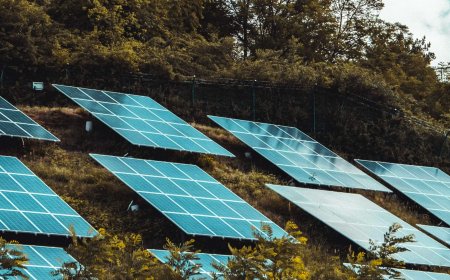
Aktives Engagement der Jugend und Zugang zu grüner Technologie sind entscheidend für afrikanische Volkswirtschaften, um Netto-Null-Ziele zu erreichen.
List of Abbreviations
As concerns over the global climate grow, a consensus has emerged on the need to achieve net- zero emissions by 2050 in order to avoid irreversible climate impact. African countries, though they emit the least carbon, have set ambitious net-zero targets, and have aligned their decarbonisation plans with national development priorities. These plans are largely based on a significant increase in the deployment and utilisation of clean technology solutions, especially in high carbon-emitting sectors such as energy, agriculture and transport, which together account for over 50% of the continent’s emissions. Developing these solutions to meet the proposed targets sustainably will depend on the pace and scale of the development of Africa’s nascent green tech sector and on harnessing the potential of its youth.
However, this will not be possible without incentivising investment in the green tech sector and implementing a policy, legal and regulatory framework that encourages opportunities for youth participation in its development. A sustainable climate transition in Africa will be dependent on localising green tech development, fostering local resilience and creating opportunities for youth across the green tech value chain. If successful, this promises immediate benefits in terms of socio-economic development and Africa’s participation in the global green tech race. The development of these technologies and the opportunities that accompany them will also curb the increasing level of migration and brain drain of its youth.
This policy brief analyses the enabling environment for green tech development in selected African countries, with emphasis on the opportunities for the continent’s teeming youth workforce. It assesses the policy and regulatory landscape using a combination of top-down and bottom-up policy analysis of solar mini-grids (renewable energy) in Nigeria, e-mobility in Kenya and climate-smart agriculture in Ghana. It identifies areas of alignment, gaps, bottlenecks and opportunities between policies and government plans related to climate, youth, technology and development. The renewable energy, technology and agriculture sectors were chosen for this study due to their identification as Africa’s primary green tech sectors in a scoping report on green tech policies and youth employment. These sectors demonstrate significant potential for both youth employment and entrepreneurship, and are central to green tech research, policies and funded programmes, all of which are interconnected. Nigeria, Kenya and Ghana were selected due to their strong focus on green tech policy and its implementation. This selection aligns with the findings of a technological needs assessment conducted in African countries, which identified solar energy, transport and agricultural technologies as priority areas. Consequently, a thorough understanding of these sectors in these specific countries can offer valuable insights and lessons that can be applied to other countries aiming to develop their green tech sectors. The cross-national and cross-sectoral approach allowed for gathering diverse data on policy trends that influence youth employment outcomes.
The results show that the promotion of green tech is often compartmentalised in specific ministries and that there is inadequate interministerial cooperation. It also indicates policy incoherence, poor planning and misaligned stakeholder interests as underlying challenges in green tech development. The misalignment between youth, climate and development policy targets and goals, overlapping and, at times, conflicting institutional mandates, and multiple points of interface with government all present challenges to green tech advancement on the continent. These policy gaps are worsened by the exclusion of young people from the policy-making process. Furthermore, policy documents usually give gender mainstreaming greater weight than youth inclusion.
This is not to downplay efforts by governments to promote youth participation in green tech development. Many of them recognise its critical significance. Countries such as Nigeria, Kenya and Ghana have set up Climate Innovation Centres to promote the incubation and growth of green tech and have integrated capacity building and technology transfer as part of national climate projects with development partners. They are also increasingly recognising the role of youth in the climate transition in their policies for youth-focused climate initiatives by African countries. However, there is significant room for improvement in the form of a supportive enabling environment to catalyse growth and investment in green tech sectors.
This policy brief describes these sectors and makes recommendations for how the enabling environment specific to the policy and regulatory landscape for green tech development and opportunities for youth can be refined. This will make the environment more inclusive, provide it with stronger political will and ensure policy coherence, coordination and buy-in across the respective governments, as well as alignment with national development goals and climate commitments.
As the world grapples with the escalating impacts of climate change, the intersection of green technology (green tech) and Africa’s budding youth potential presents a transformative opportunity for the continent’s climate transition. Africa has a young population, which is projected to exceed 740 million by 2050.1 The continent has the potential to harness this demographic to drive its nascent green technology sector. The global need to achieve net-zero emissions by 2050 has prompted many African countries to set ambitious climate targets which are largely based on the deployment of clean technology solutions, particularly in high carbon-emitting sectors such as energy, agriculture and transport, which collectively account for over 50% of the region’s emissions. Green tech applies scientific knowledge and innovation to create products, processes and services that are climate friendly and resource efficient.2 It encompasses a wide range of innovations aimed at promoting environmental sustainability, including renewable energy, sustainable agriculture and waste management. For example, solar mini-grids, e-mobility solutions and climate-smart agricultural technologies (CSAT) are emerging as key green tech solutions for decarbonising the energy, transportation and agricultural sectors across Africa. These solutions not only contribute to reducing emissions but also create substantial employment opportunities for youth and opportunities for innovation. It is estimated that investments in renewable energy alone could generate 4 million jobs by 2030 across Africa, highlighting the significant role that green tech can play in promoting youth employment.3
The involvement of youth in the green tech sector is vital. Young people bring fresh perspectives and innovative ideas that are essential for driving technological advancements and fostering entrepreneurship. Their familiarity with digital tools and platforms positions them to leverage technology in creating sustainable solutions tailored to local contexts. These are critical in the development of solutions towards the race to net zero. Additionally, youth employment is a prominent theme in Africa’s development discourse, as the continent faces significant challenges in providing productive and decent jobs for its youth. For instance, as of 2023, 53 million youth (one in five, or 29%) in sub-Saharan Africa were NEET (not in employment, education or training). This figure is just above the global youth NEET rate of 20.4%.4 Relatedly, nearly three in four (71.7%) young adult workers (aged 25 to 29) were in the form of work deemed ‘insecure’.5 If developed with the proper youth considerations, green tech can tackle these youth employment problems. It is estimated that 52% of African youth are likely to consider emigrating in the next few years, citing economic hardship as the top reason.6
Green tech in Africa simultaneously addresses the challenges of climate change and employment, while increasing economic productivity. If done right, developing and scaling these technologies will create jobs to address pressing socio-economic challenges while advancing the region’s climate ambitions. This dual focus on climate action and youth employment will position Africa as a global leader in the green economy and address critical development challenges. For instance, Africa’s renewable energy potential is massive: it is home to 60% of the world’s prime solar resources. Yet, due to limited investment in renewable energy and heavy reliance on the Global North for technology, the continent holds only 1% of installed solar PV capacity.7Solar PV, which is already the most affordable power source in many African regions, is expected to surpass all other energy sources continent-wide by 2030.8 Alongside solar, other renewables such as wind, hydropower and geothermal are expected to constitute over 80% of new power generation capacity by the same year.9
This renewable energy boom presents a unique opportunity to integrate green tech with the broader vision of green industrialisation – leveraging renewable energy to drive industrial growth, create jobs and spur economic transformation across the continent. On the other hand, investments in renewable energy are especially impactful in generating employment, creating three times as many jobs per dollar as fossil fuels, according to the Sustainable Energy for All (SE4ALL) Renewable Energy Manufacturing Initiative (REMI).10 This opens up vast opportunities for youth engagement, particularly in the development of renewable energy infrastructure, the manufacturing and maintenance of green technologies, and the operation of renewable-energy-powered industrial parks. The latter have the potential to serve as hubs of productivity and innovation, driving job creation while reducing poverty. However, realising these opportunities requires a conducive policy, legal and regulatory framework that encourages youth participation in the green tech sector. Governments will need to create an enabling environment that incentivises investment in youth development in the green tech sector while addressing barriers such as access to finance and skills development.
This policy brief analyses the policy and regulatory environment for green tech development in Nigeria (solar mini-grids), Kenya (e-mobility) and Ghana (climate-smart agricultural technology). It focuses on coherence, policy gaps and opportunities for increasing youth participation in these countries through a combination of top-down and bottom-up policy analysis. The renewable energy (solar mini-grids), transport and agriculture sectors were chosen for this study due to their identification as Africa’s primary green technology sectors in a scoping report on green technology policies and youth employment.11 These sectors demonstrate significant potential for both youth employment and entrepreneurship, and are central to green tech research, policies and funded programmes, all of which are interconnected. Nigeria, Kenya and Ghana were selected due to their strong focus on green tech policy and its implementation. This selection aligns with the findings of a technological needs assessment which identified solar energy, transport and agricultural technologies as priority areas across Africa.12 Consequently, a thorough understanding of these sectors in these specific countries can offer valuable insights and lessons that can be applied to other countries aiming to develop their green tech sectors. The cross-national and cross-sectoral examination approach allowed for gathering diverse data on policy trends that influence youth employment outcomes. The study identifies areas of alignment, gaps, bottlenecks and opportunities within policies related to climate change and youth engagement and recommends actions to foster a vibrant green tech ecosystem that empowers African youth.
Driven by a unique combination of local innovation, international investment and a growing recognition of the need for sustainable practices, the green tech sector in Africa is rapidly evolving. Africa’s abundant natural resources, young population and increasing commitment to sustainable development position the continent to capitalise on green technologies for transformative change.13 This section explores key segments of the green tech market in the context of three sub-Saharan African nations: solar mini-grids in Nigeria, e-mobility in Kenya and climate-smart agriculture (CSA) in Ghana.
In the African energy sector, clean electrification solutions are becoming increasingly popular as a solution for bridging the huge energy access gap. Across the continent, an estimated 600 million people, approximately 53% of the population, live without access to electricity.14 Among these solutions, solar mini-grids stand out as decentralised electrical systems that provide electricity to communities through renewable solar energy technologies. While mini-grids can utilise various energy sources, solar mini-grids specifically harness solar energy and are one of the most common decentralised renewable energy solutions for community electrification. These systems are rapidly emerging as a reliable solution for achieving energy access. Between 2019 and 2021, the number of installed mini-grid connections in Africa nearly doubled, rising from approximately 40,700 to over 78,000.15
The International Energy Agency (IEA) estimates the number of people with access to electricity through a solar home system in sub-Saharan Africa increased by about 25 million since 2019, topping 45 million in 2022.16 Countries such as Kenya and Nigeria lead in the deployment of these solutions in East and West Africa respectively. These decentralised clean energy systems not only provide energy access but also create significant employment opportunities, as well as budding, local, clean energy innovation ecosystems, with hubs such as the World Bank-funded Country Climate Innovation Centres serving green tech development. According to the International Renewable Energy Agency (IRENA), the renewable energy sector alone could create 4 million jobs across Africa by 2030 and 8 million jobs by 2050.17
Nigeria’s energy sector has been constrained by technical and non-technical challenges that have inhibited the delivery of reliable power to its approximately 228 million population. With over 50% of Nigerians without electricity supply access, Nigeria represents Africa’s largest potential market for off-grid electrification. With an unreliable national grid, Nigerians spend an estimated NGN 5 trillion (approximately USD 14 billion) annually on small petrol or diesel generators, which are costly and emit harmful pollutants locally and globally.18
To address this energy access deficit, numerous policies and public–private initiatives are being implemented to encourage investment in the off-grid clean energy sector and promote the adoption of decentralised clean energy solutions. In 2020, the World Bank valued the global off-grid solar market at USD 1.75 billion annually, serving 420 million users.19 In Nigeria, an estimated 20 GW of small diesel-powered generators are in daily operation – five times the capacity of the national grid.20 According to the a USAID report, the annual market potential for off-grid clean energy solutions in Nigeria is USD 8 billion for mini-grids and USD 2 billion for solar home systems.21
Over the past decade, significant efforts by the government and private sector have focused on harnessing Nigeria’s renewable energy potential, particularly in the off-grid sector. Decentralised renewable energy, especially off-grid solar, has demonstrated potential to bridge the country’s energy access gap. A key outcome of this has been a significant increase in the number of opportunities across the value chain for green tech development for electrification, with the deployment of solar mini-grids being one of the most common. Nigeria’s off-grid sector is now recognised as the largest commercially viable and fastest-growing energy access market globally, accounting for over 50% of solar appliance system (SAS) sales in West Africa and driving regional growth.22
This has led to a boom in locally grown clean tech companies led by young entrepreneurs. There are now over 200 local and international solar companies active in the country, up from fewer than 20 a decade ago.23 This growth has also created a whole new job market across the value chain for hard skills such as installation, maintenance, sales and R&D, and soft skills such as clean energy finance, energy law, consultancies, and gender and social inclusion. This success is largely driven by the private sector, supported by government initiatives to improve the enabling environment.
In Kenya, the transport sector, particularly road transportation, is one of the main sources of CO2 emissions. This is due to the predominant use of fossil fuels for internal combustion engines (ICEs). To ensure a sustainable future for transportation globally, African nations are increasingly embracing e-mobility, which involves the use of electric vehicles (EVs) as a sustainable alternative to traditional fossil fuels. The adoption of e-mobility is expected to significantly reduce greenhouse gas (GHG) emissions from the transportation sector in sub-Saharan Africa, potentially cutting emissions by up to 24% by 2040.24 The e-mobility industry in Ethiopia, Kenya, Nigeria, Rwanda and Uganda is expected to grow significantly, with projections suggesting that EV sales could reach 340,000 to 820,000 units by 2025 and expand to 3.8 to 4.9 million units by 2040.25Electric two-wheelers are expected to play a pivotal role in this growth, driven by their affordability and manoeuvrability.
In Africa, there is growing interest from both governments and the private sector in leveraging renewable energy to boost the expansion of e-mobility. This interest has also led to significant investments in e-mobility infrastructure. In East Africa, countries such as Kenya, Tanzania and Uganda have introduced new policies with tax incentives to promote the adoption of e-mobility. For instance, Kenya aims to achieve its transport sector goal of reducing emissions by 3.46 MtCO2e against the baseline in 2030.26 To this end, the country has launched government initiatives that promote EV uptake through publicity campaigns and incentives for buyers. Additionally, it has introduced a reduced EV charging electricity tariff and exempts e-motorcycles, e-buses and e-bicycles from VAT.
Kenya’s transportation sector is evolving rapidly in accordance with growth in the deployment of electric-powered two-, three- and four-wheelers throughout East Africa. As of 2022, electric buses and taxis have become an integral part of Nairobi’s public transport system. With an estimated 350 EVs registered in Kenya, these developments underscore the emergence of a nascent e-mobility market on the continent.27 The market has seen the recent entry of over 50 startups led by young CEOs, with USD 26 million in new funding in 2021.28 This budding and vibrant e-mobility startup scene is driving a transition in the transport sector from ICE to e-mobility solutions. This is largely due to the enabling environment and public–private partnerships (PPPs) that have been crucial in providing finance and technical assistance.
Kenya is actively advancing its e-mobility sector through several ongoing programmes and initiatives. The government, in partnership with development partners, is developing knowledge products to build public interest in e-mobility. These include fact sheets and brochures that provide insights into Kenya’s progress in e-mobility, highlight key developments and address common questions. The following points summarise the key initiatives of the Kenyan government.
Driven by innovative and sustainable practices, the agriculture and food security sector is undergoing a significant transformation. Climate-smart agriculture (CSA) is a key focus, incorporating techniques such as agroforestry, improved soil management and efficient water use to boost productivity and resilience to climate change impacts.
The Food and Agriculture Organization (FAO) defines CSA as ‘agriculture that sustainably increases productivity, enhances resilience (adaptation), reduces/removes GHGs (mitigation) where possible, and enhances achievement of national food security and development goals’.32 CSA therefore involves adopting technologies, practices and policies that help farmers optimise their inputs and outputs while managing climate-related disruptions. This approach spans the entire agricultural value chain – from planting and harvesting to storage, preservation, marketing and agro-processing. For example, solar-powered irrigation systems improve planting efficiency, solar dryers enhance preservation, digital technologies aid in crop monitoring to boost yields and weather-index insurance protects against droughts or floods.
CSA has been actively promoted among Ghanaian farmers as a means of adapting to climate change. The key benefits reported include improved soil fertility, higher yield, improved household income, climate resilience (such as overcoming the effects of drought and extreme temperatures) and food security. Ghana is also pioneering the use of blockchain technology for land digitalisation, which helps farmers access credit and improve land management. These innovations enhance agricultural productivity and contribute to sustainable development by reducing the environmental footprint of farming practices. These developments are not only crucial for reducing GHG emissions but also play a vital role in driving sustainable technological development in the region, creating jobs for youth and catalysing much-needed investment in Africa’s green tech sector. However, challenges such as the lack of government support and credit access, as well as high illiteracy rates among smallholder farmers, hinder broader adoption.
The Ghanaian government has initiated several key CSA initiatives as part of its national development agenda. These initiatives are outlined in the Climate-Smart Agriculture Investment Plan (CSAIP), developed under the Adaptation of African Agriculture (AAA) programme. The following points summarise the key initiatives of the Ghanaian government.
The purpose of legal, regulatory and policy frameworks is to guarantee that businesses operate equitably and openly while also ensuring the protection of consumers against any potential harm. Importantly, these frameworks enable more investments and catalyse opportunities for entrepreneurs, innovators and business ecosystems to develop and thrive. A focus and analysis on policy and regulations related to innovation ecosystems is essential to effectively tackle the obstacles and difficulties that impede the development and dissemination of green technology, such as limited access to finance, skills, markets, information and technology. Principal actors within regulatory frameworks include policymakers, regulators and other entities responsible for implementing regulatory functions.33 These actors coordinate to promote coherence as a foundation for green growth.34 This involves incorporating the priorities of youth employment and green jobs into broader national economic development plans at all levels.
To understand the green tech and youth employment policy landscape, this policy brief utilises top-down and bottom-up approaches to policy analysis. These two approaches are commonly used in policy analysis to comprehend and evaluate policies, programmes or initiatives. Specifically, we focus on the goals of the policies in relation to green tech and youth employment. This requires a multi-goal analysis, which assumes that policies are intended to fulfil certain stated goals which may sometimes be vague and/or communicated in terms that are not amenable to precise measurement.35
Policy tools are essential for guiding international efforts and facilitating the implementation of climate change mitigation and adaptation strategies. Following the United Nations Framework Convention on Climate Change (UNFCCC) policy tools category, the chosen policy instruments were limited to supportive actions and regulatory instruments. This was because many green tech sectors in Africa are new and often require novel regulations, technologies and standards, thereby eliciting government efforts to institute benchmarks and provide supportive action for research and innovation.
The coherence of policies for this analysis was assessed using the following approach:
Here we provide an overview of the policy and regulatory landscape in Nigeria, Kenya and Ghana.
The Rural Electrification Agency (REA) of Nigeria, established in 2005 under the Electric Power Sector Reform Act, serves as an implementing agency of the Federal Government, operating under the Federal Ministry of Power. Its primary mission is to provide reliable electricity to rural and unserved communities across Nigeria, a country with a population of approximately 214 million, of whom only about 60% have access to electricity.36 The REA’s work includes the implementation of programmes like the Nigeria Electrification Project (NEP), which focuses on providing electricity to households; micro, small and medium enterprises (MSMEs); educational institutions; and healthcare facilities using distributed renewable energy solutions.
Additionally, the agency supports initiatives such as the Energizing Education Programme (EEP), which aims to electrify universities and teaching hospitals with solar hybrid power systems, enhancing academic excellence and gender inclusion in STEM (science, technology, engineering and mathematics) fields. Through these efforts, the REA is committed to creating a sustainable future for Nigeria by increasing access to clean energy, reducing energy poverty and promoting economic development in rural communities. The combination of regulatory frameworks, energy policy, national strategies and programmes, international donor commitments, and foreign and indigenous investment together create the enabling environment for increased investments, technical support, improved quality standards and simplified end-user payments in Nigeria’s off-grid sector.
Table 1 maps out relevant policies and national plans for renewable energy (solar mini-grids) and youth engagement.
| Category | Document | Description | Youth or youth-related policy provision |
|---|---|---|---|
| Renewable energy |
Nigeria Electricity Act, 2023 | The Act repeals the Electric Power Sector Reform Act No. 6, 2005, and enacts the Electricity Act, 2023, to consolidate the laws relating to the Nigerian electricity supply industry. | The Act offers engineering, technical and other training or certification programmes in collaboration with both foreign and local institutions. |
| Renewable Energy Masterplan (REMP), 2005 (updated 2012) | The overall objective of the REMP is to articulate a national vision, targets and a roadmap for addressing key development challenges facing Nigeria. | Under the National Solar Energy Programme, the plan includes an awareness and public education workshop on solar thermal and solar PV technologies, specifically targeting female youth groups, alongside other stakeholder groups. | |
| National Renewable Energy and Energy Efficiency Policy (NREEEP), 2015 | Sets out the Nigerian government’s blueprint to harness the country’s renewable energy and energy efficiency resources in driving sustainable development across the country. | The policy does not specifically address youth or youth-centred initiatives. However, one of its core objectives is to stimulate growth in green employment generation and training programmes. | |
| National Renewable Energy Action Plan (NREAP), 2015–2030 | Sets out the implementation strategy for the NREEEP (2015) on renewable energy. | The policy does not address any youth-centred initiatives. However, it emphasises technical and entrepreneurial training to build the capacity of national companies, installers and producers. | |
| National Energy Efficiency Action Plan (NEEAP), 2015–2030 | The plan emphasises the effective and efficient use of energy and proposes major areas to be considered for energy efficiency and conservation: residential sector, industry, transportation, and agriculture. | The plan only captures the need to organise special education programmes for youth in schools on the advantages and benefits of efficient on-grid and off-grid lighting. | |
| Rural Electrification Strategy and Implementation Plan (RESIP), 2016 | Provides the implementation framework and measures for driving rural electrification across the country by means of on-grid and off-grid energy solutions, including productive uses of energy. | The plan highlights the need for significant capacity building across the Nigerian energy sector, which is essential to enable local industry to play a larger role in the supply chain. . | |
| Mini-Grid Regulation, 2023 | Overarching document governing the development of mini-grids (isolated or interconnected) generating between 0kW and 1MW of generation capacity per site. | There is no mention of youth-focused initiatives. | |
| Sustainable Energy for All – Action Agenda, 2016 | Provides a simplified summary of Nigeria’s action agenda for the Sustainable Energy for All Initiative | There is no mention of youth-focused initiatives. | |
| National Action Plan on Gender and Climate Change, 2020 | Provides the implementation framework and measures for gender mainstreaming in national climate change strategies and actions. | The plan, including the energy transition framework, is youth-inclusive. | |
| Nigeria’s Nationally Determined Contribution (NDC), 2021 | Nigeria’s NDC shows its national commitment towards embracing sustainable development measures that limit the rate of global warming and negative impacts of climate change. | The NDC recognises the pivotal role of youth in the NDC process, reaffirming its commitment to Article 6 of the Framework Convention and Article 12 of the Paris Agreement. | |
| Action Plans for Nigeria’s NDC | Sectoral action plans for priority sectors: agriculture, power generation, industrial energy efficiency, oil and gas, and transport. | The plan is youth-inclusive. One of its key priorities is creating significant opportunities and jobs for youth. | |
| National Climate Change Policy, 2021–2030 | Sectoral and cross-sectoral strategic policy statements and actions for the management of climate change within Nigeria’s pursuit for climate-resilient sustainable development. | The policy mainstreams youth into all climate change interventions. | |
| National Energy Policy (NEP), 2003 (updated 2022) | Framework for sustainable energy development in Nigeria with the overall objective of providing clean, affordable, adequate and reliable energy with the active participation of the private sector. | The policy does not specifically address youth or youth-centred initiatives. However, it emphasises training programmes through an expanded renewable energy industry. | |
| National Energy Master Plan, 2022 | The NEMP provides a strategic framework for the coordinated development of Nigeria's energy sector. | The plan strategically aims to integrate energy studies into the curricula of secondary and tertiary institutions, as well as the National Youth Service Corps (NYSC) programmes. | |
| Nigeria Energy Transition Plan (ETP), 2022 | The ETP is a home-grown, data-backed, multipronged strategy developed for the achievement of net-zero emissions in terms of the nation’s energy consumption. | The plan is youth-inclusive, focusing on job creation, skill development and active participation in policy-making. | |
| Nigeria Renewable Energy Roadmap, 2023 | The primary objective of the roadmap is to guide Nigeria’s transition towards a sustainable energy system by increasing the deployment of renewable energy technologies. | The policy does not specifically address youth or youth-centred initiatives. | |
| National development and youth policy | National Development Plan (NDP), 2021–2025 | This medium-term national economic plan succeeds the Vision 20:2020 introduced in 2009 and the Economic Recovery and Growth Plan (ERGP) introduced in 2017, both of which expired in 2020. | The plan is youth-inclusive, aiming specifically to reduce youth unemployment from a baseline of 42% to a target of 25% by 2025. |
| The National Youth Policy, 2019–2023 | This policy aims to establish a suitable framework aimed at safeguarding the fundamental human rights of all young individuals, fostering their optimal development. | The policy briefly mentions that one of the strategies for expanding youth employment would be to build the entrepreneurial capacity and skills of youth in indigenous technologies. |
Source: Authors’ construct, 2024
The primary regulatory authority overseeing renewable energy in Nigeria is the Electricity Act of 2023. Serving as the foundational framework, this Act supersedes the Power Sector Reform Act of 2005, which previously governed electricity generation, transmission and distribution and job creation in the country.37 It further establishes the Nigerian Electricity Regulatory Commission (NERC), tasked with overseeing and regulating the electricity sector in Nigeria.
Nevertheless, although the Act does not explicitly focus on the renewable energy sector, it encourages electricity generation from renewable sources like solar and wind. The NREEEP also offers a broader regulatory structure for renewable energy in the country, incorporating clauses that define renewable energy as that which derives from sources that do not deplete the Earth’s resources. The regulatory frameworks for renewable energy in Nigeria are primarily governed by the following laws and regulations.
Nigeria’s policy and regulatory landscape regarding green tech, particularly in the renewable energy sector, demonstrates a growing recognition of the role of youth in the transition to a sustainable, low- carbon economy. However, significant gaps remain in integrating youth-focused initiatives within the broader energy and employment policy frameworks. This assessment utilises a more analytical approach to evaluate the coherence, gaps and opportunities for youth engagement in green tech sectors, particularly solar mini-grids. Table 2 provides an assessment of the policy landscape.
| Policy | Green content | Solar mini-grid content | Youth-related initiatives | Youth employment content |
|---|---|---|---|---|
| Nigeria Electricity Act, 2023 | ✔ | ✔ | ✔ | ✖ |
| Renewable Energy Masterplan (REMP), 2005 (updated 2012) | ✔ | ✔ | ✔ | ✖ |
| National Renewable Energy and Energy Efficiency Policy (NREEEP), 2015 | ✔ | ✔ | ✖ | ✖ |
| National Renewable Energy Action Plan (NREAP), 2015–2030 | ✔ | ✔ | ✔ | ✖ |
| National Energy Efficiency Action Plan (NEEAP), 2015–2030 | ✔ | ✔ | ✔ | ✖ |
| Rural Electrification Strategy and Implementation Plan (RESIP), 2016 | ✔ | ✔ | ✔ | ✖ |
| Mini-Grid Regulation, 2023 | ✔ | ✔ | ✖ | ✖ |
| Sustainable Energy for All – Action Agenda, 2016 | ✔ | ✔ | ✖ | ✖ |
| National Action Plan on Gender and Climate Change, 2020 | ✔ | ✔ | ✔ | ✖ |
| Nigeria’s Nationally Determined Contribution (NDC), 2021 | ✔ | ✔ | ✔ | ✔ |
|
Action Plans for Nigeria’s NDC |
✔ | ✔ | ✔ | ✔ |
| National Climate Change Policy, 2021–2030 | ✔ | ✔ | ✔ | ✖ |
| National Energy Policy (NEP), 2003 (updated 2022) | ✔ | ✔ | ✖ | ✖ |
| National Energy Master Plan, 2022 | ✔ | ✔ | ✔ | ✖ |
| Nigeria Energy Transition Plan, 2022 | ✔ | ✔ | ✔ | ✖ |
| Nigeria Renewable Energy Roadmap, 2023 | ✔ | ✔ | ✖ | ✖ |
| National Development Plan (NDP), 2021–2025 | ✔ | ✔ | ✔ | ✔ |
| National Youth Policy, 2019–2023 | ✖ | ✖ | ✔ | ✔ |
Source: Authors’ construct, 2024
Nigeria’s approach to green tech, such as solar mini-grids, and youth employment is moderately coherent but lacks an integrated strategy to synergise these two critical areas.
Despite the existence of some policy frameworks that touch on youth employment and renewable energy, critical gaps hinder the development of a robust green tech workforce for youth.
While Nigeria’s renewable energy policy framework, particularly for solar mini-grids, is progressively addressing energy access challenges, its potential to harness youth initiatives remains underutilised. Recent policies such as the Electricity Act (2023) and youth-inclusive provisions in the National Development Plan (2021–2025) provide a foundation for aligning renewable energy objectives with youth employment. However, there is a pressing need for improved policy coherence, targeted youth initiatives and stronger inter-agency collaboration. The following are recommended to create youth employment in the renewable energy sector, particularly in solar mini-grids.
Kenya’s transport sector accounted for 11% of the country’s GHG emissions in 2015. Kenya’s most recent national climate action plan forecasts this to increase to 14.7% by 2030 in a business-as-usual scenario. For the government to achieve its 2030 target of reducing total GHG emissions by 32%, the transport sector will have to significantly decarbonise. Recognising this, the government plans target-driven interventions for electrifying the transport sector, including mitigating transport emissions. For example, the government aims for 5% of the total annual vehicle imports to be electric and hybrid vehicles by 2025.39 President William Ruto also stated that e-mobility is one of the key pathways towards Africa realising net zero by 2050.
Youth unemployment in Kenya poses a significant challenge, with nearly 75% of the population under the age of 35 facing limited job opportunities.40 This is particularly evident among those aged 15 to 24, where the World Bank estimated a labor force participation rate of just 38% in 2023 – underscoring the disproportionate impact of poor employment prospects and weak productivity on the country's young population.41 The e-mobility sector is still young, but jobs can be created across the value chain in areas such as electric car production and assembly, servicing, battery recycling, and building charging infrastructure. Kenya can leverage its sustainability goals and demographic dividend by tapping into the potential of young people in this dynamic sector.
Kenya’s transport sector currently relies heavily on fossil fuels. Following the Paris Climate Agreement of 2015, the country has committed to reducing emissions by 32% by 2030. This goal can be accomplished if Kenya transitions to zero-emission vehicles, such as electric vehicles, motorcycles and vessels, reducing reliance on fossil fuels.42 The country is striving to establish its first national e-mobility policy, which will encompass an e-mobility strategy and implementation plan, legislation and regulations, guidelines, and the Regulatory Impact Assessment (RIA).43 In 2023, the Kenyan Ministry of Transportation published a draft National E-Mobility Policy which recognises that there is a challenge of inadequate inclusion of women, youth and persons living with disabilities in the e-mobility ecosystem.44 The draft policy therefore proposes providing fiscal and non-fiscal incentives to players in the e-mobility value chain to employ youth and encourage the development of financing products that support youth in the sector.
While the National E-Mobility Policy is yet to be adopted by the Kenyan government, the country has established a range of policies and legislative Acts to tackle energy efficiency, with more under development. These efforts are taking place at both the national and county levels. Additionally, ongoing reforms are being implemented to enhance the sustainability of the country’s economy and reduce GHG emissions. These measures aim to support the implementation of the Paris Agreement and the attainment of Kenya’s climate targets. Current policies in the e-mobility sector are mapped in Table 3.
| Category | Document | Description | Youth or youth-related policy provision |
|---|---|---|---|
| Transport and e-mobility |
Integrated National Transport Policy, 2009–2024 | This policy seeks to accomplish national and international development goals in a way that is socially, economically and environmentally sustainable. | This policy does not explicitly target youth employment, and its e-mobility component is limited to electric-powered trains. Nonetheless, it mentions in passing that two- and three-wheeler motorcycle taxi services have reduced the number of unemployed youths. |
| Finance Act, 2019 | This Act governs Kenya’s taxation and financial regulation in the country. The provision of the Act has reduced the 20% levy on EVs to 10%. The Act also emphasises income tax exemption to encourage young people who work for themselves in Kenya. | The Act, however, makes no mention of how e-mobility would directly lead to the creation of jobs. Supportive actions include tax reforms and the backing of social programmes. | |
| The Kenya National Energy Efficiency and Conservation Strategy (NEECS), 2020 | This strategy recognises the role of youth in driving innovation and adopting energy-efficient practices.45 | The strategy does not clearly state how youth employment would be created through e-mobility in Kenya. It does, however, highlight supportive actions such as training and capacity building, tax incentives, energy efficiency initiatives and infrastructure development. | |
| EV Standards by the Kenya Bureau of Standards (KEBS) | The organisation has created EV guidelines founded on current ISO standards to oversee the development of EVs in Kenya 46 | There is no mention of youth employment in the standards. | |
| National Youth Policy |
Bottom-Up Economic Transformation Agenda (BETA), 2023 | Kenya’s current administration is implementing the Fourth Medium Term Plan (MTP IV) for 2023–2027, focusing on the BETA strategy to achieve economic turnaround and inclusive growth through a value chain approach. | The plan encourages manufacturing products such as EVs and motorbikes to achieve its goal of accelerating and scaling up MSMEs to create 1 million jobs for women and youth annually. |
| Kenya National Development Youth Policy, 2019 | The overall objective of this policy is to empower youth and harness their potential for the realisation of sustainable development.47 | While the policy repeatedly mentions green jobs, green tech, green processes, eco-entrepreneurship and waste management, it does not mention e-mobility directly. | |
| Big Four Agenda | The aim of the Big Four Agenda is to make Kenya a globally competitive and prosperous country with a high quality of life for all Kenyans by 2030. The focus is the realisation of improved energy access, energy efficiency and conservation.48 | The agenda does not explicitly link e-mobility and youth employment. |
Source: Authors’ construct, 2024
The regulatory frameworks concerning e-mobility and youth employment in Kenya encompass a collection of policies, laws, standards and institutions that oversee the progression and execution of EVs and associated services. These frameworks also prioritise the development and enhancement of decent employment prospects for the younger generation in the e-mobility sector.
Some of the key elements of the regulatory frameworks for e-mobility and youth employment in Kenya are:
To date, the Government of Kenya has implemented several policies and initiatives to promote e-mobility. However, policy gaps still exist, hindering the effectiveness of these measures (Table 4). For example, the Kenya National Energy Efficiency and Conservation Strategy (NEECS, 2020) does not categorically state options for green jobs, especially for e-mobility. The EV standards set by KEBS only created EV guidelines founded on the current ISO standards to oversee the development of EVs in Kenya and does not include youth. For the national youth employment policies, the Kenya National Development Youth Policy (2019) only outlines the government’s strategy to promote the creation of decent jobs and income-generating opportunities for all youth in Kenya. It does not link to a particular green technology such as e-mobility. Details of the assessment are discussed below.
| Policy | Green content | E-mobility content | Youth-related initiatives | Youth employment content |
|---|---|---|---|---|
| Integrated National Transport Policy, 2009–2024 | ✖ | ✖ | ✔ | ✖ |
|
Finance Act, 2019 |
✖ | ✔ | ✖ | ✖ |
| Kenya National Energy Efficiency and Conservation Strategy (NEECS), 2020 | ✖ | ✔ | ✔ | ✖ |
| EV standards by Kenya Bureau of Standards (KEBS) | ✔ | ✖ | ✖ | ✖ |
| Bottom-Up Economic Transformation Agenda (BETA) | ✔ | ✔ | ✔ | ✔ |
| Kenya National Development Youth Policy, 2019 | ✔ | ✖ | ✔ | ✔ |
| Kenya Vision 2030 | ✖ | ✖ | ✔ | ✔ |
| Big Four Agenda | ✖ | ✖ | ✔ | ✔ |
Source: Authors’ construct, 2024
Kenya’s policy and regulatory landscape appears to be moderately coherent regarding e-mobility and national youth. This coherence holds the potential to establish synergies and complementarities in terms of skills development, job creation and income generation for youth in the e-mobility sector. Nevertheless, gaps and challenges need to be addressed. These include the availability and accessibility of training and employment opportunities, the quality and sustainability of jobs, and the inclusiveness and participation of youth in policy-making and implementation processes.
Policies such as the Integrated National Transport Policy (2009–2024), the Bottom-Up Economic Transformation Agenda (BETA, 2023) and the Kenya National Energy Efficiency and Conservation Strategy (NEECS, 2020) provide a foundation for advancing e-mobility. However, coherence between e-mobility policies and youth employment strategies remains moderate. For instance, the Integrated National Transport Policy mentions boda-boda and tuk-tuk operation as a means of reducing youth unemployment but does not explicitly integrate these informal sectors into the e-mobility transition. Similarly, while the BETA agenda emphasises job creation through EV manufacturing, it lacks detailed linkages to youth employment strategies. Efforts such as tax incentives under the Finance Act (2019) and training initiatives outlined in NEECS show potential, but these measures are not adequately aligned to create comprehensive synergies between e-mobility and youth employment.
Kenya’s policy landscape presents a foundational framework for promoting e-mobility to reduce GHG emissions while addressing youth unemployment. However, there is a critical need for targeted strategies that explicitly link these policies to youth employment opportunities within the e-mobility sector. By aligning policy objectives with actionable youth engagement initiatives, Kenya can leverage its demographic dividend while fostering a sustainable transport future. The policies outlined below provide several avenues for leveraging youth initiatives within the e-mobility sector:
Ghana is among the countries in sub-Saharan Africa where agriculture remains a key driver of its economy, accounting for about 21% of its GDP and nearly 40% of the workforce.52 Nonetheless, the sector faces major climate change risks such as land degradation, low productivity and significant post-harvest losses. To address these challenges, climate-smart agriculture (CSA) has been identified as a solution that will boost the productivity, adaptability and sustainability of agricultural systems while ensuring climate change mitigation.53 CSA is supported through the adoption and expansion of different technological, practical and policy-changing revolutions. These include the use of solar-powered irrigation pumps and solar-powered dryers, which can help to reduce post-harvest losses, increase crop yield and reduce carbon emissions.
Beyond increasing agricultural production levels, Ghana’s National Climate-Smart Agriculture and Food Security Action Plan (2016–2020) aims to tackle youth unemployment by promoting youth participation in agriculture, particularly in rural districts. The plan encourages the adoption of climate-smart technologies and practices, making agriculture more attractive and viable for young people. This initiative aligns with the broader mandate of the National Youth Authority, which seeks to improve youth access to education, address unemployment and mitigate the negative effects of urbanisation, social instability and political conflict. By integrating CSA into youth development strategies, the policy provides a structured pathway for young people to engage in sustainable and productive agricultural livelihoods.
As reliance on CSA technologies increases, so does the demand for trained technicians who operate and maintain them. This creates job opportunities, from training and equipment sales to other supporting services, that can address the 12% youth unemployment rate in the country.54 Other CSA technologies, such as the use of biotechnology, drones, sensors, blockchains and artificial intelligence (AI), improve the efficiency, quality and climate resilience of agricultural production, while generating green jobs in subsectors such as renewable energy and waste management.55
These technological advancements can help address the high level of youth unemployment in Ghana, particularly in the technologically intensive subsectors of CSA. In summary, CSA can play a crucial role not just in building climate resilience within Ghana’s agricultural sector, but also in providing opportunities for productive employment for the young population.
| Category | Document | Description | Youth or youth-related policy provision |
|---|---|---|---|
| National climate policies, agricultural technologies and developmental priorities | The National Climate Change Policy (NCCP) | The NCCP, launched in 2013, outlines the vision and goals for establishing a climate-resilient and climate-compatible economy for sustainable development and equitable low-carbon economic growth5657 | While the NCCP does not explicitly mention youth employment, it includes key policy actions that imply youth-centred initiatives. |
| Climate Smart Agriculture Investment Plan (CSAIP), 2022 | The CSAIP was launched by the Ministry of Food and Agriculture (MoFA) and the World Bank. The core objective of the plan is to generate evidence of CSA technology that has the greatest potential to enhance productivity and increase household incomes. | The CSAIP reveals an investment requirement of USD 389.5 million for nine CSA projects in Ghana, with the potential to benefit at least 1.7 million farmers, including youth and their families. | |
| National Climate Smart Agriculture Food and Security Action Plan (CSA-FSAP), 2016–2020 | This policy document facilitates and operationalises the NCCP for effective integration of climate change resiliency into the development of policies and programmes in the food and agriculture sector. | The adoption of climate-smart technologies to promote youth occupation in agriculture is encouraged in this policy, but there is no clear roadmap on how to achieve it. | |
| Ghana Shared Growth and Development Agenda (GSGDA II) Policy Framework, 2014–2017 | This policy is the fifth in a series of medium-term national development policy frameworks that have been prepared over the past 20 years. It serves as the operational framework for the President’s Coordinated Program of Economic and Social Policies, 2014–2020.58 | Overall, the GSGDA II is a non-regulatory policy document that prioritises youth employment. However, it does not address job creation in CSA or the adoption of agricultural technologies. Instead, the policy focuses on providing training opportunities for unemployed young men and women and ensuring youth inclusion in national development planning. | |
| National Green Jobs Strategy (NGJS), 2021–2025 | The NGJS promotes green job creation by aligning and coordinating policies; developing and enhancing skills, especially for youth, women and persons with disabilities; supporting sustainable and competitive green enterprises and markets; and facilitating finance for green enterprises.59 | Youth employment is mainstreamed across all the strategic objectives. Two of these are youth-specific: One is to assess and monitor skills needed for green jobs, align qualification frameworks and curricula, and ensure inclusive and equitable access to training. The other is to promote green entrepreneurship with business development services and finance. | |
| National Medium-Term Development Policy Framework (NMTDPF), 2022–2025 | The NMTDPF prioritises youth employment by positioning agriculture as a viable business for youth; supporting entrepreneurship and MSME development; harnessing the demographic dividend; and promoting effective participation of young people in development.60 | The plan emphasises the need to support youth in building and sustaining modern and climate-smart agribusiness to spur economic growth. |
Source: Authors’ construct, 2024
Regulatory frameworks are the rules and standards that govern the activities and behaviours of actors in a specific sector or domain, such as CSA tech and youth employment. These frameworks can influence the incentives, opportunities and risks for the actors involved, and affect the outcomes and impacts of their actions.61 Regulatory frameworks can be established and enforced by different levels of governance, such as national, regional or local authorities, as well as by non-state actors, such as civil society, the private sector or customary institutions.
In Ghana, the regulatory frameworks for CSA tech are as follows:
Ghana’s policy and regulatory landscape regarding green tech, particularly CSA, reflects a growing acknowledgement of the role of youth in driving sustainable, climate-resilient development. However, significant gaps persist in aligning youth-focused initiatives with broader CSA and employment policy frameworks (Table 6). This assessment employs a more analytical approach to evaluate the coherence, gaps and opportunities for youth engagement in green tech sectors, with a particular emphasis on CSA. The assessment of Ghana’s policy landscape is discussed below.
| Policy | Green content | Climate-smart agriculture content | Youth employment content |
|---|---|---|---|
| National Climate Change Policy (NCCP) | ✔ | ✖ | ✖ |
| National Climate Smart Agriculture Food and Security Action Plan (CSA-FSAP), 2016–2020 | ✔ | ✔ | ✖ |
| Climate Smart Agriculture Investment Plan (CSAIP), 2022 | ✔ | ✔ | ✖ |
| Ghana Shared Growth and Development Agenda (GSGDA II) Policy Framework, 2014–2017 | ✔ | ✖ | ✔ |
| National Employment Policy (NEP), 2012–2016 | ✖ | ✖ | ✔ |
| National Medium-Term Development Policy Framework (NMTDPF), 2022–2025 | ✖ | ✔ | ✔ |
| National Green Jobs Strategy (NGJS), 2021–2025 | ✔ | ✔ | ✔ |
Source: Authors’ construct, 2024
The alignment between Ghana’s national youth employment policies and CSA frameworks reveals weak coherence. While both policy-sets highlight the importance of youth involvement and climate resilience, they lack integrated strategies to explicitly link youth employment with CSA. For example, the National Climate Change Policy (NCCP, 2013) focuses on broader priority areas like food security and environmental management but fails to address green job creation through CSA technologies. Similarly, the Climate Smart Agriculture Food and Security Action Plan (CSA-FSAP, 2016–2020), which operationalises the NCCP, emphasises climate change resilience in agriculture without providing actionable mechanisms for youth engagement in CSA. Despite these shortcomings, recent improvements, such as the National Green Jobs Strategy (2021–2025), show promise by combining green agriculture with a focus on youth employment. However, regulatory frameworks remain primarily focused on institutional actors, with limited attention to CSA initiatives directly relevant to youth employment.
Ghana’s policy landscape demonstrates a growing recognition of the role of CSA in addressing climate change risks and promoting youth employment. However, significant gaps remain in integrating CSA technologies with youth-specific employment strategies, financing mechanisms and regulatory support. By strengthening policy coherence, addressing inclusivity gaps and fostering innovation, Ghana can harness CSA to transform its agricultural sector while creating sustainable opportunities for its young population.
The existing policies create a conducive environment for harnessing youth initiatives through several avenues:
This study assessed the policy landscape in sub-Saharan Africa (Nigeria, Kenya and Ghana) with a focus on the coherence between green technology (green tech) initiatives and youth employment strategies. The findings highlight the alignment of policies, gaps and opportunities in fostering youth engagement in green tech such as solar mini-grids, CSA and e-mobility.
In conclusion, the policy landscapes in Nigeria, Ghana and Kenya exhibit varying degrees of coherence and effectiveness in aligning green technologies with youth employment strategies. Significant gaps remain in targeted youth strategies, inter-agency coordination, financial and regulatory frameworks, and inclusivity measures. However, opportunities for training, entrepreneurship and job creation underscore the potential to harness green technologies for youth engagement. Strengthening policy coherence and addressing these gaps will be critical for achieving sustainable development and maximising youth employment potential in the green economy.
To maximise youth employment in green technologies, Nigeria, Kenya and Ghana must strengthen policy coherence by aligning green tech initiatives with specific youth employment strategies. This requires improving interministerial coordination, enhancing training programmes, developing inclusive policies and fostering private sector participation. Addressing gaps in regulatory frameworks and financing will be essential for sustainable youth engagement in the green economy.
[1] World Bank (2024, October 15). The World Bank in Africa: overview. https://www.worldbank.org/en/region/afr/overview
[2] Rana, M. W., Sufang, Z., Jamil, K., Jaffri, N. R., & Hamid, I. (2021, October). Eco-innovation and its impact on environmental performance in the context of green technology. In 2021 International Conference on Engineering and Emerging Technologies (ICEET) (pp. 1–5). IEEE. https://doi.org/10.1109/ICEET53442.2021.9659774
[3] Ferroukhi, R., Reiner, M., & El-Katiri, L. (2022, November 17). Could the energy transition benefit Africa’s economies? IRENA. https://www.irena.org/News/expertinsights/2022/Nov/Could-the-Energy-Transition-Benefit-Africas-Economies
[4] International Labour Organization (2024, August). Global employment trends for youth 2024: sub-Saharan Africa. International Labour Organization. https://www.ilo.org/sites/default/files/2024-08/Sub-Saharan%20Africa%20GET%20Youth%202024_0.pdf
[5] ibid
[6] Macaulay, C. (2022, June 22). African brain drain: ‘90% of my friends want to leave’. BBC News. https://www.bbc.com/news/world-Africa-61795026
[7] Chandak, P. (2024, August 1). Overcoming barriers to solar energy in Africa: a focus on local manufacturing and policy. SolarQuarter. https://solarquarter.com/2024/08/01/overcoming-barriers-to-solar-energy-in-africa-a-focus-on-local-manufacturing-and-policy-research/#google_vignette
[8] Manga, M. (2024, December 19). The new African wave of green industrialisation. LinkedIn. target="_blank" https://www.linkedin.com/pulse/new-African-wave-green-industrialisation-mugwe-manga-qterf/
[9] ibid
[10] ibid
[11] APRI (2023). Green technology and youth employment potential in Africa: a continental scoping report. Africa Policy Research Institute. https://doi.org/10.59184/rp023.005
[12] United Nations Framework Convention on Climate Change (2020). TNA key document. United Nations Framework Convention on Climate Change. https://unfccc.int/ttclear/misc_/StaticFiles/gnwoerk_static/TNA_key_doc/2f7c0abccd674d41a183f347655f0b68/db28bf347c694b43ad27da5a93b01304.pdf
[13] FSD Africa (2024). Forecasting green jobs in Africa. https://fsdAfrica.org/wp-content/uploads/2024/07/Forecasting-Green-Jobs-in-Africa-2024.pdf
[14] UN Trade and Development (UNCTAD) (n.d.). Commodities at a glance: special issue on access to energy in sub-Saharan Africa. https://unctad.org/publication/commodities-glance-special-issue-access-energy-sub-saharan-Africa#:~:text=Globally%2C%20733%20million%20people%2C%20or,live%20without%20access%20to%20electricit
[15] ESI Africa (2024, August 14). Mini-grids boom in sub-Saharan Africa as clean energy drives growth. https://www.esi-Africa.com/reports/mini-grids-boom-in-sub-saharan-Africa-as-clean-energy-drives-growth/
[16] IEA (2023). Access to electricity improves slightly in 2023, but still far from the pace needed to meet SDG7. https://www.iea.org/commentaries/access-to-electricity-improves-slightly-in-2023-but-still-far-from-the-pace-needed-to-meet-sdg7
[17] Ferroukhi, R., Reiner, M., & El-Katiri, L. (2022, November 17). Could the energy transition benefit Africa’s economies? IRENA. https://www.irena.org/news/expertinsights/2022/nov/could-the-energy-transition-benefit-africas-economies
[18] USAID (2023, April). Power Africa Nigeria power sector program off-grid market intelligence report. https://pdf.usaid.gov/pdf_docs/PA00ZB5X.pdf
[19] World Bank. (2022). Leveraging digital finance to scale the solar home systems market in Pakistan (Pakistan Sustainable Energy Series). Washington, DC: World Bank
[20] Power Africa & USAID. (2021). PA‐NPSP Off‐grid Market Intelligence Report: Nigeria (cited in Nextier Power). Washington, DC: USAID. According to this report, "in 2021, 20 GW of small diesel‐powered generators were used in daily [operation]" in Nigeria.
[21] United States Agency for International Development. (2022). Nigerian off-grid market intelligence report. USAID Nigeria Power Sector Program (NPSP).
[22] Global Off-Grid Lighting Association. (2022). Off‐Grid Solar Market Trends Report 2022: State of the Sector.
[23] ibid
[24] Shell Foundation (2022, January). Financing the transition to electric vehicles in sub-Saharan Africa. https://shellfoundation.org/wp-content/uploads/2022/02/EV-Report-McKinsey.pdf
[25] ibid
[26] EPRA (n.d.). Electric mobility. https://renewableenergy.go.ke/electric-mobility/
[27] Future Africa (2023, August 28). Decarbonizing transport: exploring e-mobility in Africa. https://furtherAfrica.com/2023/08/28/decarbonizing-transport-exploring-e-mobility-in-Africa/
[28] The International Trade Administration, US Department of Commerce (2022, August 8). Kenya e-mobility. https://www.trade.gov/market-intelligence/kenya-e-mobility
[29] EPRA (n.d.). Electric mobility. https://renewableenergy.go.ke/electric-mobility/
[30] ibid
[31] ibid
[32] FAO (2010). Climate-smart agriculture: policies, practices and financing for food security, adaptation and mitigation. Rome: Food and Agriculture Organization (FAO). https://www.fao.org/4/i1881e/i1881e00.htm
[33] Organisation for Economic Co-operation and Development (OECD) (2021). OECD Regulatory Policy Outlook 2021: Chapter 5 - The governance of sector regulators. OECD Publishing. Retrieved from https://www.oecd.org/content/dam/oecd/en/publications/reports/2021/10/oecd-regulatory-policy-outlook-2021_c5274577/38b0fdb1-en.pdf
[34] Mwaura, G., & Glover, D. (2021). Green jobs for young people in Africa: work in progress. INCLUDE Knowledge Platform, Leiden, The Netherlands. https://www.researchgate.net/profile/Dominic-Glover/publication/353803451_Green_Jobs_for_Young_People_in_Africa_Work_in_Progress_INCLUDE_Evidence_Synthesis_Paper_July_2021/links/611284161e95fe241ac182a7/Green-Jobs-for-Young-People-in-Africa-Work-in-Progress-INCLUDE-Evidence-Synthesis-Paper-July-2021.pdf
[35] Chen, H-T. C., & Rossi, P. H. (1980). The multi-goal, theory-driven approach to evaluation: a model linking basic and applied social science. Social Forces, 59(1): 106–122. https://doi.org/10.2307/2577835
[36] Proctor, D. (2024, January 2). Nigeria group announces more mini-grid deployments. Power. https://www.powermag.com/nigeria-group-announces-more-mini-grid-deployments/
[37] Timi-Koleolu, S., Alex-Adedipe, A., Atanda, O., & Yishawu, N. (2023). Renewable energy laws and regulations Nigeria. International Comparative Legal Guides International Business Reports. https://iclg.com/practice-areas/renewable-energy-laws-and-regulations/nigeria#:~:text=The%20main%20regulation%20guiding%20renewable,electricity%20generation%2C%20transmission%20and%20distribution
[38] Lagos State Ministry of Energy and Mineral Resources. (2023). Lagos State Off-Grid Electrification Strategy and Action Plan. https://lagosmemr.com/wp-content/uploads/2023/05/New-update-Double-Page-View-THE-LAGOS-STATE-OFF-GRID-ELECTIFICATION-STRATEGY-AND-ACTION-PLAN.pdf
[39] Ministry of Energy (2020). Kenya National Energy Efficiency and Conservation Strategy 2020. https://unepdtu.org/wp-content/uploads/2020/09/kenya-national-energy-efficiency-and-conservation-strategy-2020.pdf
[40] World Bank. (2024, November 26). Ujasiriamali: Self‐employment and job creation for youth in Kenya. World Bank. https://www.worldbank.org/en/news/feature/2024/11/26/ujasiriamali-self-employment-and-job-creation-for-youth-in-kenya
[41] World Bank. (2023, October 2). Creating employment opportunities for vulnerable youth in Kenya. World Bank. https://www.worldbank.org/en/results/2023/10/02/creating-employment-opportunities-for-vulnerable-youth-in-kenya
[42] Galuszka, J., Martin, E., Nkurunziza, A., Oginga, J., Senyagwa, J., Teko, E., & Lah, O. (2021, February 4). East Africa’s policy and stakeholder integration of informal operators in electric mobility transitions—Kigali, Nairobi, Kisumu and Dar es Salaam. MDPI. doi.org/10.3390/su13041703
[43] Kemp, Y. (2023, September). Electric motorcycles to give Kenyan women, youth better access to jobs. ESI Africa. https://www.esi-Africa.com/news/electric-motorcycles-to-give-kenyan-women-youth-better-access-to-jobs/
[44] Ministry of Roads & Transport, Republic of Kenya. (2024, March 27). Draft National e‐Mobility Policy [For circulation]. https://www.transport.go.ke/sites/default/files/Draft%20National%20e-Mobility%20Policy_For%20Circulation%2027.03.2024.pdf
[45] International Energy Agency (IEA) and International Renewable Energy Agency (IRENA) (2013). Nigeria Renewable Energy Master Plan. Policy and Measures Database. https://www.iea.org/policies/4974-nigeria-renewable-energy-master-plan
[46] Ministry of Transport, Infrastructure, Housing, Urban Development and Public Works (2021, January). Electric vehicle standards in Kenya. https://www.transport.go.ke/department/images/climate/Electric_mobility_standards.pdf
[47] Kenya Youth Development Policy 2019 (2019). Ministry of Public Service, Youth and Gender, State Department of Youth. https://youth.go.ke/wp-content/uploads/2020/11/Kenya-Youth-Development-Policy-2019-Popular-version.pdf
[48] Government of Kenya (2018). National Climate Change Action Plan 2018–2022 – Volume 3: mitigation technical analysis report, Nairobi, Kenya. www.environment.go.ke
[49] Delegation of German Industry and Commerce for Eastern Africa (2021). Roadmap to e-mobility in Kenya launch. https://www.kenia.ahk.de/news/details/roadmap-to-e-mobility-in-kenya-launch-1
[50] MMAN (2023). Electric-mobility in Kenya: an overview of regulatory and legal considerations. https://mman.co.ke/content/electric-mobility-kenya-overview-regulatory-and-legal-considerations
[51] Partnering for Green Growth and the Global Goals 2030, P4G (2021). Roundtable accelerates e-mobility solutions in Kenya. https://p4gpartnerships.org/news-events/roundtable-accelerates-e-mobility-solutions-kenya
[52] Verschuuren, J. (2018). Towards an EU regulatory framework for climate-smart agriculture: the example of soil carbon sequestration. Transnational Environmental Law, 7(2), 301–322. https://www.cambridge.org/core/journals/transnational-environmental-law/article/towards-an-eu-regulatory-framework-for-climatesmart-agriculture-the-example-of-soil-carbon-sequestration/4F209C660A9AE1F4FC5E47FAC858208B
[53] Wahabu, E., & Patel, P. (2020, May). Climate change and water scarcity disrupting youth livelihoods in Ghana. https://www.iwmi.cgiar.org/2020/05/climate-change-and-water-scarcity-disrupting-youth-livelihoods-in-ghana
[54] World Bank (2020, September). Addressing youth unemployment in Ghana needs urgent action, calls new World Bank report. https://www.worldbank.org/en/news/press-release/2020/09/29/addressing-youth-unemployment-in-ghana-needs-urgent-action
[55] Tuebner, R. (2023). Ghana climate change report. Washington, DC: United States Department of Agriculture Foreign Agricultural Service. See also: United Nations Climate Change (2023). How are stakeholders engaged on adaptation under the UN climate process? https://unfccc.int/topics/adaptation-and-resilience/the-big-picture/how-are-stakeholders-engaged-on-adaptation-under-the-un-climate-process
[56] Botchway, V. A., Sam, K. O., Karbo, N., Essegbey, G. O., Nutsukpo, D., Agyemang, K., Zougmore, R. B., & Partey, S. T. (2016). Climate-smart agricultural practices in Ghana. CCAFS Technical Report. Accra: Council for Scientific and Industrial Research – Animal Research Institute (CSIR-ARI). https://core.ac.uk/download/pdf/224976716.pdf
[57] Sova, C., Chaudhury, A. S., Nelson, W., Nutsukpo, D. K., & Zougmoré, R. B. (2014). Climate change adaptation policy in Ghana: priorities for the agriculture sector. CCAFS Working Paper. https://cgspace.cgiar.org/items/4910c95c-03af-4829-a09b-b7662bfcbbe3
[58] Republic of Ghana (2014). The coordinated programme of economic and social development policies (2014–2020). https://www.cabri-sbo.org/uploads/files/Documents/ghana_2014_planning_external_national_plan_author_region_english_.pdf
[59] Government of Ghana (2021). National Green Jobs Strategy, 2021–2025. https://www.ilo.org/wcmsp5/groups/public/---Africa/--ro-abidjan/---ilo-abuja/documents/publication/wcms_776631.pdf\
[60] Government of Ghana (2021). National Medium-Term Development Policy Framework, 2022–2025. https://ndpc.gov.gh/media/National_Development_Policy_Framework_volume.pdf
[61] Parance, B., Groulx, E., & Montero, L. (2023, August). Regulatory frameworks to support governments in the fight against greenwashing. https://www.business-humanrights.org/en/latest-news/regulatory-frameworks-to-combat-greenwashing-supporting-governments-to-counter-greenwashing-through-regulatory-enhancement/
[62] Ministry of Food and Agriculture (2024). Youth in agriculture. https://mofa.gov.gh/site/programmes/youth-in-agriculture
[63] Aryeetey, E., Baffour, P. T., & Turkson, F. E. (2021, June). Addressing youth unemployment in Ghana by supporting the agro-processing and tourism sectors. https://www.brookings.edu/articles/addressing-youth-unemployment-in-ghana-by-supporting-the-agro-processing-and-tourism-sectors/

Dr. Serwah Prempeh is the Senior Fellow and Head of APRI's Just Green Technology Transition Programme, which is focused on aligning African technology innovation priorities with its development goals and bridging Africa-Germany-EU relations on just green technology innovation and development.

Chibuikem Agbaegbu is a Senior Climate and Energy Fellow and head of APRI’s Nigeria Office. His expertise covers Sub-Saharan Africa’s energy market with a speciality in low carbon electrification, energy nexus, climate transition, and circular economy.

Olumide Damilola Onitekun serves as the Research and Policy Officer under APRI’s Climate Change program, contributing to multiple initiatives, including accelerating Nigeria’s energy transition through a country platform, methane mitigation and reduction in the oil and gas sector, and mainstreaming climate actions into Nigeria’s development plan.

Victor Fagorite is a postdoctoral research scholar at the School of Complex Adaptive Systems and the College of Global Futures at Arizona State University in Tempe, USA. He holds a PhD in Future Energies, specialising in Clean Hydrocarbon Technologies and Geological Carbon Storage.

Abel Gaiya is the Deputy Chief of Programmes at Clean Technology Hub, and leads projects geared towards advancing energy access at the national, state, and local levels in Nigeria.
This paper was produced in the context of the Green Technology for Green Growth: Barriers and Drivers Project (2023 - November 2025) in partnership with the Mastercard Foundation. The views expressed do not necessarily represent those of the Foundation, its staff, or its Board of Directors.