
Hybrid-Mikronetze als produktive Infrastruktur in Subsahara-Afrika (EN)
Hybrid-Mikronetze bieten eine praktikable Alternative für die Stromversorgung der Industrie in ländlichen Gebieten, wenn die zentralen Stromnetze ausfallen; ihr Erfolg hängt jedoch von einer koordinierten produktiven Nachfrage, tragfähigen Finanzierungsmöglichkeiten, einer starken Steuerung und der Unterstützung durch Unternehmen ab.
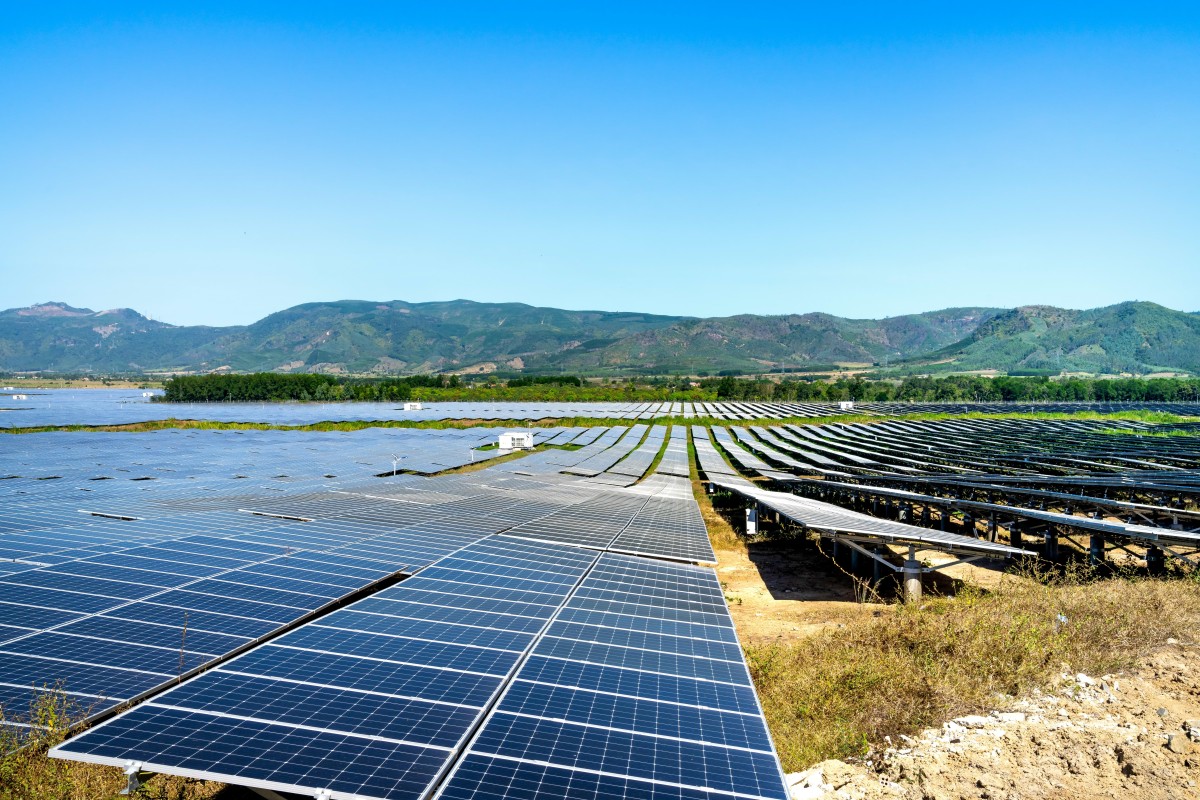
foto von Quang Nguyen Vinh auf Unsplash

Summary
- Exclusive reliance on central-grid expansion is unlikely to meet rural productive-energy needs because it remains costly, slow to deploy and spatially uneven.
- In off-grid and weak-grid areas, hybrid microgrids can therefore provide a complementary source of reliable electricity for productive activities such as agro-processing, fabrication, refrigeration and small workshops.
- Their greatest developmental value lies not merely in extending household access to electricity but in serving as industrial infrastructure for distributed, community-embedded production.
- However, this potential depends on sufficient demand aggregation, viable tariffs and financing arrangements, effective governance and maintenance systems, and access to machinery, skills, and markets.
- Hybrid microgrids should therefore be integrated into industrial policy, rural development strategies and spatial planning rather than implemented as stand-alone energy projects.
Introduction
Sub-Saharan Africa faces two distinct energy deficits. In 2023, about 600 million people lacked access to electricity, while many connected households and firms received unreliable service (IEA, 2024). Rural and peri-urban enterprises were especially constrained, limiting agro-processing, cold storage and fabrication. Large generation and transmission systems remain essential for cities, industry and power trade, but do not resolve the last-mile economics of dispersed, low-demand settlements.
Minigrids are isolated or grid-interconnectable systems, generally 10 kW–10 MW; hybrid microgrids combine generation and storage technologies. For both, the economic case depends on context. In rural Kenya, Maqelepo et al. (2022) estimated a 30-year implicit subsidy of USD 5,118 to USD 5,330 per grid customer, compared with USD 3,380 for off-grid supply. Yet minigrids were cheaper in only 37-40 % of communities. Distance from the grid, customer density, expected consumption, the cost of alternatives and the presence of an anchor productive load determine whether a minigrid is the least-cost option.
Synthesising research, sector reports and cases, this paper argues that hybrid microgrids can complement central grids as productive infrastructure where grid extension is slow, unreliable or uneconomic. Its central finding is that hybrid microgrids support manufacturing only when electricity is bundled with machinery finance, skills, market access, maintenance capacity and accountable governance.
The development opportunity: powering micro-manufacturing
Hybrid microgrids can serve agro-processing, welding, tailoring, refrigeration, cold chains, water pumping, digital services and local fabrication. Locating generation near productive clusters can reduce fuel use and downtime. The opportunity is strongest where an anchor user, such as a mill, cold store, telecom tower, clinic or workshop cluster, raises the load factor and provides predictable revenue for a shared network. Higher utilisation spreads fixed costs across more kilowatt-hours, improves the operator’s financial position and can reduce the risk of unaffordable tariffs for smaller users.
The evidence is mixed and method-sensitive. A cohort of 2,658 connected households and businesses in Kenya and Nigeria reported large one-year gains, including a quadrupling of median income in some Kenyan communities (Carabajal et al., 2024). However, the before-and-after design cannot fully separate the effects of electricity from selection bias, local economic trends or complementary interventions. A randomised grid-extension study in rural Kenya found low demand and no meaningful medium-run household effects (Lee et al., 2020). A randomised study in India found limited average effects after three to five years, with larger returns in larger villages (Burlig & Preonas, 2024). Aklin et al. (2017), studying off-grid solar in India, recorded an access gain of 29 to 36 percentage points and a fall in monthly kerosene spending of INR 47 to INR 49, but no systematic effects beyond that. Practical Action and IIED (2019) document unequal benefits by gender and wealth, offering qualitative rather than causal evidence.
Read together, these results show that while electricity facilitates industrialisation, distributed production also needs working capital, machinery, skills, transport and buyers. Where that enabling bundle is absent, weak demand, unaffordable tariffs and poor revenue collection leave systems under-used and financially fragile. That reading sets the research agenda:
- Which combinations of anchor load and enterprise support produce durable firms?
- Which governance arrangements allocate risk fairly between developers, financiers and users?
- How do women-led firms gain access to finance?
- And how should minigrids integrate when the main grid eventually arrives?
Conditions, costs and governance
As noted above, the economic case for hybrid microgrids depends on verified demand, a viable load factor, affordable but sustainable tariffs, long-tenor finance, reliable operations and maintenance, and clear grid-arrival rules. These constraints should be treated as design conditions. Three of these conditions carry most of the weight in explaining the gaps between pilot and portfolio: the cost base, the ownership model and the quality of system design.
Cost comes first because it sets the tariff that everything else must accommodate. The African Minigrid Developers Association (AMDA, 2024) reports that minigrid capital expenditure fell by roughly 20 % between 2020 and 2024, but stood at approximately USD 6,824 per kilowatt-peak (kWp), compared with approximately USD 3,000 per kWp globally. Logistics, limited scale, import duties, foreign-exchange exposure and shallow supply chains account for part of that premium. The consequence is that African systems need higher load factors or higher subsidies than the global cost curve implies, which returns the argument to the anchor load. Programme targets should be read with the same care. For example, while Mission 300 (a joint continental initiative that aims to provide reliable electricity access to 300 million people across Africa by the year 2030) covers grid, minigrid and stand-alone connections together, it does not constitute a minigrid forecast (African Development Bank, 2025).
Ownership determines who absorbs the cost and who has standing to contest it. Most African minigrids are developer-led and publicly subsidised rather than wholly community-owned (AMDA, 2024), so proposals for full community ownership describe a small share of the installed base. A defensible model is therefore a developer-led or public-private operator with structured user participation, comprising transparent tariffs, representation in siting, local operations and maintenance roles, functioning dispute resolution, auditable accounts, and pre-agreed rules for what happens when the national grid arrives. This translates Ostrom’s (1990) collective-action insight into enforceable institutions, and Sen’s (1999) conception of agency becomes operational when users influence service design and secure financing for productive assets.
Participation of this kind can still leave some users outside the system unless inclusion is designed explicitly. Women-led firms face collateral and asset-ownership gaps, siting decisions that overlook their activities and tariff structures poorly matched to their cash flow (Practical Action & IIED, 2019). Each of these obstacles has a corresponding design response, namely sex-disaggregated demand mapping, reserved equipment grants or guarantees, representation in tariff and siting decisions, flexible payment schedules, and monitoring disaggregated by sex and income. Even where these conditions are met, distributed manufacturing remains a complement to centralised industry rather than a replacement for it. It can support local value addition and resilience where transport, logistics and market access are adequate.
The third condition is technical. Optimisation methods improve sizing decisions but cannot compensate for weak demand or weak institutions. Their value lies in testing how reliability targets, resource profiles and load assumptions shift system cost before procurement is committed, making them a screening tool within least-cost planning rather than a substitute for enterprise assessment. A Kaduna study illustrates both the promise and the limits. It combined airport meteorological records with measured load data to size an isolated solar, wind and battery system. With loss-of-power-supply probability capped at 25 %, an Improved Grey Wolf algorithm reduced modelled annualised cost from USD 169,880 to USD 112,356, a saving of 34 % (Sesan et al., 2024). That saving is a planning result, since it depends on the assumed load, resource availability, reliability target and prices. Comparable sub-Saharan validations remain scarce. A well-sized system is not a guarantee of its productivity.
Taken together, these conditions suggest that distributed manufacturing can support local value addition and resilience where cost, governance, inclusion and system design are handled deliberately, and where transport, logistics and market access are adequate. Absent those conditions, claims about structural transformation remain hypothetical.
Policy priorities
Policy should connect identified barriers to accountable instruments. The priority is an owner-specific package that links least-cost siting, productive-use equipment, finance, sustainable tariffs, operations and maintenance (O&M), inclusion and grid-arrival rules. Table 1 assigns each condition to an accountable actor and instrument.
Table 1: Proposed policy responses to the current energy environment
| Finding/barrier | Policy response | Owner/instrument |
|---|---|---|
| Low demand and weak load factor | Site projects around verified clusters and anchor loads; bundle power with equipment and business support. | Energy and industry ministries: least-cost plans, demand audits and results-based equipment grants. |
| High capital cost and short-tenor finance | Lower the weighted cost of capital while preserving performance incentives. | Finance ministries and DFIs (Development Finance Institutions): viability-gap grants, concessional debt and local-currency guarantees, with fiscal costs disclosed. |
| Cost-reflective tariffs exceeding affordability | Use targeted connection and equipment support rather than suppressing tariffs below sustainable cost. | Regulators and social-protection agencies; budgeted or transparent cross-subsidies. Senegal’s ASER/Ci-Dev vouchers covered up to about 85 % of the connection fees for poorer households (World Bank, 2016). |
| O&M weakness and grid-arrival risk | Define service, maintenance, interconnection and compensation obligations before awarding a contract. | Regulators, utilities and local authorities: standard licences, integration clauses, asset-valuation rules and funded O&M training. |
| Gender and income exclusion | Make access to productive assets and decision-making measurable. | Implementing agencies and lenders: reserved grants or guarantees, representation requirements and sex-disaggregated monitoring. |
Source: author’s construct, 2026
Conclusion
The evidence shows that hybrid microgrids are complementary infrastructure in a definable set of circumstances, namely, where grid extension is costly or slow, an anchor load underwrites demand, subsidies are transparent and predictable, and firms can access machinery, finance, skills, maintenance and buyers.
This requires three reforms. The first is technology-neutral spatial planning, so grid, minigrid, and stand-alone options are compared, at least on social-cost grounds, rather than assigned by default. The second is results-based finance that links infrastructure payments to productive-use equipment in firms’ hands, thereby converting a connection into a load. The third is an enforceable rulebook covering affordability, inclusion, O&M and grid arrival, since these are the terms under which both users and investors bear risk.
Future research should answer the following questions: 1) Which anchor-load typologies generate firms that survive beyond the subsidy period? 2) Which ownership arrangements protect users without deterring capital? 3) Does gender-responsive finance change enterprise outcomes, or only access? Policy should deploy either centralised or decentralised systems wherever each delivers reliable power and productive capability at the lowest social and fiscal cost.
References
Africa Minigrid Developers Association. (2024). Benchmarking Africa’s minigrids report 2024. https://www.africamda.org/publications/amdas-benchmarking-africas-minigrids-report-2024/
African Development Bank. (2025, January 17). Mission 300 Africa Energy Summit to concretise efforts to connect 300 million Africans to energy by 2030 [Press release]. https://www.afdb.org/en/mission-300-africa-energy-summit
Aklin, M., Bayer, P., Harish, S. P., & Urpelainen, J. (2017). Does basic energy access generate socioeconomic benefits? A field experiment with off-grid solar power in India. Science Advances, 3(5), Article e1602153. https://doi.org/10.1126/sciadv.1602153
Burlig, F., & Preonas, L. (2024). Out of the darkness and into the light? Development effects of rural electrification. Journal of Political Economy, 132(9), 2937–2971. https://doi.org/10.1086/730204
Carabajal, A. T., Orsot, A., Elimbi Moudio, M. P., Haggai, T., Okonkwo, C. J., Jarrard, G. T., III, & Selby, N. S. (2024). Social and economic impact analysis of solar minigrids in rural Africa: A cohort study from Kenya and Nigeria. Environmental Research: Infrastructure and Sustainability, 4(2), Article 025005. https://doi.org/10.1088/2634-4505/ad4ffb
International Energy Agency, International Renewable Energy Agency, United Nations Statistics Division, World Bank, & World Health Organization. (2024). Tracking SDG 7: The energy progress report 2024. World Bank. https://www.iea.org/reports/tracking-sdg7-the-energy-progress-report-2024
Lee, K., Miguel, E., & Wolfram, C. (2020). Experimental evidence on the economics of rural electrification. Journal of Political Economy, 128(4), 1523–1565. https://doi.org/10.1086/705417
Maqelepo, L., Williams, N., & Taneja, J. (2022). Rural electrification subsidy estimation: A spatial model development and case study. Environmental Research: Infrastructure and Sustainability, 2(4), Article 045009. https://doi.org/10.1088/2634-4505/ac9711
Ostrom, E. (1990). Governing the commons: The evolution of institutions for collective action. Cambridge University Press. https://doi.org/10.1017/CBO9781316423936
Sen, A. (1999). Development as freedom. Oxford University Press.
Sesan, B. S., Abubakar, I., Kadandani, N. B., & Olalekan, I. B. (2024). Optimal sizing of solar-wind hybrid microgrid using improved grey wolf optimisation algorithm: A case study of Kaduna, Nigeria. FUDMA Journal of Sciences, 7(6), 362–372. https://doi.org/10.33003/fjs-2023-0706-2214
About the Authors

Kossi Toulassi
Mr Kossi Toulassi is a recognised financial strategist and economic analyst with 20-plus years’ experience in driving complex financial operations, investment strategies and sustainable growth.