
Background
Urbanisation on the African continent long predates the colonial encounter; it is ancient, indigenous, and strikingly diverse (Freund, 2007). Modern African urbanisation, shaped by colonial legacies, is characterised by rapid population growth, pervasive informality, and fragmented governance responses. Across much of the continent, population growth is outpacing what institutions can manage, producing conditions of both dynamism and exclusion (Smit, 2018).
Governments have responded with a range of strategies, including the construction of "modern" or "smart" new cities. Rather than addressing the underlying structural problems, these interventions have tended to intensify socio-spatial fragmentation (Maatallah et al., 2026).
What such approaches consistently overlook is that informal settlements, informal service networks, paratransit, community coping strategies, and fragmented data practices remain central to how these cities function. Yet policymakers continue to treat informality as a transient problem to be eliminated rather than as evidence of governance failure and unmet need (Cobbinah, 2023).
This misreading is the premise of Rethinking Policy and Practice for Urban Africa, a series of four policy briefs by three Fellows from the SMUS – APRI Urban Africa Post-Doctoral Programme and special guest contributors, Mourice Wambua Kausya and Brunilde Verrier. The 2025 SMUS-APRI Urban Africa Post-Doctoral Research Scholarship Programme aimed to enhance the capacity of the selected researchers to succinctly communicate research findings on urban wicked problems in the specific context of African urban agglomerations to policymakers and the public through policy briefs.
Read separately, the briefs address four different problems: 1) a failed transit system; 2) a broken mapping workflow; 3) corruption in water provision; and 4) the persistence of illegal electricity connections.
Read together; however, they highlight a recurring urban policy dilemma in which behaviours treated as problematic are often rational responses to conditions of systemic exclusion. The wicked urban problems highlighted in the Policy Briefs are systemic, politically contested and mutate as actors respond to attempted fixes, so that one-dimensional fixes generate new harms rather than resolving existing challenges. These recurring paradoxes, or “wicked problems,” as Rittel & Webber (1973) call them, form the theoretical basis of this series.

Bus Rapid Transit (BRT) in Accra, Ghana
Emmanuel opens the series with a look at a failed attempt to introduce a Bus Rapid Transit (BRT) in Accra. The introduction of a BRT system was promoted as an integrated reform and a technical fix for urban congestion. What it delivered was a downgrade of the functioning Quality Bus Service and its eventual operational collapse, with numerous attempts to relaunch the service ongoing since 2005. Drawing on document analysis and expert interviews, the brief traces the failure to overlapping mandates, tokenistic engagement, donor-driven models misaligned with local conditions and unsustainable financing. The unresolved issue at the centre of this failure was the displacement of existing trotro operators, whose livelihoods the reform threatened and who fought back through union action and by stalling construction.

Informal electricity in Mathare, Nairobi
Using participatory systems mapping, Mourice and Brunilde show how informal electricity provision in Mathare is woven into community livelihoods, sustained by affordability constraints and reinforced by punitive enforcement cycles that cut supply to whole neighbourhoods without touching the underlying drivers. Although formal electricity supply exists in Mathare, its costs, paperwork and punitive enforcement make it an unattractive option for most households, who instead choose to connect with informal suppliers, exposing residents to personal and legal risks (Satterthwaite, 2017). Emblematic of the wicked problem, each crackdown reinforces residents' belief that the formal system is not designed to serve them (Amankwaa & Gough, 2022). Consequently, informality deepens.

Corruption in the water and sanitation sector in Kisumu, Kenya
Calvince’s paper examines corruption in Kisumu’s water and sanitation sector and sharpens the series’ central claim about how policy fails. Anti-corruption frameworks exist nationally; county bylaws exist locally. As a result, in Kisumu’s informal settlements, bribery for connections, fraudulent billing, favouritism and engineered delays persist because the integrity architecture was built to catch national grand corruption at the institutional level, not petty grassroots extraction. Drawing on focus groups and a physical survey of 334 sanitation facilities and 88 water points across Kisumu’s six most populous informal settlements, the brief maps both the forms of corruption and the policy gaps that sustain them. It shows that petty corruption runs on bribes for basic connections, manipulated bills, extortion through service disruption and compromised inspections, all of which are rooted in years of state neglect. In sum, what residents experience is a daily tax on health, dignity and money, one levied most heavily on those least able to contest it (Plummer & Cross, 2006).
Mapping Nairobi’s settlements
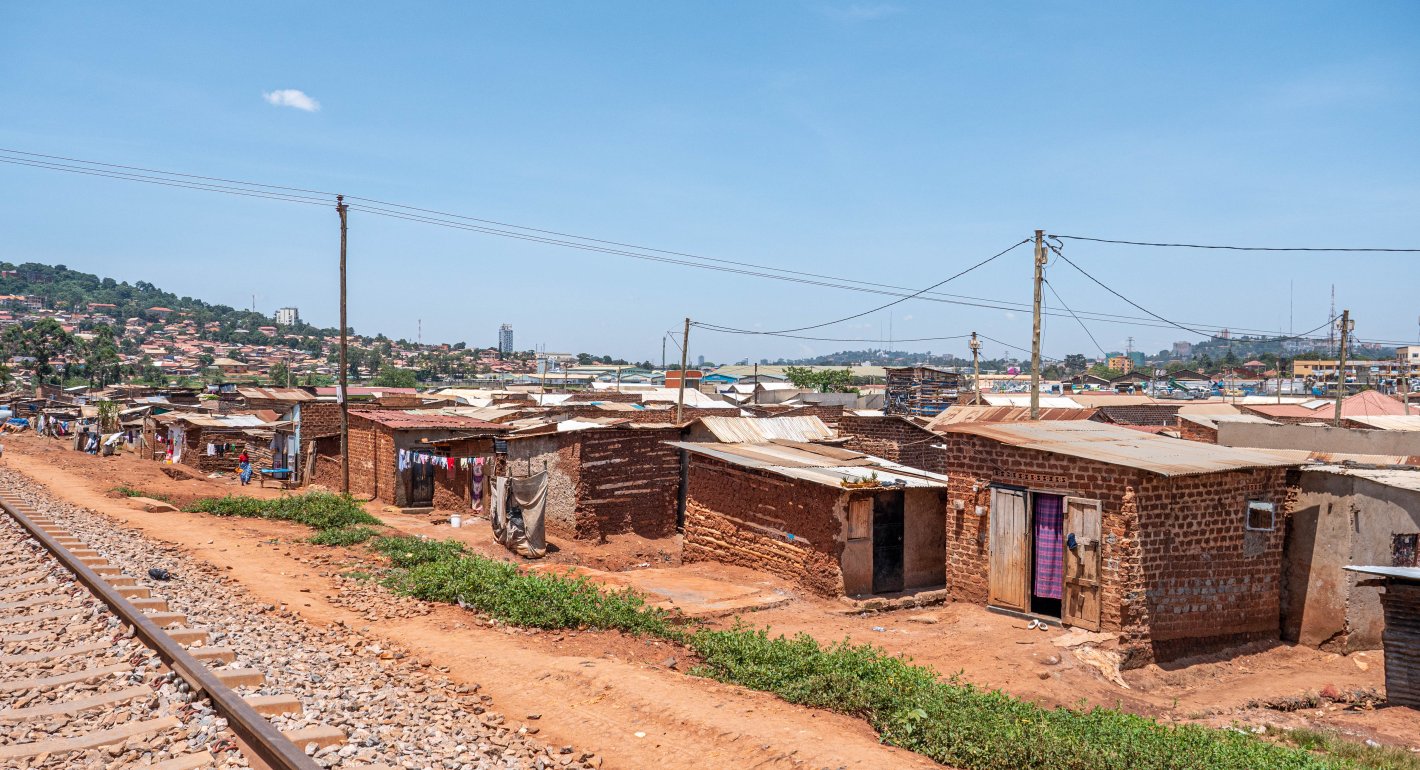
Mildred turns to the mapping of Nairobi’s settlements, which have been repeatedly mapped by different actors using incompatible tools, yielding fragmented, outdated data of little value to the programmes intended for its use. Taking Mathare as her case study, she diagnoses gaps in the city’s geospatial workflows. She proposes integrated visualisation, including ArcGIS StoryMaps and flood simulation, to connect settlement growth, service gaps and climate vulnerability, enabling better decision-making. Her contribution reframes mapping as a governance function. She also names the danger that visibility carries in a context where mapping has often preceded eviction.
Three findings about urban policymaking in African cities
Across the four sectors, the findings of these briefs converge on the failure of top-down governance, the rationality of informal adaptation and the need for community participation and institutional integration. This suggests that the problems documented here are not sector-specific pathologies, but rather expressions of the mode of ordering of urban policymaking systems in African cities.
The briefs reveal three things about urban policymaking in African cities
-
Policies designed for a city that does not exist
Urban policy is largely designed for a city that does not exist. Accra’s BRT followed international standards, not the logic of a city where trotros are as much a livelihood system as a mode of transport. Nairobi’s mapping tools assumed clean, integrated data in a city where most residents of settlements are temporary. Kisumu’s anti-corruption framework was written to catch ministers, not meter readers. Each instrument talks past the place it means to govern. Of course, limited funding constrains implementation. However, the deeper failure lies in planning assumptions which aim to achieve legible, serviced, compliant cities without engaging with existing players and systems.
-
Informality as a planning regime, not an anomaly
Informality is not the absence of planning. It is an alternative planning regime built in the gap between what formal systems promise and what they deliver. Research shows that informal urban space is produced through identifiable processes of incremental adaptation and design (Kamalipour & Dovey, 2020). Reflecting this shift in understanding, a growing body of scholarship positions informal settlements not as sites of urban failure but as key arenas of city-making (Dovey et al., 2023; Cobbinah, 2023).
Informal electricity in Mathare is a structured, affordable answer to exclusion. Corruption in Kisumu is petty in form and structural in cause. Instead of conceiving informality as a defining feature of African urbanisation, city planners still treat this regime as “other” to formality, a problem to be corrected and a phase that cities outgrow. The reflex to read the informal city as lawless is a colonial legacy. For instance, Nairobi’s informal settlements have roots in colonial urban planning, which treated Kenyans as temporary labourers, restricted their formal residence and deliberately produced racialised spatial inequality through zoning, land controls and unequal service provision. The post-independence state continued to view the unplanned majority as removable (Björkman, 2013).
-
Governance as contested terrain
Governance in the city is often contested because it involves negotiation on unequal ground between the formal state and the informal city that has already organised itself in the absence of formal recognition or support. Accra’s BRT was a contest over terminal revenues, route control and the livelihoods of tens of thousands of private informal transport workers. The Mathare electricity crackdowns were a collective punishment that antagonised paying residents and deepened mistrust. Corruption in Kisumu’s water sector cannot be separated from the political history of a city long treated as an opposition stronghold and neglected accordingly. The gap between what the state reads as illegality and what residents experience as a rational answer to exclusion runs through three of the four briefs.
Emerging strategies and opportunities
The series is about pathways forward. It is written for city and county policymakers who need evidence for specific reforms, national ministries revising sector frameworks, development partners designing financing and technical assistance, and researchers placing their work in a comparative multi-city framework.
Each brief concludes that wicked urban problems require rethinking the governance and knowledge systems underpinning urban policy and planning. In practice, this means a workable BRT in Accra depends on integrated land-use and transport planning, institutional reform, sustainable financing and clear lines of responsibility across agencies. In Kisumu, curbing corruption demands integrity sensitisation, prioritised investment in low-income areas and enforceable rules that tackle its everyday root causes. Calvince’s brief warns that enforcement aimed only at low-level staff disciplines the poorest actors in the chain, while pipes and sewers remain unbuilt. In Nairobi's electricity sector, gradual formalisation and trust-building are more effective than punitive crackdowns. When planning, integrated visualisation platforms can serve as a shared, authoritative, evidence-based tool that links spatial, infrastructural and climate data and has the potential to improve interagency coordination.
Additionally, these contributions highlight that wicked urban problems do not yield to one-off, sector-specific interventions imposed without community engagement. The authors recommend working with existing adaptive practices and treating residents as participants in governance rather than its targets or subjects. Reform thus has to be spatially grounded and responsive to the uneven geographies of risk, access and political attention that citywide averages hide. That means policymakers must stop governing informal urban life as a crime to suppress and start treating it as a legitimate part of the city to engage with. The gap between what the state reads as illegality and what residents experience as a rational answer to exclusion is where the rethinking should begin. It also means moving away from crisis-driven enforcement toward trust built through sustained dialogue and treating residents’ participation as a source of evidence and design, not just as a box to tick. In sum, the series points to the need to reorient policy-making away from imported templates that ignore how African cities operate and toward approaches rooted in how these cities actually work for the majority of their residents.
We gratefully acknowledge the contributions of the Policy Brief authors, the academic and policy peer reviewers for their expert review and constructive feedback, and the publication team for their meticulous work in producing this Policy Brief Series.
References
Amankwaa, E. F., & Gough, K. V. (2022). Everyday contours and politics of infrastructure: Informal governance of electricity access in urban Ghana. Urban Studies, 59(12), 2468–2488. https://doi.org/10.1177/00420980211030155
Björkman, L. (2013). Cities with ‘slums’: From informal settlement eradication to a right to the city in Africa, by Marie Huchzermeyer [Review of the book Cities with ‘slums’: From informal settlement eradication to a right to the city in Africa, by M. Huchzermeyer]. Journal of Urban Affairs, 35(1), 124–126. https://doi.org/10.1111/juaf.12008
Cobbinah, P. B., & Gaisie, E. (Eds.). (2023). Reimagining urban planning in Africa. Cambridge University Press. https://doi.org/10.1017/9781009389457
Dovey, K., van Oostrum, M., Shafique, T., Chatterjee, I., & Pafka, E. (2023). Atlas of informal settlement: Understanding self-organised urban design. Bloomsbury. https://doi.org/10.5040/9781350295070
Freund, B. (2007). Urban life emerges in Africa. In The African city: A history (pp. 1–36). Cambridge University Press.
Kamalipour, H., & Dovey, K. (2020). Incremental production of urban space: A typology of informal design. Habitat International, 98, Article 102133. https://doi.org/10.1016/j.habitatint.2020.102133
Maatallah, R., Abdessamad, A., & Khatori, Y. (2026). Smart cities in Africa: A systematic literature review of challenges and development strategies. City and Environment Interactions, 30, Article 100365. https://doi.org/10.1016/j.cacint.2026.100365
Plummer, J., & Cross, P. (2006). Tackling corruption in the water and sanitation sector in Africa: Starting the dialogue. Water and Sanitation Program, World Bank. http://documents.worldbank.org/curated/en/266671468003899417
Rittel, H. W. J., & Webber, M. M. (1973). Dilemmas in a general theory of planning. Policy Sciences, 4, 155–169. https://doi.org/10.1007/BF01405730
Satterthwaite, D. (2017). The impact of urban development on risk in sub-Saharan Africa’s cities with a focus on small and intermediate urban centres. International Journal of Disaster Risk Reduction, 26, 16–23. https://doi.org/10.1016/j.ijdrr.2017.09.025
Smit, W. (2018). Urban governance in Africa: An overview. International Development Policy | Revue internationale de politique de développement, 10, 55–77. https://doi.org/10.4000/poldev.2637
About the Editors

Dr. Serwah Prempeh
Dr. Serwah Prempeh is the Senior Fellow and Head of APRI's Just Green Technology Transition Programme, which is focused on aligning African technology innovation priorities with its development goals and bridging Africa-Germany-EU relations on just green technology innovation and development.

Thando Tilmann
Thando Tilmann is a scientific coordinator at the Global Center of Spatial Methods for Urban Sustainability (SMUS) at Technische Universität Berlin. Her work focuses on facilitating multi-stakeholder dialogue on complex global challenges and making scientific knowledge more accessible to wider audiences.
The Global Center of Spatial Methods for Urban Sustainability (SMUS) is funded by the German Academic Exchange Service (DAAD) with funds from the German Federal Ministry for Economic Cooperation and Development (BMZ).